Loading...
This comparison has not been analyzed yet.
One-time AI generation (~1 minute). Scores and timeline are already available below.
Di Xin of Shang vs Kanishka II
Di Xin of Shang leads by 9.6 pts · 2 figures compared
…

Di Xin of Shang
Emperor · Ancient
44.7Total
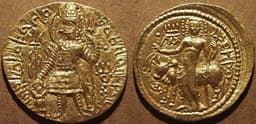
Kanishka II
Emperor · Ancient
35.1Total
Basic Information
Born
-1050
230
Died
-1046
240
Era
Ancient
Ancient
Nationality
Shang China
Kushan Empire
Occupation
Emperor
Emperor
Civilization
Eastern
Indian
Score Comparison
Military (10%)
45.0
22.6
Political (20%)
27.9
30.7
Influence (20%)
51.8
44.0
Legacy (20%)
52.0
34.2
Leadership (15%)
38.1
31.2
Strategy (15%)
43.7
39.6
TOTAL
44.7
35.1
Di Xin of Shang — Complete Timeline
1050 BC
Construction of the Wine Pool and Meat ForestCultural
Di Xin allegedly built a pool filled with wine and hung meat in trees, creating a 'wine pool and meat forest' for extravagant orgies. This story, recorded in later texts, exemplifies his reputation as a decadent tyrant.
DecadenceLegendTyranny
Impact: nationaldestructive
Imprisonment of King Wen of ZhouPolitical Action◆ Major
Di Xin imprisoned King Wen of Zhou at Youli, a Shang prison. During his captivity, King Wen is said to have studied the I Ching. Di Xin later released him after receiving tribute, a decision that allowed Zhou to continue its rise.
ImprisonmentZhou RisePolitical Mistake
Impact: regional
1046 BC
Battle of MuyeWar
Di Xin's Shang army was defeated by King Wu of Zhou at the Battle of Muye. The Shang forces, including slave soldiers who defected, were routed. This battle ended the Shang dynasty and established Zhou rule over China.
BattleDynastic ChangeShang Defeat
Impact: globaltragic
Self-immolation at Deer Terrace PavilionOther◆ Major
After the defeat at Muye, Di Xin retreated to the Deer Terrace Pavilion, adorned himself with jade, and set the building on fire, burning himself to death. This act became a symbol of his tyranny and the Shang dynasty's fall.
DeathTyrannyDynastic Fall
Impact: nationaltragic
Kanishka II — Complete Timeline
230 AD
Accession during Sassanian ExpansionPolitical Action◆ Major
Kanishka II ascended to the Kushan throne around 230 AD, a period when the Sassanian Empire under Ardashir I was expanding eastward. His reign was marked by the loss of western territories to the Sassanians, reducing Kushan influence.
Kushan EmpireSassanian EmpireTerritorial Loss
Impact: regionaldestructive
235 AD
Issuance of Coins with Shiva ImageryCultural
Kanishka II issued coins featuring Shiva and the bull Nandi, continuing the Shaivite tradition of his predecessor Vasudeva I. These coins are found in the Mathura region, indicating a continued cultural focus on Indian religious motifs.
CoinageShaivismMathura
This comparison has not been analyzed yet.
One-time AI generation (~1 minute). Scores and timeline are already available below.
Rankings
🥇
Di Xin of ShangLeader
Mil: 45.0Pol: 27.9Inf: 51.8
44.7
🥈
Kanishka II
Mil: 22.6Pol: 30.7Inf: 44.0
35.1
+9.6 behind
How This Comparison Works
Algorithm
Each figure is scored on 6 dimensions (0—100 scale) based on structured historical data: Military (10%), Political (20%), Influence (20%), Legacy (20%), Leadership (15%), Strategy (15%). The weighted total produces the final ranking.
Data Sources
Scores are computed from structured sub-indicators in the database. Scale factors adjust for era (Ancient ×0.85, Modern ×1.0) and civilization size (Eastern ×1.05, Other ×0.80) to account for differences in population and military scale.
Maximum 3 Figures
Comparisons are limited to 2—3 figures to ensure readability and statistical meaningfulness.
Error Margins
±5 points per dimension — Sub-scores are derived from historical records with inherent uncertainty. Two figures within 5 points on a dimension should be considered roughly equivalent in that area.
Total Score Accuracy
±3 points overall — The weighted combination of 6 dimensions produces a total score with approximately ±3 points of uncertainty. Differences of less than 3 points are not statistically significant— the figures are effectively tied.
Known Limitations
- Historical records are incomplete and uneven across civilizations
- Figures from oral-tradition societies may be underrepresented
- Occupation labels can misclassify multi-role figures
- Scores measure capability and impact, not moral character
- Quantitative scoring is a comparison tool, not absolute truth
Capability Radar
Military (10%) — Battles & Warfare
Battles
30
10
Win Rate
20
10
Expansion
15
5
Political (20%) — Governance & Reform
Reform
10
10
Diplomacy
15
15
Economy
20
10
Influence (20%) — Cultural & Global Reach
Cultural
40
10
Global
30
10
Legacy (20%) — Historical Impact
Historical
60
15
Longevity
70
10
Leadership (15%) — Power & Stability
Tenure
40
20
Stability
5
15
Strategy (15%) — Tactics & Innovation
Strategy
20
10
Tactics
25
10
Reform
10
5
Similar Comparisons
Comments & Discussion
No comments yet. Be the first to share your thoughts!