Loading...
Desi Bouterse vs Julius Caesar
Julius Caesar leads by 39.7 pts · 2 figures compared
…
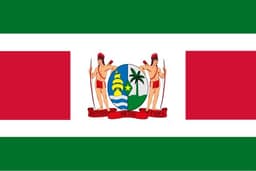
Desi Bouterse
General · Modern
43.1Total

Julius Caesar
General · Ancient
82.8Total
Basic Information
Born
1945
-100
Died
—
-44
Era
Modern
Ancient
Nationality
Suriname
Roman Republic
Occupation
General
General
Civilization
Other
Western
Score Comparison
Military (10%)
10.2
88.0
Political (20%)
36.5
78.0
Influence (20%)
51.0
85.0
Legacy (20%)
40.0
82.0
Leadership (15%)
65.7
80.0
Strategy (15%)
39.6
85.0
TOTAL
43.1
82.8
Desi Bouterse — Complete Timeline
1980 AD
1980 Coup d'ÉtatPolitical Action
Desi Bouterse led a military coup that overthrew the democratically elected government of Suriname. He established a military regime, suspended the constitution, and ruled as de facto leader, marking the start of a period of authoritarian rule.
CoupMilitary RuleAuthoritarianism
Impact: nationaldestructive
1982 AD
December MurdersPolitical Action◆ Major
Bouterse's regime executed 15 prominent opposition figures, including journalists, lawyers, and academics, in what became known as the December Murders. The event drew international condemnation and led to sanctions against Suriname.
MassacreHuman RightsRepression
Impact: nationaltragic
1986 AD
Interior War and Maroon ConflictWar◆ Major
Bouterse's regime fought a civil war against Maroon rebels led by Ronnie Brunswijk, known as the Interior War. The conflict resulted in hundreds of deaths, displacement of indigenous communities, and destruction of infrastructure.
Civil WarConflictMaroons
Impact: nationaltragic
2010 AD
Presidency of SurinamePolitical Action◆ Major
Bouterse was elected President of Suriname in 2010, returning to power through democratic elections. His presidency was marked by economic growth from mining and oil, but also by ongoing controversy over his past human rights abuses.
PresidencyElectionControversy
Impact: national
2019 AD
Conviction for the December MurdersPolitical Action◆ Major
Bouterse was convicted by a Surinamese court for his role in the December Murders and sentenced to 20 years in prison. The verdict was a landmark in transitional justice, though Bouterse appealed and remained free pending the outcome.
ConvictionJusticeHuman Rights
Impact: nationaldestructive
Julius Caesar — Complete Timeline
58 BC
Gallic WarsWar◆ Major
Caesar, as proconsul of Gaul, launched a series of campaigns that conquered all of Gaul (modern France, Belgium, and parts of Switzerland). He fought numerous battles, including against the Helvetii, the Belgae, and the Gallic chieftain Vercingetorix. The wars brought immense wealth and a loyal army to Caesar.
Gallic WarsConquestRoman Expansion
Impact: regional
49 BC
Crossing the RubiconPolitical Action◆ Major
Caesar led Legio XIII across the Rubicon River into Italy, defying the Roman Senate's order to disband his army. This act triggered a civil war against Pompey and the Optimates, ultimately leading to Caesar's dictatorship and the end of the Roman Republic.
Roman Civil WarEnd of RepublicPower Struggle
Impact: global
48 BC
Battle of PharsalusWar◆ Major
Caesar's outnumbered army defeated the larger forces of Pompey the Great at Pharsalus in Greece. Caesar's tactical use of a reserve line to counter Pompey's cavalry charge proved decisive. Pompey fled to Egypt, where he was assassinated, leaving Caesar as the undisputed master of the Roman world.
Roman Civil WarBattleDecisive Victory
Impact: regional
44 BC
Appointment as Dictator for LifePolitical Action◆ Major
The Roman Senate appointed Caesar dictator perpetuo (dictator for life), granting him unprecedented personal power. This move concentrated military, legislative, and judicial authority in one person, effectively ending the Roman Republic's traditional system of checks and balances and alarming many senators.
DictatorshipEnd of RepublicPower Consolidation
Impact: regionaldestructive
Assassination on the Ides of MarchPolitical Action◆ Major
A group of Roman senators, led by Marcus Junius Brutus and Gaius Cassius Longinus, stabbed Caesar to death at a meeting of the Senate in the Theatre of Pompey. The assassination was intended to restore the Republic, but instead triggered another civil war that led to the rise of the Roman Empire.
AssassinationRoman PoliticsEnd of Republic
Impact: globaldestructive
Expert Analysis
desi-bouterse-vs-julius-caesar
# The General's Choice: Caesar and Bouterse and the Fate of Republics
On the Ides of March in 44 BCE, Julius Caesar fell beneath twenty-three dagger strokes in the Senate chamber of Rome. Nearly two thousand years later, in December 1982, fifteen men—journalists, lawyers, and academics—were executed in a colonial-era fort in Paramaribo, their bodies never fully accounted for. One death launched an empire; the other condemned a nation to decades of division. Both acts were carried out by men who had seized power through military force, yet their paths diverged so sharply that comparing them seems almost absurd—until we ask the question that haunts every republic: what separates a leader who transforms his world from one who merely corrupts it?
Origins
Gaius Julius Caesar was born into the patrician Julian clan, a family of ancient prestige but modest wealth in a Rome dominated by money and military glory. His father died when he was sixteen, leaving him to navigate the treacherous currents of late Republican politics—a world of civil wars, proscriptions, and the crumbling of ancestral traditions. The Rome of his youth was a city where ambitious men could rise by military conquest abroad and political manipulation at home, but where the Senate's paralysis and the mob's volatility made every achievement provisional.
Desi Bouterse came of age in a different kind of twilight. Born in 1945 in Domburg, Suriname, a Dutch colony on the shoulder of South America, he was the son of a schoolteacher and grew up in a society defined by ethnic divisions—Creole, Javanese, Hindustani, Maroon—and by the quiet violence of colonial rule. When Suriname gained independence in 1975, it inherited a fragile democracy and a military barely equipped for nation-building. Bouterse, who had trained in the Dutch army and later at a Cuban military school, belonged to a generation of postcolonial officers who saw their nations' parliaments as obstacles, not institutions.
Rise to Power
Caesar's ascent was a masterpiece of strategic patience. He built his reputation in the usual Roman way—military service in Asia Minor, a quaestorship in Spain, and then a series of carefully calibrated political alliances. The First Triumvirate with Pompey and Crassus in 60 BCE gave him the consulship and, crucially, a five-year command in Gaul. There, between 58 and 50 BCE, he conquered a territory larger than Italy itself, winning battles at Alesia and against the Germanic tribes that made him the most famous general of his age. His Commentaries on the Gallic Wars were not just history but propaganda, shaping how Romans—and posterity—would see him.
Bouterse's rise was swifter and cruder. On February 25, 1980, he led a coup of sixteen sergeants that toppled Suriname's elected government. The takeover was almost bloodless, supported by a population weary of corruption and ethnic politicking. But where Caesar had spent decades earning legitimacy through conquest and law, Bouterse had only the barrel of a gun. In the months that followed, he purged rivals, suspended the constitution, and declared himself head of a "Revolutionary People's Government." The difference reveals something essential: Caesar seized power after proving himself indispensable to Rome; Bouterse seized power because the state was too weak to stop him.
Leadership & Governance
As dictator, Caesar did not merely rule—he remade. He reformed the calendar, creating the Julian system that would serve Europe for sixteen centuries. He granted citizenship to Gauls and Spaniards, extended Roman law across the provinces, and initiated public works that employed the urban poor. His military genius—the siege of Alesia, the lightning campaign against Pompey at Pharsalus—was matched by a political instinct that understood that conquest meant nothing without integration. He pardoned former enemies, including Brutus and Cassius, in a gesture of clemency that was both magnanimous and calculated. Yet his concentration of power—dictator for life, his image on coins, his control over elections—terrified the senatorial class, who saw in him a king in all but name.
Bouterse governed differently. His regime's defining act was the December Murders of 1982, when fifteen prominent critics were rounded up and executed in Fort Zeelandia. The killings were a message—that dissent would not be tolerated—but they also revealed a leader who ruled through fear rather than persuasion. The Interior War against Maroon rebels from 1986 to 1992 devastated the interior and deepened ethnic wounds. When Bouterse finally returned to power through elections in 2010, it was not because he had reformed Suriname, but because the economy had collapsed and voters were desperate. His presidency was marked by corruption scandals and stagnation; in 2019, a military court convicted him for the December Murders and sentenced him to twenty years.
Triumph & Tragedy
Caesar's greatest triumph was also his undoing. By crossing the Rubicon in 49 BCE, he chose civil war over submission to the Senate, and his victory made him master of Rome. But his clemency bred contempt among those who could not forgive his usurpation. On the Ides of March, the Senate's daggers proved that even the most brilliant general could not legislate loyalty.
Bouterse's tragedy was smaller but more sordid. His greatest moment—the 1980 coup that promised to cleanse Suriname of corruption—became the foundation for decades of authoritarianism and decay. The December Murders made him a pariah internationally, and his conviction in 2019, though historic, came too late for the dead and for the nation that had watched its democratic experiment collapse.
Character & Destiny
Caesar was brilliant, ambitious, and reckless—a man who believed that fortune favored the bold and that his genius could overcome any obstacle. His assassination was not a failure of strategy but of psychology: he could not imagine that men he had pardoned would kill him. Bouterse was pragmatic, ruthless, and ultimately shallow—a survivor who adapted to circumstances rather than shaping them. He lacked Caesar's vision of a transformed society; his rule was about power for its own sake.
Legacy
Caesar's legacy is the Roman Empire itself. His name became a title—Kaiser, Tsar—and his reforms outlasted the Republic he destroyed. He is remembered as a founder, a tyrant, and everything in between.
Bouterse's legacy is a cautionary tale. In Suriname, he is either a strongman who stood up to the Dutch or a murderer who betrayed his country's hopes. His conviction in 2019 was a landmark for justice in the Caribbean, but the wounds he opened—ethnic division, distrust of institutions, the normalization of violence—remain unhealed.
Conclusion
The difference between these two generals is not merely one of scale, but of purpose. Caesar conquered Gaul and remade Rome because he believed in a larger destiny—for himself, certainly, but also for civilization. Bouterse seized a small nation and held it captive because he had no other vision. One built an empire; the other left a prison. The lesson for every republic is this: the men who break its laws may be geniuses or thugs, but the cost to those who live under them is always the same.
Rankings
🥇
Julius CaesarLeader
Mil: 88.0Pol: 78.0Inf: 85.0
82.8
🥈
Desi Bouterse
Mil: 10.2Pol: 36.5Inf: 51.0
43.1
+39.7 behind
How This Comparison Works
Algorithm
Each figure is scored on 6 dimensions (0—100 scale) based on structured historical data: Military (10%), Political (20%), Influence (20%), Legacy (20%), Leadership (15%), Strategy (15%). The weighted total produces the final ranking.
Data Sources
Scores are computed from structured sub-indicators in the database. Scale factors adjust for era (Ancient ×0.85, Modern ×1.0) and civilization size (Eastern ×1.05, Other ×0.80) to account for differences in population and military scale.
Maximum 3 Figures
Comparisons are limited to 2—3 figures to ensure readability and statistical meaningfulness.
Error Margins
±5 points per dimension — Sub-scores are derived from historical records with inherent uncertainty. Two figures within 5 points on a dimension should be considered roughly equivalent in that area.
Total Score Accuracy
±3 points overall — The weighted combination of 6 dimensions produces a total score with approximately ±3 points of uncertainty. Differences of less than 3 points are not statistically significant— the figures are effectively tied.
Known Limitations
- Historical records are incomplete and uneven across civilizations
- Figures from oral-tradition societies may be underrepresented
- Occupation labels can misclassify multi-role figures
- Scores measure capability and impact, not moral character
- Quantitative scoring is a comparison tool, not absolute truth
Capability Radar
Military (10%) — Battles & Warfare
Battles
5
95
Win Rate
5
92
Expansion
5
97
Political (20%) — Governance & Reform
Reform
20
90
Diplomacy
30
85
Economy
15
82
Influence (20%) — Cultural & Global Reach
Cultural
20
88
Global
15
94
Legacy (20%) — Historical Impact
Historical
25
95
Longevity
15
96
Leadership (15%) — Power & Stability
Tenure
55
75
Stability
10
60
Strategy (15%) — Tactics & Innovation
Strategy
10
94
Tactics
10
96
Reform
5
88
Similar Comparisons
Comments & Discussion
No comments yet. Be the first to share your thoughts!