Loading...
David Marshall vs Fernando Henrique Cardoso
Fernando Henrique Cardoso leads by 21.9 pts · 2 figures compared
…
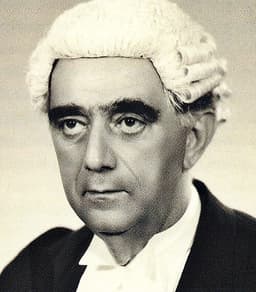
David Marshall
Politician · Modern
39.7Total

Fernando Henrique Cardoso
Politician · Modern
61.6Total
Basic Information
Born
1908
1931
Died
1995
—
Era
Modern
Modern
Nationality
Singapore
Brazil
Occupation
Politician
Politician
Civilization
Eastern
Western
Score Comparison
Military (10%)
14.4
50.0
Political (20%)
39.4
82.0
Influence (20%)
50.2
61.0
Legacy (20%)
41.7
52.0
Leadership (15%)
45.0
80.0
Strategy (15%)
26.7
40.8
TOTAL
39.7
61.6
David Marshall — Complete Timeline
1955 AD
Appointed First Chief Minister of SingaporePolitical Action◆ Major
David Marshall became the first Chief Minister of Singapore following the 1955 general election. He led a minority government and negotiated with the British for self-governance, but resigned in 1956 after failing to secure full internal self-rule.
Singapore self-governmentConstitutional negotiations
Impact: national
1956 AD
Led the Merdeka Talks in LondonPolitical Action◆ Major
Marshall led a delegation to London to negotiate full internal self-government for Singapore. The talks collapsed when the British refused to grant control over internal security and defense, leading to Marshall's resignation as Chief Minister.
Merdeka talksSelf-government failure
Impact: national
Resigned as Chief MinisterPolitical Action◆ Major
After the failure of the London talks, Marshall resigned as Chief Minister on June 7, 1956. He was succeeded by Lim Yew Hock. Marshall's resignation marked a turning point in Singapore's path to self-government.
ResignationPolitical transition
Impact: national
1957 AD
Founded the Workers' Party of SingaporePolitical Action◆ Major
After leaving office, Marshall founded the Workers' Party, a political party that became a key opposition force in Singapore. He served as its first secretary-general, advocating for social democracy and workers' rights.
Political party foundingOpposition
Impact: nationalconstructive
1978 AD
Appointed Singapore's First Ambassador to FrancePolitical Action
Marshall served as Singapore's first ambassador to France from 1978 to 1980. He also held concurrent accreditation to Spain and Portugal, representing Singapore's diplomatic interests in Europe.
DiplomacyAmbassador
Impact: national
Fernando Henrique Cardoso — Complete Timeline
1993 AD
Appointed Minister of FinancePolitical Action◆ Major
Fernando Henrique Cardoso was appointed Minister of Finance by President Itamar Franco in May 1993. He was tasked with stabilizing Brazil's economy, which was suffering from hyperinflation.
Finance MinistryEconomic PolicyBrazil
Impact: nationalconstructive
1994 AD
Implemented the Plano RealReform
Cardoso led the implementation of the Plano Real (Real Plan) in 1994, a comprehensive economic stabilization program. It introduced a new currency, the real, and successfully ended hyperinflation, bringing price stability to Brazil.
Economic StabilizationPlano RealBrazil
Impact: nationalconstructive
Elected President of BrazilPolitical Action◆ Major
Cardoso was elected president of Brazil in 1994 as the candidate of the Brazilian Social Democracy Party (PSDB). He assumed office on January 1, 1995, with a mandate to continue economic reforms.
PresidencyElectionBrazil
Impact: nationalconstructive
1995 AD
Privatized State-Owned EnterprisesReform◆ Major
Cardoso's government privatized several state-owned enterprises, including the mining company Vale do Rio Doce and the telecommunications system Telebr
PrivatizationEconomic ReformBrazil
Impact: national
Created the Bolsa Escola ProgramReform◆ Major
Cardoso created the Bolsa Escola (School Grant) program in 1995, a conditional cash transfer that provided payments to poor families in exchange for keeping their children in school. This program later evolved into Bolsa Fam
Social PolicyEducationBrazil
Impact: nationalprogressive
1998 AD
Re-elected President of BrazilPolitical Action◆ Major
Cardoso was re-elected president in 1998, winning in the first round. His second term focused on fiscal austerity, privatization, and social programs, though economic growth remained modest.
Re-electionEconomic ReformBrazil
Impact: nationalconstructive
Expert Analysis
Origins
David Marshall was born on March 12, 1908, in Singapore, into a Jewish family of Baghdadi descent. His father was a merchant, and Marshall was educated at St. Joseph's Institution and later studied law at the University of London, becoming a barrister. He returned to Singapore to practice law, gaining a reputation as a skilled criminal lawyer. Fernando Henrique Cardoso was born on June 18, 1931, in Rio de Janeiro, Brazil, into a family of military and political elites. His father was a general, and Cardoso initially studied sociology at the University of São Paulo, earning a PhD. He became a renowned sociologist, focusing on dependency theory and development in Latin America. Their origins shaped their paths: Marshall's legal background and minority status drove his fight for political rights; Cardoso's academic expertise informed his economic policies.
Rise to Power
Marshall entered politics in the 1950s, joining the Labour Front. In 1955, he led the party to victory in Singapore's first general election, becoming the first Chief Minister on April 6, 1955. His rise was rapid but fragile, as his party held only 10 of 32 seats. He immediately faced the challenge of negotiating with the British for self-government. Cardoso's rise was more gradual. He served as a senator and later as Minister of Finance in 1993 under President Itamar Franco. His key moment came when he designed the Plano Real, a stabilization plan that curbed hyperinflation. In 1994, he was elected president in a landslide, winning 54% of the vote in the first round. Cardoso's political score of 82.0 reflects his effective coalition-building and policy success, while Marshall's 39.4 political score shows his limited governance capacity.
Leadership & Governance
Marshall led a minority government with limited executive power. He focused on social welfare, including free education and housing, but struggled to implement reforms due to British resistance and internal divisions. His leadership was confrontational; he walked out of the Merdeka Talks in 1956 after the British refused full internal self-government. This principled stand led to his resignation. Cardoso, in contrast, was a pragmatic reformer. As president from 1995 to 2002, he implemented fiscal austerity, privatized state enterprises like Vale do Rio Doce, and strengthened social programs such as Bolsa Família precursor programs. His leadership score of 80.0 reflects his ability to manage a large, diverse country. Marshall's strategy score was 26.7, reflecting his inability to negotiate effectively; Cardoso's strategy score of 40.8 indicates more successful long-term planning.
Triumph & Tragedy
Marshall's greatest triumph was leading the Merdeka Talks and raising the profile of Singapore's self-government. He also founded the Workers' Party, which became a key opposition force. However, his failure to secure self-rule from the British was a personal tragedy, leading to his resignation after only 14 months. He later served as Singapore's first ambassador to France but never regained political power. Cardoso's triumph was the Plano Real, which ended decades of hyperinflation and stabilized Brazil's economy, benefiting millions. He also expanded education and healthcare. However, his privatization policies were criticized for increasing inequality, and his legacy was tarnished by corruption scandals later. Cardoso's military score of 50.0 is neutral; Marshall's 14.4 reflects his non-military background.
Character & Destiny
Marshall was a passionate orator and principled leader, but his confrontational style and refusal to compromise led to his early political demise. He was described as 'fiery' and 'uncompromising,' which made him a poor negotiator in the colonial context. Cardoso was a cerebral, pragmatic technocrat. His academic background gave him a systematic approach to problem-solving. He was willing to form alliances across the political spectrum, which allowed him to pass reforms. Their characters shaped their fates: Marshall's destiny was to be a symbol of resistance, while Cardoso's was to be a successful reformer. Marshall's total score of 39.7 underscores his limited impact compared to Cardoso's 61.6.
Legacy
Marshall's legacy is as a founding father of Singapore's political independence and a pioneer of opposition politics. The Workers' Party remains a major force in Singapore. However, his direct influence on policy was minimal. Cardoso's legacy is more profound: the Plano Real laid the foundation for Brazil's economic stability and growth. His social programs reduced poverty, and his reforms modernized the economy. He is remembered as one of Brazil's most effective presidents. Cardoso's influence score of 61.0 versus Marshall's 50.2 reflects his broader global impact. Legacy scores: Cardoso 52.0, Marshall 41.7.
Conclusion
Fernando Henrique Cardoso had a greater impact than David Marshall. Cardoso's policies ended hyperinflation and transformed Brazil's economy, affecting over 200 million people. Marshall's contributions were important but limited to a small city-state and a short tenure. Cardoso's total score of 61.6 dwarfs Marshall's 39.7, and his political, leadership, and legacy scores are significantly higher. While Marshall's principled stand is admirable, Cardoso's concrete achievements in governance and economic stabilization make him the more consequential figure.
Rankings
🥇
Fernando Henrique CardosoLeader
Mil: 50.0Pol: 82.0Inf: 61.0
61.6
🥈
David Marshall
Mil: 14.4Pol: 39.4Inf: 50.2
39.7
+21.9 behind
How This Comparison Works
Algorithm
Each figure is scored on 6 dimensions (0—100 scale) based on structured historical data: Military (10%), Political (20%), Influence (20%), Legacy (20%), Leadership (15%), Strategy (15%). The weighted total produces the final ranking.
Data Sources
Scores are computed from structured sub-indicators in the database. Scale factors adjust for era (Ancient ×0.85, Modern ×1.0) and civilization size (Eastern ×1.05, Other ×0.80) to account for differences in population and military scale.
Maximum 3 Figures
Comparisons are limited to 2—3 figures to ensure readability and statistical meaningfulness.
Error Margins
±5 points per dimension — Sub-scores are derived from historical records with inherent uncertainty. Two figures within 5 points on a dimension should be considered roughly equivalent in that area.
Total Score Accuracy
±3 points overall — The weighted combination of 6 dimensions produces a total score with approximately ±3 points of uncertainty. Differences of less than 3 points are not statistically significant— the figures are effectively tied.
Known Limitations
- Historical records are incomplete and uneven across civilizations
- Figures from oral-tradition societies may be underrepresented
- Occupation labels can misclassify multi-role figures
- Scores measure capability and impact, not moral character
- Quantitative scoring is a comparison tool, not absolute truth
Capability Radar
Military (10%) — Battles & Warfare
Battles
16
31
Win Rate
15
30
Expansion
20
34
Political (20%) — Governance & Reform
Reform
30
85
Diplomacy
40
75
Economy
20
90
Influence (20%) — Cultural & Global Reach
Cultural
20
40
Global
20
55
Legacy (20%) — Historical Impact
Historical
30
60
Longevity
20
50
Leadership (15%) — Power & Stability
Tenure
15
65
Stability
20
70
Strategy (15%) — Tactics & Innovation
Strategy
23
38
Tactics
28
38
Reform
30
41
Similar Comparisons
Comments & Discussion
No comments yet. Be the first to share your thoughts!