Loading...
Darius III vs Napoleon Bonaparte
Napoleon Bonaparte leads by 30.1 pts · 2 figures compared
…
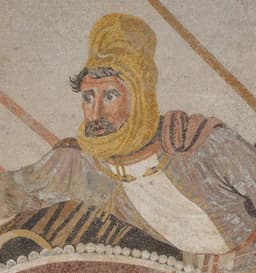
Darius III
Emperor · Ancient
40.8Total

Napoleon Bonaparte
General · Modern
70.9Total
Basic Information
Born
-380
1769
Died
-330
1821
Era
Ancient
Modern
Nationality
Persia
France
Occupation
Emperor
General
Civilization
Middle Eastern
Western
Score Comparison
Military (10%)
50.0
94.0
Political (20%)
25.0
72.0
Influence (20%)
47.9
40.0
Legacy (20%)
43.3
80.0
Leadership (15%)
38.1
78.0
Strategy (15%)
35.7
90.0
TOTAL
40.8
70.9
Darius III — Complete Timeline
333 BC
Battle of IssusWar◆ Major
Darius III commanded the Persian army against Alexander the Great at Issus in Cilicia. Alexander's forces defeated the larger Persian army, and Darius fled the battlefield, leaving his family and baggage train to be captured.
Wars of AlexanderBattlePersian Empire
Impact: global
331 BC
Battle of GaugamelaWar
Darius III assembled a massive army from across the empire to confront Alexander near Arbela. Alexander's tactical brilliance led to a decisive Persian defeat, and Darius again fled the field, effectively ending Achaemenid resistance.
Wars of AlexanderBattlePersian Empire
Impact: global
330 BC
Loss of the Persian Capital PersepolisWar◆ Major
Alexander the Great captured and sacked Persepolis, the ceremonial capital of the Achaemenid Empire. The palace complex was burned, symbolizing the end of Persian imperial power and the transfer of hegemony to Macedonia.
Wars of AlexanderSackPersepolis
Impact: globaldestructive
Flight and Death of Darius IIIPolitical Action◆ Major
After Gaugamela, Darius fled eastward through Media and Parthia. He was deposed and imprisoned by his own satrap Bessus, then murdered by Bessus's followers near Hecatompylos. Alexander later gave Darius a royal burial at Persepolis.
DeathSuccessionAchaemenid Empire
Impact: globaltragic
Napoleon Bonaparte — Complete Timeline
1799 AD
Coup of 18 BrumaireOther◆ Major
Napoleon Bonaparte, with support from his brother Lucien and key political figures, overthrew the Directory in a bloodless coup. He established the Consulate with himself as First Consul, effectively becoming the ruler of France. This event ended the French Revolution's most unstable period.
French RevolutionCoupRise to Power
Impact: regional
1804 AD
Promulgation of the Napoleonic CodeOther◆ Major
Napoleon enacted the Civil Code of the French, known as the Napoleonic Code, a comprehensive set of laws that replaced the fragmented feudal legal systems. The code established legal equality, protected property rights, and secularized law. It became the basis for legal systems in many European and world countries.
Legal ReformNapoleonic CodeCivil Law
Impact: globalconstructive
1805 AD
Battle of AusterlitzWar◆ Major
Napoleon's Grande Arm
Napoleonic WarsBattleDecisive Victory
Impact: global
1812 AD
Invasion of RussiaWar◆ Major
Napoleon led the Grande Arm
Napoleonic WarsInvasionDisaster
Impact: globaldestructive
1815 AD
Battle of WaterlooWar◆ Major
Napoleon's French army was defeated by the combined forces of the Duke of Wellington's Anglo-Allied army and Gebhard Leberecht von Bl
Napoleonic WarsBattleFinal Defeat
Impact: globaldestructive
Expert Analysis
Origins
Darius III, born around 380 BCE, ascended the Persian throne in 336 BCE after the death of Artaxerxes III. He was a member of the Achaemenid dynasty, though not directly in line; he came to power through court intrigue. His early life was marked by service as a satrap (governor) of Armenia, demonstrating administrative competence but little military experience. Darius inherited an empire weakened by internal strife and the recent loss of Egypt.
Napoleon Bonaparte, born in 1769 on Corsica, was of minor Italian nobility. He studied at French military schools, graduating from the École Militaire in 1785. His early career was shaped by the French Revolution, which provided opportunities for rapid advancement. By 1793, he distinguished himself at the Siege of Toulon, earning promotion to brigadier general at age 24. His upbringing in a politically turbulent era forged his ambition and tactical acumen.
Rise to Power
Darius III rose after a series of palace assassinations. In 336 BCE, the vizier Bagoas poisoned King Artaxerxes III and later his son Arses, placing Darius on the throne. Darius soon eliminated Bagoas to secure his rule. His reign began with rebellions in Egypt and Babylon, which he managed to quell, but his main challenge emerged when Alexander the Great crossed into Asia in 334 BCE.
Napoleon's rise was meteoric. After Toulon, he suppressed a royalist uprising in 1795, gaining command of the Army of Italy in 1796. His Italian campaign (1796-1797) shattered Austrian power, making him a national hero. In 1799, he returned from Egypt and staged the Coup of 18 Brumaire, overthrowing the Directory and becoming First Consul. By 1804, he crowned himself Emperor of the French.
Leadership & Governance
Darius III ruled as an absolute monarch, relying on satraps and a centralized bureaucracy. He attempted to mobilize the vast resources of the Persian Empire but struggled with loyalty among his nobles. His leadership at battles like Issus (333 BCE) and Gaugamela (331 BCE) showed personal courage but tactical inflexibility. He deployed massive armies but failed to adapt to Alexander's combined arms tactics. Politically, he scored 42.7, reflecting his inability to maintain unity.
Napoleon centralized French government, reformed education, and established the Napoleonic Code (1804), which influenced legal systems worldwide. His leadership score of 80.0 reflects his ability to inspire troops and manage a vast empire. He appointed officials based on merit, implemented the Continental System to block British trade, and created the Bank of France. However, his authoritarian rule curtailed freedoms and restored slavery in colonies.
Triumph & Tragedy
Darius III's greatest success was temporarily uniting the Persian Empire against Alexander. At Issus, he fought personally, but his flight after the battle led to defeat. His greatest failure was losing the Persian capital Persepolis, which was sacked and burned in 330 BCE, symbolizing the end of Achaemenid power. He was betrayed and murdered by his own satrap Bessus in 330 BCE.
Napoleon's triumphs include the Battle of Austerlitz (1805), where he crushed the Austrian and Russian armies, and the Napoleonic Code. His tragedy was the Invasion of Russia (1812), where over 600,000 men died due to harsh winter and scorched-earth tactics. His final defeat at Waterloo (1815) ended his rule, leading to exile and death in 1821.
Character & Destiny
Darius III was described as a kind but indecisive ruler. He avoided direct confrontation when possible, which Alexander exploited. His reliance on mercenaries and satraps proved fatal. His character, scoring 38.4 in leadership, showed a tendency to panic under pressure, as seen at Gaugamela where he fled early.
Napoleon was a brilliant strategist (strategy score 93.0) and charismatic leader (military 94.0). He was ambitious, micromanaging, and increasingly overconfident. His arrogance led to the Peninsular War and Russian disaster. He refused to compromise, which ultimately isolated France.
Legacy
Darius III's legacy is overshadowed by Alexander. The Achaemenid Empire fell, but Persian administrative systems influenced later empires. He scored 57.7 in legacy, remembered mostly as the king who lost to Alexander. His tomb remains unknown.
Napoleon's legacy is immense: the Napoleonic Code, modern warfare concepts, and the spread of nationalism. He scored 78.0 in legacy. His reforms shaped modern Europe, and his military tactics are studied in war colleges. However, his wars caused millions of deaths.
Conclusion
Napoleon Bonaparte had greater impact. With a total score of 82.4 compared to Darius III's 47.9, Napoleon's military innovations, legal reforms, and influence on modern governance surpass Darius's brief reign. Darius was a product of a declining empire, while Napoleon reshaped an entire continent. Despite his ultimate defeat, Napoleon's reforms endured, whereas Darius III's empire vanished. The score gap of 34.5 points reflects this disparity.
Rankings
🥇
Napoleon BonaparteLeader
Mil: 94.0Pol: 72.0Inf: 40.0
70.9
🥈
Darius III
Mil: 50.0Pol: 25.0Inf: 47.9
40.8
+30.1 behind
How This Comparison Works
Algorithm
Each figure is scored on 6 dimensions (0—100 scale) based on structured historical data: Military (10%), Political (20%), Influence (20%), Legacy (20%), Leadership (15%), Strategy (15%). The weighted total produces the final ranking.
Data Sources
Scores are computed from structured sub-indicators in the database. Scale factors adjust for era (Ancient ×0.85, Modern ×1.0) and civilization size (Eastern ×1.05, Other ×0.80) to account for differences in population and military scale.
Maximum 3 Figures
Comparisons are limited to 2—3 figures to ensure readability and statistical meaningfulness.
Error Margins
±5 points per dimension — Sub-scores are derived from historical records with inherent uncertainty. Two figures within 5 points on a dimension should be considered roughly equivalent in that area.
Total Score Accuracy
±3 points overall — The weighted combination of 6 dimensions produces a total score with approximately ±3 points of uncertainty. Differences of less than 3 points are not statistically significant— the figures are effectively tied.
Known Limitations
- Historical records are incomplete and uneven across civilizations
- Figures from oral-tradition societies may be underrepresented
- Occupation labels can misclassify multi-role figures
- Scores measure capability and impact, not moral character
- Quantitative scoring is a comparison tool, not absolute truth
Capability Radar
Military (10%) — Battles & Warfare
Battles
15
95
Win Rate
10
90
Expansion
10
95
Political (20%) — Governance & Reform
Reform
10
95
Diplomacy
20
80
Economy
25
85
Influence (20%) — Cultural & Global Reach
Cultural
20
85
Global
25
90
Legacy (20%) — Historical Impact
Historical
40
95
Longevity
30
90
Leadership (15%) — Power & Stability
Tenure
30
85
Stability
15
70
Strategy (15%) — Tactics & Innovation
Strategy
15
95
Tactics
20
98
Reform
10
92
Similar Comparisons
Comments & Discussion
No comments yet. Be the first to share your thoughts!