Loading...
Darius I vs King Muyeol
Darius I leads by 20.8 pts · 2 figures compared
…
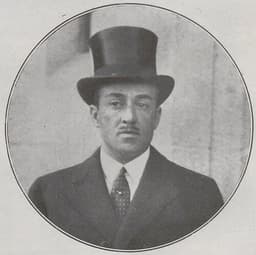
Darius I
Emperor · Ancient
74.8Total

King Muyeol
Emperor · Ancient
54.0Total
Basic Information
Born
-550
-604
Died
-486
—
Era
Ancient
Ancient
Nationality
Persia
Korea
Occupation
Emperor
Emperor
Civilization
Middle Eastern
Eastern
Score Comparison
Military (10%)
76.0
65.0
Political (20%)
75.0
68.0
Influence (20%)
88.0
54.1
Legacy (20%)
65.0
50.0
Leadership (15%)
72.0
40.0
Strategy (15%)
69.1
52.5
TOTAL
74.8
54.0
Darius I — Complete Timeline
522 BC
Suppression of revoltsWar◆ Major
Upon seizing the throne, Darius I suppressed widespread revolts across the empire, including in Babylon, Media, and Egypt. He recorded these victories on the Behistun Inscription, which also legitimized his rule.
RevoltEmpireBehistun Inscription
Impact: regionaldestructive
518 BC
Reorganization of the Persian EmpireReform
Darius I divided the Persian Empire into 20 provinces called satrapies, each governed by a satrap. He standardized coinage, weights, measures, and established a postal system, creating an efficient administrative structure.
AdministrationEmpireReform
Impact: globalconstructive
515 BC
Construction of PersepolisCultural◆ Major
Darius I began construction of Persepolis as the ceremonial capital of the Persian Empire. The city featured grand palaces and reliefs depicting tribute bearers from across the empire, symbolizing Achaemenid power.
ArchitectureCapitalPersia
Impact: regionalconstructive
500 BC
Construction of the Royal RoadOther◆ Major
Darius I built the Royal Road from Susa to Sardis, spanning 2,700 km. The road facilitated rapid communication and trade across the empire, with relay stations allowing messengers to travel in days.
InfrastructureRoadTrade
Impact: regionalconstructive
490 BC
Invasion of GreeceWar◆ Major
Darius I launched a punitive expedition against Greece, resulting in the Battle of Marathon. The Persian army was defeated by the Athenians, marking the first major Greek victory in the Greco-Persian Wars.
Greco-Persian WarsInvasionMarathon
Impact: global
King Muyeol — Complete Timeline
654 AD
Ascended to the Throne of SillaPolitical Action◆ Major
Muyeol became king of Silla, beginning a period of alliance with Tang China that would lead to the unification of the Korean Peninsula.
AccessionSillaKorea
Impact: regional
655 AD
Formed Alliance with Tang ChinaPolitical Action
Muyeol secured a military alliance with the Tang dynasty of China, agreeing to jointly conquer Baekje and Goguryeo. This alliance was crucial for Silla's unification efforts.
AllianceTangSilla
Impact: regionalconstructive
660 AD
Conquered BaekjeWar
Muyeol led Silla forces, in coordination with the Tang army, to conquer Baekje. The fall of Baekje was a major step toward the unification of the Korean Peninsula under Silla.
ConquestBaekjeUnification
Impact: regional
661 AD
Died Before Goguryeo's FallOther◆ Major
Muyeol died before the conquest of Goguryeo was completed. His son, Munmu, succeeded him and finished the unification process.
DeathSuccessionSilla
Impact: regional
Expert Analysis
Origins
Darius I was born around 550 BCE into the Achaemenid dynasty, though not directly in the line of succession. His father Hystaspes was a satrap of Parthia, and Darius was likely raised in the Persian court, receiving training in governance and warfare. The early Persian Empire, founded by Cyrus the Great, was still consolidating its vast territories. Darius's background as a member of the royal family but not the immediate heir shaped his ambitions.
King Muyeol, born Kim Chunchu in 604 CE, was a member of the Silla royal family in Korea. His father was a prince, but Muyeol's early life was marked by political turmoil. He spent years as a hostage in Goguryeo, which gave him firsthand experience of Silla's rivals. His education included Confucian classics and military strategy, preparing him for leadership. Muyeol's formative years were defined by the struggle for dominance among the Three Kingdoms of Korea: Silla, Baekje, and Goguryeo.
Rise to Power
Darius rose to power in 522 BCE after the death of Cambyses II. He claimed that Gaumata, a magus, had usurped the throne impersonating Cambyses's brother Bardiya. Darius, along with six other Persian nobles, assassinated Gaumata. Darius then seized the throne, sparking rebellions across the empire. He spent the next two years suppressing revolts in Babylon, Media, Elam, and other regions, as recorded in the Behistun Inscription. His military campaigns from 522 to 520 BCE secured his rule.
Muyeol's path to kingship was more diplomatic. He became king of Silla in 654 CE after the death of King Jindeok. Before ascending, he had already forged a crucial alliance with Tang China, traveling to the Tang court in 648 CE to negotiate military support. This alliance was a turning point, as Silla had previously been the weakest of the Three Kingdoms. Muyeol's rise was facilitated by his political acumen and the strategic necessity of countering Baekje and Goguryeo.
Leadership & Governance
Darius I reorganized the Persian Empire into 20 satrapies, each governed by a satrap, with standardized coinage, weights, and measures. He built the Royal Road from Susa to Sardis, spanning 2,700 km, with relay stations for rapid communication. His administrative reforms created a centralized bureaucracy that allowed efficient tax collection and governance. Darius also began construction of Persepolis as a ceremonial capital, symbolizing Persian power. His leadership style was autocratic but effective, scoring 72.0 in leadership.
King Muyeol's governance was focused on military alliance and conquest. He maintained the Silla monarchy's authority but relied heavily on Tang support. His political score of 68.0 reflects his skill in diplomacy, but his leadership score of 40.0 indicates less personal command. Muyeol's reforms were limited; he prioritized unification over domestic policies. He did not implement lasting administrative changes like Darius, but he successfully integrated Silla's military with Tang forces.
Triumph & Tragedy
Darius's greatest triumph was the consolidation and expansion of the Persian Empire. He extended Persian control into the Indus Valley, Thrace, and parts of Greece. The construction of Persepolis and the Royal Road were monumental achievements. However, his invasion of Greece ended in defeat at the Battle of Marathon in 490 BCE, where the Athenian hoplites routed the Persian army. This failure marked the beginning of Persian-Greek conflicts. Darius also faced rebellions in Egypt and Babylon, which he suppressed but which drained resources.
Muyeol's triumph was the conquest of Baekje in 660 CE, achieved with Tang forces. This was a major step toward Korean unification. However, he died in 661 CE before Goguryeo fell, leaving his son Munmu to complete the unification. His tragedy was his early death, which prevented him from seeing the full unification. Additionally, the alliance with Tang later led to conflict, as Tang attempted to dominate Silla after the conquests, though Muyeol did not live to see this.
Character & Destiny
Darius was ambitious, methodical, and ruthless. His detailed Behistun Inscription shows a king who carefully documented his achievements. He was a builder and organizer, but his pride led him to invade Greece, a miscalculation. His character shaped his destiny as an empire builder, but his overreach at Marathon tarnished his legacy. Historians note his administrative genius but also his authoritarian tendencies.
Muyeol was pragmatic and diplomatic, willing to ally with a foreign power to achieve unification. His experience as a hostage taught him patience and strategy. His early death cut short his reign, but his alliance set the stage for Silla's dominance. His character was less flamboyant than Darius's, but his focus on a single goal—unification—defined his destiny.
Legacy
Darius I's legacy is immense. His administrative system influenced later empires, including the Roman and Byzantine. The Royal Road facilitated trade and communication, and Persepolis remained a symbol of Persian culture. His invasion of Greece sparked the Greco-Persian Wars, which shaped Western history. His influence score of 88.0 reflects his lasting impact. However, his legacy score of 65.0 is tempered by the eventual fall of the Persian Empire.
King Muyeol's legacy is primarily as the architect of Korean unification. His son Munmu completed the work, but Muyeol's alliance with Tang was crucial. The Unified Silla period (668–935 CE) that followed laid the foundation for Korean identity. His influence score of 54.1 is lower due to his short reign and limited direct impact. Nevertheless, he is remembered as a key figure in Korean history, albeit overshadowed by his son.
Conclusion
Darius I had a greater impact on world history than King Muyeol. With a total score of 74.8 compared to Muyeol's 54.0, Darius's administrative reforms, construction projects, and role in the Greco-Persian Wars shaped the development of Western Asia and Europe. Muyeol's unification of Korea was significant regionally, but its influence was confined to the Korean Peninsula. Darius's legacy is global, while Muyeol's is national. The data supports that Darius I is the more consequential figure.
Rankings
🥇
Darius ILeader
Mil: 76.0Pol: 75.0Inf: 88.0
74.8
🥈
King Muyeol
Mil: 65.0Pol: 68.0Inf: 54.1
54.0
+20.8 behind
How This Comparison Works
Algorithm
Each figure is scored on 6 dimensions (0—100 scale) based on structured historical data: Military (10%), Political (20%), Influence (20%), Legacy (20%), Leadership (15%), Strategy (15%). The weighted total produces the final ranking.
Data Sources
Scores are computed from structured sub-indicators in the database. Scale factors adjust for era (Ancient ×0.85, Modern ×1.0) and civilization size (Eastern ×1.05, Other ×0.80) to account for differences in population and military scale.
Maximum 3 Figures
Comparisons are limited to 2—3 figures to ensure readability and statistical meaningfulness.
Error Margins
±5 points per dimension — Sub-scores are derived from historical records with inherent uncertainty. Two figures within 5 points on a dimension should be considered roughly equivalent in that area.
Total Score Accuracy
±3 points overall — The weighted combination of 6 dimensions produces a total score with approximately ±3 points of uncertainty. Differences of less than 3 points are not statistically significant— the figures are effectively tied.
Known Limitations
- Historical records are incomplete and uneven across civilizations
- Figures from oral-tradition societies may be underrepresented
- Occupation labels can misclassify multi-role figures
- Scores measure capability and impact, not moral character
- Quantitative scoring is a comparison tool, not absolute truth
Capability Radar
Military (10%) — Battles & Warfare
Battles
75
55
Win Rate
70
60
Expansion
85
70
Political (20%) — Governance & Reform
Reform
95
55
Diplomacy
85
75
Economy
90
50
Influence (20%) — Cultural & Global Reach
Cultural
80
45
Global
85
40
Legacy (20%) — Historical Impact
Historical
85
60
Longevity
80
50
Leadership (15%) — Power & Stability
Tenure
90
60
Stability
80
55
Strategy (15%) — Tactics & Innovation
Strategy
80
65
Tactics
65
50
Reform
85
40
Similar Comparisons
Comments & Discussion
No comments yet. Be the first to share your thoughts!