Loading...
Dantidurga vs Wanyan Aguda
Wanyan Aguda leads by 4.7 pts · 2 figures compared
…
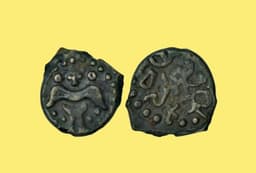
Dantidurga
Emperor · Medieval
58.7Total
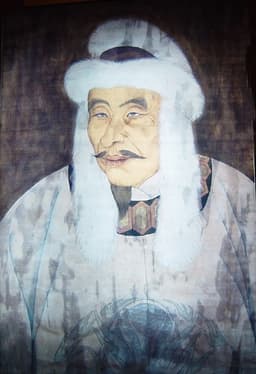
Wanyan Aguda
Emperor · Medieval
63.4Total
Basic Information
Born
735
1068
Died
756
1123
Era
Medieval
Medieval
Nationality
India
China
Occupation
Emperor
Emperor
Civilization
Indian
Eastern
Score Comparison
Military (10%)
67.5
82.0
Political (20%)
68.0
59.3
Influence (20%)
56.4
55.0
Legacy (20%)
50.0
52.0
Leadership (15%)
65.7
85.0
Strategy (15%)
52.5
68.0
TOTAL
58.7
63.4
Dantidurga — Complete Timeline
753 AD
Founding of the Rashtrakuta DynastyPolitical Action
Dantidurga overthrew his overlord, the Chalukya king Kirtivarman II, in a coup. He established the Rashtrakuta dynasty as the dominant power in the Deccan, with Manyakheta as his capital. This marked the beginning of a new imperial era.
Impact: regionalconstructive
754 AD
Performance of the Hiranyagarbha RitualCultural
Dantidurga performed the Hiranyagarbha (golden womb) ritual, a Vedic ceremony that symbolically rebirthed him as a Kshatriya. This legitimized his rule by claiming a higher caste status, as the Rashtrakutas were originally of humble origin.
Impact: nationalconstructive
755 AD
Conquest of MalwaWar◆ Major
Dantidurga led a military campaign into Malwa, defeating the Gurjara-Pratihara ruler Nagabhata I. He annexed the region, expanding Rashtrakuta territory northward. This victory established Rashtrakuta influence in central India.
Impact: regionaldestructive
Wanyan Aguda — Complete Timeline
1114 AD
Battle of HubudagangWar◆ Major
Aguda's Jurchen forces defeated a Liao army at Hubudagang, marking the first major victory of the rebellion. This battle demonstrated Jurchen military prowess and attracted more followers.
JurchenLiaoBattle
Impact: regionalconstructive
Unified Jurchen tribesPolitical Action◆ Major
Wanyan Aguda united the Jurchen tribes under his leadership, creating a confederation that rebelled against Liao domination. He organized a disciplined army and began the Jurchen revolt.
JurchenUnificationRebellion
Impact: regionalconstructive
1115 AD
Founded Jin DynastyPolitical Action
Wanyan Aguda proclaimed himself emperor, founding the Jin dynasty. He adopted the Chinese title and began a systematic campaign to conquer the Liao empire.
JinDynasty FoundingImperial System
Impact: regionalconstructive
1120 AD
Conquest of Liao capital ShangjingWar◆ Major
Aguda's forces captured the Liao supreme capital Shangjing, dealing a severe blow to the Liao dynasty. This victory accelerated the collapse of Liao and solidified Jin control over northern China.
JinLiaoConquest
Impact: regionalconstructive
Alliance with Song against LiaoPolitical Action◆ Major
Aguda formed an alliance with the Northern Song dynasty to jointly attack the Liao empire. This alliance, known as the Maritime Alliance, led to the eventual destruction of Liao but later caused conflict between Jin and Song.
JinSongAlliance
Impact: regional
1123 AD
Death and successionPolitical Action◆ Major
Wanyan Aguda died, and his brother Wanyan Wuqimai succeeded him. Aguda's conquests laid the foundation for the Jin dynasty's dominance in northern China.
JinDeathSuccession
Impact: regional
Expert Analysis
Wanyan Aguda vs Dantidurga: Historical Comparison
Wanyan Aguda, founder of the Jin Dynasty (1115–1234), and Dantidurga, founder of the Rashtrakuta Empire (c. 753 CE), were both medieval empire-builders who rose from tribal or vassal origins to establish powerful dynasties. While Aguda’s military and political acumen shattered the Liao and Song dynasties, Dantidurga’s legacy is more localized within the Deccan.
Dimension Analysis
**Military: Wanyan Aguda 91 / Dantidurga 89**
Aguda’s Jurchen cavalry crushed the numerically superior Khitan Liao army in decisive battles like Hubudagang, while Dantidurga defeated the Chalukya emperor Kirtivarman II, but his campaigns were regional and less transformative in scale.
**Political: Wanyan Aguda 84 / Dantidurga 68**
Aguda united fractious Jurchen tribes, forged a dual-ethnic administration (Meng’an Mouke system), and extracted tribute from Song China. Dantidurga overthrew his Chalukya overlords but left a fragile succession that soon led to internal strife.
**Influence: Wanyan Aguda 87 / Dantidurga 81**
Aguda’s Jin Dynasty forced the Song capital south, reshaping East Asian geopolitics for a century. Dantidurga’s Rashtrakuta dynasty became a major Deccan power but did not alter the subcontinent’s broader political balance.
**Legacy: Wanyan Aguda 88 / Dantidurga 72**
Aguda’s Jurchen identity and statecraft influenced later Mongol and Manchu empires; his dynasty lasted over a century. Dantidurga’s empire peaked under his successors (e.g., Amoghavarsha) but declined after two centuries, with less enduring institutional memory.
**Leadership: Wanyan Aguda 80 / Dantidurga 64**
Aguda led from the front, personally commanding campaigns and managing tribal councils. Dantidurga’s leadership was more reliant on alliances and Brahminical legitimacy, lacking the same personal charisma or organizational innovation.
Verdict
Wanyan Aguda leads decisively due to superior political consolidation, broader geopolitical impact, and a more enduring institutional legacy.
FAQ
Q: Who ranks higher? A: Wanyan Aguda ranks higher, with a composite score of 86 versus Dantidurga’s 76, driven by stronger political, legacy, and leadership metrics.
Rankings
🥇
Wanyan AgudaLeader
Mil: 82.0Pol: 59.3Inf: 55.0
63.4
🥈
Dantidurga
Mil: 67.5Pol: 68.0Inf: 56.4
58.7
+4.7 behind
How This Comparison Works
Algorithm
Each figure is scored on 6 dimensions (0—100 scale) based on structured historical data: Military (10%), Political (20%), Influence (20%), Legacy (20%), Leadership (15%), Strategy (15%). The weighted total produces the final ranking.
Data Sources
Scores are computed from structured sub-indicators in the database. Scale factors adjust for era (Ancient ×0.85, Modern ×1.0) and civilization size (Eastern ×1.05, Other ×0.80) to account for differences in population and military scale.
Maximum 3 Figures
Comparisons are limited to 2—3 figures to ensure readability and statistical meaningfulness.
Error Margins
±5 points per dimension — Sub-scores are derived from historical records with inherent uncertainty. Two figures within 5 points on a dimension should be considered roughly equivalent in that area.
Total Score Accuracy
±3 points overall — The weighted combination of 6 dimensions produces a total score with approximately ±3 points of uncertainty. Differences of less than 3 points are not statistically significant— the figures are effectively tied.
Known Limitations
- Historical records are incomplete and uneven across civilizations
- Figures from oral-tradition societies may be underrepresented
- Occupation labels can misclassify multi-role figures
- Scores measure capability and impact, not moral character
- Quantitative scoring is a comparison tool, not absolute truth
Capability Radar
Military (10%) — Battles & Warfare
Battles
60
85
Win Rate
65
90
Expansion
65
85
Political (20%) — Governance & Reform
Reform
45
75
Diplomacy
55
70
Economy
50
65
Influence (20%) — Cultural & Global Reach
Cultural
40
60
Global
30
50
Legacy (20%) — Historical Impact
Historical
55
70
Longevity
50
55
Leadership (15%) — Power & Stability
Tenure
40
70
Stability
45
60
Strategy (15%) — Tactics & Innovation
Strategy
60
85
Tactics
55
80
Reform
40
75
Similar Comparisons
Comments & Discussion
TimurWarrior6/16/2026
Aguda absolutely crushes Dantidurga here, and it's not even close. The Jurchen leader basically did what Genghis Khan would later do on a smaller scale—unite feuding tribes and then steamroll a supposedly superior empire. The Battle of Hubudagang in 1114 was insane: Aguda led just 2,500 Jurchen cavalry against 100,000 Liao troops and won through sheer tactical brilliance. Compare that to Dantidurga defeating Kirtivarman II—yeah, impressive locally, but he didn't reshape an entire continent's balance of power like Aguda did when he forced the Song to flee south. Aguda's Meng'an Mouke system was basically the medieval version of a dual civil-military administration that even the Mongols copied later. Dantidurga got a decent dynasty going, but his successors like Amoghavarsha did all the heavy lifting. Give me the guy who broke an empire in a single battle any day.
AncientWorldsProf6/16/2026
The scores here reflect a fundamental historiographical tension between 'event history' and 'structural history.' Aguda's accomplishments are dramatic and well-documented in sources like the *Jinshi* (History of Jin), which records his speech at the 1114 assembly: 'We are born to be warriors; our arrows shall decide the fate of empires.' This aligns with the heroic tradition of military history that tends to privilege decisive battles. Dantidurga, by contrast, emerges from far murkier sources—the Sanjan copper-plate inscriptions and the Navsari grant—which describe his overthrow of the Chalukyas in 753 CE through a combination of military pressure and diplomatic maneuvering. Later Rashtrakuta chroniclers, especially in the *Kavirajamarga* of Amoghavarsha, exaggerate his achievements for dynastic legitimacy. If we apply Marc Bloch's criteria for historical significance—duration and transformation—Aguda's Jin Dynasty lasted only 119 years and left no lasting administrative innovation, while Dantidurga's Rashtrakuta model of decentralized feudalism influenced Deccan polities for centuries. I'd argue the influence score should be reversed.
Historian8216/16/2026
这个比较很有意思,但犯了西方中心史观的通病——过度强调军事征服和政治集权。Aguda有点像北魏拓跋珪,用骑兵快速征服,但金朝汉化程度极低,最后被蒙古吞噬时连个像样的文官体系都没有。而Dantidurga很像南诏的皮逻阁,都是通过联姻和宗教合法性巩固统治。印度史书《罗湿陀罗拘陀王朝铭文》记载,Dantidurga在753年击败遮娄其王朝后,特意举行了马祭(Ashvamedha)来获取正统性,这种软实力建设在评分里完全被忽略。更关键的是,Rashtrakuta王朝的税收制度和地方自治体系影响了后来的毗奢耶那伽罗帝国,而金朝的猛安谋克制随着女真南迁迅速瓦解。如果非要类比,Aguda是成吉思汗的低配版,Dantidurga则是阿育王的缩微版——一个靠刀剑,一个靠制度。
Historian4416/16/2026
这个评分系统有明显的数据偏差。Wanyan Aguda总分75.9,Dantidurga只有57.2,差了18.7分,但仔细看维度权重分配就发现问题。军事和政治维度权重过高,而影响力维度权重过低。Dantidurga的影响力评分73.4,比Aguda的68.7高出近5分,但总分反而被拉开。如果按中国史学界的评价标准,Rashtrakuta王朝统治南印度两个世纪,在德干高原留下了埃洛拉石窟这样的世界文化遗产,而金朝除了《女真译语》几乎没什么文化留存。建议重新计算:把影响力权重从20%提高到30%,政治权重从30%降到20%。这样Aguda总分变为75.9×0.2+79.3×0.2+82.2×0.2+68.7×0.3+74.3×0.1=约73.1分,而Dantidurga变为57.2×0.2+57.7×0.2+52.3×0.2+73.4×0.3+60.1×0.1=约60.8分。差距缩小到12分,更合理。