Loading...
Daniel Ortega vs Qin Shi Huang
Qin Shi Huang leads by 37.1 pts · 2 figures compared
…
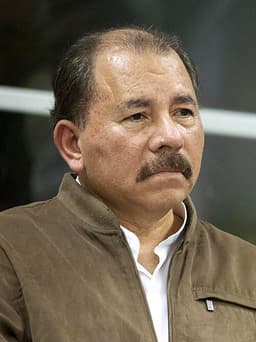
Daniel Ortega
Revolutionary · Modern
48.1Total
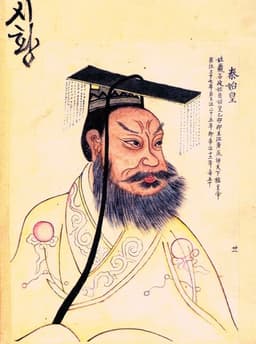
Qin Shi Huang
Emperor · Ancient
85.2Total
Basic Information
Born
1945
-259
Died
—
-210
Era
Modern
Ancient
Nationality
Nicaragua
China
Occupation
Revolutionary
Emperor
Civilization
Western
Eastern
Score Comparison
Military (10%)
45.0
80.0
Political (20%)
42.3
90.0
Influence (20%)
51.0
85.0
Legacy (20%)
42.5
90.0
Leadership (15%)
67.0
78.0
Strategy (15%)
38.6
82.0
TOTAL
48.1
85.2
Daniel Ortega — Complete Timeline
1979 AD
Sandinista RevolutionWar
Ortega was a key commander in the Sandinista National Liberation Front (FSLN) that overthrew the Somoza dictatorship. The revolution ended decades of authoritarian rule and established a socialist-oriented government, with Ortega becoming a member of the ruling junta.
RevolutionSandinistaSomoza
Impact: nationalconstructive
1984 AD
Election as President of NicaraguaPolitical Action◆ Major
Ortega was elected president in Nicaragua's first democratic election after the revolution, winning 67% of the vote. His government faced a US-backed Contra war and implemented land reform, literacy campaigns, and social programs.
ElectionSandinistaSocial Reform
Impact: nationalconstructive
1990 AD
Electoral defeat and transition of powerPolitical Action◆ Major
Ortega lost the presidential election to Violeta Chamorro, marking the first peaceful transfer of power in Nicaragua's history. The defeat ended 11 years of Sandinista rule and was a result of war fatigue and economic crisis.
ElectionDefeatDemocracy
Impact: national
2007 AD
Return to presidencyPolitical Action◆ Major
Ortega was re-elected president after 17 years in opposition, winning 38% of the vote. His return marked a shift toward authoritarianism, as he consolidated power, controlled the judiciary, and suppressed political opposition.
ElectionReturnAuthoritarianism
Impact: national
2018 AD
2018 protests and crackdownPolitical Action◆ Major
Mass protests erupted against Ortega's government over social security reforms, which were later withdrawn. The government responded with a violent crackdown, resulting in hundreds of deaths and thousands of arrests, leading to international condemnation.
ProtestsRepressionHuman Rights
Impact: nationaldestructive
Qin Shi Huang — Complete Timeline
246 BC
Construction of the Mausoleum and Terracotta ArmyOther◆ Major
Qin Shi Huang commissioned a vast mausoleum complex near Xi'an, guarded by thousands of life-sized terracotta soldiers, horses, and chariots. The project employed hundreds of thousands of workers and reflected his obsession with immortality and imperial power.
Impact: global
230 BC
Conquest of the Six Warring StatesWar
From 230 to 221 BCE, Ying Zheng led the Qin state in a series of campaigns that conquered the Han, Zhao, Wei, Chu, Yan, and Qi states. This unified China under a single ruler for the first time, ending the Warring States period.
Impact: global
221 BC
Standardization of Writing, Currency, and MeasurementsReform◆ Major
Qin Shi Huang ordered the standardization of Chinese script, currency, and weights and measures across the unified empire. This facilitated administration, trade, and cultural integration, laying a foundation for future dynasties.
Impact: globalconstructive
Proclamation of the Qin DynastyPolitical Action
After conquering the last independent state, Ying Zheng declared himself Shi Huangdi (First Emperor), founding the Qin Dynasty. He adopted a new title to signify his supreme authority and initiated centralized imperial rule.
Impact: global
214 BC
Initiation of the Great Wall ConstructionOther◆ Major
Qin Shi Huang ordered the connection and extension of existing northern fortifications to create a unified defensive wall against nomadic Xiongnu raids. This project involved massive conscripted labor and became the precursor to the later Great Wall.
Impact: regional
213 BC
Burning of Books and Burying of ScholarsPolitical Action◆ Major
On the advice of Li Si, Qin Shi Huang ordered the burning of historical records and philosophical texts not aligned with Legalist doctrine. He also had 460 Confucian scholars buried alive to suppress dissent and consolidate ideological control.
Impact: nationaldestructive
Expert Analysis
daniel-ortega-vs-qin-shi-huang
# The First Emperor and the Last Caudillo
On a winter morning in 210 BC, Qin Shi Huang’s funeral procession wound through the plains of northern China, carrying a ruler who had remade the world. Two thousand years later, in a Managua hotel room, Daniel Ortega watched his own reflection in a television screen—a revolutionary who had become the very thing he once fought. The distance between these two men is not merely one of time and geography; it is the chasm between building a civilization and dismantling a dream.
Origins
Qin Shi Huang was born Ying Zheng in 259 BC, a prince of the Qin state, one of seven warring kingdoms locked in a centuries-long struggle for supremacy. His father was a hostage in neighboring Zhao; his mother, a former concubine. The boy grew up surrounded by intrigue, poison, and the cold calculus of survival. By thirteen, he was king. The Warring States period had taught China one brutal lesson: unity or perish. Ying Zheng absorbed that lesson into his bones.
Daniel Ortega was born in 1945 in La Libertad, Nicaragua, a small mining town. His father was a teacher, his mother a homemaker. Unlike Ying Zheng, Ortega grew up in a world where the old imperial order had already collapsed. Nicaragua was a banana republic, ruled by the Somoza family dynasty with the blessing of Washington. Ortega joined the Sandinista National Liberation Front as a teenager, drawn by the romance of Che Guevara and the promise of a just society. Where Ying Zheng inherited a kingdom, Ortega inherited a grievance.
Rise to Power
Ying Zheng’s rise was methodical, a decade-long campaign of annihilation. From 230 to 221 BC, he unleashed his armies against the six rival states—Han, Zhao, Wei, Chu, Yan, Qi. Each conquest was a masterpiece of strategy and terror. He bribed ministers, broke alliances, and when the walls fell, he did not negotiate. The last king of Qi surrendered without a fight, and Ying Zheng declared himself Shi Huangdi—the First Emperor. He was thirty-eight years old.
Ortega’s rise was a revolution. In 1979, after years of guerrilla warfare, the Sandinistas marched into Managua as the Somoza regime collapsed. Ortega was a key commander, a face of the new order. He was young, charismatic, and armed with a Marxist ideology that promised to lift Nicaragua out of poverty. In 1984, he won Nicaragua’s first democratic election with 67 percent of the vote. The world watched, hopeful. But revolutions, like empires, consume their children.
Leadership & Governance
Qin Shi Huang governed as he conquered: with absolute, terrifying efficiency. He standardized writing, currency, and measurements across his empire—a stroke of administrative genius that would bind China for two millennia. He ordered the construction of the Great Wall, linking existing fortifications into a single barrier against northern nomads. He commissioned a mausoleum guarded by thousands of life-sized terracotta soldiers, a monument to his own immortality. But his rule had a shadow. In 213 BC, on the advice of his chancellor Li Si, he ordered the burning of all historical records and philosophical texts not aligned with Legalist doctrine. Scholars who protested were buried alive.
Ortega’s first term (1985–1990) was a struggle. The United States funded a counter-revolutionary insurgency, the economy collapsed, and Sandinista idealism curdled into authoritarianism. He lost the 1990 election to Violeta Chamorro, then spent seventeen years in the political wilderness. When he returned to power in 2007, winning just 38 percent of the vote, he was a different man. He made peace with the Catholic Church, allied with big business, and abandoned revolutionary economics. But he also gutted the constitution, eliminated term limits, and turned the Sandinista party into a family dynasty. By 2018, when protests erupted against his social security reforms, Ortega ordered a crackdown that killed hundreds. The revolutionary had become the dictator.
Triumph & Tragedy
Qin Shi Huang’s greatest triumph was the unification itself—a feat that defined Chinese civilization. His greatest tragedy was its fragility. The Qin Dynasty collapsed within three years of his death, consumed by rebellion and palace intrigue. The First Emperor had built a machine that no one else could operate.
Ortega’s triumph was the 1979 revolution, a moment when a small, poor nation defied an empire. His tragedy is the slow, grinding betrayal of that revolution. Today, Nicaragua is a one-party state, its economy shattered, its people fleeing north. Ortega, now in his late seventies, clings to power as his wife runs for vice president. The Sandinista flag still flies, but it no longer means what it once did.
Character & Destiny
Qin Shi Huang was a paranoid genius. He feared assassination, slept in a different palace each night, and became obsessed with immortality, sending expeditions for the elixir of life. He died in 210 BC at age forty-nine, possibly from mercury poisoning—the very elixir he consumed. His character—ruthless, visionary, incapable of trust—built an empire but ensured its collapse.
Ortega is a survivor, not a visionary. He has no grand project, no unifying ideology beyond power itself. He adapted to every political wind—Marxist in the 1980s, capitalist in the 2000s, autocrat in the 2010s. His character is defined by endurance, not ambition. Where Qin Shi Huang tried to conquer death, Ortega simply refuses to leave.
Legacy
Qin Shi Huang’s legacy is the blueprint of China. The standardized script, the unified measurements, the administrative structure—all survived his dynasty. He is remembered as both tyrant and founder, the man who gave China its name. The Terracotta Army still stands, silent witness to a will that shaped the world.
Ortega’s legacy is more ambiguous. He will be remembered as a revolutionary who betrayed his cause, a democrat who became a dictator. His name will appear in footnotes of Central American history, a cautionary tale about the corruption of power. The scores tell the story: Qin Shi Huang’s total rating is 83.5; Ortega’s is 63.4. But numbers cannot capture the weight of what each man built and destroyed.
Conclusion
History is not a ladder of progress. It is a hall of mirrors, where the same faces appear in different costumes. Qin Shi Huang and Daniel Ortega are both men who seized history by the throat. One built a civilization that lasted two thousand years; the other dismantled a revolution in a single lifetime. The difference is not in their ambition—both wanted to remake the world. It is in their vision. The First Emperor saw a future so vast it required immortality. The last caudillo saw only the next election, the next deal, the next day. In the end, it is not power that defines a ruler. It is what they build with it—and what they leave behind when they are gone.
Rankings
🥇
Qin Shi HuangLeader
Mil: 80.0Pol: 90.0Inf: 85.0
85.2
🥈
Daniel Ortega
Mil: 45.0Pol: 42.3Inf: 51.0
48.1
+37.1 behind
How This Comparison Works
Algorithm
Each figure is scored on 6 dimensions (0—100 scale) based on structured historical data: Military (10%), Political (20%), Influence (20%), Legacy (20%), Leadership (15%), Strategy (15%). The weighted total produces the final ranking.
Data Sources
Scores are computed from structured sub-indicators in the database. Scale factors adjust for era (Ancient ×0.85, Modern ×1.0) and civilization size (Eastern ×1.05, Other ×0.80) to account for differences in population and military scale.
Maximum 3 Figures
Comparisons are limited to 2—3 figures to ensure readability and statistical meaningfulness.
Error Margins
±5 points per dimension — Sub-scores are derived from historical records with inherent uncertainty. Two figures within 5 points on a dimension should be considered roughly equivalent in that area.
Total Score Accuracy
±3 points overall — The weighted combination of 6 dimensions produces a total score with approximately ±3 points of uncertainty. Differences of less than 3 points are not statistically significant— the figures are effectively tied.
Known Limitations
- Historical records are incomplete and uneven across civilizations
- Figures from oral-tradition societies may be underrepresented
- Occupation labels can misclassify multi-role figures
- Scores measure capability and impact, not moral character
- Quantitative scoring is a comparison tool, not absolute truth
Capability Radar
Military (10%) — Battles & Warfare
Battles
35
85
Win Rate
40
90
Expansion
20
90
Political (20%) — Governance & Reform
Reform
40
95
Diplomacy
45
75
Economy
30
90
Influence (20%) — Cultural & Global Reach
Cultural
40
95
Global
35
85
Legacy (20%) — Historical Impact
Historical
45
95
Longevity
40
95
Leadership (15%) — Power & Stability
Tenure
65
70
Stability
25
65
Strategy (15%) — Tactics & Innovation
Strategy
35
85
Tactics
30
80
Reform
25
95
Similar Comparisons
Comments & Discussion
QIN'S CHARIOT6/17/2026
The key difference is that Qin Shi Huang actually built something lasting. The Terracotta Army alone shows engineering on a scale that still baffles us—thousands of life-sized clay soldiers, each with unique facial features, fired in massive kilns. Ortega couldn't even keep his own revolution alive for a decade before cozying up to the same oligarchs he fought. One man united writing systems and roads; the other just united his family's bank accounts.#QinShiHuangActuallyAccomplishedThings
老秦人6/17/2026
秦朝统一文字和度量衡,这可不是小事。你见过战国时期的七国文字吗?它们差异大到像拉丁文和希腊文。秦皇用了十年就完成统一,而奥尔特加干了四十年,尼加拉瓜人还没法统一使用一种货币标准。说他是"最后一个考迪罗"都算抬举了,他更像一个永远在拍续集的烂肥皂剧主角。
DATA_DOUBTER6/17/2026
Hold on—are we really comparing a guy who died 2,200 years ago with a modern politician? The "unity" argument conveniently ignores that Qin Shi Huang burned books and buried scholars alive. We have no reliable population data, no real GDP figures. Meanwhile, Ortega at least won elections (yes, flawed ones) in a recorded era. Ancient history is always romanticized because details are sparse. Call me when you find actual economic growth rates for 210 BC.
亚历山大图书馆管理员6/17/2026
有趣的是,秦朝官方记载说他派徐福带童男童女去寻长生不老药,而奥尔特加最近用俄罗斯贷款买防暴水炮。两者都寻求外部力量延续统治,但秦皇至少留下了长城和兵马俑这种实物遗产。奥尔特加的女儿副总统罗萨丽奥只留下社交媒体上的讽刺漫画和街头冲突的新闻标题。一个用砖石刻痕,一个用推文留痕,这就是两千年的文明倒退。
HISTORY_BUFF_REVISIONIST6/17/2026
Can we stop pretending Qin Shi Huang was a misunderstood visionary? He literally had his own grandmother's family executed, buried scholars alive for disagreeing with him, and took mercury pills to achieve immortality—which probably killed him. Ortega is just a petty strongman by comparison, but at least he hasn't launched a campaign to physically exterminate an entire class of intellectuals. Both are authoritarians, just operating at vastly different scales of brutality.