Loading...
Daniel Ortega vs Julius Caesar
Julius Caesar leads by 34.7 pts · 2 figures compared
…
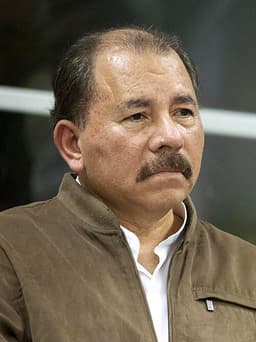
Daniel Ortega
Revolutionary · Modern
48.1Total

Julius Caesar
General · Ancient
82.8Total
Basic Information
Born
1945
-100
Died
—
-44
Era
Modern
Ancient
Nationality
Nicaragua
Roman Republic
Occupation
Revolutionary
General
Civilization
Western
Western
Score Comparison
Military (10%)
45.0
88.0
Political (20%)
42.3
78.0
Influence (20%)
51.0
85.0
Legacy (20%)
42.5
82.0
Leadership (15%)
67.0
80.0
Strategy (15%)
38.6
85.0
TOTAL
48.1
82.8
Daniel Ortega — Complete Timeline
1979 AD
Sandinista RevolutionWar
Ortega was a key commander in the Sandinista National Liberation Front (FSLN) that overthrew the Somoza dictatorship. The revolution ended decades of authoritarian rule and established a socialist-oriented government, with Ortega becoming a member of the ruling junta.
RevolutionSandinistaSomoza
Impact: nationalconstructive
1984 AD
Election as President of NicaraguaPolitical Action◆ Major
Ortega was elected president in Nicaragua's first democratic election after the revolution, winning 67% of the vote. His government faced a US-backed Contra war and implemented land reform, literacy campaigns, and social programs.
ElectionSandinistaSocial Reform
Impact: nationalconstructive
1990 AD
Electoral defeat and transition of powerPolitical Action◆ Major
Ortega lost the presidential election to Violeta Chamorro, marking the first peaceful transfer of power in Nicaragua's history. The defeat ended 11 years of Sandinista rule and was a result of war fatigue and economic crisis.
ElectionDefeatDemocracy
Impact: national
2007 AD
Return to presidencyPolitical Action◆ Major
Ortega was re-elected president after 17 years in opposition, winning 38% of the vote. His return marked a shift toward authoritarianism, as he consolidated power, controlled the judiciary, and suppressed political opposition.
ElectionReturnAuthoritarianism
Impact: national
2018 AD
2018 protests and crackdownPolitical Action◆ Major
Mass protests erupted against Ortega's government over social security reforms, which were later withdrawn. The government responded with a violent crackdown, resulting in hundreds of deaths and thousands of arrests, leading to international condemnation.
ProtestsRepressionHuman Rights
Impact: nationaldestructive
Julius Caesar — Complete Timeline
58 BC
Gallic WarsWar◆ Major
Caesar, as proconsul of Gaul, launched a series of campaigns that conquered all of Gaul (modern France, Belgium, and parts of Switzerland). He fought numerous battles, including against the Helvetii, the Belgae, and the Gallic chieftain Vercingetorix. The wars brought immense wealth and a loyal army to Caesar.
Gallic WarsConquestRoman Expansion
Impact: regional
49 BC
Crossing the RubiconPolitical Action◆ Major
Caesar led Legio XIII across the Rubicon River into Italy, defying the Roman Senate's order to disband his army. This act triggered a civil war against Pompey and the Optimates, ultimately leading to Caesar's dictatorship and the end of the Roman Republic.
Roman Civil WarEnd of RepublicPower Struggle
Impact: global
48 BC
Battle of PharsalusWar◆ Major
Caesar's outnumbered army defeated the larger forces of Pompey the Great at Pharsalus in Greece. Caesar's tactical use of a reserve line to counter Pompey's cavalry charge proved decisive. Pompey fled to Egypt, where he was assassinated, leaving Caesar as the undisputed master of the Roman world.
Roman Civil WarBattleDecisive Victory
Impact: regional
44 BC
Appointment as Dictator for LifePolitical Action◆ Major
The Roman Senate appointed Caesar dictator perpetuo (dictator for life), granting him unprecedented personal power. This move concentrated military, legislative, and judicial authority in one person, effectively ending the Roman Republic's traditional system of checks and balances and alarming many senators.
DictatorshipEnd of RepublicPower Consolidation
Impact: regionaldestructive
Assassination on the Ides of MarchPolitical Action◆ Major
A group of Roman senators, led by Marcus Junius Brutus and Gaius Cassius Longinus, stabbed Caesar to death at a meeting of the Senate in the Theatre of Pompey. The assassination was intended to restore the Republic, but instead triggered another civil war that led to the rise of the Roman Empire.
AssassinationRoman PoliticsEnd of Republic
Impact: globaldestructive
Expert Analysis
daniel-ortega-vs-julius-caesar
### The General and the Revolutionary: Two Paths to Power
On a winter morning in 44 BCE, Julius Caesar walked into the Senate chamber, ignoring a soothsayer’s warning. Hours later, his body lay in a pool of blood, stabbed twenty-three times by men he had once called friends. Nearly two thousand years later, on a sweltering afternoon in 1979, Daniel Ortega rode into Managua atop a captured tank, hailed as a liberator who had toppled a dynasty. Both men seized history by the throat, but where Caesar’s ambition built an empire and ended in a martyr’s tragedy, Ortega’s revolution has curdled into a slow-motion tragedy of its own. What separates a legend from a cautionary tale? The answer lies not in their goals, but in the soil where they grew.
### Origins
Caesar was born into the patrician Julian clan, a family with ancient lineage but little contemporary influence. His uncle was Gaius Marius, the populist general who had reformed the Roman army and defied the Senate. Caesar grew up in a Rome wracked by civil wars, where political violence was a family heirloom. He learned early that prestige meant nothing without power, and that power came from soldiers, not speeches. By contrast, Daniel Ortega was born in 1945 in La Libertad, Nicaragua, a mining town where poverty was a birthright. His father was a bookkeeper who opposed the Somoza dictatorship; his mother was a devout Catholic. Ortega joined the Sandinista movement as a teenager, drawn by a mix of Marxist theory and nationalist fury. Where Caesar inherited a name and a tradition of ambition, Ortega inherited a grievance and a gun.
Their eras shaped them as surely as their bloodlines. Caesar’s Rome was a republic collapsing under the weight of its own success—vast territories, corrupt oligarchs, and armies more loyal to generals than to the state. Ortega’s Nicaragua was a banana republic where the Somoza family treated the country as a private plantation, with U.S. backing. For Caesar, the problem was too much power in too few hands; for Ortega, the problem was too little justice for too many. Both would answer with violence, but the kind of violence differed: Caesar’s was calculated and strategic, Ortega’s was ideological and visceral.
### Rise to Power
Caesar’s ascent was a masterpiece of patience and timing. He served as a military tribune in Asia Minor, then as a quaestor in Spain, where he wept before a statue of Alexander the Great, lamenting that he had done nothing at an age when the Macedonian had already conquered the world. He forged alliances with the wealthy Crassus and the popular Pompey, forming the First Triumvirate in 60 BCE. His conquest of Gaul (58–50 BCE) was not just a war—it was a business. He plundered gold, enslaved hundreds of thousands, and built an army that worshipped him. When the Senate ordered him to disband, he crossed the Rubicon River in 49 BCE, uttering the famous words, “*Alea iacta est*”—the die is cast. He was not seizing power; he was claiming what he believed destiny owed him.
Ortega’s rise was faster, more desperate. In 1979, after years of guerrilla warfare, the Sandinistas marched into Managua as the Somoza regime crumbled. Ortega, then 34, was one of nine commanders in the FSLN’s leadership. He was not the most charismatic—that was Tomás Borge—nor the most intellectual—that was Carlos Fonseca. But Ortega was the most disciplined, the most willing to play the bureaucratic game. In 1984, he won the presidency with 67% of the vote, a legitimate mandate in a country exhausted by war. Yet his power rested not on a personal army like Caesar’s, but on a revolutionary party. That difference would prove decisive.
### Leadership & Governance
Caesar governed as a reformer. As dictator, he expanded the Senate, granted citizenship to provincials, reformed the calendar (giving us the Julian calendar), and launched public works projects to employ the poor. He was ruthless—he ordered the massacre of the Usipetes and Tencteri tribes in Gaul—but his cruelty was instrumental, not gratuitous. He understood that to consolidate power, he had to win hearts, not just break heads. His military genius was unmatched: at the Siege of Alesia (52 BCE), he built fortifications around both the Gauls inside and the relief army outside, a double-ringed trap that still stuns military historians. His political wisdom, however, was flawed. He pardoned his enemies, thinking they would be grateful; instead, they plotted his death.
Ortega’s governance tells a different story. In his first term (1985–1990), he faced a U.S.-backed Contra war and an economic blockade. He implemented land reform and literacy campaigns that won international acclaim. But he also censored opposition newspapers and conscripted young men into a brutal war. After losing the 1990 election to Violeta Chamorro, he spent 17 years in the political wilderness, but never left the stage. When he returned to power in 2007, winning with just 38% of the vote, he had learned a lesson—not about democracy, but about control. He gradually dismantled checks on his power, co-opted the military, and turned the Sandinista party into a family business, with his wife Rosario Murillo as vice president. By 2018, when protests erupted over social security reforms, his government responded with live ammunition, killing hundreds. Where Caesar’s tyranny was efficient and short-lived, Ortega’s has been slow, corrosive, and enduring.
### Triumph & Tragedy
Caesar’s greatest triumph was Gaul: he conquered a territory larger than Italy, wrote a memoir that became a classic, and returned to Rome as the wealthiest man in the world. His greatest tragedy was his assassination on the Ides of March, 44 BCE. He died at 55, at the height of his power, undone by his own clemency. His last words, according to tradition, were to Brutus: “*Et tu, Brute?*” Then you, too, Brutus? It was a moment of profound personal betrayal, but also a political failure: he had centralized power without creating a structure to sustain it.
Ortega’s triumph was the 1979 revolution itself—a ragtag army of students and peasants defeating a U.S.-backed dictatorship. It was a moment of genuine hope. His tragedy is unfolding in slow motion. The 2018 protests were the turning point: what began as a demand for pension reform turned into a nationwide uprising against his rule. Ortega’s security forces killed at least 300 people, according to human rights groups, and drove thousands into exile. His own legacy has become a cautionary tale: the revolutionary who became the dictator he once fought. Today, he rules a country that is poorer, more violent, and more isolated than the one he inherited.
### Character & Destiny
Caesar was driven by an almost supernatural self-confidence. He believed in his own star, took risks that would have destroyed lesser men, and forgave enemies because he could not imagine them succeeding. His fatal flaw was not ambition—every Roman senator had that—but a kind of aristocratic contempt for the consequences of his actions. He thought he could rewrite the rules of the Republic without breaking them. He was wrong.
Ortega is driven by something more brittle: a survivor’s instinct. He has outlasted U.S. presidents, Contra commanders, and internal party rivals. He has no grand vision beyond staying in power. His character is marked by a deep resentment of perceived slights, a tendency to see criticism as conspiracy, and an ability to adapt his ideology to circumstance. He began as a Marxist-Leninist, governed as a social democrat, and now rules as a caudillo—a strongman in the Latin American tradition. Where Caesar died because he trusted too much, Ortega survives because he trusts no one.
### Legacy
Caesar’s legacy is monumental. His name became synonymous with power—Kaiser, Tsar, Caesar. His reforms laid the foundation for the Roman Empire, which lasted five centuries. His writings are still read in classrooms. He is remembered as a genius, a tyrant, and a martyr, all at once. The debate over whether he saved or destroyed the Republic has never ended.
Ortega’s legacy is more ambiguous. For older Nicaraguans, he is the man who freed them from Somoza. For younger ones, he is the man who crushed their dreams. Internationally, he is a symbol of revolutionary promise betrayed. His scores—Military 36, Political 61, Legacy 58—tell the story: a leader who could not match Caesar’s martial prowess, nor his political vision, nor his enduring influence. Ortega will be remembered, but not revered.
### Conclusion
Standing in the Senate chamber, Caesar saw enemies everywhere and walked in anyway. Standing on that tank in Managua, Ortega saw a future that seemed infinite. Both men believed they were the heroes of their own stories. Caesar’s story ended in a single, dramatic act of violence that made him immortal. Ortega’s story continues, each year adding another chapter of erosion, another page of regret. Perhaps the deepest difference is this: Caesar died at the height of his power, leaving only questions. Ortega lives on, giving answers no one wants to hear. History forgives many sins, but it never forgives a leader who outlives his own legend.
Rankings
🥇
Julius CaesarLeader
Mil: 88.0Pol: 78.0Inf: 85.0
82.8
🥈
Daniel Ortega
Mil: 45.0Pol: 42.3Inf: 51.0
48.1
+34.7 behind
How This Comparison Works
Algorithm
Each figure is scored on 6 dimensions (0—100 scale) based on structured historical data: Military (10%), Political (20%), Influence (20%), Legacy (20%), Leadership (15%), Strategy (15%). The weighted total produces the final ranking.
Data Sources
Scores are computed from structured sub-indicators in the database. Scale factors adjust for era (Ancient ×0.85, Modern ×1.0) and civilization size (Eastern ×1.05, Other ×0.80) to account for differences in population and military scale.
Maximum 3 Figures
Comparisons are limited to 2—3 figures to ensure readability and statistical meaningfulness.
Error Margins
±5 points per dimension — Sub-scores are derived from historical records with inherent uncertainty. Two figures within 5 points on a dimension should be considered roughly equivalent in that area.
Total Score Accuracy
±3 points overall — The weighted combination of 6 dimensions produces a total score with approximately ±3 points of uncertainty. Differences of less than 3 points are not statistically significant— the figures are effectively tied.
Known Limitations
- Historical records are incomplete and uneven across civilizations
- Figures from oral-tradition societies may be underrepresented
- Occupation labels can misclassify multi-role figures
- Scores measure capability and impact, not moral character
- Quantitative scoring is a comparison tool, not absolute truth
Capability Radar
Military (10%) — Battles & Warfare
Battles
35
95
Win Rate
40
92
Expansion
20
97
Political (20%) — Governance & Reform
Reform
40
90
Diplomacy
45
85
Economy
30
82
Influence (20%) — Cultural & Global Reach
Cultural
40
88
Global
35
94
Legacy (20%) — Historical Impact
Historical
45
95
Longevity
40
96
Leadership (15%) — Power & Stability
Tenure
65
75
Stability
25
60
Strategy (15%) — Tactics & Innovation
Strategy
35
94
Tactics
30
96
Reform
25
88
Similar Comparisons
Comments & Discussion
No comments yet. Be the first to share your thoughts!