Loading...
This comparison has not been analyzed yet.
One-time AI generation (~1 minute). Scores and timeline are already available below.
Dagobert I vs Muhammad Shah I Bahmani
Muhammad Shah I Bahmani leads by 3.1 pts · 2 figures compared
…
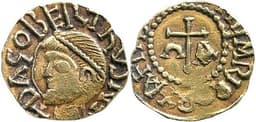
Dagobert I
Emperor · Medieval
51.2Total
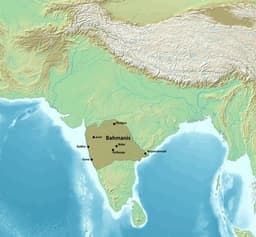
Muhammad Shah I Bahmani
Emperor · Medieval
54.3Total
Basic Information
Born
603
1358
Died
639
1375
Era
Medieval
Medieval
Nationality
Frankish Empire
India
Occupation
Emperor
Emperor
Civilization
Western
Indian
Score Comparison
Military (10%)
55.0
25.0
Political (20%)
68.0
62.7
Influence (20%)
54.9
60.0
Legacy (20%)
45.0
49.2
Leadership (15%)
40.0
66.0
Strategy (15%)
45.0
51.7
TOTAL
51.2
54.3
Dagobert I — Complete Timeline
629 AD
Reunification of the Frankish KingdomsPolitical Action◆ Major
Upon the death of his father Chlothar II, Dagobert I inherited the entire Frankish realm. He became the sole king, ruling over Neustria, Austrasia, and Burgundy, marking the last time a Merovingian king held undisputed authority over all Franks.
MerovingianUnificationSuccession
Impact: regional
630 AD
Patronage of the Arts and the Basilica of Saint-DenisCultural◆ Major
Dagobert I was a major patron of the arts, commissioning goldsmiths and artisans. He richly endowed the Basilica of Saint-Denis, where he was later buried, and ordered the creation of the 'Throne of Dagobert,' a bronze folding chair that became a symbol of Frankish kingship.
MerovingianPatronageSaint-Denis
Impact: regionalconstructive
631 AD
Campaign Against the SlavsWar◆ Major
Dagobert I led a campaign against the Slavic Wends under King Samo. The Frankish army was defeated at the Battle of Wogastisburg, a rare military setback for Dagobert. This defeat weakened Frankish influence in the east and emboldened Slavic tribes.
MerovingianSlavsDefeat
Impact: regionaldestructive
639 AD
Division of the Kingdom Between His SonsPolitical Action◆ Major
Before his death, Dagobert I divided the Frankish kingdom between his young sons: Sigebert III received Austrasia, and Clovis II received Neustria and Burgundy. This division weakened the Merovingian dynasty and paved the way for the rise of the mayors of the palace.
MerovingianDivisionSuccession
Impact: regional
Muhammad Shah I Bahmani — Complete Timeline
1360 AD
Reorganization of Bahmani administrationReform◆ Major
Muhammad Shah I Bahmani restructured the Bahmani administration by dividing the sultanate into four provinces (tarafs), each governed by a tarafdar. This system improved tax collection and military organization.
Administrative ReformProvincial System
Impact: regionalconstructive
1365 AD
War with Vijayanagara over Raichur DoabWar◆ Major
Muhammad Shah I Bahmani fought a war against the Vijayanagara Empire for control of the Raichur Doab. The conflict ended with a treaty that temporarily ceded the region to Vijayanagara.
WarVijayanagaraTerritorial Dispute
Impact: regional
1367 AD
Construction of the Jami Masjid at GulbargaCultural
Muhammad Shah I Bahmani commissioned the construction of the Jami Masjid in Gulbarga, a large congregational mosque. The mosque became a center for Islamic worship and learning in the Bahmani capital.
ArchitectureReligion
constructive
1370 AD
Suppression of the rebellion of Bahram KhanPolitical Action
Muhammad Shah I Bahmani crushed a rebellion led by the noble Bahram Khan, who had challenged his authority. The revolt was put down with force, and Bahram Khan was executed.
RebellionInternal Conflict
Impact: nationaldestructive
This comparison has not been analyzed yet.
One-time AI generation (~1 minute). Scores and timeline are already available below.
Rankings
🥇
Muhammad Shah I BahmaniLeader
Mil: 25.0Pol: 62.7Inf: 60.0
54.3
🥈
Dagobert I
Mil: 55.0Pol: 68.0Inf: 54.9
51.2
+3.1 behind
How This Comparison Works
Algorithm
Each figure is scored on 6 dimensions (0—100 scale) based on structured historical data: Military (10%), Political (20%), Influence (20%), Legacy (20%), Leadership (15%), Strategy (15%). The weighted total produces the final ranking.
Data Sources
Scores are computed from structured sub-indicators in the database. Scale factors adjust for era (Ancient ×0.85, Modern ×1.0) and civilization size (Eastern ×1.05, Other ×0.80) to account for differences in population and military scale.
Maximum 3 Figures
Comparisons are limited to 2—3 figures to ensure readability and statistical meaningfulness.
Error Margins
±5 points per dimension — Sub-scores are derived from historical records with inherent uncertainty. Two figures within 5 points on a dimension should be considered roughly equivalent in that area.
Total Score Accuracy
±3 points overall — The weighted combination of 6 dimensions produces a total score with approximately ±3 points of uncertainty. Differences of less than 3 points are not statistically significant— the figures are effectively tied.
Known Limitations
- Historical records are incomplete and uneven across civilizations
- Figures from oral-tradition societies may be underrepresented
- Occupation labels can misclassify multi-role figures
- Scores measure capability and impact, not moral character
- Quantitative scoring is a comparison tool, not absolute truth
Capability Radar
Military (10%) — Battles & Warfare
Battles
30
45
Win Rate
35
50
Expansion
40
40
Political (20%) — Governance & Reform
Reform
45
65
Diplomacy
55
55
Economy
50
50
Influence (20%) — Cultural & Global Reach
Cultural
50
40
Global
20
30
Legacy (20%) — Historical Impact
Historical
40
45
Longevity
30
40
Leadership (15%) — Power & Stability
Tenure
60
60
Stability
55
55
Strategy (15%) — Tactics & Innovation
Strategy
35
45
Tactics
30
40
Reform
25
55
Similar Comparisons
Comments & Discussion
No comments yet. Be the first to share your thoughts!