Loading...
This comparison has not been analyzed yet.
One-time AI generation (~1 minute). Scores and timeline are already available below.
Dag Hammarskjold vs Gulzarilal Nanda
Dag Hammarskjold leads by 18.6 pts · 2 figures compared
…
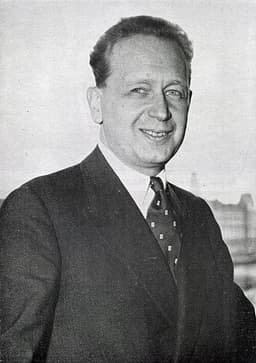
Dag Hammarskjold
Politician · Modern
60.3Total

Gulzarilal Nanda
Politician · Modern
41.7Total
Basic Information
Born
1905
1898
Died
1961
1998
Era
Modern
Modern
Nationality
Sweden
India
Occupation
Politician
Politician
Civilization
Western
Indian
Score Comparison
Military (10%)
48.4
36.1
Political (20%)
60.0
30.8
Influence (20%)
58.3
47.1
Legacy (20%)
56.0
35.8
Leadership (15%)
79.8
45.0
Strategy (15%)
59.5
60.0
TOTAL
60.3
41.7
Dag Hammarskjold — Complete Timeline
1953 AD
Elected Secretary-General of the United NationsPolitical Action◆ Major
Dag Hammarskj
UN Secretary-GeneralLeadershipPost-War
Impact: globalconstructive
1956 AD
Established the UN Emergency ForcePolitical Action◆ Major
Hammarskjöld created the first UN peacekeeping force, the UN Emergency Force, to supervise the withdrawal of invading forces during the Suez Crisis. This established the precedent for UN peacekeeping operations.
PeacekeepingSuez CrisisUNEF
Impact: globalconstructive
1960 AD
Mediated the Congo CrisisPolitical Action◆ Major
Hammarskjöld deployed UN peacekeepers to the Congo to restore order after independence and prevent secession of Katanga. The mission faced challenges, including the death of Prime Minister Patrice Lumumba and accusations of bias.
CongoPeacekeepingDecolonization
Impact: regional
1961 AD
Killed in a plane crashOther◆ Major
Hammarskjöld died in a plane crash near Ndola, Northern Rhodesia (now Zambia), while en route to negotiate a ceasefire in the Congo. His death remains controversial, with theories of sabotage or assassination.
DeathPlane CrashCongo
Impact: globaltragic
Awarded the Nobel Peace Prize posthumouslyCultural◆ Major
Hammarskjöld was posthumously awarded the Nobel Peace Prize for his efforts to strengthen the UN and resolve international conflicts. He remains the only UN Secretary-General to receive the prize after death.
Nobel PrizePeaceUN
Impact: globalconstructive
Gulzarilal Nanda — Complete Timeline
1951 AD
Appointment as Minister of Labour and EmploymentPolitical Action◆ Major
Gulzarilal Nanda was appointed Union Minister of Labour and Employment in Nehru's government. He played a key role in shaping India's labour laws and industrial relations policies, including the Industrial Disputes Act.
Labour MinisterIndustrial RelationsPolicy
Impact: nationalconstructive
1963 AD
Appointment as Minister of Home AffairsPolitical Action◆ Major
Gulzarilal Nanda was appointed Union Minister of Home Affairs in Jawaharlal Nehru's cabinet. He held this portfolio during a period of national security challenges, including the 1965 Indo-Pakistani War.
Home MinisterCabinetSecurity
Impact: national
1964 AD
Appointment as Acting Prime Minister of India (First Term)Political Action◆ Major
Gulzarilal Nanda served as acting Prime Minister of India for 13 days following the death of Jawaharlal Nehru. He held the office until Lal Bahadur Shastri was elected as the new prime minister by the Congress Party.
Acting Prime MinisterNehru's DeathTransition
Impact: national
1966 AD
Appointment as Acting Prime Minister of India (Second Term)Political Action◆ Major
Gulzarilal Nanda served as acting Prime Minister of India for 13 days following the death of Lal Bahadur Shastri. He held the office until Indira Gandhi was elected as the new prime minister by the Congress Party.
Acting Prime MinisterShastri's DeathTransition
Impact: national
1977 AD
Resignation from Congress PartyPolitical Action
Gulzarilal Nanda resigned from the Indian National Congress after the Emergency (1975-77). He joined the Janata Party, reflecting his opposition to Indira Gandhi's authoritarian rule during the Emergency.
ResignationEmergencyJanata Party
Impact: national
This comparison has not been analyzed yet.
One-time AI generation (~1 minute). Scores and timeline are already available below.
Rankings
🥇
Dag HammarskjoldLeader
Mil: 48.4Pol: 60.0Inf: 58.3
60.3
🥈
Gulzarilal Nanda
Mil: 36.1Pol: 30.8Inf: 47.1
41.7
+18.6 behind
How This Comparison Works
Algorithm
Each figure is scored on 6 dimensions (0—100 scale) based on structured historical data: Military (10%), Political (20%), Influence (20%), Legacy (20%), Leadership (15%), Strategy (15%). The weighted total produces the final ranking.
Data Sources
Scores are computed from structured sub-indicators in the database. Scale factors adjust for era (Ancient ×0.85, Modern ×1.0) and civilization size (Eastern ×1.05, Other ×0.80) to account for differences in population and military scale.
Maximum 3 Figures
Comparisons are limited to 2—3 figures to ensure readability and statistical meaningfulness.
Error Margins
±5 points per dimension — Sub-scores are derived from historical records with inherent uncertainty. Two figures within 5 points on a dimension should be considered roughly equivalent in that area.
Total Score Accuracy
±3 points overall — The weighted combination of 6 dimensions produces a total score with approximately ±3 points of uncertainty. Differences of less than 3 points are not statistically significant— the figures are effectively tied.
Known Limitations
- Historical records are incomplete and uneven across civilizations
- Figures from oral-tradition societies may be underrepresented
- Occupation labels can misclassify multi-role figures
- Scores measure capability and impact, not moral character
- Quantitative scoring is a comparison tool, not absolute truth
Capability Radar
Military (10%) — Battles & Warfare
Battles
30
42
Win Rate
32
48
Expansion
36
52
Political (20%) — Governance & Reform
Reform
70
20
Diplomacy
85
25
Economy
40
15
Influence (20%) — Cultural & Global Reach
Cultural
50
5
Global
70
5
Legacy (20%) — Historical Impact
Historical
65
10
Longevity
55
5
Leadership (15%) — Power & Stability
Tenure
55
15
Stability
75
20
Strategy (15%) — Tactics & Innovation
Strategy
39
54
Tactics
42
53
Reform
45
58
Similar Comparisons
Comments & Discussion
No comments yet. Be the first to share your thoughts!