Loading...
This comparison has not been analyzed yet.
One-time AI generation (~1 minute). Scores and timeline are already available below.
Cyrus the Younger vs Eumenes of Cardia
Eumenes of Cardia leads by 5.7 pts · 2 figures compared
…

Cyrus the Younger
General · Ancient
48.0Total
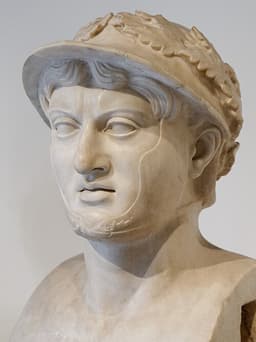
Eumenes of Cardia
General · Ancient
53.7Total
Basic Information
Born
-423
-362
Died
-401
-316
Era
Ancient
Ancient
Nationality
Persia
Macedon
Occupation
General
General
Civilization
Middle Eastern
Western
Score Comparison
Military (10%)
20.0
85.0
Political (20%)
35.0
33.6
Influence (20%)
55.7
54.9
Legacy (20%)
49.2
47.5
Leadership (15%)
57.1
50.7
Strategy (15%)
60.0
70.0
TOTAL
48.0
53.7
Cyrus the Younger — Complete Timeline
408 BC
Appointment as satrap of Lydia and commander in AnatoliaPolitical Action◆ Major
Cyrus the Younger was appointed by his father Darius II as satrap of Lydia, Phrygia, and Cappadocia, and commander of all Persian forces in Anatolia. This gave him a power base for his ambitions.
Achaemenid EmpireSatrapAppointment
Impact: regional
407 BC
Support for Sparta in the Peloponnesian WarPolitical Action◆ Major
Cyrus provided financial and military support to Sparta against Athens in the Peloponnesian War. He befriended the Spartan general Lysander, helping Sparta achieve final victory at Aegospotami in 405 BC.
Achaemenid EmpireSpartaPeloponnesian War
Impact: regional
401 BC
Death at the Battle of CunaxaWar
Cyrus's forces engaged Artaxerxes II's army at Cunaxa, near Babylon. Cyrus personally led a charge against his brother but was killed in the fighting. His death ended the rebellion and left the Greek mercenaries stranded.
Achaemenid EmpireBattleDeathRebellion
Impact: regionaltragic
Rebellion against Artaxerxes II and march to CunaxaPolitical Action
Cyrus gathered a Greek mercenary army of about 13,000 men and marched from Sardis to Babylon to overthrow his brother Artaxerxes II. The expedition was recorded by Xenophon in the Anabasis.
Achaemenid EmpireRebellionExpedition
Impact: regional
Eumenes of Cardia — Complete Timeline
336 BC
Appointment as Alexander's secretaryPolitical Action◆ Major
Eumenes was appointed as Alexander the Great's personal secretary (chief scribe) after the death of Philip II. This position gave him intimate knowledge of imperial administration and access to Alexander's inner circle.
Alexander the GreatAdministrationCourt
Impact: nationalconstructive
321 BC
Command at the Battle of the HellespontWar
Eumenes defeated Craterus and Neoptolemus at the Battle of the Hellespont. Craterus, Alexander's most trusted general, was killed in the battle. This victory established Eumenes as a major military commander in the Wars of the Diadochi.
Wars of the DiadochiCraterusBattle
Impact: regional
319 BC
Siege of NoraWar◆ Major
After being declared an outlaw by Antipater, Eumenes was besieged by Antigonus Monophthalmus at the fortress of Nora in Cappadocia. He held out for over a year, negotiating a truce that allowed him to escape and continue his campaign.
Wars of the DiadochiSiegeAntigonus
Impact: regional
316 BC
Battle of GabieneWar◆ Major
Eumenes fought Antigonus Monophthalmus at Gabiene. Though the battle was tactically indecisive, Eumenes' own Silver Shields mutinied and handed him over to Antigonus, who had him executed. This ended his campaign.
Wars of the DiadochiAntigonusExecution
Impact: regionaltragic
Execution by AntigonusPolitical Action◆ Major
After being betrayed by his own troops at Gabiene, Eumenes was executed by Antigonus Monophthalmus. His death removed the last major supporter of the Argead royal house and consolidated Antigonus's power in Asia.
Wars of the DiadochiExecutionAntigonus
Impact: regionaltragic
This comparison has not been analyzed yet.
One-time AI generation (~1 minute). Scores and timeline are already available below.
Rankings
🥇
Eumenes of CardiaLeader
Mil: 85.0Pol: 33.6Inf: 54.9
53.7
🥈
Cyrus the Younger
Mil: 20.0Pol: 35.0Inf: 55.7
48.0
+5.7 behind
How This Comparison Works
Algorithm
Each figure is scored on 6 dimensions (0—100 scale) based on structured historical data: Military (10%), Political (20%), Influence (20%), Legacy (20%), Leadership (15%), Strategy (15%). The weighted total produces the final ranking.
Data Sources
Scores are computed from structured sub-indicators in the database. Scale factors adjust for era (Ancient ×0.85, Modern ×1.0) and civilization size (Eastern ×1.05, Other ×0.80) to account for differences in population and military scale.
Maximum 3 Figures
Comparisons are limited to 2—3 figures to ensure readability and statistical meaningfulness.
Error Margins
±5 points per dimension — Sub-scores are derived from historical records with inherent uncertainty. Two figures within 5 points on a dimension should be considered roughly equivalent in that area.
Total Score Accuracy
±3 points overall — The weighted combination of 6 dimensions produces a total score with approximately ±3 points of uncertainty. Differences of less than 3 points are not statistically significant— the figures are effectively tied.
Known Limitations
- Historical records are incomplete and uneven across civilizations
- Figures from oral-tradition societies may be underrepresented
- Occupation labels can misclassify multi-role figures
- Scores measure capability and impact, not moral character
- Quantitative scoring is a comparison tool, not absolute truth
Capability Radar
Military (10%) — Battles & Warfare
Battles
30
75
Win Rate
25
70
Expansion
20
60
Political (20%) — Governance & Reform
Reform
10
30
Diplomacy
30
65
Economy
15
35
Influence (20%) — Cultural & Global Reach
Cultural
45
45
Global
40
35
Legacy (20%) — Historical Impact
Historical
55
55
Longevity
50
40
Leadership (15%) — Power & Stability
Tenure
20
50
Stability
15
40
Strategy (15%) — Tactics & Innovation
Strategy
35
85
Tactics
40
80
Reform
10
40
Similar Comparisons
Comments & Discussion
No comments yet. Be the first to share your thoughts!