Loading...
Cyrus the Great vs Vijayalaya Chola
Cyrus the Great leads by 29.7 pts · 2 figures compared
…
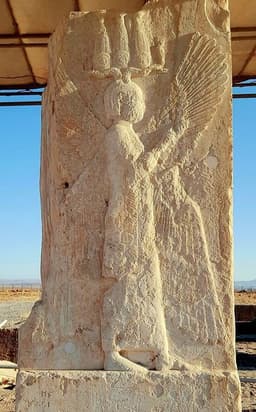
Cyrus the Great
Emperor · Ancient
83.9Total
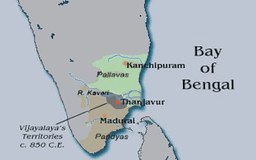
Vijayalaya Chola
Emperor · Medieval
54.2Total
Basic Information
Born
-600
820
Died
-530
870
Era
Ancient
Medieval
Nationality
Persia
India
Occupation
Emperor
Emperor
Civilization
Middle Eastern
Indian
Score Comparison
Military (10%)
82.0
45.0
Political (20%)
85.0
40.8
Influence (20%)
85.0
58.0
Legacy (20%)
90.0
54.0
Leadership (15%)
78.0
64.0
Strategy (15%)
75.0
60.0
TOTAL
83.9
54.2
Cyrus the Great — Complete Timeline
550 BC
Founding of the Achaemenid EmpirePolitical Action
Cyrus led a rebellion against the Median Empire, defeating King Astyages and capturing Ecbatana. He then united the Persian and Median tribes, establishing the Achaemenid Empire, which became the largest empire the world had yet seen.
Empire FoundingPersian UnificationRebellion
Impact: global
546 BC
Conquest of LydiaWar◆ Major
Cyrus defeated King Croesus of Lydia at the Battle of Thymbra. The Lydian capital Sardis was captured, and Croesus was taken prisoner. This conquest brought Anatolia under Persian control and secured access to the Aegean coast.
Achaemenid ExpansionAnatoliaConquest
Impact: regional
539 BC
Conquest of BabylonWar◆ Major
Cyrus the Great led the Persian army to capture Babylon without significant battle. The city's gates were opened, and Cyrus entered peacefully. This conquest added Mesopotamia to the Achaemenid Empire and marked the end of the Neo-Babylonian Empire.
Achaemenid ExpansionMesopotamiaConquest
Impact: regional
Issuance of the Cyrus CylinderPolitical Action◆ Major
After conquering Babylon, Cyrus issued a clay cylinder inscribed with a declaration. It described his policy of restoring temples, repatriating displaced peoples, and allowing religious freedom. The cylinder is often cited as an early charter of human rights.
Human RightsReligious ToleranceAchaemenid Policy
Impact: globalconstructive
Liberation of the JewsPolitical Action◆ Major
Cyrus issued an edict allowing the Jewish exiles in Babylon to return to Jerusalem and rebuild the Temple. This event is recorded in the biblical Book of Ezra and is a key moment in Jewish history, ending the Babylonian captivity.
Jewish HistoryReligious FreedomReturn from Exile
Impact: regionalconstructive
Vijayalaya Chola — Complete Timeline
820 AD
Foundation of the Imperial Chola DynastyPolitical Action◆ Major
Vijayalaya Chola established the Imperial Chola dynasty, reviving the ancient Chola lineage after centuries of obscurity. He consolidated control over the Kaveri delta region, laying the foundation for the Chola Empire's future expansion.
Impact: regionalconstructive
850 AD
Capture of Thanjavur from the MutharaiyarWar◆ Major
Vijayalaya Chola captured the city of Thanjavur from the Mutharaiyar chieftains, who were vassals of the Pallavas. This victory established the Chola kingdom as an independent power and made Thanjavur the new Chola capital.
Impact: regionalconstructive
860 AD
Construction of the Vijayalaya Choleswaram TempleCultural
Vijayalaya Chola built the Vijayalaya Choleswaram temple at Narthamalai, a rock-cut temple dedicated to Shiva. This temple is one of the earliest Chola architectural monuments, reflecting the transition from Pallava to Chola styles.
constructive
Expert Analysis
Cyrus the Great vs Vijayalaya Chola
# The Founder's Touch: Cyrus the Great and Vijayalaya Chola
On a spring morning in 539 BCE, the gates of Babylon swung open without a fight, and a Persian king walked into history as a liberator. Thirteen centuries later, in the scorched plains of southern India, a minor chieftain named Vijayalaya climbed the walls of Thanjavur, a mud-brick fortress that would become the seed of an empire. Both men founded dynasties. Both men changed the world. But one would be remembered as a universal symbol of tolerance, the other as the quiet architect of a golden age. What separates a Cyrus from a Vijayalaya? The answer lies not in their achievements, but in the soil of their ambitions.
Origins
Cyrus was born around 600 BCE into the Persian tribe of the Achaemenids, a vassal people under the shadow of the Median Empire. His grandfather, Astyages, was the Median king—a fact that would later prove useful. Legend has it that Cyrus was raised by a herdsman after a dream warned Astyages that the boy would overthrow him. Whether true or not, the story reveals a crucial truth: Cyrus grew up at the intersection of two worlds—the Persian highlands and the Median court—learning the arts of war and diplomacy from both.
Vijayalaya, by contrast, emerged from obscurity. Born around 820 CE, he belonged to the ancient Chola lineage, a dynasty that had faded into legend centuries earlier. The Cholas had once ruled the Kaveri delta, but by the ninth century, they were little more than a memory, their lands controlled by the Pallavas and their vassals, the Mutharaiyar. Vijayalaya was not a prince reclaiming a throne; he was a local strongman in a fractured landscape, scrapping for power in the shadows of greater kings.
Rise to Power
Cyrus’s rise was a masterclass in political timing. In 550 BCE, he led a rebellion against his grandfather Astyages, defeating the Medes and capturing their capital, Ecbatana. But Cyrus did not destroy his enemies—he absorbed them. He presented himself not as a conqueror but as a rightful heir, merging Persian and Median elites into a single ruling class. This was not just strategy; it was a philosophy. Within a decade, he had turned the tables on the Lydian king Croesus, defeating him at the Battle of Thymbra in 546 BCE, and soon after, the entire Anatolian peninsula fell into his hands.
Vijayalaya’s path was narrower and harder. For decades, he fought as a minor chieftain, likely a vassal of the Pallavas, biding his time. His breakthrough came in 850 CE, when he captured Thanjavur from the Mutharaiyar. The city was not Babylon—it was a modest fortress town—but it was a foothold. Where Cyrus conquered empires in a single campaign, Vijayalaya clawed his way into history one stone at a time. His victory was not a revolution but a reclamation: the Chola name, dormant for centuries, was reborn in the mud of the Kaveri.
Leadership & Governance
Cyrus governed with a vision that bordered on the radical. After conquering Babylon in 539 BCE, he issued the Cyrus Cylinder, a clay declaration that restored local cults, allowed displaced peoples to return home, and respected the customs of every subject nation. Most famously, he freed the Jewish exiles, an act recorded in the Hebrew Bible with rare gratitude: “Thus says Cyrus king of Persia: The Lord, the God of heaven, has given me all the kingdoms of the earth.” This was not mere propaganda—it was a system. Cyrus built an empire of provinces governed by satraps, each allowed to keep their laws, languages, and gods, as long as they paid tribute and kept the peace.
Vijayalaya’s governance was more modest but no less effective. He ruled Thanjavur as a Hindu king, patronizing temples and consolidating control over the Kaveri delta. His greatest cultural act was the construction of the Vijayalaya Choleswaram temple at Narthamalai, a rock-cut shrine to Shiva that still stands today. Unlike Cyrus, who wrote his policies on clay for the world to read, Vijayalaya left his mark in stone—a quiet assertion that the Cholas had returned to stay. His administration was personal, local, and rooted in the rhythms of the land.
Triumph & Tragedy
Cyrus’s triumph was the conquest of Babylon itself—a city so mighty that it was said to have walls wide enough for chariots to pass. He took it without a battle, a feat that cemented his reputation as a divinely favored ruler. But his tragedy was the same as his triumph: he died in 530 BCE while campaigning against a nomadic tribe on the eastern frontier, his body reportedly left for the vultures. The man who unified the ancient world from the Indus to the Mediterranean fell in a forgotten skirmish.
Vijayalaya’s triumph was smaller but more personal: the capture of Thanjavur, a city that would become the heart of Chola power for centuries. His tragedy was that he did not live to see the empire he founded reach its height. He died around 870 CE, leaving his son Aditya to expand the kingdom. Where Cyrus fell at the peak of his power, Vijayalaya passed in quiet obscurity, his dynasty’s greatest glories still decades away.
Character & Destiny
Cyrus was a man of grand gestures and calculated mercy. He understood that power was not about crushing enemies but about winning their loyalty. His character—confident, magnanimous, and ruthlessly pragmatic—shaped an empire that outlasted him by two centuries. Vijayalaya was a survivor, a man who knew that patience was more valuable than brilliance. He did not conquer the world; he reclaimed a corner of it, and that was enough.
Their destinies reflect their choices. Cyrus’s legacy is global: the Cyrus Cylinder is often called the first charter of human rights, and his policies influenced thinkers from Alexander to the American Founders. Vijayalaya’s legacy is regional but profound: the Chola dynasty he founded would go on to build the Brihadeeswarar Temple, conquer Sri Lanka, and trade with China. One man’s name echoes through the ages; the other’s is whispered in the corridors of a temple he built with his own hands.
Legacy
Cyrus is remembered as a liberator, a philosopher-king, and a unifier. His tomb at Pasargadae still stands, a plain stone monument that draws pilgrims and presidents alike. In the Bible, he is called God’s anointed; in Iran, he is the father of the nation. Vijayalaya is remembered by historians and by the people of Tamil Nadu, who honor him as the founder of a dynasty that defined an era. His temple at Narthamalai remains a pilgrimage site, a quiet monument to a man who started with nothing but a name.
Conclusion
To compare Cyrus and Vijayalaya is to compare two kinds of greatness. Cyrus built an empire that reshaped the ancient world; Vijayalaya built a kingdom that would later reshape southern India. One spoke to the ages; the other spoke to his people. Yet both understood a fundamental truth: that power, to endure, must be rooted in respect for the past and hope for the future. Cyrus liberated the Jews; Vijayalaya built a temple to Shiva. In the end, they were both founders—and founders, like seeds, cannot be judged by their size, only by what grows from them.
Rankings
🥇
Cyrus the GreatLeader
Mil: 82.0Pol: 85.0Inf: 85.0
83.9
🥈
Vijayalaya Chola
Mil: 45.0Pol: 40.8Inf: 58.0
54.2
+29.7 behind
How This Comparison Works
Algorithm
Each figure is scored on 6 dimensions (0—100 scale) based on structured historical data: Military (10%), Political (20%), Influence (20%), Legacy (20%), Leadership (15%), Strategy (15%). The weighted total produces the final ranking.
Data Sources
Scores are computed from structured sub-indicators in the database. Scale factors adjust for era (Ancient ×0.85, Modern ×1.0) and civilization size (Eastern ×1.05, Other ×0.80) to account for differences in population and military scale.
Maximum 3 Figures
Comparisons are limited to 2—3 figures to ensure readability and statistical meaningfulness.
Error Margins
±5 points per dimension — Sub-scores are derived from historical records with inherent uncertainty. Two figures within 5 points on a dimension should be considered roughly equivalent in that area.
Total Score Accuracy
±3 points overall — The weighted combination of 6 dimensions produces a total score with approximately ±3 points of uncertainty. Differences of less than 3 points are not statistically significant— the figures are effectively tied.
Known Limitations
- Historical records are incomplete and uneven across civilizations
- Figures from oral-tradition societies may be underrepresented
- Occupation labels can misclassify multi-role figures
- Scores measure capability and impact, not moral character
- Quantitative scoring is a comparison tool, not absolute truth
Capability Radar
Military (10%) — Battles & Warfare
Battles
85
45
Win Rate
90
50
Expansion
92
55
Political (20%) — Governance & Reform
Reform
90
35
Diplomacy
95
40
Economy
80
35
Influence (20%) — Cultural & Global Reach
Cultural
90
40
Global
90
30
Legacy (20%) — Historical Impact
Historical
95
55
Longevity
95
50
Leadership (15%) — Power & Stability
Tenure
70
50
Stability
85
45
Strategy (15%) — Tactics & Innovation
Strategy
88
45
Tactics
80
40
Reform
75
30
Similar Comparisons
Comments & Discussion
CYRUS_FANBOY6/16/2026
Cyrus didn't just conquer—he pioneered multicultural statecraft. Let's talk specifics: his cylinder, unearthed in 1879, explicitly condemns Nabonidus's forced labor and restores local cults. That's not propaganda; it's a diplomatic revolution. Vijayalaya built a mud fort and called it an empire. Cute, but Cyrus created a model that the Romans couldn't match for centuries. The Persian system of satrapies, local self-rule, and religious tolerance? That's the blueprint for civilization, not some fo
考古学打脸侠6/16/2026
别吹波斯了。居鲁士那个“圆柱”其实就是babylonian temple propaganda,专门写给当地祭司看的。真实历史是,他一样搞屠杀—巴比伦编年史提到巴比伦城外战斗死了不少人。而维贾亚拉雅呢?828年坦贾武尔攻城战,三国混战里他趁乱崛起,靠的是实打实的军事计谋。居鲁士那些“解放者”人设是后来希腊作家捧出来的,原始碑文可没说他有多仁慈。咱能不能别总拿西方中心观美化古代暴君?
SECULARIST_FOR_THE_WIN6/16/2026
The real divider? Cyrus presided over an empire where Jews, Babylonians, and Greeks co-existed under one legal framework—his cylinder literally mentions "freedom of movement" for displaced peoples. Vijayalaya's Thanjavur was a Hindu fortress-state that expelled Buddhist monasteries. Adi Shankara's followers were already marginalizing Buddhists across India, and the Cholas accelerated that erasure. I'm not saying Cyrus was perfect, but he actively protected minority cultures. Vijayalaya's legacy
古籍考据党6/16/2026
你们都在讨论军事实力,但有谁认真对比过建国资本?居鲁士出身波斯王族,外公是米底皇帝—这种血统资本是他能迅速整合中亚势力的关键。维贾亚拉雅?公元820年他不过是帕拉瓦王朝治下一个地方税务官的儿子,《大史》和《乔拉编年史》根本没他早年记载!他靠的是一次军事冒险:趁帕拉瓦-拉什特拉库塔内战,用200骑兵偷袭坦贾武尔得手。一个是含着金汤匙的政变者,一个是草根投机家。这对比太不对称了。