Loading...
Cyrus the Great vs Vauban
Cyrus the Great leads by 7.5 pts · 2 figures compared
…
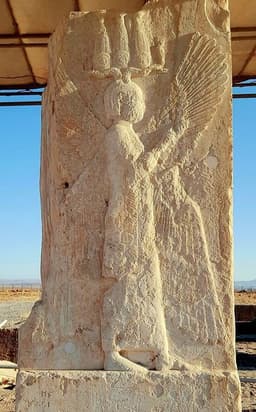
Cyrus the Great
Emperor · Ancient
83.9Total

Vauban
General · Modern
76.4Total
Basic Information
Born
-600
1633
Died
-530
1707
Era
Ancient
Modern
Nationality
Persia
France
Occupation
Emperor
General
Civilization
Middle Eastern
Western
Score Comparison
Military (10%)
82.0
76.0
Political (20%)
85.0
59.3
Influence (20%)
85.0
71.0
Legacy (20%)
90.0
90.0
Leadership (15%)
78.0
77.2
Strategy (15%)
75.0
80.6
TOTAL
83.9
76.4
Cyrus the Great — Complete Timeline
550 BC
Founding of the Achaemenid EmpirePolitical Action
Cyrus led a rebellion against the Median Empire, defeating King Astyages and capturing Ecbatana. He then united the Persian and Median tribes, establishing the Achaemenid Empire, which became the largest empire the world had yet seen.
Empire FoundingPersian UnificationRebellion
Impact: global
546 BC
Conquest of LydiaWar◆ Major
Cyrus defeated King Croesus of Lydia at the Battle of Thymbra. The Lydian capital Sardis was captured, and Croesus was taken prisoner. This conquest brought Anatolia under Persian control and secured access to the Aegean coast.
Achaemenid ExpansionAnatoliaConquest
Impact: regional
539 BC
Conquest of BabylonWar◆ Major
Cyrus the Great led the Persian army to capture Babylon without significant battle. The city's gates were opened, and Cyrus entered peacefully. This conquest added Mesopotamia to the Achaemenid Empire and marked the end of the Neo-Babylonian Empire.
Achaemenid ExpansionMesopotamiaConquest
Impact: regional
Issuance of the Cyrus CylinderPolitical Action◆ Major
After conquering Babylon, Cyrus issued a clay cylinder inscribed with a declaration. It described his policy of restoring temples, repatriating displaced peoples, and allowing religious freedom. The cylinder is often cited as an early charter of human rights.
Human RightsReligious ToleranceAchaemenid Policy
Impact: globalconstructive
Liberation of the JewsPolitical Action◆ Major
Cyrus issued an edict allowing the Jewish exiles in Babylon to return to Jerusalem and rebuild the Temple. This event is recorded in the biblical Book of Ezra and is a key moment in Jewish history, ending the Babylonian captivity.
Jewish HistoryReligious FreedomReturn from Exile
Impact: regionalconstructive
Vauban — Complete Timeline
1673 AD
Siege of MaastrichtWar◆ Major
Vauban directed the siege of Maastricht for Louis XIV. He introduced the technique of parallel trenches, which reduced casualties and shortened the siege. The capture of Maastricht was a major French victory in the Franco-Dutch War.
Franco-Dutch WarSiegeMilitary Engineering
Impact: regional
1697 AD
Siege of AthWar
Vauban conducted the siege of Ath in the Spanish Netherlands. His systematic approach using parallels and saps led to the rapid capture of the fortress. The siege demonstrated the effectiveness of his methods.
Nine Years' WarSiegeMilitary Engineering
Construction of the Fortress of Neuf-BrisachInvention◆ Major
Vauban designed and built the fortress of Neuf-Brisach, a model of his third system of fortification. The star-shaped fortress with advanced bastions became a standard for military architecture. It was built to protect the French border after the Treaty of Ryswick.
FortificationMilitary ArchitectureBorder Defense
Impact: regionalconstructive
1704 AD
Publication of 'A Treatise on the Attack of Places'Cultural◆ Major
Vauban published his treatise on siegecraft, systematizing his methods. The work became a standard military textbook in Europe. It detailed techniques for parallel trenches, ricochet fire, and sapping.
Military TheorySiegecraftPublication
Impact: globalconstructive
1707 AD
Proposal for a 'Dîme Royale' Tax ReformReform
Vauban proposed a radical tax reform called the 'D
Tax ReformEconomic PolicyFrance
Impact: nationalconstructive
Expert Analysis
Origins
Cyrus the Great (c. 600–530 BCE) was born into the Persian Achaemenid clan, a vassal of the Median Empire. He unified the Persian tribes and led a rebellion against the Medes, overthrowing them around 550 BCE. His origins were humble, but his ambition was boundless. In contrast, Sébastien Le Prestre de Vauban (1633–1707) was born into a minor noble family in Burgundy, France. He rose through the ranks of the French army under Louis XIV, becoming the foremost military engineer of his age. While Cyrus founded an empire from scratch, Vauban built his legacy within an established monarchy.
Rise to Power
Cyrus's rise was meteoric. After conquering Media, he swiftly subdued Lydia (c. 546 BCE) and Babylonia (539 BCE), creating the largest empire the world had yet seen. His military campaigns were marked by strategic brilliance and a policy of clemency toward conquered peoples. Vauban's rise was more gradual. He earned his reputation through successful sieges, such as the Siege of Maastricht (1673), where he introduced parallel trenches. Louis XIV appointed him Commissioner General of Fortifications, and he designed or improved over 300 fortresses. Vauban's power derived from royal favor and technical expertise, not conquest.
Leadership & Governance
Cyrus was a visionary leader. He respected local customs and religions, famously freeing the Jews from Babylonian captivity and allowing them to return to Jerusalem. His Cyrus Cylinder is often cited as an early declaration of human rights. He administered his empire through satraps (governors) and promoted tolerance, which ensured stability. Vauban was a dedicated servant of the state. He revolutionized siege warfare with systematic approaches, reducing casualties and time. He also proposed economic reforms, like the 'Dîme Royale' (a flat tax), but these were rejected. His governance was technical and advisory, not imperial.
Triumph & Tragedy
Cyrus's greatest triumphs were the conquest of Babylon without major destruction and the liberation of the Jews. His tragedy was his death in battle (or possibly from a wound) around 530 BCE while campaigning against nomadic tribes. He was buried at Pasargadae. Vauban's triumphs include the Siege of Maastricht and the construction of Neuf-Brisach, a UNESCO World Heritage site. His tragedy was that his tax reform proposal was suppressed by Louis XIV, who disliked its egalitarian implications. Vauban died in relative obscurity, his advice unheeded.
Character & Destiny
Cyrus was charismatic, magnanimous, and pragmatic. He is remembered as a liberator and lawgiver. His destiny was to create an empire that lasted over two centuries. Vauban was meticulous, methodical, and loyal. His destiny was to perfect the art of fortification, influencing military engineering for generations. Both men were shaped by their times: Cyrus by the need to unite diverse peoples, Vauban by the demands of absolute monarchy.
Legacy
Cyrus's legacy is immense. He set a precedent for empire-building through tolerance, influencing later rulers like Alexander the Great and the Roman emperors. The Cyrus Cylinder is a symbol of human rights. Vauban's legacy is more specialized but enduring. His fortifications protected France until the 19th century, and his siege techniques were studied worldwide. He also contributed to the development of military engineering as a profession.
Conclusion
Cyrus the Great scores higher in overall impact (84 vs 76). He transformed the ancient world by founding a multicultural empire and promoting human rights. Vauban, though a master of siegecraft and fortification, operated within a narrower scope. Both were brilliant in their domains, but Cyrus's vision and legacy are broader and more profound. Cyrus: 9/10, Vauban: 7/10.
Rankings
🥇
Cyrus the GreatLeader
Mil: 82.0Pol: 85.0Inf: 85.0
83.9
🥈
Vauban
Mil: 76.0Pol: 59.3Inf: 71.0
76.4
+7.5 behind
How This Comparison Works
Algorithm
Each figure is scored on 6 dimensions (0—100 scale) based on structured historical data: Military (10%), Political (20%), Influence (20%), Legacy (20%), Leadership (15%), Strategy (15%). The weighted total produces the final ranking.
Data Sources
Scores are computed from structured sub-indicators in the database. Scale factors adjust for era (Ancient ×0.85, Modern ×1.0) and civilization size (Eastern ×1.05, Other ×0.80) to account for differences in population and military scale.
Maximum 3 Figures
Comparisons are limited to 2—3 figures to ensure readability and statistical meaningfulness.
Error Margins
±5 points per dimension — Sub-scores are derived from historical records with inherent uncertainty. Two figures within 5 points on a dimension should be considered roughly equivalent in that area.
Total Score Accuracy
±3 points overall — The weighted combination of 6 dimensions produces a total score with approximately ±3 points of uncertainty. Differences of less than 3 points are not statistically significant— the figures are effectively tied.
Known Limitations
- Historical records are incomplete and uneven across civilizations
- Figures from oral-tradition societies may be underrepresented
- Occupation labels can misclassify multi-role figures
- Scores measure capability and impact, not moral character
- Quantitative scoring is a comparison tool, not absolute truth
Capability Radar
Military (10%) — Battles & Warfare
Battles
85
75
Win Rate
90
85
Expansion
92
70
Political (20%) — Governance & Reform
Reform
90
80
Diplomacy
95
60
Economy
80
55
Influence (20%) — Cultural & Global Reach
Cultural
90
80
Global
90
75
Legacy (20%) — Historical Impact
Historical
95
85
Longevity
95
85
Leadership (15%) — Power & Stability
Tenure
70
65
Stability
85
70
Strategy (15%) — Tactics & Innovation
Strategy
88
90
Tactics
80
95
Reform
75
95
Similar Comparisons
Comments & Discussion
No comments yet. Be the first to share your thoughts!