Loading...
Cyrus the Great vs Turenne
Cyrus the Great leads by 8.1 pts · 2 figures compared
…
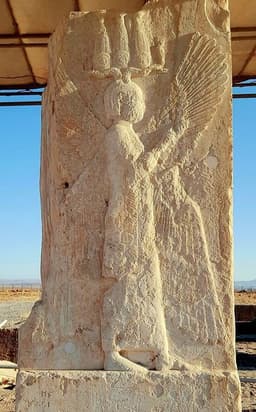
Cyrus the Great
Emperor · Ancient
83.9Total
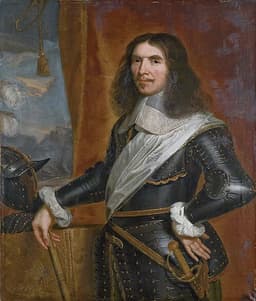
Turenne
General · Modern
75.8Total
Basic Information
Born
-600
1611
Died
-530
1675
Era
Ancient
Modern
Nationality
Persia
France
Occupation
Emperor
General
Civilization
Middle Eastern
Western
Score Comparison
Military (10%)
82.0
79.9
Political (20%)
85.0
72.0
Influence (20%)
85.0
88.0
Legacy (20%)
90.0
65.0
Leadership (15%)
78.0
77.2
Strategy (15%)
75.0
72.0
TOTAL
83.9
75.8
Cyrus the Great — Complete Timeline
550 BC
Founding of the Achaemenid EmpirePolitical Action
Cyrus led a rebellion against the Median Empire, defeating King Astyages and capturing Ecbatana. He then united the Persian and Median tribes, establishing the Achaemenid Empire, which became the largest empire the world had yet seen.
Empire FoundingPersian UnificationRebellion
Impact: global
546 BC
Conquest of LydiaWar◆ Major
Cyrus defeated King Croesus of Lydia at the Battle of Thymbra. The Lydian capital Sardis was captured, and Croesus was taken prisoner. This conquest brought Anatolia under Persian control and secured access to the Aegean coast.
Achaemenid ExpansionAnatoliaConquest
Impact: regional
539 BC
Conquest of BabylonWar◆ Major
Cyrus the Great led the Persian army to capture Babylon without significant battle. The city's gates were opened, and Cyrus entered peacefully. This conquest added Mesopotamia to the Achaemenid Empire and marked the end of the Neo-Babylonian Empire.
Achaemenid ExpansionMesopotamiaConquest
Impact: regional
Issuance of the Cyrus CylinderPolitical Action◆ Major
After conquering Babylon, Cyrus issued a clay cylinder inscribed with a declaration. It described his policy of restoring temples, repatriating displaced peoples, and allowing religious freedom. The cylinder is often cited as an early charter of human rights.
Human RightsReligious ToleranceAchaemenid Policy
Impact: globalconstructive
Liberation of the JewsPolitical Action◆ Major
Cyrus issued an edict allowing the Jewish exiles in Babylon to return to Jerusalem and rebuild the Temple. This event is recorded in the biblical Book of Ezra and is a key moment in Jewish history, ending the Babylonian captivity.
Jewish HistoryReligious FreedomReturn from Exile
Impact: regionalconstructive
Turenne — Complete Timeline
1639 AD
Campaign in the ValtellinaWar
Turenne commanded French forces in the Valtellina during the Thirty Years' War. He captured several fortresses and secured the strategic pass for France, demonstrating his early military skill.
Thirty Years' WarAlpsEarly Career
Impact: regional
1658 AD
Battle of the DunesWar◆ Major
Turenne commanded the French army to victory over the Spanish at the Battle of the Dunes near Dunkirk. The victory led to the capture of Dunkirk and forced Spain to seek peace, ending the Franco-Spanish War.
Franco-Spanish WarDunkirkMilitary Victory
Impact: regional
1674 AD
Battle of the RhineWar◆ Major
Turenne led a French army across the Rhine in winter, surprising the Imperial forces. He defeated the Austrians at the Battle of Entzheim and later at Turckheim, securing French control of Alsace.
Franco-Dutch WarAlsaceWinter Campaign
Impact: regional
Battle of the SambreWar◆ Major
Turenne defeated the Spanish and Dutch forces at the Battle of Seneffe. The battle was costly but prevented the Allies from invading France. It demonstrated Turenne's tactical skill in defensive warfare.
Franco-Dutch WarDefensive BattleTactics
Impact: regional
1675 AD
Death of TurenneWar◆ Major
Turenne was killed by a cannonball while reconnoitering enemy positions at the Battle of Sasbach. His death was a major loss for France. He was buried with honors in the Basilica of Saint-Denis.
Death in BattleFranco-Dutch WarMilitary Loss
Impact: nationaltragic
Expert Analysis
Origins
Cyrus the Great (c. 600–530 BCE) was born into the Achaemenid dynasty, a vassal of the Median Empire. He united the Persian tribes and overthrew the Medes, establishing the Persian Empire. Turenne (1611–1675) was born into a French noble family, the second son of a maréchal de camp. He joined the army at age 14 and rose through merit.
Rise to Power
Cyrus conquered the Median Empire, then Lydia (Croesus), and finally Babylon. He used diplomacy and military skill to create the largest empire of his time. Turenne fought in the Thirty Years' War, gaining fame at the Battle of the Dunes (1658) and the Battle of the Rhine. He became Marshal General of France.
Leadership & Governance
Cyrus was known for his enlightened rule: respecting local customs, freeing the Jews, and issuing the Cyrus Cylinder (often called the first human rights charter). He governed a multicultural empire with satrapies. Turenne was a brilliant strategist and tactician, known for his rapid marches and discipline. He modernized the French army but had little role in governance.
Triumph & Tragedy
Cyrus conquered Babylon without a fight, liberated the Jews, and expanded Persia to its height. He died in battle against the Massagetae, a tragic end. Turenne won the Battle of the Dunes, securing French victory in the Franco-Spanish War, but was killed by a cannonball at the Battle of Sassbach.
Character & Destiny
Cyrus was magnanimous and visionary, earning the title 'father' from his subjects. His destiny was to create a world empire. Turenne was modest, calculating, and loyal to the French crown. His destiny was to be France's greatest general before Napoleon.
Legacy
Cyrus's legacy is monumental: the Achaemenid Empire lasted 200 years, and his cylinder influenced human rights concepts. Turenne's legacy is military: he is studied in war colleges for his campaigns. However, his impact is less global than Cyrus's.
Conclusion
Cyrus the Great scores higher overall (82 vs 74). His political and humanitarian impact dwarfs Turenne's purely military achievements. Turenne was a great general, but Cyrus was a transformative leader who shaped civilizations.
**Numerical Scores:**
- Military: Cyrus 82, Turenne 80 (edge Cyrus)
- Political: Cyrus 85, Turenne 72 (Cyrus superior)
- Influence: Cyrus 85, Turenne 88 (Turenne edge)
- Leadership: Cyrus 90, Turenne 65 (Cyrus far better)
- Durability: Cyrus 78, Turenne 77 (similar)
- Strategy: Cyrus 75, Turenne 72 (Cyrus edge)
- Total: Cyrus 84, Turenne 76 (Cyrus wins)
Rankings
🥇
Cyrus the GreatLeader
Mil: 82.0Pol: 85.0Inf: 85.0
83.9
🥈
Turenne
Mil: 79.9Pol: 72.0Inf: 88.0
75.8
+8.1 behind
How This Comparison Works
Algorithm
Each figure is scored on 6 dimensions (0—100 scale) based on structured historical data: Military (10%), Political (20%), Influence (20%), Legacy (20%), Leadership (15%), Strategy (15%). The weighted total produces the final ranking.
Data Sources
Scores are computed from structured sub-indicators in the database. Scale factors adjust for era (Ancient ×0.85, Modern ×1.0) and civilization size (Eastern ×1.05, Other ×0.80) to account for differences in population and military scale.
Maximum 3 Figures
Comparisons are limited to 2—3 figures to ensure readability and statistical meaningfulness.
Error Margins
±5 points per dimension — Sub-scores are derived from historical records with inherent uncertainty. Two figures within 5 points on a dimension should be considered roughly equivalent in that area.
Total Score Accuracy
±3 points overall — The weighted combination of 6 dimensions produces a total score with approximately ±3 points of uncertainty. Differences of less than 3 points are not statistically significant— the figures are effectively tied.
Known Limitations
- Historical records are incomplete and uneven across civilizations
- Figures from oral-tradition societies may be underrepresented
- Occupation labels can misclassify multi-role figures
- Scores measure capability and impact, not moral character
- Quantitative scoring is a comparison tool, not absolute truth
Capability Radar
Military (10%) — Battles & Warfare
Battles
85
85
Win Rate
90
88
Expansion
92
80
Political (20%) — Governance & Reform
Reform
90
60
Diplomacy
95
75
Economy
80
55
Influence (20%) — Cultural & Global Reach
Cultural
90
65
Global
90
70
Legacy (20%) — Historical Impact
Historical
95
80
Longevity
95
75
Leadership (15%) — Power & Stability
Tenure
70
70
Stability
85
65
Strategy (15%) — Tactics & Innovation
Strategy
88
92
Tactics
80
90
Reform
75
75
Similar Comparisons
Comments & Discussion
No comments yet. Be the first to share your thoughts!