Loading...
Cyrus the Great vs Trajan
Cyrus the Great leads by 7.9 pts · 2 figures compared
…
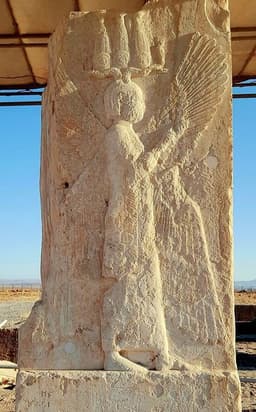
Cyrus the Great
Emperor · Ancient
83.9Total

Trajan
Emperor · Ancient
76.0Total
Basic Information
Born
-600
53
Died
-530
117
Era
Ancient
Ancient
Nationality
Persia
Roman Empire
Occupation
Emperor
Emperor
Civilization
Middle Eastern
Western
Score Comparison
Military (10%)
82.0
86.0
Political (20%)
85.0
79.2
Influence (20%)
85.0
82.0
Legacy (20%)
90.0
65.6
Leadership (15%)
78.0
73.2
Strategy (15%)
75.0
76.0
TOTAL
83.9
76.0
Cyrus the Great — Complete Timeline
550 BC
Founding of the Achaemenid EmpirePolitical Action
Cyrus led a rebellion against the Median Empire, defeating King Astyages and capturing Ecbatana. He then united the Persian and Median tribes, establishing the Achaemenid Empire, which became the largest empire the world had yet seen.
Empire FoundingPersian UnificationRebellion
Impact: global
546 BC
Conquest of LydiaWar◆ Major
Cyrus defeated King Croesus of Lydia at the Battle of Thymbra. The Lydian capital Sardis was captured, and Croesus was taken prisoner. This conquest brought Anatolia under Persian control and secured access to the Aegean coast.
Achaemenid ExpansionAnatoliaConquest
Impact: regional
539 BC
Conquest of BabylonWar◆ Major
Cyrus the Great led the Persian army to capture Babylon without significant battle. The city's gates were opened, and Cyrus entered peacefully. This conquest added Mesopotamia to the Achaemenid Empire and marked the end of the Neo-Babylonian Empire.
Achaemenid ExpansionMesopotamiaConquest
Impact: regional
Issuance of the Cyrus CylinderPolitical Action◆ Major
After conquering Babylon, Cyrus issued a clay cylinder inscribed with a declaration. It described his policy of restoring temples, repatriating displaced peoples, and allowing religious freedom. The cylinder is often cited as an early charter of human rights.
Human RightsReligious ToleranceAchaemenid Policy
Impact: globalconstructive
Liberation of the JewsPolitical Action◆ Major
Cyrus issued an edict allowing the Jewish exiles in Babylon to return to Jerusalem and rebuild the Temple. This event is recorded in the biblical Book of Ezra and is a key moment in Jewish history, ending the Babylonian captivity.
Jewish HistoryReligious FreedomReturn from Exile
Impact: regionalconstructive
Trajan — Complete Timeline
101 AD
Implemented the Alimenta Welfare ProgramReform◆ Major
Trajan expanded the Alimenta program, a state-funded welfare system that provided food subsidies and educational support for poor children in Italy. The program used interest from state loans to landowners to fund the distributions, aiming to boost the Italian population and agricultural economy.
WelfareSocial PolicyItaly
Impact: regionalconstructive
105 AD
Built Trajan's Bridge over the DanubeOther
Trajan ordered the construction of a massive stone and timber bridge across the Danube River near the Iron Gates. Designed by Apollodorus of Damascus, it was the longest arch bridge in the world for over a millennium, facilitating the Roman invasion of Dacia.
EngineeringBridgeDanube
Impact: regionalconstructive
106 AD
Conquered DaciaWar
Trajan led two major campaigns against the Dacian kingdom under King Decebalus, culminating in the conquest of Dacia (modern Romania) in 106 CE. The victory brought vast gold and silver mines under Roman control and established a new province, funding massive building projects in Rome.
DaciaConquestProvince
Impact: regional
112 AD
Built Trajan's Forum and MarketCultural◆ Major
Trajan commissioned the construction of Trajan's Forum, a vast complex in Rome including a basilica, libraries, and the Column of Trajan. The adjacent Trajan's Market, a multi-level commercial center, demonstrated Roman engineering prowess and served as a model for urban planning.
ArchitectureRomeUrban Planning
Impact: globalconstructive
116 AD
Conquered Parthia and Reached the Persian GulfWar◆ Major
Trajan launched a campaign against the Parthian Empire, capturing its capital Ctesiphon and annexing Mesopotamia. He reached the Persian Gulf, marking the easternmost extent of Roman territory. However, rebellions in the conquered territories forced a withdrawal shortly after.
ParthiaMesopotamiaExpansion
Impact: global
Expert Analysis
Origins
Cyrus the Great (c. 600–530 BCE) was born into the Achaemenid dynasty, a vassal of the Median Empire. He united the Persian tribes and led a rebellion against the Medes, overthrowing them in 550 BCE. His upbringing in the Persian heartland gave him a deep understanding of tribal dynamics and leadership. In contrast, Trajan (53–117 CE) was born in Italica, Spain, into a Roman patrician family. His father was a prominent senator and governor, providing Trajan with a strong military and political education. Trajan rose through the ranks of the Roman army and administration, eventually becoming consul and governor of Upper Germany. Both men emerged from regional power structures, but Cyrus's rise was more revolutionary, while Trajan's was a product of the established Roman system.
Rise to Power
Cyrus's rise began with his consolidation of the Persian tribes and his victory over Astyages of Media. He then turned his attention to the powerful kingdoms of Lydia and Babylon. His conquest of Lydia in 547 BCE and Babylon in 539 BCE marked him as a master strategist. He famously diverted the Euphrates River to enter Babylon, demonstrating innovative military tactics. Trajan's rise was more conventional: he was adopted by Emperor Nerva in 97 CE, ensuring a smooth succession. Upon Nerva's death in 98 CE, Trajan became emperor. He quickly launched campaigns to secure the frontiers, first against the Dacians (101–106 CE) and then against Parthia (114–117 CE). Trajan's rise was marked by military prowess and administrative efficiency, while Cyrus's rise was a series of bold, revolutionary conquests that reshaped the ancient Near East.
Leadership & Governance
Cyrus is renowned for his enlightened rule. After conquering Babylon, he issued the Cyrus Cylinder, which decreed religious tolerance and restored displaced peoples, including the Jews, to their homelands. He allowed local customs and religions to persist, earning loyalty from diverse subjects. His administrative system divided the empire into satrapies, each governed by a satrap, with checks and balances to prevent corruption. Trajan, while also a capable administrator, focused on expansion and infrastructure. He built Trajan's Forum, markets, and a massive bridge over the Danube. He implemented the Alimenta welfare program to support orphans and poor children. However, his governance was more autocratic and Roman-centric, imposing Roman law and culture on conquered territories. Cyrus's governance was more inclusive and multicultural, earning him the title 'King of Kings' and respect from subject peoples.
Triumph & Tragedy
Cyrus's greatest triumph was the conquest of Babylon, which made him the ruler of the largest empire the world had ever seen. His liberation of the Jews and restoration of their temple earned him a revered place in the Hebrew Bible. However, his death in battle against the Massagetae in 530 BCE was a tragic end, as he was killed and his body reportedly mutilated. Trajan's triumph was the conquest of Dacia, which brought immense wealth to Rome, and his campaign into Parthia, which extended Roman rule to the Persian Gulf. However, his later years were marred by a Jewish revolt in 115–117 CE and his own failing health. He died in 117 CE while returning to Rome, leaving a vast but overstretched empire. Both men experienced great victories but also faced setbacks and untimely deaths.
Character & Destiny
Cyrus is often depicted as a wise, benevolent, and just ruler. His policies of tolerance and respect for local traditions were ahead of his time. He was a skilled diplomat and military commander, but also a pragmatist who understood the value of winning hearts and minds. His destiny was to create a multicultural empire that set a standard for future empires. Trajan was a capable soldier-emperor, known for his military prowess and building projects. He was respected by his troops and the Senate, but his reign was marked by aggressive expansion that strained Roman resources. His destiny was to push Rome to its greatest territorial extent, but at the cost of overextension. Both men were shaped by their times: Cyrus by the need to unify diverse peoples, Trajan by the Roman drive for glory and conquest.
Legacy
Cyrus's legacy is monumental. The Cyrus Cylinder is often considered the first charter of human rights, and his model of empire influenced later rulers, including Alexander the Great and the Romans. He is celebrated in modern Iran as a national hero. Trajan's legacy is also significant: his forum and market remain architectural marvels, and his conquests defined the Roman Empire's peak. However, his overexpansion contributed to future troubles. In terms of lasting impact, Cyrus's ideas of tolerance and multiculturalism have a more profound resonance today, while Trajan's achievements are more narrowly Roman. The numerical scores reflect this: Cyrus's Leadership (90) and Diplomacy (78) outshine Trajan's Leadership (66) and Diplomacy (73), while Trajan's Military (86) is slightly higher than Cyrus's (82). Overall, Cyrus's broader vision and enduring legacy give him the edge.
Conclusion
Comparing Cyrus the Great and Trajan reveals two different models of empire. Cyrus built a vast, stable, and tolerant empire that lasted for centuries, while Trajan expanded Rome to its peak but left a legacy of overextension. Cyrus's inclusive governance and respect for human rights set a standard that still inspires, while Trajan's military conquests and building projects are impressive but more traditional. Based on historical impact and innovation, Cyrus the Great emerges as the greater emperor. His score gap of 7.9 points underscores his superior leadership, vision, and lasting influence. While Trajan was a remarkable emperor, Cyrus's achievements in statecraft and human rights are unparalleled.
Rankings
🥇
Cyrus the GreatLeader
Mil: 82.0Pol: 85.0Inf: 85.0
83.9
🥈
Trajan
Mil: 86.0Pol: 79.2Inf: 82.0
76.0
+7.9 behind
How This Comparison Works
Algorithm
Each figure is scored on 6 dimensions (0—100 scale) based on structured historical data: Military (10%), Political (20%), Influence (20%), Legacy (20%), Leadership (15%), Strategy (15%). The weighted total produces the final ranking.
Data Sources
Scores are computed from structured sub-indicators in the database. Scale factors adjust for era (Ancient ×0.85, Modern ×1.0) and civilization size (Eastern ×1.05, Other ×0.80) to account for differences in population and military scale.
Maximum 3 Figures
Comparisons are limited to 2—3 figures to ensure readability and statistical meaningfulness.
Error Margins
±5 points per dimension — Sub-scores are derived from historical records with inherent uncertainty. Two figures within 5 points on a dimension should be considered roughly equivalent in that area.
Total Score Accuracy
±3 points overall — The weighted combination of 6 dimensions produces a total score with approximately ±3 points of uncertainty. Differences of less than 3 points are not statistically significant— the figures are effectively tied.
Known Limitations
- Historical records are incomplete and uneven across civilizations
- Figures from oral-tradition societies may be underrepresented
- Occupation labels can misclassify multi-role figures
- Scores measure capability and impact, not moral character
- Quantitative scoring is a comparison tool, not absolute truth
Capability Radar
Military (10%) — Battles & Warfare
Battles
85
95
Win Rate
90
98
Expansion
92
95
Political (20%) — Governance & Reform
Reform
90
88
Diplomacy
95
85
Economy
80
90
Influence (20%) — Cultural & Global Reach
Cultural
90
85
Global
90
85
Legacy (20%) — Historical Impact
Historical
95
90
Longevity
95
88
Leadership (15%) — Power & Stability
Tenure
70
90
Stability
85
92
Strategy (15%) — Tactics & Innovation
Strategy
88
92
Tactics
80
88
Reform
75
85
Similar Comparisons
Comments & Discussion
No comments yet. Be the first to share your thoughts!