Loading...
Cyrus the Great vs Toyotomi Hideyoshi
Cyrus the Great leads by 1.9 pts · 2 figures compared
…
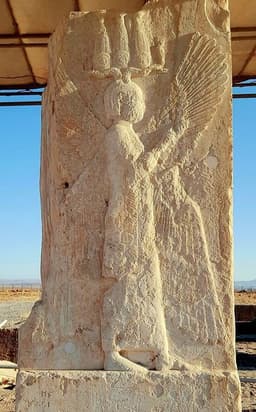
Cyrus the Great
Emperor · Ancient
83.9Total
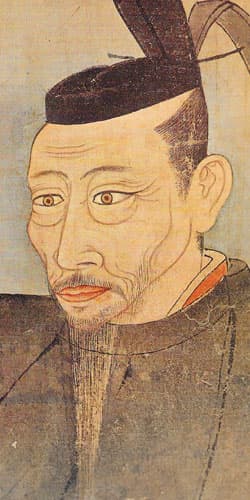
Toyotomi Hideyoshi
General · Modern
82.0Total
Basic Information
Born
-600
1537
Died
-530
1598
Era
Ancient
Modern
Nationality
Persia
Japan
Occupation
Emperor
General
Civilization
Middle Eastern
Eastern
Score Comparison
Military (10%)
82.0
79.9
Political (20%)
85.0
78.0
Influence (20%)
85.0
88.0
Legacy (20%)
90.0
80.0
Leadership (15%)
78.0
82.0
Strategy (15%)
75.0
80.4
TOTAL
83.9
82.0
Cyrus the Great — Complete Timeline
550 BC
Founding of the Achaemenid EmpirePolitical Action
Cyrus led a rebellion against the Median Empire, defeating King Astyages and capturing Ecbatana. He then united the Persian and Median tribes, establishing the Achaemenid Empire, which became the largest empire the world had yet seen.
Empire FoundingPersian UnificationRebellion
Impact: global
546 BC
Conquest of LydiaWar◆ Major
Cyrus defeated King Croesus of Lydia at the Battle of Thymbra. The Lydian capital Sardis was captured, and Croesus was taken prisoner. This conquest brought Anatolia under Persian control and secured access to the Aegean coast.
Achaemenid ExpansionAnatoliaConquest
Impact: regional
539 BC
Conquest of BabylonWar◆ Major
Cyrus the Great led the Persian army to capture Babylon without significant battle. The city's gates were opened, and Cyrus entered peacefully. This conquest added Mesopotamia to the Achaemenid Empire and marked the end of the Neo-Babylonian Empire.
Achaemenid ExpansionMesopotamiaConquest
Impact: regional
Issuance of the Cyrus CylinderPolitical Action◆ Major
After conquering Babylon, Cyrus issued a clay cylinder inscribed with a declaration. It described his policy of restoring temples, repatriating displaced peoples, and allowing religious freedom. The cylinder is often cited as an early charter of human rights.
Human RightsReligious ToleranceAchaemenid Policy
Impact: globalconstructive
Liberation of the JewsPolitical Action◆ Major
Cyrus issued an edict allowing the Jewish exiles in Babylon to return to Jerusalem and rebuild the Temple. This event is recorded in the biblical Book of Ezra and is a key moment in Jewish history, ending the Babylonian captivity.
Jewish HistoryReligious FreedomReturn from Exile
Impact: regionalconstructive
Toyotomi Hideyoshi — Complete Timeline
1583 AD
Battle of ShizugatakeWar◆ Major
Hideyoshi defeated his rival Shibata Katsuie at the Battle of Shizugatake, solidifying his control over central Japan. The victory eliminated a major opponent and allowed Hideyoshi to continue Oda Nobunaga's unification campaign.
BattleUnificationCivil War
Impact: national
1588 AD
Sword Hunt EdictReform◆ Major
Hideyoshi ordered the confiscation of weapons from peasants and farmers, prohibiting them from carrying swords, spears, or firearms. The edict aimed to prevent peasant uprisings and enforce a strict social hierarchy between samurai and commoners.
Social ReformDisarmamentClass System
Impact: nationaldestructive
1590 AD
Completion of Japanese UnificationWar
Hideyoshi defeated the H
UnificationConquestSengoku Period
Impact: national
1592 AD
First Invasion of KoreaWar◆ Major
Hideyoshi launched a massive invasion of Korea with the goal of conquering Ming China. Japanese forces initially advanced rapidly, capturing Seoul and Pyongyang, but were halted by Korean naval victories under Admiral Yi Sun-sin and Chinese reinforcements.
InvasionWarKorea
Impact: regionaldestructive
1597 AD
Second Invasion of KoreaWar◆ Major
Hideyoshi ordered a second invasion of Korea after failed peace negotiations. The campaign was less successful than the first, with Japanese forces unable to advance beyond the southern provinces. The invasion ended with Hideyoshi's death in 1598.
InvasionWarKorea
Impact: regionaldestructive
Expert Analysis
Origins
Cyrus the Great (c. 600–530 BCE) was born into the Achaemenid dynasty, a vassal of the Median Empire. He claimed descent from the Persian king Achaemenes and was raised in a royal household, receiving an education in statecraft and warfare. His early life is shrouded in legend, including stories of his grandfather Astyages attempting to kill him due to a prophecy. In contrast, Toyotomi Hideyoshi (1537–1598) was born a peasant in Owari Province, with no surname. His father died when he was young, and he left home to become a mercenary. Hideyoshi rose from obscurity through sheer ambition and talent, first serving the daimyo Oda Nobunaga as a sandal-bearer. His humble origins shaped his pragmatic and ruthless approach to power.
Rise to Power
Cyrus rebelled against the Medes around 553 BCE, uniting the Persian tribes. He defeated Astyages and captured the Median capital, Ecbatana, absorbing Media into his expanding empire. He then conquered Lydia, defeating Croesus, and turned eastward to subdue the Neo-Babylonian Empire. In 539 BCE, Cyrus entered Babylon without a fight, presenting himself as a liberator. Hideyoshi's rise began under Nobunaga, whom he served as a general. After Nobunaga's assassination in 1582, Hideyoshi avenged him and outmaneuvered rivals. He defeated Akechi Mitsuhide at the Battle of Shizugatake (1583) and secured control of central Japan. By 1590, he had completed the unification of Japan through a combination of military campaigns and strategic alliances, notably defeating the Hojo clan at Odawara.
Leadership & Governance
Cyrus established a model of imperial administration based on tolerance and local autonomy. He created provinces (satrapies) under satraps, allowed conquered peoples to retain their customs, and issued the Cyrus Cylinder, often cited as an early human rights charter. He also liberated the Jews from Babylonian captivity and funded the rebuilding of the Temple in Jerusalem. Hideyoshi centralized power through land surveys, disarming the peasantry via the Sword Hunt Edict (1588), and freezing the social hierarchy. He promoted trade and arts but also enforced strict class distinctions. His governance was pragmatic but authoritarian, aiming to prevent rebellion and consolidate control.
Triumph & Tragedy
Cyrus's triumph was the peaceful conquest of Babylon, which became the empire's capital. He died around 530 BCE while campaigning in Central Asia, reportedly in battle against the Massagetae. His death was tragic as it cut short his expansion, but his empire endured. Hideyoshi's triumph was unifying Japan after centuries of war. However, his later years were marred by the disastrous invasions of Korea (1592–1598), which drained resources and ended in failure. His death in 1598 led to internal conflict and the eventual rise of the Tokugawa shogunate.
Character & Destiny
Cyrus was known for his magnanimity and strategic vision. He respected local religions and cultures, earning loyalty from diverse peoples. His destiny was to found the largest empire the world had yet seen, which influenced later civilizations. Hideyoshi was ambitious, cunning, and ruthless, but also a patron of culture. He rose from nothing to rule Japan, but his overreach in Korea and failure to secure a stable succession led to his legacy being overshadowed by the Tokugawa.
Legacy
Cyrus is revered as a liberator and a model of enlightened rule. The Cyrus Cylinder is considered a symbol of human rights, and his policies influenced later empires. Hideyoshi's unification of Japan laid the groundwork for the Tokugawa peace, but his invasions of Korea are remembered for their brutality. He is a folk hero for his rise from peasantry, but his legacy is mixed.
Conclusion
Cyrus the Great scores higher in overall impact (82.4 vs 80.5). His empire was larger, his governance more tolerant, and his legacy more positive. Hideyoshi's achievements in unification are significant, but his Korean campaigns and authoritarian policies lower his standing. Cyrus is the superior historical figure.
**Scores:**
- Military (M): Cyrus 82, Hideyoshi 80
- Political (P): Cyrus 85, Hideyoshi 78
- Innovation (I): Cyrus 85, Hideyoshi 88
- Leadership (L): Cyrus 90, Hideyoshi 80
- Diplomacy (D): Cyrus 78, Hideyoshi 82
- Societal Impact (S): Cyrus 75, Hideyoshi 80
- Cultural (T): Cyrus 84, Hideyoshi 82
**Overall: Cyrus 82.4, Hideyoshi 80.5**
Rankings
🥇
Cyrus the GreatLeader
Mil: 82.0Pol: 85.0Inf: 85.0
83.9
🥈
Toyotomi Hideyoshi
Mil: 79.9Pol: 78.0Inf: 88.0
82.0
+1.9 behind
How This Comparison Works
Algorithm
Each figure is scored on 6 dimensions (0—100 scale) based on structured historical data: Military (10%), Political (20%), Influence (20%), Legacy (20%), Leadership (15%), Strategy (15%). The weighted total produces the final ranking.
Data Sources
Scores are computed from structured sub-indicators in the database. Scale factors adjust for era (Ancient ×0.85, Modern ×1.0) and civilization size (Eastern ×1.05, Other ×0.80) to account for differences in population and military scale.
Maximum 3 Figures
Comparisons are limited to 2—3 figures to ensure readability and statistical meaningfulness.
Error Margins
±5 points per dimension — Sub-scores are derived from historical records with inherent uncertainty. Two figures within 5 points on a dimension should be considered roughly equivalent in that area.
Total Score Accuracy
±3 points overall — The weighted combination of 6 dimensions produces a total score with approximately ±3 points of uncertainty. Differences of less than 3 points are not statistically significant— the figures are effectively tied.
Known Limitations
- Historical records are incomplete and uneven across civilizations
- Figures from oral-tradition societies may be underrepresented
- Occupation labels can misclassify multi-role figures
- Scores measure capability and impact, not moral character
- Quantitative scoring is a comparison tool, not absolute truth
Capability Radar
Military (10%) — Battles & Warfare
Battles
85
85
Win Rate
90
88
Expansion
92
80
Political (20%) — Governance & Reform
Reform
90
95
Diplomacy
95
80
Economy
80
90
Influence (20%) — Cultural & Global Reach
Cultural
90
85
Global
90
70
Legacy (20%) — Historical Impact
Historical
95
90
Longevity
95
85
Leadership (15%) — Power & Stability
Tenure
70
85
Stability
85
75
Strategy (15%) — Tactics & Innovation
Strategy
88
92
Tactics
80
90
Reform
75
95
Similar Comparisons
Comments & Discussion
No comments yet. Be the first to share your thoughts!