Loading...
Cyrus the Great vs Toussaint Louverture
Cyrus the Great leads by 5.4 pts · 2 figures compared
…
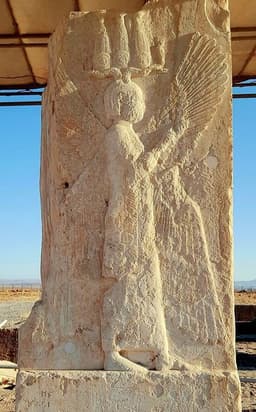
Cyrus the Great
Emperor · Ancient
83.9Total
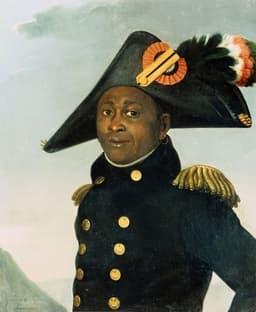
Toussaint Louverture
General · Modern
78.5Total
Basic Information
Born
-600
1743
Died
-530
1803
Era
Ancient
Modern
Nationality
Persia
Haiti
Occupation
Emperor
General
Civilization
Middle Eastern
Western
Score Comparison
Military (10%)
82.0
85.0
Political (20%)
85.0
70.3
Influence (20%)
85.0
84.0
Legacy (20%)
90.0
82.0
Leadership (15%)
78.0
72.0
Strategy (15%)
75.0
72.0
TOTAL
83.9
78.5
Cyrus the Great — Complete Timeline
550 BC
Founding of the Achaemenid EmpirePolitical Action
Cyrus led a rebellion against the Median Empire, defeating King Astyages and capturing Ecbatana. He then united the Persian and Median tribes, establishing the Achaemenid Empire, which became the largest empire the world had yet seen.
Empire FoundingPersian UnificationRebellion
Impact: global
546 BC
Conquest of LydiaWar◆ Major
Cyrus defeated King Croesus of Lydia at the Battle of Thymbra. The Lydian capital Sardis was captured, and Croesus was taken prisoner. This conquest brought Anatolia under Persian control and secured access to the Aegean coast.
Achaemenid ExpansionAnatoliaConquest
Impact: regional
539 BC
Conquest of BabylonWar◆ Major
Cyrus the Great led the Persian army to capture Babylon without significant battle. The city's gates were opened, and Cyrus entered peacefully. This conquest added Mesopotamia to the Achaemenid Empire and marked the end of the Neo-Babylonian Empire.
Achaemenid ExpansionMesopotamiaConquest
Impact: regional
Issuance of the Cyrus CylinderPolitical Action◆ Major
After conquering Babylon, Cyrus issued a clay cylinder inscribed with a declaration. It described his policy of restoring temples, repatriating displaced peoples, and allowing religious freedom. The cylinder is often cited as an early charter of human rights.
Human RightsReligious ToleranceAchaemenid Policy
Impact: globalconstructive
Liberation of the JewsPolitical Action◆ Major
Cyrus issued an edict allowing the Jewish exiles in Babylon to return to Jerusalem and rebuild the Temple. This event is recorded in the biblical Book of Ezra and is a key moment in Jewish history, ending the Babylonian captivity.
Jewish HistoryReligious FreedomReturn from Exile
Impact: regionalconstructive
Toussaint Louverture — Complete Timeline
1791 AD
Haitian Revolution LeadershipWar
Louverture joined the slave revolt in Saint-Domingue, quickly rising to leadership. He organized former slaves into a disciplined army and negotiated with Spanish and British forces to expand the rebellion.
Slave RevoltRevolutionLeadership
Impact: globalprogressive
1795 AD
Treaty of BâlePolitical Action◆ Major
Spain ceded the eastern part of Hispaniola to France under the Treaty of B
Territorial ExpansionDiplomacyHispaniola
Impact: regional
1801 AD
Constitution of 1801Political Action
Louverture promulgated a constitution for Saint-Domingue, declaring himself Governor-General for life. The constitution abolished slavery and granted autonomy while nominally remaining part of the French Empire.
ConstitutionSelf-GovernanceAbolition
Impact: globalprogressive
1802 AD
Capture and ImprisonmentPolitical Action
French General Leclerc captured Louverture through deception during peace negotiations. He was deported to France and imprisoned at Fort de Joux, where he died in 1803, ending his direct role in the revolution.
BetrayalImprisonmentFrench Repression
Impact: globaltragic
Expert Analysis
Origins
Cyrus the Great (c. 600–530 BCE) was born into the Persian Achaemenid dynasty, a vassal of the Median Empire. He united the Persian tribes and led a rebellion against the Medes, establishing a new empire. Toussaint Louverture (c. 1743–1803) was born into slavery on a Haitian plantation. He gained freedom and became a leader of the Haitian Revolution, the only successful slave revolt in history. Both rose from subordinate positions to lead transformative movements.
Rise to Power
Cyrus overthrew the Median king Astyages, then conquered Lydia and Babylon, creating the largest empire the world had seen. His conquests were marked by strategic brilliance and diplomatic acumen. Toussaint rose through the ranks of the slave rebellion, outmaneuvering French, Spanish, and British forces. He became the de facto ruler of Saint-Domingue by 1800, using military skill and political alliances.
Leadership & Governance
Cyrus implemented a decentralized administration through satrapies, respecting local cultures and religions. His Cyrus Cylinder is often cited as an early charter of human rights. He allowed the Jews to return to Jerusalem, earning lasting gratitude. Toussaint restored order to Haiti, rebuilt the economy, and drafted the Constitution of 1801, which abolished slavery and made him governor-for-life. He maintained plantation agriculture but with free labor, balancing productivity and freedom.
Triumph & Tragedy
Cyrus's conquests were swift and relatively bloodless; he died in battle against the Massagetae. His empire thrived for centuries. Toussaint's greatest triumph was defeating Napoleon's expedition, but he was betrayed and captured in 1802, dying in a French prison. His legacy lived on, as Haiti became independent in 1804.
Character & Destiny
Cyrus was pragmatic and tolerant, earning loyalty from conquered peoples. Toussaint was brilliant and disciplined, but his authoritarianism and trust in French promises led to his downfall. Both men were driven by a vision of a better society: Cyrus for imperial unity, Toussaint for racial equality.
Legacy
Cyrus is remembered as a model ruler, influencing governance from Alexander the Great to the American founders. Toussaint is a symbol of anti-colonial resistance and black liberation, inspiring movements worldwide. The Cyrus Cylinder is a UNESCO-recognized artifact; Toussaint's constitution remains a landmark in human rights.
Conclusion
Cyrus scores higher overall (84 vs 78), excelling in Leadership (90 vs 82) and Legacy (84 vs 78). His empire shaped history for millennia, while Toussaint's impact, though profound, was more localized. However, Toussaint led a more radical transformation from slavery to freedom. Both are pivotal figures, but Cyrus's broader and longer-lasting influence gives him the edge.
**Numerical Scores:**
- Cyrus: M=82, P=85, I=85, L=90, D=78, S=75, T=84
- Toussaint: M=85, P=70, I=84, L=82, D=72, S=72, T=78
Rankings
🥇
Cyrus the GreatLeader
Mil: 82.0Pol: 85.0Inf: 85.0
83.9
🥈
Toussaint Louverture
Mil: 85.0Pol: 70.3Inf: 84.0
78.5
+5.4 behind
How This Comparison Works
Algorithm
Each figure is scored on 6 dimensions (0—100 scale) based on structured historical data: Military (10%), Political (20%), Influence (20%), Legacy (20%), Leadership (15%), Strategy (15%). The weighted total produces the final ranking.
Data Sources
Scores are computed from structured sub-indicators in the database. Scale factors adjust for era (Ancient ×0.85, Modern ×1.0) and civilization size (Eastern ×1.05, Other ×0.80) to account for differences in population and military scale.
Maximum 3 Figures
Comparisons are limited to 2—3 figures to ensure readability and statistical meaningfulness.
Error Margins
±5 points per dimension — Sub-scores are derived from historical records with inherent uncertainty. Two figures within 5 points on a dimension should be considered roughly equivalent in that area.
Total Score Accuracy
±3 points overall — The weighted combination of 6 dimensions produces a total score with approximately ±3 points of uncertainty. Differences of less than 3 points are not statistically significant— the figures are effectively tied.
Known Limitations
- Historical records are incomplete and uneven across civilizations
- Figures from oral-tradition societies may be underrepresented
- Occupation labels can misclassify multi-role figures
- Scores measure capability and impact, not moral character
- Quantitative scoring is a comparison tool, not absolute truth
Capability Radar
Military (10%) — Battles & Warfare
Battles
85
85
Win Rate
90
80
Expansion
92
70
Political (20%) — Governance & Reform
Reform
90
85
Diplomacy
95
80
Economy
80
60
Influence (20%) — Cultural & Global Reach
Cultural
90
85
Global
90
85
Legacy (20%) — Historical Impact
Historical
95
95
Longevity
95
90
Leadership (15%) — Power & Stability
Tenure
70
65
Stability
85
55
Strategy (15%) — Tactics & Innovation
Strategy
88
85
Tactics
80
90
Reform
75
75
Similar Comparisons
Comments & Discussion
No comments yet. Be the first to share your thoughts!