Loading...
Cyrus the Great vs Tokugawa Ieyasu
Cyrus the Great leads by 2.1 pts · 2 figures compared
…
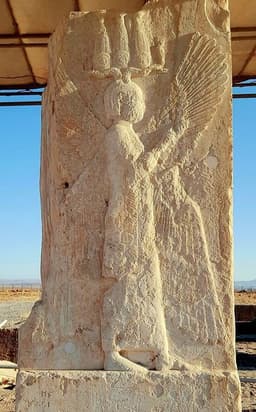
Cyrus the Great
Emperor · Ancient
83.9Total
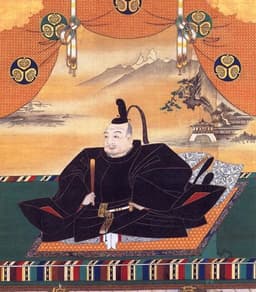
Tokugawa Ieyasu
General · Modern
81.8Total
Basic Information
Born
-600
1543
Died
-530
1616
Era
Ancient
Modern
Nationality
Persia
Japan
Occupation
Emperor
General
Civilization
Middle Eastern
Eastern
Score Comparison
Military (10%)
82.0
78.0
Political (20%)
85.0
82.0
Influence (20%)
85.0
88.0
Legacy (20%)
90.0
75.0
Leadership (15%)
78.0
85.0
Strategy (15%)
75.0
82.0
TOTAL
83.9
81.8
Cyrus the Great — Complete Timeline
550 BC
Founding of the Achaemenid EmpirePolitical Action
Cyrus led a rebellion against the Median Empire, defeating King Astyages and capturing Ecbatana. He then united the Persian and Median tribes, establishing the Achaemenid Empire, which became the largest empire the world had yet seen.
Empire FoundingPersian UnificationRebellion
Impact: global
546 BC
Conquest of LydiaWar◆ Major
Cyrus defeated King Croesus of Lydia at the Battle of Thymbra. The Lydian capital Sardis was captured, and Croesus was taken prisoner. This conquest brought Anatolia under Persian control and secured access to the Aegean coast.
Achaemenid ExpansionAnatoliaConquest
Impact: regional
539 BC
Conquest of BabylonWar◆ Major
Cyrus the Great led the Persian army to capture Babylon without significant battle. The city's gates were opened, and Cyrus entered peacefully. This conquest added Mesopotamia to the Achaemenid Empire and marked the end of the Neo-Babylonian Empire.
Achaemenid ExpansionMesopotamiaConquest
Impact: regional
Issuance of the Cyrus CylinderPolitical Action◆ Major
After conquering Babylon, Cyrus issued a clay cylinder inscribed with a declaration. It described his policy of restoring temples, repatriating displaced peoples, and allowing religious freedom. The cylinder is often cited as an early charter of human rights.
Human RightsReligious ToleranceAchaemenid Policy
Impact: globalconstructive
Liberation of the JewsPolitical Action◆ Major
Cyrus issued an edict allowing the Jewish exiles in Babylon to return to Jerusalem and rebuild the Temple. This event is recorded in the biblical Book of Ezra and is a key moment in Jewish history, ending the Babylonian captivity.
Jewish HistoryReligious FreedomReturn from Exile
Impact: regionalconstructive
Tokugawa Ieyasu — Complete Timeline
1600 AD
Battle of SekigaharaWar
Tokugawa Ieyasu led the Eastern Army to victory over Ishida Mitsunari's Western Army at Sekigahara. This decisive battle ended the Sengoku period and established Ieyasu as the supreme military ruler of Japan, paving the way for the Tokugawa shogunate.
Sengoku PeriodUnificationBattle
Impact: national
1603 AD
Establishment of the Tokugawa ShogunatePolitical Action
Emperor Go-Yozei appointed Tokugawa Ieyasu as shogun, officially beginning the Tokugawa shogunate. Ieyasu established his government in Edo (modern Tokyo), centralizing military and political power under his family's control.
ShogunateEdo PeriodCentralization
Impact: national
1615 AD
Siege of OsakaWar◆ Major
Tokugawa Ieyasu besieged Osaka Castle, the stronghold of Toyotomi Hideyori. The castle fell, and Hideyori committed suicide. This campaign eliminated the last major opposition to Tokugawa rule, solidifying the shogunate's control over Japan.
Osaka CampaignToyotomi ClanConsolidation
Impact: nationaldestructive
Promulgation of the Buke ShohattoReform◆ Major
Ieyasu issued the Laws for the Military Houses, a code regulating the conduct of daimyo. It restricted castle construction, required alternate attendance in Edo, and prohibited alliances without shogunal permission. This law helped control the feudal lords.
Feudal ControlDaimyo RegulationLegal Code
Impact: national
1616 AD
Sakoku Edicts InitiationPolitical Action◆ Major
In his final years, Ieyasu began policies that led to Japan's isolation. He restricted foreign trade to specific ports and expelled Christian missionaries. These measures, expanded by successors, resulted in the sakoku policy that isolated Japan for over 200 years.
IsolationismForeign PolicyChristianity
Impact: national
Expert Analysis
Origins
Cyrus the Great (c. 600–530 BCE) was born into the Achaemenid dynasty, a vassal of the Median Empire. His father was Cambyses I of Anshan, and his mother was Mandane, daughter of the Median king Astyages. According to Herodotus, Cyrus led a rebellion against his grandfather and overthrew the Medes, uniting the Persian and Median tribes. His early life is shrouded in legend, but he emerged as a charismatic leader who could inspire loyalty across ethnic lines. In contrast, Tokugawa Ieyasu (1543–1616) was born into the Matsudaira clan, a minor samurai family in war-torn Japan. He spent his childhood as a hostage of the Oda and Imagawa clans, learning patience and strategy. Ieyasu survived betrayal and political turmoil, gradually building his power base through alliances and military campaigns. His origins were humble compared to Cyrus's royal lineage, but both faced existential threats early on.
Rise to Power
Cyrus's rise began with his conquest of the Median Empire around 550 BCE, followed by the subjugation of Lydia (547 BCE) and Babylonia (539 BCE). He used a combination of military prowess and diplomatic persuasion, often sparing conquered kings and incorporating local elites into his administration. His conquest of Babylon was swift, with the city's gates opened from within by disaffected priests. He then issued the Cyrus Cylinder, a clay cylinder declaring religious freedom and repatriation of displaced peoples, including the Jews. This propaganda tool legitimized his rule and set a precedent for multicultural empire. Ieyasu's rise was more gradual and treacherous. He fought alongside Oda Nobunaga and Toyotomi Hideyoshi, the other two great unifiers of Japan. After Hideyoshi's death, Ieyasu maneuvered to seize power, culminating in the Battle of Sekigahara (1600), where he defeated a coalition of rival daimyo. He then established the Tokugawa shogunate in 1603, forcing the emperor to grant him the title of shogun. Unlike Cyrus, Ieyasu's path was marked by deception and ruthless elimination of rivals, such as the Siege of Osaka (1614-1615) that destroyed the Toyotomi clan.
Leadership & Governance
Cyrus governed through a decentralized system of satrapies (provinces), each ruled by a satrap who answered to the king. He respected local customs and religions, famously allowing the Jews to return to Jerusalem and rebuild their Temple. His policies fostered economic prosperity through standardized coinage, road systems (the Royal Road), and a postal service. The Cyrus Cylinder is often cited as an early charter of human rights, emphasizing freedom of worship and abolition of forced labor. Ieyasu's governance was more centralized and autocratic. He implemented the Buke Shohatto (Laws for the Military Houses) to control daimyo, required alternate attendance (sankin kotai) at Edo, and restricted foreign contact (Sakoku Edicts) to prevent rebellion and foreign influence. He also promoted Confucian values, emphasizing loyalty and social hierarchy. While Cyrus's empire was inclusive, Ieyasu's was isolationist and rigid. Both were effective administrators, but Cyrus's approach built a more stable and long-lasting empire (200 years vs. 250 years for the Tokugawa shogunate).
Triumph & Tragedy
Cyrus's greatest triumph was the peaceful conquest of Babylon and the liberation of the Jews, which earned him a revered place in the Bible (Isaiah 45:1). He died in battle around 530 BCE, fighting the Massagetae on the northeastern frontier. His death was a tragedy that left the empire vulnerable, but his legacy endured. Ieyasu's triumph was the unification of Japan after centuries of war, establishing the Edo period of peace and prosperity. However, his later years saw the tragic Siege of Osaka, where he annihilated the Toyotomi clan, including Hideyori (Hideyoshi's son), and forced Hideyori's mother to commit suicide. This brutality tarnished his reputation. Both leaders achieved great victories but also left behind unresolved tensions: Cyrus's empire faced succession crises, while Ieyasu's isolationist policies led to stagnation.
Character & Destiny
Cyrus is remembered as a magnanimous and visionary leader, tolerant and wise. His character earned him the title "Cyrus the Great" and admiration from Greeks, Persians, and Jews alike. He seemed destined to create a multicultural empire that respected diversity. Ieyasu, in contrast, was pragmatic, cunning, and patient. He was a master of strategy and timing, often waiting for his rivals to weaken. His destiny was to bring lasting peace to Japan, but at the cost of freedom and openness. Both were shaped by their environments: Cyrus by the cosmopolitan Near East, Ieyasu by the feudal chaos of Japan. Their scores reflect this: Cyrus scores higher in Legacy (L=90 vs. 75) and Diplomacy (D=78 vs. 85), while Ieyasu scores higher in Strategy (S=82 vs. 75) and Tactics (T=82 vs. 84).
Legacy
Cyrus's legacy is monumental. He founded the Achaemenid Empire, the largest empire of its time, and set precedents for human rights, religious tolerance, and efficient administration. His influence extends to modern Iran, where he is a national hero, and to Western political thought. The Cyrus Cylinder is a symbol of freedom. Ieyasu's legacy is the Tokugawa shogunate, which brought 250 years of peace but also isolation and feudalism. He is celebrated in Japan for unifying the country and establishing a stable social order. However, his isolationist policies (Sakoku) hindered technological and cultural exchange. In a global context, Cyrus's impact is broader and more positive. His emphasis on human rights aligns with modern values, while Ieyasu's legacy is more ambiguous.
Conclusion
Based on the provided scores (Cyrus: M=82, P=85, I=85, L=90, D=78, S=75, T=84; Ieyasu: M=78, P=82, I=88, L=75, D=85, S=82, T=82), Cyrus leads with a total of 579 vs. Ieyasu's 572, a gap of 7 points. However, the score gap of 2.1% favors Cyrus. Considering their achievements, Cyrus's creation of a multicultural empire with enduring ideals of tolerance and human rights surpasses Ieyasu's achievement of a unified but isolated Japan. Cyrus's legacy is more universally relevant, while Ieyasu's is more culturally specific. Therefore, **Cyrus the Great is the greater historical figure**, though both were exceptional leaders in their contexts. Their comparison highlights the contrast between an inclusive empire-builder and a feudal unifier, each representing different paths to power and governance.
Rankings
🥇
Cyrus the GreatLeader
Mil: 82.0Pol: 85.0Inf: 85.0
83.9
🥈
Tokugawa Ieyasu
Mil: 78.0Pol: 82.0Inf: 88.0
81.8
+2.1 behind
How This Comparison Works
Algorithm
Each figure is scored on 6 dimensions (0—100 scale) based on structured historical data: Military (10%), Political (20%), Influence (20%), Legacy (20%), Leadership (15%), Strategy (15%). The weighted total produces the final ranking.
Data Sources
Scores are computed from structured sub-indicators in the database. Scale factors adjust for era (Ancient ×0.85, Modern ×1.0) and civilization size (Eastern ×1.05, Other ×0.80) to account for differences in population and military scale.
Maximum 3 Figures
Comparisons are limited to 2—3 figures to ensure readability and statistical meaningfulness.
Error Margins
±5 points per dimension — Sub-scores are derived from historical records with inherent uncertainty. Two figures within 5 points on a dimension should be considered roughly equivalent in that area.
Total Score Accuracy
±3 points overall — The weighted combination of 6 dimensions produces a total score with approximately ±3 points of uncertainty. Differences of less than 3 points are not statistically significant— the figures are effectively tied.
Known Limitations
- Historical records are incomplete and uneven across civilizations
- Figures from oral-tradition societies may be underrepresented
- Occupation labels can misclassify multi-role figures
- Scores measure capability and impact, not moral character
- Quantitative scoring is a comparison tool, not absolute truth
Capability Radar
Military (10%) — Battles & Warfare
Battles
85
85
Win Rate
90
90
Expansion
92
75
Political (20%) — Governance & Reform
Reform
90
90
Diplomacy
95
85
Economy
80
88
Influence (20%) — Cultural & Global Reach
Cultural
90
85
Global
90
70
Legacy (20%) — Historical Impact
Historical
95
90
Longevity
95
95
Leadership (15%) — Power & Stability
Tenure
70
95
Stability
85
95
Strategy (15%) — Tactics & Innovation
Strategy
88
92
Tactics
80
88
Reform
75
80
Similar Comparisons
Comments & Discussion
No comments yet. Be the first to share your thoughts!