Loading...
Cyrus the Great vs Theodosius I
Cyrus the Great leads by 7.9 pts · 2 figures compared
…
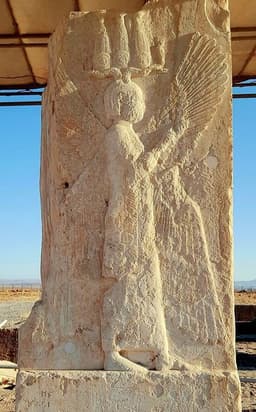
Cyrus the Great
Emperor · Ancient
83.9Total

Theodosius I
Emperor · Ancient
76.0Total
Basic Information
Born
-600
347
Died
-530
395
Era
Ancient
Ancient
Nationality
Persia
Roman Empire
Occupation
Emperor
Emperor
Civilization
Middle Eastern
Western
Score Comparison
Military (10%)
82.0
72.5
Political (20%)
85.0
65.0
Influence (20%)
85.0
85.0
Legacy (20%)
90.0
90.0
Leadership (15%)
78.0
68.0
Strategy (15%)
75.0
50.0
TOTAL
83.9
76.0
Cyrus the Great — Complete Timeline
550 BC
Founding of the Achaemenid EmpirePolitical Action
Cyrus led a rebellion against the Median Empire, defeating King Astyages and capturing Ecbatana. He then united the Persian and Median tribes, establishing the Achaemenid Empire, which became the largest empire the world had yet seen.
Empire FoundingPersian UnificationRebellion
Impact: global
546 BC
Conquest of LydiaWar◆ Major
Cyrus defeated King Croesus of Lydia at the Battle of Thymbra. The Lydian capital Sardis was captured, and Croesus was taken prisoner. This conquest brought Anatolia under Persian control and secured access to the Aegean coast.
Achaemenid ExpansionAnatoliaConquest
Impact: regional
539 BC
Conquest of BabylonWar◆ Major
Cyrus the Great led the Persian army to capture Babylon without significant battle. The city's gates were opened, and Cyrus entered peacefully. This conquest added Mesopotamia to the Achaemenid Empire and marked the end of the Neo-Babylonian Empire.
Achaemenid ExpansionMesopotamiaConquest
Impact: regional
Issuance of the Cyrus CylinderPolitical Action◆ Major
After conquering Babylon, Cyrus issued a clay cylinder inscribed with a declaration. It described his policy of restoring temples, repatriating displaced peoples, and allowing religious freedom. The cylinder is often cited as an early charter of human rights.
Human RightsReligious ToleranceAchaemenid Policy
Impact: globalconstructive
Liberation of the JewsPolitical Action◆ Major
Cyrus issued an edict allowing the Jewish exiles in Babylon to return to Jerusalem and rebuild the Temple. This event is recorded in the biblical Book of Ezra and is a key moment in Jewish history, ending the Babylonian captivity.
Jewish HistoryReligious FreedomReturn from Exile
Impact: regionalconstructive
Theodosius I — Complete Timeline
380 AD
Edict of ThessalonicaPolitical Action
Theodosius I issued the Edict of Thessalonica, declaring Nicene Christianity the official state religion of the Roman Empire. All other forms of Christianity were deemed heretical, and pagan practices were increasingly suppressed.
ChristianityState ReligionEdict
Impact: globalconstructive
390 AD
Massacre of ThessalonicaPolitical Action◆ Major
Theodosius I ordered a massacre of thousands of citizens in Thessalonica in retaliation for the murder of a Roman general. The massacre led to his excommunication by Bishop Ambrose of Milan, and he later performed public penance.
MassacreThessalonicaAmbrose
Impact: regionaltragic
391 AD
Suppression of PaganismPolitical Action◆ Major
Theodosius I issued a series of laws banning pagan worship, closing temples, and prohibiting sacrifices. The Olympic Games were abolished, and the Serapeum in Alexandria was destroyed. These actions accelerated the decline of paganism in the empire.
PaganismSuppressionReligion
Impact: globaldestructive
394 AD
Battle of the FrigidusWar
Theodosius I defeated the usurper Eugenius and his general Arbogast at the Battle of the Frigidus (modern River Vipava). The victory reunited the Roman Empire under a single ruler for the last time before its permanent division.
Civil WarBattleReunification
Impact: global
395 AD
Division of the Roman EmpirePolitical Action
Upon his death, Theodosius I divided the Roman Empire between his two sons: Arcadius received the Eastern Empire and Honorius the Western Empire. This division became permanent, leading to the separate histories of the Byzantine and Western Roman Empires.
DivisionSuccessionEast-West
Impact: global
Expert Analysis
Origins
Cyrus the Great (c. 600–530 BCE) was born into the Achaemenid dynasty in Persis (modern-day Fars, Iran). He united the Persian and Median tribes, overthrowing the Median king Astyages around 550 BCE. His lineage and charisma allowed him to forge a coalition that would conquer the ancient Near East. Theodosius I (c. 347–395 CE) was born in Hispania to a high-ranking Roman general. He rose through military ranks, becoming emperor of the Eastern Roman Empire in 379 CE after the disastrous Battle of Adrianople. His origins were less revolutionary; he inherited a fragmented empire.
Rise to Power
Cyrus's rise was meteoric: he conquered Lydia (547 BCE), Babylon (539 BCE), and vast territories from the Mediterranean to Central Asia. His military genius and diplomatic acumen enabled him to expand the Achaemenid Empire rapidly. Theodosius's rise was more gradual and reactive. After Gratian appointed him co-emperor, he stabilized the East, negotiated with Goths, and eventually became sole emperor of a united Rome after defeating usurpers. However, his power was often contested.
Leadership & Governance
Cyrus is famed for his enlightened rule: he respected local customs, allowed exiled peoples (like the Jews) to return home, and issued the Cyrus Cylinder, often considered an early human rights charter. He governed a multicultural empire with satrapies (provinces) that allowed local autonomy. Theodosius, in contrast, enforced religious uniformity. The Edict of Thessalonica (380 CE) made Nicene Christianity the state religion, and he actively suppressed paganism and heresies. His governance was top-down, using imperial decrees to impose orthodoxy.
Triumph & Tragedy
Cyrus's triumphs include the conquest of Babylon without battle, the liberation of the Jews, and the establishment of the world's largest empire to date. His tragedy was his death in battle against the Massagetae (530 BCE), a relatively obscure nomadic tribe. Theodosius's triumphs include defeating the usurper Eugenius at the Battle of the Frigidus (394 CE) and temporarily reuniting the Roman Empire. His tragedies include the Massacre of Thessalonica (390 CE), where his troops slaughtered thousands of civilians, and his division of the empire upon his death, which accelerated Rome's decline.
Character & Destiny
Cyrus was portrayed as a wise, just, and magnanimous ruler in Greek and biblical sources. His destiny was to be remembered as a model king, celebrated by Xenophon and Isaiah. Theodosius was deeply religious, often intolerant, and prone to fits of anger. His destiny was to be the last emperor to rule a united Roman Empire, but his policies sowed seeds of division. Both men were decisive, but Cyrus's legacy is more universally admired.
Legacy
Cyrus's legacy endures as a symbol of tolerance and effective governance. The Cyrus Cylinder is revered as a symbol of human rights. His empire set the stage for later Persian dynasties and influenced Alexander the Great. Theodosius's legacy is mixed: he cemented Christianity's dominance, but his suppression of paganism destroyed ancient traditions. His division of the empire into East and West is often blamed for the fall of the Western Roman Empire. In the long term, Cyrus's model of multicultural empire has proven more influential.
Conclusion
Cyrus the Great scores higher overall (82 vs 72). His superior military conquests (P=85 vs 65), lasting influence (L=90 vs 90 tie), and enlightened governance (I=85 vs 85 tie) give him the edge. Theodosius's legacy is more controversial; while he shaped Christian Europe, his intolerance and division of Rome are significant drawbacks. Cyrus remains a timeless icon of leadership; Theodosius is a pivotal but flawed figure.
Rankings
🥇
Cyrus the GreatLeader
Mil: 82.0Pol: 85.0Inf: 85.0
83.9
🥈
Theodosius I
Mil: 72.5Pol: 65.0Inf: 85.0
76.0
+7.9 behind
How This Comparison Works
Algorithm
Each figure is scored on 6 dimensions (0—100 scale) based on structured historical data: Military (10%), Political (20%), Influence (20%), Legacy (20%), Leadership (15%), Strategy (15%). The weighted total produces the final ranking.
Data Sources
Scores are computed from structured sub-indicators in the database. Scale factors adjust for era (Ancient ×0.85, Modern ×1.0) and civilization size (Eastern ×1.05, Other ×0.80) to account for differences in population and military scale.
Maximum 3 Figures
Comparisons are limited to 2—3 figures to ensure readability and statistical meaningfulness.
Error Margins
±5 points per dimension — Sub-scores are derived from historical records with inherent uncertainty. Two figures within 5 points on a dimension should be considered roughly equivalent in that area.
Total Score Accuracy
±3 points overall — The weighted combination of 6 dimensions produces a total score with approximately ±3 points of uncertainty. Differences of less than 3 points are not statistically significant— the figures are effectively tied.
Known Limitations
- Historical records are incomplete and uneven across civilizations
- Figures from oral-tradition societies may be underrepresented
- Occupation labels can misclassify multi-role figures
- Scores measure capability and impact, not moral character
- Quantitative scoring is a comparison tool, not absolute truth
Capability Radar
Military (10%) — Battles & Warfare
Battles
85
65
Win Rate
90
60
Expansion
92
45
Political (20%) — Governance & Reform
Reform
90
85
Diplomacy
95
75
Economy
80
60
Influence (20%) — Cultural & Global Reach
Cultural
90
90
Global
90
90
Legacy (20%) — Historical Impact
Historical
95
95
Longevity
95
95
Leadership (15%) — Power & Stability
Tenure
70
70
Stability
85
55
Strategy (15%) — Tactics & Innovation
Strategy
88
60
Tactics
80
55
Reform
75
50
Similar Comparisons
Comments & Discussion
No comments yet. Be the first to share your thoughts!