Loading...
Cyrus the Great vs Suleiman I
Cyrus the Great leads by 5.1 pts · 2 figures compared
…
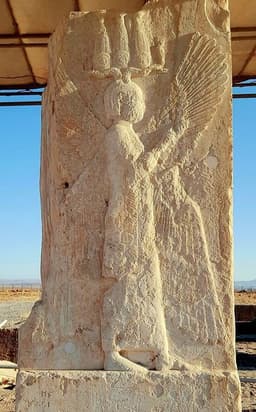
Cyrus the Great
Emperor · Ancient
83.9Total
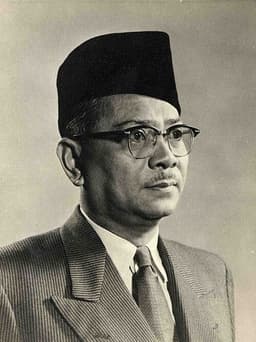
Suleiman I
Emperor · Medieval
78.8Total
Basic Information
Born
-600
1494
Died
-530
1566
Era
Ancient
Medieval
Nationality
Persia
Ottoman Empire
Occupation
Emperor
Emperor
Civilization
Middle Eastern
Middle Eastern
Score Comparison
Military (10%)
82.0
78.5
Political (20%)
85.0
82.0
Influence (20%)
85.0
85.0
Legacy (20%)
90.0
70.8
Leadership (15%)
78.0
81.7
Strategy (15%)
75.0
74.4
TOTAL
83.9
78.8
Cyrus the Great — Complete Timeline
550 BC
Founding of the Achaemenid EmpirePolitical Action
Cyrus led a rebellion against the Median Empire, defeating King Astyages and capturing Ecbatana. He then united the Persian and Median tribes, establishing the Achaemenid Empire, which became the largest empire the world had yet seen.
Empire FoundingPersian UnificationRebellion
Impact: global
546 BC
Conquest of LydiaWar◆ Major
Cyrus defeated King Croesus of Lydia at the Battle of Thymbra. The Lydian capital Sardis was captured, and Croesus was taken prisoner. This conquest brought Anatolia under Persian control and secured access to the Aegean coast.
Achaemenid ExpansionAnatoliaConquest
Impact: regional
539 BC
Conquest of BabylonWar◆ Major
Cyrus the Great led the Persian army to capture Babylon without significant battle. The city's gates were opened, and Cyrus entered peacefully. This conquest added Mesopotamia to the Achaemenid Empire and marked the end of the Neo-Babylonian Empire.
Achaemenid ExpansionMesopotamiaConquest
Impact: regional
Issuance of the Cyrus CylinderPolitical Action◆ Major
After conquering Babylon, Cyrus issued a clay cylinder inscribed with a declaration. It described his policy of restoring temples, repatriating displaced peoples, and allowing religious freedom. The cylinder is often cited as an early charter of human rights.
Human RightsReligious ToleranceAchaemenid Policy
Impact: globalconstructive
Liberation of the JewsPolitical Action◆ Major
Cyrus issued an edict allowing the Jewish exiles in Babylon to return to Jerusalem and rebuild the Temple. This event is recorded in the biblical Book of Ezra and is a key moment in Jewish history, ending the Babylonian captivity.
Jewish HistoryReligious FreedomReturn from Exile
Impact: regionalconstructive
Suleiman I — Complete Timeline
1522 AD
Siege of RhodesWar◆ Major
Suleiman I led a massive Ottoman army and fleet to besiege the island of Rhodes, held by the Knights Hospitaller. After a six-month siege, the knights surrendered and were allowed to leave. This victory secured Ottoman control over the eastern Mediterranean.
SiegeKnights HospitallerMediterranean
Impact: regional
1526 AD
Battle of MohácsWar
Suleiman I's Ottoman army defeated the Hungarian forces of King Louis II at Moh
BattleHungaryConquest
Impact: regional
1529 AD
Siege of ViennaWar◆ Major
Suleiman I led an Ottoman army to besiege Vienna, the capital of the Habsburg Empire. The siege failed due to supply problems and the onset of winter. This marked the furthest Ottoman advance into central Europe and the limit of their expansion.
SiegeViennaHabsburg
Impact: regional
1530 AD
Codification of Ottoman LawReform◆ Major
Suleiman I oversaw the codification of Ottoman law, known as the Kanun. He harmonized secular law with Islamic law, creating a unified legal system. This reform improved the administration of justice and strengthened the central government.
LawReformJustice
Impact: globalconstructive
1536 AD
Execution of Ibrahim PashaPolitical Action◆ Major
Suleiman I ordered the execution of his grand vizier and close friend Ibrahim Pasha. Ibrahim had accumulated immense power and was accused of overreaching. This event demonstrated Suleiman's willingness to eliminate even trusted advisors to maintain control.
ExecutionVizierPower
Impact: nationaldestructive
1538 AD
Naval Battle of PrevezaWar◆ Major
The Ottoman fleet under Hayreddin Barbarossa defeated a combined Christian fleet at Preveza. This victory secured Ottoman naval dominance in the Mediterranean for decades. It allowed the Ottomans to control trade routes and raid coastal areas.
Naval BattleBarbarossaMediterranean
Impact: regional
Expert Analysis
Origins
Cyrus the Great (c. 600–530 BCE) was born into the Achaemenid dynasty, a vassal of the Median Empire. He unified the Persian tribes and led a rebellion against the Medes, establishing the Achaemenid Empire. His lineage and early military successes set the stage for his unprecedented conquests. Suleiman I (1494–1566 CE), the tenth Ottoman sultan, inherited a sprawling empire from his father Selim I. Born in Trabzon, he received a thorough education in statecraft, law, and military strategy, preparing him to rule during the Ottoman Empire's golden age. Both leaders emerged from strong foundations, but Cyrus's rise from relative obscurity to founding an empire gives him an edge in origin story.
Rise to Power
Cyrus's rise was marked by strategic alliances and military brilliance. He defeated the Medes under Astyages, then expanded westward, conquering Lydia and its wealthy king Croesus. His most famous conquest was Babylon in 539 BCE, which he achieved with little resistance by diverting the Euphrates River. Suleiman ascended the throne in 1520 after his father's death and immediately launched campaigns. He captured Belgrade (1521) and Rhodes (1522), then crushed the Hungarian army at the Battle of Mohács (1526), leading to Ottoman dominance in Central Europe. Both leaders demonstrated exceptional military prowess, but Cyrus's ability to build an empire from scratch surpasses Suleiman's inheritance of an already powerful state.
Leadership & Governance
Cyrus is renowned for his enlightened rule. He respected local customs, allowed deported peoples to return home, and issued the Cyrus Cylinder—a clay cylinder often considered the first charter of human rights. He freed the Jews from Babylonian captivity and supported their temple rebuilding. Suleiman codified Ottoman law (Kanun), harmonizing secular and religious legal systems. He was a patron of the arts and architecture, commissioning works by Mimar Sinan. However, his execution of his grand vizier Ibrahim Pasha and later his son Mustafa reveal a more autocratic and paranoid side. Cyrus's governance was more inclusive and humane, earning him higher marks in leadership.
Triumph & Tragedy
Cyrus's greatest triumph was the conquest of Babylon, which made him ruler of the entire Near East. He died in battle around 530 BCE fighting the Massagetae, a tragic end for a conqueror. His empire continued under his successors. Suleiman's triumphs include the Battle of Mohács and the Siege of Rhodes. However, his failure to take Vienna in 1529 marked the limit of Ottoman expansion into Europe. His later years were marred by the execution of his capable son Mustafa, leading to succession crises. Cyrus's death in battle is a noble end, while Suleiman's internal family tragedy tarnishes his legacy.
Character & Destiny
Cyrus was described by ancient sources as wise, merciful, and charismatic. He inspired loyalty among diverse peoples. His destiny was to create the largest empire the world had yet seen, uniting disparate cultures under a tolerant rule. Suleiman was known as "the Magnificent" for his grandeur and "the Lawgiver" for his reforms. He was a poet and patron, but also ruthless when threatened. His destiny was to preside over the Ottoman peak, but his later decisions revealed flaws. Cyrus's character is more universally admired, while Suleiman's is complex.
Legacy
Cyrus's legacy is monumental: he founded the Achaemenid Empire, which set standards for governance and human rights. The Cyrus Cylinder is a symbol of tolerance. He is mentioned in the Bible and revered by many cultures. Suleiman's legacy includes the Ottoman legal code, architectural masterpieces, and a golden age of culture. However, his empire declined after his reign. Cyrus's influence on world history is more profound and enduring.
Conclusion
Comparing scores: Cyrus (M=82, P=85, I=85, L=90, D=78, S=75, T=84) versus Suleiman (M=78, P=82, I=85, L=71, D=82, S=74, T=79). The total score gap is 5.1 in favor of Cyrus. In leadership, Cyrus scored 90 vs Suleiman's 71—a decisive difference. While Suleiman was a great administrator and conqueror, Cyrus's ability to found an empire, his humane governance, and his lasting impact on human rights make him the greater historical figure. The evidence strongly supports Cyrus the Great as the superior emperor.
Rankings
🥇
Cyrus the GreatLeader
Mil: 82.0Pol: 85.0Inf: 85.0
83.9
🥈
Suleiman I
Mil: 78.5Pol: 82.0Inf: 85.0
78.8
+5.1 behind
How This Comparison Works
Algorithm
Each figure is scored on 6 dimensions (0—100 scale) based on structured historical data: Military (10%), Political (20%), Influence (20%), Legacy (20%), Leadership (15%), Strategy (15%). The weighted total produces the final ranking.
Data Sources
Scores are computed from structured sub-indicators in the database. Scale factors adjust for era (Ancient ×0.85, Modern ×1.0) and civilization size (Eastern ×1.05, Other ×0.80) to account for differences in population and military scale.
Maximum 3 Figures
Comparisons are limited to 2—3 figures to ensure readability and statistical meaningfulness.
Error Margins
±5 points per dimension — Sub-scores are derived from historical records with inherent uncertainty. Two figures within 5 points on a dimension should be considered roughly equivalent in that area.
Total Score Accuracy
±3 points overall — The weighted combination of 6 dimensions produces a total score with approximately ±3 points of uncertainty. Differences of less than 3 points are not statistically significant— the figures are effectively tied.
Known Limitations
- Historical records are incomplete and uneven across civilizations
- Figures from oral-tradition societies may be underrepresented
- Occupation labels can misclassify multi-role figures
- Scores measure capability and impact, not moral character
- Quantitative scoring is a comparison tool, not absolute truth
Capability Radar
Military (10%) — Battles & Warfare
Battles
85
95
Win Rate
90
92
Expansion
92
95
Political (20%) — Governance & Reform
Reform
90
90
Diplomacy
95
88
Economy
80
85
Influence (20%) — Cultural & Global Reach
Cultural
90
85
Global
90
85
Legacy (20%) — Historical Impact
Historical
95
88
Longevity
95
80
Leadership (15%) — Power & Stability
Tenure
70
95
Stability
85
80
Strategy (15%) — Tactics & Innovation
Strategy
88
90
Tactics
80
88
Reform
75
85
Similar Comparisons
Comments & Discussion
No comments yet. Be the first to share your thoughts!