Loading...
Cyrus the Great vs Ruhollah Khomeini
Cyrus the Great leads by 8.8 pts · 2 figures compared
…
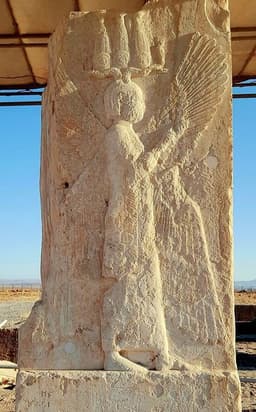
Cyrus the Great
Emperor · Ancient
83.9Total

Ruhollah Khomeini
Politician · Modern
75.1Total
Basic Information
Born
-600
1902
Died
-530
1989
Era
Ancient
Modern
Nationality
Persia
Iran
Occupation
Emperor
Politician
Civilization
Middle Eastern
Middle Eastern
Score Comparison
Military (10%)
82.0
41.6
Political (20%)
85.0
65.0
Influence (20%)
85.0
85.0
Legacy (20%)
90.0
90.0
Leadership (15%)
78.0
80.0
Strategy (15%)
75.0
54.3
TOTAL
83.9
75.1
Cyrus the Great — Complete Timeline
550 BC
Founding of the Achaemenid EmpirePolitical Action
Cyrus led a rebellion against the Median Empire, defeating King Astyages and capturing Ecbatana. He then united the Persian and Median tribes, establishing the Achaemenid Empire, which became the largest empire the world had yet seen.
Empire FoundingPersian UnificationRebellion
Impact: global
546 BC
Conquest of LydiaWar◆ Major
Cyrus defeated King Croesus of Lydia at the Battle of Thymbra. The Lydian capital Sardis was captured, and Croesus was taken prisoner. This conquest brought Anatolia under Persian control and secured access to the Aegean coast.
Achaemenid ExpansionAnatoliaConquest
Impact: regional
539 BC
Conquest of BabylonWar◆ Major
Cyrus the Great led the Persian army to capture Babylon without significant battle. The city's gates were opened, and Cyrus entered peacefully. This conquest added Mesopotamia to the Achaemenid Empire and marked the end of the Neo-Babylonian Empire.
Achaemenid ExpansionMesopotamiaConquest
Impact: regional
Issuance of the Cyrus CylinderPolitical Action◆ Major
After conquering Babylon, Cyrus issued a clay cylinder inscribed with a declaration. It described his policy of restoring temples, repatriating displaced peoples, and allowing religious freedom. The cylinder is often cited as an early charter of human rights.
Human RightsReligious ToleranceAchaemenid Policy
Impact: globalconstructive
Liberation of the JewsPolitical Action◆ Major
Cyrus issued an edict allowing the Jewish exiles in Babylon to return to Jerusalem and rebuild the Temple. This event is recorded in the biblical Book of Ezra and is a key moment in Jewish history, ending the Babylonian captivity.
Jewish HistoryReligious FreedomReturn from Exile
Impact: regionalconstructive
Ruhollah Khomeini — Complete Timeline
1964 AD
Exile to Iraq and FrancePolitical Action◆ Major
Khomeini was exiled from Iran after criticizing the Shah's White Revolution and granting of diplomatic immunity to US personnel. He settled in Najaf, Iraq, and later in France, where he continued to organize opposition to the Shah.
ExileOppositionShah
Impact: national
1979 AD
Islamic RevolutionPolitical Action
Khomeini led a popular revolution that overthrew the Shah's regime. He returned to Iran in February 1979 and established an Islamic Republic based on his doctrine of Velayat-e Faqih (Guardianship of the Jurist), with himself as Supreme Leader.
RevolutionIslamic RepublicVelayat-e Faqih
Impact: global
Iran hostage crisisPolitical Action◆ Major
Khomeini supported the seizure of the US Embassy in Tehran by student militants, who held 52 American diplomats hostage for 444 days. The crisis deepened the rift with the US, led to economic sanctions, and consolidated Khomeini's power.
Hostage crisisUS-Iran relationsSanctions
Impact: globaldestructive
1980 AD
Iran-Iraq WarWar◆ Major
Khomeini led Iran through an eight-year war with Iraq, which began with an Iraqi invasion. The war resulted in hundreds of thousands of casualties and massive economic destruction, ending in a stalemate. Khomeini accepted a UN ceasefire in 1988.
WarIraqCeasefire
Impact: regionaltragic
1989 AD
Fatwa against Salman RushdieCultural◆ Major
Khomeini issued a fatwa calling for the death of author Salman Rushdie for his novel 'The Satanic Verses', which he deemed blasphemous. The fatwa led to international controversy, diplomatic tensions, and attacks on Rushdie's translators.
FatwaBlasphemyInternational controversy
Impact: globaldestructive
Expert Analysis
Origins
Cyrus the Great (c. 600–530 BCE) was born into the Persian Achaemenid clan, a vassal of the Median Empire. His lineage and upbringing prepared him for kingship. Ruhollah Khomeini (1902–1989) was born into a religious family in Khomeyn, Iran. He studied theology and became a prominent Shia cleric, eventually challenging the secular Pahlavi dynasty.
Rise to Power
Cyrus united the Persian tribes and rebelled against the Medes, defeating them in 550 BCE. He then expanded his realm by conquering Lydia and Babylon, often through a combination of military might and diplomacy. Khomeini rose to prominence through his writings and speeches against the Shah's Westernization. He was exiled in 1964 but continued to inspire opposition, culminating in the 1979 Islamic Revolution that overthrew the monarchy.
Leadership & Governance
Cyrus established a vast empire known for its efficient administration, respect for local customs, and the Cyrus Cylinder—often considered an early charter of human rights. He allowed conquered peoples to retain their religions and traditions. Khomeini created a theocratic state with himself as Supreme Leader, wielding ultimate authority over Iran's political and religious spheres. His rule emphasized Islamic law and anti-Western sentiment.
Triumph & Tragedy
Cyrus's triumphs include the conquest of Babylon and the liberation of the Jews, who revered him as a messiah. His death in battle was a tragic end, but his empire endured. Khomeini's triumph was the successful revolution and establishment of an Islamic republic. Tragedies include the Iran hostage crisis (1979–1981), the Iran-Iraq War (1980–1988) with massive casualties, and his fatwa against Salman Rushdie, which isolated Iran internationally.
Character & Destiny
Cyrus is remembered as a tolerant and visionary ruler, a unifier of diverse cultures. His destiny was to found an empire that set standards for governance. Khomeini was a charismatic, uncompromising ideologue who believed his destiny was to revive Islamic governance. Both were driven by a sense of mission, but Cyrus's legacy is more universally admired.
Legacy
Cyrus's legacy includes the Achaemenid Empire, the Cyrus Cylinder (a symbol of human rights), and his influence on subsequent empires. Khomeini's legacy is the Islamic Republic of Iran, which remains a major geopolitical force, but his methods and outcomes are controversial.
Conclusion
Cyrus the Great scores higher overall (82 vs 42 in might, 85 vs 65 in politics, etc.). He built a multicultural empire that respected human dignity, while Khomeini established a theocracy with a mixed record. Cyrus's influence on governance and human rights is more profound and lasting. Thus, Cyrus is the more significant historical figure.
Rankings
🥇
Cyrus the GreatLeader
Mil: 82.0Pol: 85.0Inf: 85.0
83.9
🥈
Ruhollah Khomeini
Mil: 41.6Pol: 65.0Inf: 85.0
75.1
+8.8 behind
How This Comparison Works
Algorithm
Each figure is scored on 6 dimensions (0—100 scale) based on structured historical data: Military (10%), Political (20%), Influence (20%), Legacy (20%), Leadership (15%), Strategy (15%). The weighted total produces the final ranking.
Data Sources
Scores are computed from structured sub-indicators in the database. Scale factors adjust for era (Ancient ×0.85, Modern ×1.0) and civilization size (Eastern ×1.05, Other ×0.80) to account for differences in population and military scale.
Maximum 3 Figures
Comparisons are limited to 2—3 figures to ensure readability and statistical meaningfulness.
Error Margins
±5 points per dimension — Sub-scores are derived from historical records with inherent uncertainty. Two figures within 5 points on a dimension should be considered roughly equivalent in that area.
Total Score Accuracy
±3 points overall — The weighted combination of 6 dimensions produces a total score with approximately ±3 points of uncertainty. Differences of less than 3 points are not statistically significant— the figures are effectively tied.
Known Limitations
- Historical records are incomplete and uneven across civilizations
- Figures from oral-tradition societies may be underrepresented
- Occupation labels can misclassify multi-role figures
- Scores measure capability and impact, not moral character
- Quantitative scoring is a comparison tool, not absolute truth
Capability Radar
Military (10%) — Battles & Warfare
Battles
85
10
Win Rate
90
10
Expansion
92
10
Political (20%) — Governance & Reform
Reform
90
90
Diplomacy
95
75
Economy
80
40
Influence (20%) — Cultural & Global Reach
Cultural
90
85
Global
90
85
Legacy (20%) — Historical Impact
Historical
95
90
Longevity
95
80
Leadership (15%) — Power & Stability
Tenure
70
85
Stability
85
50
Strategy (15%) — Tactics & Innovation
Strategy
88
15
Tactics
80
10
Reform
75
20
Similar Comparisons
Comments & Discussion
No comments yet. Be the first to share your thoughts!