Loading...
Cyrus the Great vs Pedro I of Brazil
Cyrus the Great leads by 29.3 pts · 2 figures compared
…
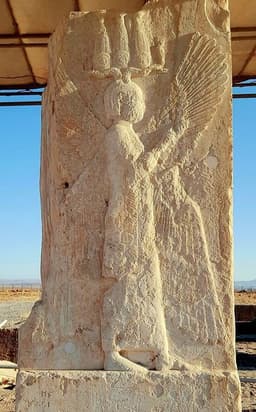
Cyrus the Great
Emperor · Ancient
83.9Total
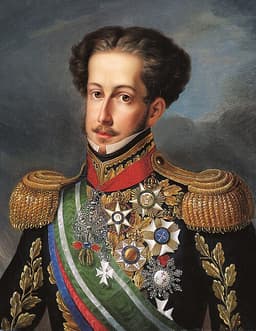
Pedro I of Brazil
Emperor · Modern
54.6Total
Basic Information
Born
-600
1798
Died
-530
1834
Era
Ancient
Modern
Nationality
Persia
Brazil
Occupation
Emperor
Emperor
Civilization
Middle Eastern
Western
Score Comparison
Military (10%)
82.0
55.0
Political (20%)
85.0
62.7
Influence (20%)
85.0
59.0
Legacy (20%)
90.0
50.0
Leadership (15%)
78.0
53.2
Strategy (15%)
75.0
45.0
TOTAL
83.9
54.6
Cyrus the Great — Complete Timeline
550 BC
Founding of the Achaemenid EmpirePolitical Action
Cyrus led a rebellion against the Median Empire, defeating King Astyages and capturing Ecbatana. He then united the Persian and Median tribes, establishing the Achaemenid Empire, which became the largest empire the world had yet seen.
Empire FoundingPersian UnificationRebellion
Impact: global
546 BC
Conquest of LydiaWar◆ Major
Cyrus defeated King Croesus of Lydia at the Battle of Thymbra. The Lydian capital Sardis was captured, and Croesus was taken prisoner. This conquest brought Anatolia under Persian control and secured access to the Aegean coast.
Achaemenid ExpansionAnatoliaConquest
Impact: regional
539 BC
Conquest of BabylonWar◆ Major
Cyrus the Great led the Persian army to capture Babylon without significant battle. The city's gates were opened, and Cyrus entered peacefully. This conquest added Mesopotamia to the Achaemenid Empire and marked the end of the Neo-Babylonian Empire.
Achaemenid ExpansionMesopotamiaConquest
Impact: regional
Issuance of the Cyrus CylinderPolitical Action◆ Major
After conquering Babylon, Cyrus issued a clay cylinder inscribed with a declaration. It described his policy of restoring temples, repatriating displaced peoples, and allowing religious freedom. The cylinder is often cited as an early charter of human rights.
Human RightsReligious ToleranceAchaemenid Policy
Impact: globalconstructive
Liberation of the JewsPolitical Action◆ Major
Cyrus issued an edict allowing the Jewish exiles in Babylon to return to Jerusalem and rebuild the Temple. This event is recorded in the biblical Book of Ezra and is a key moment in Jewish history, ending the Babylonian captivity.
Jewish HistoryReligious FreedomReturn from Exile
Impact: regionalconstructive
Pedro I of Brazil — Complete Timeline
1822 AD
Declaration of Independence of BrazilPolitical Action
Pedro I declared Brazil's independence from Portugal on September 7, 1822, at the Ipiranga River in S
Impact: globalprogressive
Coronation as Emperor of BrazilPolitical Action◆ Major
Pedro I was crowned Emperor of Brazil on December 1, 1822, in Rio de Janeiro. The coronation formalized the new imperial government, with Pedro I as constitutional monarch, though he retained significant executive powers.
Impact: nationalconstructive
1823 AD
War of Independence of BrazilWar◆ Major
Pedro I led Brazilian forces against Portuguese loyalists in the War of Independence. Key battles occurred in Bahia, Maranh
Impact: national
Dissolution of the Constituent AssemblyPolitical Action◆ Major
Pedro I dissolved the Constituent Assembly after conflicts over the constitution's limits on imperial power. He then imposed the 1824 Constitution, which granted the emperor extensive powers, including the Moderating Power, centralizing authority.
Impact: nationaldestructive
1831 AD
Abdication of the Brazilian ThronePolitical Action
Pedro I abdicated the Brazilian throne in favor of his five-year-old son Pedro II on April 7, 1831. He returned to Portugal to claim the Portuguese throne, leaving Brazil under a regency until his son came of age.
Impact: national
Expert Analysis
Cyrus the Great vs Pedro I of Brazil
### The Conqueror and the Liberator: Two Emperors Who Forged Nations
History remembers some rulers for the empires they built, and others for the nations they freed. But rarely does it offer two men, both called emperor, whose paths diverged so dramatically—one ascending to legend, the other descending into exile—within the span of a single lifetime. Consider the scene: In 539 BCE, Cyrus the Great enters Babylon not through a breach in the walls, but through gates opened by his own allies, greeted as a liberator. Two and a half millennia later, in 1831, Pedro I of Brazil, a man who had once been hailed as the father of his country, abdicates his throne in the dead of night, leaving his five-year-old son to rule a nation he could no longer manage. Both were founders. One became a symbol of tolerance and imperial brilliance; the other, a cautionary tale of promise undone by temperament.
### Origins: The Mountain Chief and the Exiled Prince
Cyrus was born around 600 BCE into a world of warring kingdoms—Assyria, Media, Lydia, Babylon—where power was measured by the sword and the tribute it could extract. Raised among the Persians, a semi-nomadic people of the Iranian plateau, he inherited a tribal tradition of leadership that valued loyalty and military prowess. His grandfather, Astyages, was the king of the Medes, a fact that would later prove crucial. Cyrus’s upbringing was not in a palace of marble but in the rugged highlands, where survival depended on cunning and the bonds of kinship. This environment forged a leader who understood that an empire could not be built on fear alone.
Pedro I, by contrast, was born in 1798 into the most glittering court in the Americas—the Portuguese royal family in exile in Rio de Janeiro. His father, King João VI, had fled Napoleon’s armies, bringing the entire apparatus of the Portuguese state to Brazil. Young Pedro grew up in a world of intrigue, surrounded by advisors who saw him as a pawn in a larger game of European power. He was educated, impulsive, and deeply aware of his own royal blood, but he lacked the grounding of a man who had ever had to fight for his survival. He was a prince in a colony that was about to become a nation, and he had no model for what that meant.
### Rise to Power: Rebellion and Declaration
Cyrus’s rise began with a calculated act of defiance. In 550 BCE, he led a rebellion against his own grandfather, King Astyages of Media. The Median army, weary of its ruler’s tyranny, largely defected to Cyrus, and Ecbatana fell without a prolonged siege. This was not a simple coup; it was the fusion of two peoples—Persians and Medes—into a single kingdom. Cyrus then turned west, and in 546 BCE, he defeated the famously wealthy King Croesus of Lydia at the Battle of Thymbra, using a tactical innovation: a line of camels to spook the Lydian cavalry. By 539 BCE, he was at the gates of Babylon, the greatest city of the ancient world. He did not storm it; he diverted the Euphrates River and entered through the riverbed while the city feasted. It was a masterstroke of psychological warfare and political intelligence.
Pedro’s rise was less a conquest than a declaration. In 1822, facing pressure from Portugal to return to colonial status, he famously shouted “Independência ou Morte!” at the Ipiranga River. He was crowned emperor that December, and then fought a brief War of Independence in 1823 against Portuguese loyalists in Bahia. But unlike Cyrus, who united a coalition, Pedro ruled over a deeply divided society—slaveholders and slaves, Portuguese-born elites and Brazilian-born patriots, conservatives and liberals. His path to power was not a military campaign but a political gamble, and the stakes were far more fragile.
### Leadership & Governance: The Cylinder and the Constitution
Cyrus’s governance was revolutionary for its time. After capturing Babylon, he issued the Cyrus Cylinder in 539 BCE, a clay declaration that restored local cults, returned displaced peoples to their homelands, and abolished forced labor. Most famously, he allowed the Jewish exiles to return to Jerusalem and rebuild their Temple—an act recorded in the Hebrew Bible and later celebrated as a precursor to human rights. His empire was vast, stretching from the Indus to the Mediterranean, but he ruled through satraps, local governors who were given considerable autonomy. He respected the customs of conquered peoples, even adopting the titles and rituals of Babylonian kings. His military score of 82 and political score of 85 reflect a man who understood that conquest was only half the work; the other half was persuasion.
Pedro I, by contrast, governed through confrontation. He dissolved the Constituent Assembly in 1823 after clashing with deputies who wanted to limit his power, then imposed a constitution that gave him extensive authority. He was a capable military leader in the war for independence, but his political score of 60.2 reveals a ruler who could not build consensus. His reign was plagued by rebellions in the provinces, economic instability, and a growing personal unpopularity. He was a romantic figure—charismatic, brave, and impulsive—but he lacked Cyrus’s strategic patience. Where Cyrus offered freedom and order, Pedro offered command and chaos.
### Triumph & Tragedy: The Open Gates and the Empty Throne
Cyrus’s greatest moment was the fall of Babylon itself—a city that had never been conquered in its history, taken without a battle. His greatest tragedy was perhaps his own death, around 530 BCE, on a campaign against the Massagetae in Central Asia. According to legend, his body was mutilated by the queen Tomyris, who had sworn revenge for the death of her son. Even in defeat, his empire endured, and his tomb at Pasargadae became a pilgrimage site for centuries.
Pedro’s triumph was the birth of an independent Brazil, a nation he had forged with his own hands. But his tragedy was his abdication in 1831, forced by a combination of political crisis, military mutiny, and personal scandal. He left for Portugal, where he would die three years later, a man who had ruled two countries—Brazil and Portugal (briefly, as Pedro IV)—but could keep neither. His son, Pedro II, would go on to reign for nearly half a century, a far more stable and beloved monarch.
### Character & Destiny: The Architect and the Arsonist
Cyrus was a man of calculation. He understood that power required legitimacy, and legitimacy required generosity. His policies of cultural tolerance were not mere idealism; they were practical strategies for holding together a multi-ethnic empire. He was ruthless when necessary—he did not hesitate to kill his own grandfather—but he was magnanimous when it served his purpose. His leadership score of 80 and strategy score of 72 reflect a ruler who balanced force with finesse.
Pedro was a man of passion. He declared independence on horseback, fought in the mud of Bahia, and fell in love with a mistress while married to an Austrian archduchess. He was generous to a fault and stubborn to a ruin. His strategy score of 50 is the lowest of his metrics, and it shows. He could win a battle but not a peace, rally a crowd but not a cabinet. His destiny was shaped by his inability to master the very politics he had helped create.
### Legacy: The Father of Empire and the Father of a Nation
Cyrus is remembered as a model of enlightened despotism—a ruler who founded an empire that would last over two centuries and whose principles of governance influenced Alexander the Great, the Roman Empire, and even the framers of modern human rights. The Cyrus Cylinder is housed in the British Museum, a symbol of the ancient world’s most inclusive vision of power. His legacy score of 80 is a testament to his enduring impact.
Pedro I is remembered as the founder of Brazil, but his legacy is more complex. He is celebrated as a liberator, yet his reign was marked by authoritarianism and instability. His son, Pedro II, would become a symbol of progress, but the father is often seen as a flawed hero—a man who did the one great thing and could do no more. His legacy score of 70 reflects a figure who is honored but not revered, remembered but not studied.
### Conclusion: The Art of Founding
What separates these two men is not ambition, for both had it in abundance. What separates them is wisdom—the ability to see beyond the moment of victory and into the long work of building. Cyrus understood that an empire is not a conquest but a contract; Pedro believed that a nation is a declaration. One built a structure that would outlast him; the other lit a fire that consumed him. Both were founders, but only one was a builder. In the end, history judges not by the force of the blow, but by the shape of the edifice that remains.
Rankings
🥇
Cyrus the GreatLeader
Mil: 82.0Pol: 85.0Inf: 85.0
83.9
🥈
Pedro I of Brazil
Mil: 55.0Pol: 62.7Inf: 59.0
54.6
+29.3 behind
How This Comparison Works
Algorithm
Each figure is scored on 6 dimensions (0—100 scale) based on structured historical data: Military (10%), Political (20%), Influence (20%), Legacy (20%), Leadership (15%), Strategy (15%). The weighted total produces the final ranking.
Data Sources
Scores are computed from structured sub-indicators in the database. Scale factors adjust for era (Ancient ×0.85, Modern ×1.0) and civilization size (Eastern ×1.05, Other ×0.80) to account for differences in population and military scale.
Maximum 3 Figures
Comparisons are limited to 2—3 figures to ensure readability and statistical meaningfulness.
Error Margins
±5 points per dimension — Sub-scores are derived from historical records with inherent uncertainty. Two figures within 5 points on a dimension should be considered roughly equivalent in that area.
Total Score Accuracy
±3 points overall — The weighted combination of 6 dimensions produces a total score with approximately ±3 points of uncertainty. Differences of less than 3 points are not statistically significant— the figures are effectively tied.
Known Limitations
- Historical records are incomplete and uneven across civilizations
- Figures from oral-tradition societies may be underrepresented
- Occupation labels can misclassify multi-role figures
- Scores measure capability and impact, not moral character
- Quantitative scoring is a comparison tool, not absolute truth
Capability Radar
Military (10%) — Battles & Warfare
Battles
85
35
Win Rate
90
40
Expansion
92
30
Political (20%) — Governance & Reform
Reform
90
45
Diplomacy
95
50
Economy
80
30
Influence (20%) — Cultural & Global Reach
Cultural
90
40
Global
90
45
Legacy (20%) — Historical Impact
Historical
95
55
Longevity
95
50
Leadership (15%) — Power & Stability
Tenure
70
55
Stability
85
25
Strategy (15%) — Tactics & Innovation
Strategy
88
35
Tactics
80
30
Reform
75
20
Similar Comparisons
Comments & Discussion
PersianTactician6/16/2026
Cyrus's use of psychological warfare in Babylon wasn't just clever—it was revolutionary. By diverting the Euphrates and marching under the gates, he executed a waterborne assault that modern special forces would envy. Pedro I? He charged into battle at Avilez like a hotheaded cavalryman, not a strategist. Cyrus built an empire with engineering and diplomacy; Pedro burned his with tantrums. One was the sun of his age; the other, a spark that fizzled.
巴比伦水道6/16/2026
拿水利工程说事才见真章。大流士一世修运河,居鲁士早在公元前539年就用了水道战术——挖沟改流,夜入巴比伦。这不仅是奇袭,是工程与军事的完美融合。佩德罗一世有这本事吗?没有。他只会靠血缘领兵,打仗靠葡萄牙军官,治国靠冲动脾气。居鲁士的智慧写在泥板上,佩德罗的愚蠢写在流亡船票上。
DataMiner30006/16/2026
Let's talk numbers, not myths. Cyrus's Persian Empire at its peak spanned 5.5 million square kilometers—built over 30 years. Pedro's Brazil? 8.5 million square kilometers, inherited, not conquered. But Pedro's reign lasted only 9 years before he fled to Portugal. Cyrus ruled for exactly 30 years and died in battle, still expanding. Efficiency per decade? Cyrus outpaces Pedro 3:1 in lasting impact. One created a multicultural superstate; the other couldn't keep a cabinet together.
史实拆解人6/16/2026
你们都被美化了。居鲁士的"宽容"律令多是后人美化——巴比伦文献根本没说解放犹太人,而是波斯人自己的宣传。佩德罗至少真实:他留给巴西一个独立国家、一套法典、一支海军。居鲁士死后帝国就分裂内战,佩德罗的儿子佩德罗二世统治了58年,巴西成为拉美最稳定政权。谁更"伟大"?别拿两千年后的神话压一个活生生的失败者。