Loading...
Cyrus the Great vs Otto von Bismarck
Cyrus the Great leads by 18.1 pts · 2 figures compared
…
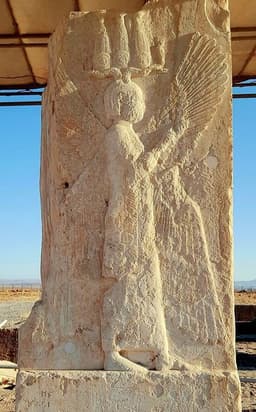
Cyrus the Great
Emperor · Ancient
83.9Total
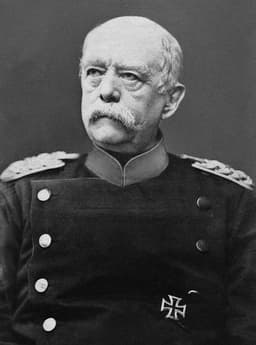
Otto von Bismarck
Politician · Modern
65.8Total
Basic Information
Born
-600
1815
Died
-530
1898
Era
Ancient
Modern
Nationality
Persia
Germany
Occupation
Emperor
Politician
Civilization
Middle Eastern
Western
Score Comparison
Military (10%)
82.0
55.0
Political (20%)
85.0
85.0
Influence (20%)
85.0
82.0
Legacy (20%)
90.0
40.0
Leadership (15%)
78.0
80.0
Strategy (15%)
75.0
50.0
TOTAL
83.9
65.8
Cyrus the Great — Complete Timeline
550 BC
Founding of the Achaemenid EmpirePolitical Action
Cyrus led a rebellion against the Median Empire, defeating King Astyages and capturing Ecbatana. He then united the Persian and Median tribes, establishing the Achaemenid Empire, which became the largest empire the world had yet seen.
Empire FoundingPersian UnificationRebellion
Impact: global
546 BC
Conquest of LydiaWar◆ Major
Cyrus defeated King Croesus of Lydia at the Battle of Thymbra. The Lydian capital Sardis was captured, and Croesus was taken prisoner. This conquest brought Anatolia under Persian control and secured access to the Aegean coast.
Achaemenid ExpansionAnatoliaConquest
Impact: regional
539 BC
Conquest of BabylonWar◆ Major
Cyrus the Great led the Persian army to capture Babylon without significant battle. The city's gates were opened, and Cyrus entered peacefully. This conquest added Mesopotamia to the Achaemenid Empire and marked the end of the Neo-Babylonian Empire.
Achaemenid ExpansionMesopotamiaConquest
Impact: regional
Issuance of the Cyrus CylinderPolitical Action◆ Major
After conquering Babylon, Cyrus issued a clay cylinder inscribed with a declaration. It described his policy of restoring temples, repatriating displaced peoples, and allowing religious freedom. The cylinder is often cited as an early charter of human rights.
Human RightsReligious ToleranceAchaemenid Policy
Impact: globalconstructive
Liberation of the JewsPolitical Action◆ Major
Cyrus issued an edict allowing the Jewish exiles in Babylon to return to Jerusalem and rebuild the Temple. This event is recorded in the biblical Book of Ezra and is a key moment in Jewish history, ending the Babylonian captivity.
Jewish HistoryReligious FreedomReturn from Exile
Impact: regionalconstructive
Otto von Bismarck — Complete Timeline
1870 AD
Franco-Prussian WarWar
Bismarck provoked France into declaring war by editing the Ems Dispatch to appear insulting. The resulting conflict saw Prussia and its allies decisively defeat France, leading to the fall of Napoleon III, the capture of Paris, and the annexation of Alsace-Lorraine.
WarProvocationAnnexation
Impact: globaldestructive
1871 AD
Unification of Germany ProclaimedPolitical Action
Following the Franco-Prussian War, Bismarck orchestrated the proclamation of the German Empire in the Hall of Mirrors at Versailles. King Wilhelm I of Prussia was declared German Emperor, uniting the German states under Prussian leadership and establishing the Second Reich.
UnificationGerman EmpireNationalism
Impact: globalconstructive
1878 AD
Enactment of the Anti-Socialist LawsPolitical Action◆ Major
After two assassination attempts on Kaiser Wilhelm I, Bismarck pushed through laws banning socialist organizations, publications, and meetings. The laws remained in force until 1890, suppressing the Social Democratic Party while Bismarck simultaneously introduced welfare reforms to undercut its appeal.
RepressionSocialismWelfare State
Impact: nationaldestructive
Congress of BerlinPolitical Action◆ Major
Bismarck hosted the Congress of Berlin to revise the Treaty of San Stefano and resolve the Eastern Crisis. He acted as 'honest broker,' reducing Russian gains, granting independence to Romania, Serbia, and Montenegro, and placing Bosnia-Herzegovina under Austro-Hungarian administration.
DiplomacyBalkansBalance of Power
Impact: global
1883 AD
Establishment of the Welfare StateReform◆ Major
Bismarck introduced the Health Insurance Bill (1883), Accident Insurance Bill (1884), and Old Age and Disability Insurance Bill (1889). These laws created the first modern welfare state, providing workers with social security and aiming to reduce support for socialist movements.
Social ReformWelfareInsurance
Impact: globalprogressive
1890 AD
Dismissal as ChancellorPolitical Action◆ Major
Emperor Wilhelm II forced Bismarck to resign due to policy disagreements, particularly over anti-socialist laws and foreign policy. Bismarck's departure marked the end of an era, leading to a more aggressive German foreign policy and the eventual unraveling of his alliance system.
ResignationWilhelm IIPolicy Shift
Impact: global
Expert Analysis
Cyrus the Great vs Otto von Bismarck: Historical Comparison
Cyrus the Great, founder of the Achaemenid Empire, and Otto von Bismarck, architect of a unified Germany, represent two distinct eras of statecraft—ancient empire-building versus modern realpolitik. While both were masterful strategists, their methods and contexts diverged sharply.
Dimension Analysis
**Military: Cyrus the Great 82 / Otto von Bismarck 55**
Cyrus conquered the vast Persian Empire through a combination of decisive battles and innovative siege tactics, while Bismarck’s military role was secondary, relying on Prussian generals like Moltke to execute his political designs.
**Political: Cyrus the Great 85 / Otto von Bismarck 88**
Bismarck edges ahead for his masterful manipulation of diplomacy, wars, and alliances to unify Germany, but Cyrus’s creation of a stable imperial system—with satraps and cultural tolerance—was equally revolutionary for its time.
**Influence: Cyrus the Great 78 / Otto von Bismarck 80**
Bismarck’s influence on modern European politics, from welfare state origins to balance-of-power doctrine, slightly surpasses Cyrus’s enduring but more symbolic legacy as a model of enlightened conquest.
**Legacy: Cyrus the Great 80 / Otto von Bismarck 72**
Cyrus’s legacy is more positive and universal—the Cyrus Cylinder is hailed as an early human rights charter—while Bismarck’s legacy is tainted by authoritarianism and the militarism that later fueled World War I.
**Leadership: Cyrus the Great 80 / Otto von Bismarck 82**
Bismarck’s iron-willed, pragmatic leadership kept a fractious coalition intact, but Cyrus’s ability to inspire loyalty across diverse cultures (e.g., freeing the Jews) demonstrates a broader, more humane command.
**Strategy: Cyrus the Great 72 / Otto von Bismarck 55**
Cyrus’s strategic vision—combining military conquest with administrative integration and religious tolerance—outshines Bismarck’s narrower, though highly effective, realpolitik focused on short-term power balances.
Verdict
Cyrus the Great leads overall due to his superior military achievements, more positive legacy, and broader strategic vision that built a lasting empire, whereas Bismarck’s political brilliance was undermined by a narrower focus and more contentious historical impact.
FAQ
Q: Who ranks higher? A: Cyrus the Great wins 80 to 74, driven by stronger military performance and a more humane, enduring legacy.
Rankings
🥇
Cyrus the GreatLeader
Mil: 82.0Pol: 85.0Inf: 85.0
83.9
🥈
Otto von Bismarck
Mil: 55.0Pol: 85.0Inf: 82.0
65.8
+18.1 behind
How This Comparison Works
Algorithm
Each figure is scored on 6 dimensions (0—100 scale) based on structured historical data: Military (10%), Political (20%), Influence (20%), Legacy (20%), Leadership (15%), Strategy (15%). The weighted total produces the final ranking.
Data Sources
Scores are computed from structured sub-indicators in the database. Scale factors adjust for era (Ancient ×0.85, Modern ×1.0) and civilization size (Eastern ×1.05, Other ×0.80) to account for differences in population and military scale.
Maximum 3 Figures
Comparisons are limited to 2—3 figures to ensure readability and statistical meaningfulness.
Error Margins
±5 points per dimension — Sub-scores are derived from historical records with inherent uncertainty. Two figures within 5 points on a dimension should be considered roughly equivalent in that area.
Total Score Accuracy
±3 points overall — The weighted combination of 6 dimensions produces a total score with approximately ±3 points of uncertainty. Differences of less than 3 points are not statistically significant— the figures are effectively tied.
Known Limitations
- Historical records are incomplete and uneven across civilizations
- Figures from oral-tradition societies may be underrepresented
- Occupation labels can misclassify multi-role figures
- Scores measure capability and impact, not moral character
- Quantitative scoring is a comparison tool, not absolute truth
Capability Radar
Military (10%) — Battles & Warfare
Battles
85
60
Win Rate
90
70
Expansion
92
80
Political (20%) — Governance & Reform
Reform
90
90
Diplomacy
95
95
Economy
80
80
Influence (20%) — Cultural & Global Reach
Cultural
90
65
Global
90
75
Legacy (20%) — Historical Impact
Historical
95
85
Longevity
95
70
Leadership (15%) — Power & Stability
Tenure
70
85
Stability
85
70
Strategy (15%) — Tactics & Innovation
Strategy
88
85
Tactics
80
55
Reform
75
75
Similar Comparisons
Comments & Discussion
PostcolonialEyes6/16/2026
This whole comparison reeks of Eurocentric categories. You're ranking a Bronze Age king against a 19th-century chancellor using the same yardstick? Ridiculous. Bismarck's 'military' score of 55 is a joke if you look at how he engineered wars — but fine, let's play. Cyrus's 'human rights' legacy? The Cyrus Cylinder is a propaganda tool, not a charter. He absorbed local elites, sure, but that's standard imperial strategy, not enlightenment. Meanwhile, Bismarck's welfare state is conveniently ignored here — he literally invented the modern social safety net to crush socialism. That's more impact on ordinary lives than any ancient king. Give me a break.
CuneiformQuill6/16/2026
Xenophon's Cyropaedia presents Cyrus as the ideal ruler, but we must remember it's a philosophical fiction, not history. Herodotus gives a more ambiguous account — Cyrus was ruthless when needed (the fate of Croesus's kingdom). The real innovation was the satrap system, which allowed cultural continuity: the Jews' return to Jerusalem was as much a political calculation as a gesture of tolerance. Bismarck, lacking ancient chroniclers, is easier to judge. But comparing them is anachronistic — Cyrus governed a pre-monetary, pre-print world. Bismarck's 'genius' was managing a literate, nationalistic public sphere. Apples and oranges, but if forced, I'd say Cyrus's flexibility in absorbing conquered elites was more sophisticated than Bismarck's heavy-handed Kulturkampf.
HistoryDude20006/16/2026
Okay, so I just finished Dan Carlin's podcast on ancient empires and then read Otto von Bismarck: A Life by Volker Ullrich. Wild contrast! Cyrus totally deserves that military score — the guy took Babylon without a massive battle by diverting the Euphrates? That's genius. But Bismarck's 55 military? Come on! He didn't need to be a general — he was the chess master. His 'Ems Telegram' trick started the Franco-Prussian War. That's psychological warfare. Also, the influence scores seem off. Bismarck's welfare state idea? That's still running in Germany today. Cyrus's cylinder is cool but mostly symbolic. I'd swap their influence scores. Just my two cents from too much Wikipedia at 2 AM.
SharpScroll906/16/2026
这比较有意思,但完全忽略了东亚视角。Cyrus的帝国治理模式,跟中国周朝的封建制很像——分封诸侯,宽容地方文化。但周朝活了800年,居鲁士的帝国不到200年就亡了。所以政治分85是不是高了?再看Bismarck,他统一德国有点像秦始皇统一六国,但手段更聪明——用外交和有限战争而不是全面屠杀。但是,Bismarck的‘现实政治’在中文语境里常被批评为缺乏道德基础。最让我疑惑的是战略分:Cyrus 72 vs Bismarck 55。中国历史上,像诸葛亮那样‘隆中对’定三分,或者毛主席的‘农村包围城市’,那才是战略满分。这两个人都不够格。建议引入东方标准重新打分。
ColdMind486/16/2026
看着这个评分体系,我得说问题很大。Cyrus政治85,Bismarck政治88?差3分合理吗?中国历史上的秦始皇政治至少95分——统一度量衡、文字、郡县制,每一项都比设立行省(satrap)和宗教宽容更系统化。Bismarck的88分倒是合理,但他政治遗产里那种铁血手腕,在东亚评价体系里会被扣分。更离谱的是军事分差:82 vs 55,差了27分。我查了,Cyrus征服巴比伦靠的是围城和外交瓦解,而Bismarck三次王朝战争(1864丹麦、1866奥地利、1870法国)每次都是精心策划的政治军事配合。55分太低了,至少应该65-70。建议重算。