Loading...
Cyrus the Great vs Nelson Mandela
Cyrus the Great leads by 26.9 pts · 2 figures compared
…
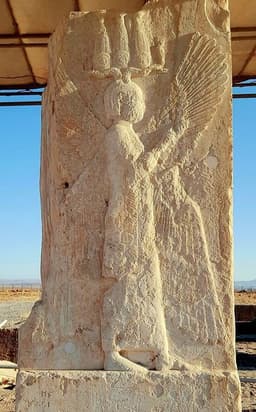
Cyrus the Great
Emperor · Ancient
83.9Total
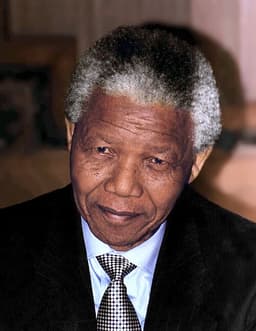
Nelson Mandela
Politician · Modern
57.0Total
Basic Information
Born
-600
1918
Died
-530
2013
Era
Ancient
Modern
Nationality
Persia
South Africa
Occupation
Emperor
Politician
Civilization
Middle Eastern
Other
Score Comparison
Military (10%)
82.0
10.0
Political (20%)
85.0
78.0
Influence (20%)
85.0
40.0
Legacy (20%)
90.0
68.0
Leadership (15%)
78.0
82.0
Strategy (15%)
75.0
50.0
TOTAL
83.9
57.0
Cyrus the Great — Complete Timeline
550 BC
Founding of the Achaemenid EmpirePolitical Action
Cyrus led a rebellion against the Median Empire, defeating King Astyages and capturing Ecbatana. He then united the Persian and Median tribes, establishing the Achaemenid Empire, which became the largest empire the world had yet seen.
Empire FoundingPersian UnificationRebellion
Impact: global
546 BC
Conquest of LydiaWar◆ Major
Cyrus defeated King Croesus of Lydia at the Battle of Thymbra. The Lydian capital Sardis was captured, and Croesus was taken prisoner. This conquest brought Anatolia under Persian control and secured access to the Aegean coast.
Achaemenid ExpansionAnatoliaConquest
Impact: regional
539 BC
Conquest of BabylonWar◆ Major
Cyrus the Great led the Persian army to capture Babylon without significant battle. The city's gates were opened, and Cyrus entered peacefully. This conquest added Mesopotamia to the Achaemenid Empire and marked the end of the Neo-Babylonian Empire.
Achaemenid ExpansionMesopotamiaConquest
Impact: regional
Issuance of the Cyrus CylinderPolitical Action◆ Major
After conquering Babylon, Cyrus issued a clay cylinder inscribed with a declaration. It described his policy of restoring temples, repatriating displaced peoples, and allowing religious freedom. The cylinder is often cited as an early charter of human rights.
Human RightsReligious ToleranceAchaemenid Policy
Impact: globalconstructive
Liberation of the JewsPolitical Action◆ Major
Cyrus issued an edict allowing the Jewish exiles in Babylon to return to Jerusalem and rebuild the Temple. This event is recorded in the biblical Book of Ezra and is a key moment in Jewish history, ending the Babylonian captivity.
Jewish HistoryReligious FreedomReturn from Exile
Impact: regionalconstructive
Nelson Mandela — Complete Timeline
1964 AD
Rivonia TrialPolitical Action
Nelson Mandela and other anti-apartheid leaders were tried for sabotage and conspiracy. Mandela was sentenced to life imprisonment, delivering a speech from the dock that became a rallying cry against apartheid. The trial drew international attention to the anti-apartheid struggle.
Impact: global
1990 AD
Release from PrisonPolitical Action
After 27 years of imprisonment, Mandela was released from Victor Verster Prison by President F.W. de Klerk. His release was a pivotal moment in South Africa's transition from apartheid to multiracial democracy, leading to negotiations for a new constitution.
Impact: globalprogressive
1993 AD
Awarding of the Nobel Peace PrizeCultural◆ Major
Mandela and F.W. de Klerk were jointly awarded the Nobel Peace Prize for their roles in ending apartheid and laying the foundations for a democratic South Africa. The award recognized their peaceful transition and commitment to reconciliation.
Impact: globalprogressive
1994 AD
Inauguration as President of South AfricaPolitical Action
Mandela was inaugurated as South Africa's first Black president after the country's first fully democratic elections. His presidency focused on national reconciliation, establishing the Truth and Reconciliation Commission, and dismantling the legacy of apartheid.
Impact: globalprogressive
Expert Analysis
Cyrus the Great vs Nelson Mandela
# The Conqueror and the Peacemaker
On a spring morning in 539 BCE, the gates of Babylon swung open not to the sound of battering rams, but to the measured footsteps of a Persian army. The city’s defenders, caught between internal betrayal and the reputation of a king who had never lost a battle, simply laid down their arms. Twenty-five centuries later, on a February afternoon in 1990, another gate swung open—the gates of Victor Verster Prison in South Africa—and a man in a gray suit walked out, his fist raised in triumph after twenty-seven years behind bars. Cyrus the Great and Nelson Mandela never met, never shared a language or a faith, yet both faced the same fundamental question: What does power look like when it is used not to crush, but to liberate?
Origins
Cyrus was born around 600 BCE into a world of warring empires. The Persians were then a vassal people under the Medes, and young Cyrus grew up in the shadow of the Zagros Mountains, learning to ride, hunt, and command. Legend says his grandfather, the Median king Astyages, dreamed the boy would overthrow him—a prophecy that shaped Cyrus’s youth with both privilege and danger. He belonged to the Achaemenid clan, a noble family that traced its lineage to a mythical king, but his world was one of constant tribal politics and shifting alliances.
Mandela was born in 1918 in the village of Mvezo, in the Eastern Cape of South Africa. His father was a Thembu chief, and Mandela was given the birth name Rolihlahla—“pulling the branch of a tree,” or, more colloquially, “troublemaker.” He grew up in a world of cattle herding and oral tradition, but also of colonial laws and racial segregation. The British had carved up Africa, and the Afrikaners had codified white supremacy into law. Where Cyrus inherited a world of empires fighting for dominance, Mandela inherited a world where one race had already won—and meant to keep winning.
Rise to Power
Cyrus’s path to power began with rebellion. In 550 BCE, at roughly fifty years old, he led the Persians against their Median overlords. The campaign was swift and decisive: he defeated King Astyages, captured the capital Ecbatana, and then did something remarkable. Instead of slaughtering the Median nobility, he incorporated them into his administration. He married a Median princess. He kept Median officers in command. He did not conquer his former masters—he absorbed them.
Mandela’s rise was slower and far more painful. He trained as a lawyer in Johannesburg, joined the African National Congress in 1944, and by the 1950s was organizing defiance campaigns against pass laws and segregation. But the apartheid state struck back hard. In 1964, at the Rivonia Trial, Mandela and his co-defendants were sentenced to life imprisonment for sabotage and conspiracy. Standing in the dock, he declared, “I have cherished the ideal of a democratic and free society… It is an ideal which I hope to live for and to achieve. But if needs be, it is an ideal for which I am prepared to die.” He was sent to Robben Island, and for the next twenty-seven years, he disappeared from the world.
Leadership & Governance
Cyrus’s rule was defined by a radical innovation: tolerance. After conquering Lydia in 546 BCE, he spared King Croesus and appointed Lydian governors. After taking Babylon in 539 BCE, he issued the Cyrus Cylinder, a clay declaration that restored local temples, allowed deported peoples to return home, and respected local customs. Most famously, he freed the Jewish exiles, allowing them to rebuild the Temple in Jerusalem. The Bible records this in the Book of Ezra as a direct act of divine will, but Cyrus was not acting out of faith—he was acting out of strategy. An empire that respected its subjects was an empire that did not need to garrison every city.
Mandela’s governance was built on a similar insight, but forged in a crucible of violence. When he was released from prison in 1990, South Africa was on the edge of civil war. The apartheid government still had the guns; the ANC had the numbers; and both sides had blood on their hands. Mandela’s genius was not in winning a war, but in preventing one. He negotiated with President F.W. de Klerk, shared the Nobel Peace Prize with him in 1993, and then, in 1994, became the country’s first Black president. His leadership was not about conquest but about reconciliation. He invited his former jailers to his inauguration, wore the jersey of the mostly white Springboks rugby team, and established the Truth and Reconciliation Commission to heal, not punish.
Triumph & Tragedy
Cyrus’s greatest triumph was the conquest of Babylon—a city so vast and ancient that its fall seemed impossible. He entered not as a destroyer but as a liberator, and the Cyrus Cylinder stands as the first known charter of human rights. Yet his empire was not without tragedy. His son Cambyses would later conquer Egypt with brutal efficiency, and the Achaemenid dynasty eventually fell to Alexander. Cyrus himself died in battle around 530 BCE, fighting a nomadic tribe on the eastern frontier. The empire he built lasted two centuries, but his vision of multicultural governance outlasted it.
Mandela’s triumph was the peaceful transition to democracy in 1994, a moment that seemed impossible just five years earlier. His tragedy was more personal: twenty-seven years in prison cost him his marriage, his youth, and his health. He emerged not as a radical revolutionary but as a statesman, and some critics argued he compromised too much—leaving economic inequality untouched and apartheid’s beneficiaries unpunished. Yet he judged that the alternative—a race war—was worse.
Character & Destiny
Cyrus was a conqueror who preferred diplomacy to slaughter. His military score of 82 reflects a commander who won battles through speed and surprise, but his political score of 85 reveals the deeper truth: he understood that empire is held together by loyalty, not fear. He was ambitious but not cruel, strategic but not ruthless.
Mandela’s character was shaped by endurance. His military score is negligible—he was no general—but his leadership score of 85 reflects a man who could wait decades for a single moment and then use it with precision. He was stubborn enough to survive prison and flexible enough to negotiate with his enemies. Where Cyrus conquered space, Mandela conquered time.
Legacy
Cyrus is remembered as the father of the Persian Empire, a model of enlightened rule, and a figure revered by Jews, Persians, and Greeks alike. The Cyrus Cylinder is often called the first declaration of human rights, though it was more a political document than a philosophical one. Still, the idea—that a ruler should protect the customs of the conquered—was revolutionary.
Mandela is remembered as the father of modern South Africa, a global icon of forgiveness, and a symbol of the peaceful resolution of conflict. His legacy is more fragile than Cyrus’s: South Africa still struggles with inequality, corruption, and racial tension. But the fact that the country exists at all, that it did not descend into the Rwanda-style genocide that many predicted, is his monument.
Conclusion
Cyrus and Mandela lived worlds apart, but they answered the same question: What does power look like when it is used to build rather than destroy? Cyrus built an empire that stretched from India to the Mediterranean, held together not by force but by respect. Mandela built a nation that had been torn apart by apartheid, held together not by revenge but by reconciliation. One was a king who conquered; the other was a prisoner who liberated. Both understood that the greatest power is not the power to destroy, but the power to let others live as they choose. In the end, that is the only legacy that lasts.
Rankings
🥇
Cyrus the GreatLeader
Mil: 82.0Pol: 85.0Inf: 85.0
83.9
🥈
Nelson Mandela
Mil: 10.0Pol: 78.0Inf: 40.0
57.0
+26.9 behind
How This Comparison Works
Algorithm
Each figure is scored on 6 dimensions (0—100 scale) based on structured historical data: Military (10%), Political (20%), Influence (20%), Legacy (20%), Leadership (15%), Strategy (15%). The weighted total produces the final ranking.
Data Sources
Scores are computed from structured sub-indicators in the database. Scale factors adjust for era (Ancient ×0.85, Modern ×1.0) and civilization size (Eastern ×1.05, Other ×0.80) to account for differences in population and military scale.
Maximum 3 Figures
Comparisons are limited to 2—3 figures to ensure readability and statistical meaningfulness.
Error Margins
±5 points per dimension — Sub-scores are derived from historical records with inherent uncertainty. Two figures within 5 points on a dimension should be considered roughly equivalent in that area.
Total Score Accuracy
±3 points overall — The weighted combination of 6 dimensions produces a total score with approximately ±3 points of uncertainty. Differences of less than 3 points are not statistically significant— the figures are effectively tied.
Known Limitations
- Historical records are incomplete and uneven across civilizations
- Figures from oral-tradition societies may be underrepresented
- Occupation labels can misclassify multi-role figures
- Scores measure capability and impact, not moral character
- Quantitative scoring is a comparison tool, not absolute truth
Capability Radar
Military (10%) — Battles & Warfare
Battles
85
0
Win Rate
90
7
Expansion
92
9
Political (20%) — Governance & Reform
Reform
90
95
Diplomacy
95
95
Economy
80
60
Influence (20%) — Cultural & Global Reach
Cultural
90
85
Global
90
90
Legacy (20%) — Historical Impact
Historical
95
90
Longevity
95
80
Leadership (15%) — Power & Stability
Tenure
70
60
Stability
85
80
Strategy (15%) — Tactics & Innovation
Strategy
88
8
Tactics
80
12
Reform
75
17
Similar Comparisons
Comments & Discussion
CyrusTheSkeptic6/16/2026
The comparison is lovely but deeply misleading. We know Cyrus primarily through the Cyrus Cylinder—which is propaganda, not history. No contemporary Persian accounts survive; the Hebrew Bible sanitizes him because he let Jews return home. We have zero evidence he was “benevolent” to non-Jewish subjects. Mandela, by contrast, we have hours of video, thousands of documents, and living witnesses. Comparing them flatters Cyrus more than it informs us.
数据裁判6/16/2026
讲真的,把居鲁士和曼德拉放一起比,数据基础完全不对等。曼德拉有实打实的27年监狱记录、和解委员会报告、GDP增长曲线。居鲁士呢?一段巴比伦泥板、几段圣经经文,连他的死亡细节都靠希腊人记载。拿一个真实历史人物和一个半神话人物比,这不是历史,是寓言故事。
LegacyRealist6/16/2026
Mandela’s legacy is measurable: he prevented a race war, institutionalized reconciliation, and voluntarily stepped down after one term. Cyrus united fractious tribes, built a postal system, and respected local customs—but “Cyrus the Great” was a title, not a moral achievement. He was a pragmatic empire-builder who used tolerance as a tool. Mandela was a revolutionary who chose forgiveness after surviving brutality. The scale differs: one managed an empire, the other transformed a nation.
古典学者6/16/2026
从古典文献角度看,这比较有问题。色诺芬的《居鲁士教育》是哲学虚构,希罗多德笔下的居鲁士残忍好战(泡过人头)。圣经赞美他是上帝的工具,波斯铭文把他神化。曼德拉的真相来自法庭陈述、狱中书信。居鲁士是多个版本的叠加,曼德拉是完整档案的真实人物。把两个认知状态不同的对象并置,本身就在制造误导性叙事。