Loading...
Cyrus the Great vs Mahatma Gandhi
Cyrus the Great leads by 15.2 pts · 2 figures compared
…
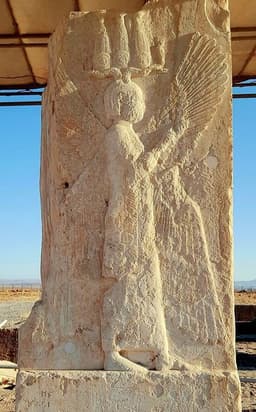
Cyrus the Great
Emperor · Ancient
83.9Total
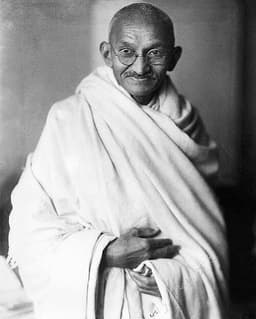
Mahatma Gandhi
Politician · Modern
68.7Total
Basic Information
Born
-600
1869
Died
-530
1948
Era
Ancient
Modern
Nationality
Persia
India
Occupation
Emperor
Politician
Civilization
Middle Eastern
Indian
Score Comparison
Military (10%)
82.0
42.3
Political (20%)
85.0
65.0
Influence (20%)
85.0
80.0
Legacy (20%)
90.0
75.0
Leadership (15%)
78.0
70.0
Strategy (15%)
75.0
55.0
TOTAL
83.9
68.7
Cyrus the Great — Complete Timeline
550 BC
Founding of the Achaemenid EmpirePolitical Action
Cyrus led a rebellion against the Median Empire, defeating King Astyages and capturing Ecbatana. He then united the Persian and Median tribes, establishing the Achaemenid Empire, which became the largest empire the world had yet seen.
Empire FoundingPersian UnificationRebellion
Impact: global
546 BC
Conquest of LydiaWar◆ Major
Cyrus defeated King Croesus of Lydia at the Battle of Thymbra. The Lydian capital Sardis was captured, and Croesus was taken prisoner. This conquest brought Anatolia under Persian control and secured access to the Aegean coast.
Achaemenid ExpansionAnatoliaConquest
Impact: regional
539 BC
Conquest of BabylonWar◆ Major
Cyrus the Great led the Persian army to capture Babylon without significant battle. The city's gates were opened, and Cyrus entered peacefully. This conquest added Mesopotamia to the Achaemenid Empire and marked the end of the Neo-Babylonian Empire.
Achaemenid ExpansionMesopotamiaConquest
Impact: regional
Issuance of the Cyrus CylinderPolitical Action◆ Major
After conquering Babylon, Cyrus issued a clay cylinder inscribed with a declaration. It described his policy of restoring temples, repatriating displaced peoples, and allowing religious freedom. The cylinder is often cited as an early charter of human rights.
Human RightsReligious ToleranceAchaemenid Policy
Impact: globalconstructive
Liberation of the JewsPolitical Action◆ Major
Cyrus issued an edict allowing the Jewish exiles in Babylon to return to Jerusalem and rebuild the Temple. This event is recorded in the biblical Book of Ezra and is a key moment in Jewish history, ending the Babylonian captivity.
Jewish HistoryReligious FreedomReturn from Exile
Impact: regionalconstructive
Mahatma Gandhi — Complete Timeline
1917 AD
Champaran SatyagrahaPolitical Action
Gandhi led his first nonviolent protest in India, supporting indigo farmers in Champaran, Bihar, against exploitative British planters. He organized a campaign of civil disobedience and negotiations, resulting in the abolition of the oppressive tinkathia system.
Civil disobedienceFarmers' rightsBritish Raj
Impact: nationalprogressive
1919 AD
Jallianwala Bagh massacre aftermathPolitical Action◆ Major
After British troops killed hundreds of unarmed civilians in Amritsar, Gandhi organized a nationwide hartal (strike) and nonviolent protests. He returned his medals and launched the Rowlatt Satyagraha, marking a shift from cooperation to non-cooperation with British rule.
ProtestBritish RajMassacre
Impact: nationaltragic
1930 AD
Salt MarchPolitical Action
Gandhi led a 240-mile march from Sabarmati to Dandi, Gujarat, to defy the British salt monopoly. Thousands joined him, making salt from seawater. This act of civil disobedience sparked mass protests across India and drew global attention to the independence movement.
Civil disobedienceSalt taxIndependence movement
Impact: globalprogressive
1942 AD
Quit India Movement launchPolitical Action◆ Major
Gandhi launched the Quit India Movement, calling for an end to British rule with the slogan 'Do or Die'. The British arrested him and other leaders, but the movement led to widespread protests and repression, accelerating the end of colonial rule.
IndependenceCivil disobedienceBritish Raj
Impact: nationalprogressive
1948 AD
AssassinationPolitical Action
Gandhi was shot and killed by Nathuram Godse, a Hindu nationalist, during a prayer meeting in New Delhi. His assassination shocked the world and led to a wave of grief and violence, but also reinforced his legacy as a martyr for nonviolence.
AssassinationMartyrdomNonviolence
Impact: globaltragic
Expert Analysis
Cyrus the Great vs Mahatma Gandhi
# The Conqueror and the Saint
On a spring morning in 1930, a frail man in a loincloth bent down to pick up a handful of salt on a beach in western India. The British Empire, the largest the world had ever seen, watched and trembled. Twenty-four centuries earlier, another man had entered Babylon not with an army in battle array but with a policy of mercy inscribed on a clay cylinder. Cyrus the Great and Mahatma Gandhi never met, never could have met. Yet both sought to reshape the relationship between power and humanity. One conquered an empire; the other dissolved one. One ruled through tolerance; the other through sacrifice. The question lingers: What drove two such different paths to such different outcomes?
Origins
Cyrus was born around 600 BCE into a world of warring kingdoms. The Medes, Persians, Babylonians, and Lydians fought for supremacy across the ancient Near East. He was the son of Cambyses I, a Persian vassal king under the Median Empire. But legend tells a different story: that his grandfather, the Median king Astyages, dreamed the boy would overthrow him, and ordered him killed. The infant was saved by a herdsman. Whether myth or history, the tale captures a truth: Cyrus grew up knowing that power was fragile, that kings could fall, and that survival required cunning.
Gandhi was born in 1869 in coastal Gujarat, India, into a merchant caste family. His father was a chief minister in a small princely state; his mother was deeply religious, steeped in Jain teachings of nonviolence. The British Raj was at its zenith, confident and unshakeable. Young Mohandas was an average student, painfully shy, terrified of public speaking. He once ran home from school rather than recite a poem. He would later sail to London to study law, then to South Africa to practice it. There, thrown off a train for refusing to leave a first-class compartment, he found his purpose.
Rise to Power
Cyrus came to power through rebellion. In 550 BCE, he led the Persians against their Median overlords, defeating King Astyages and capturing Ecbatana. It was a daring gamble: the Persians were the junior partners in the alliance, the Medes the senior. But Cyrus had something his enemies lacked — a vision of empire not as domination but as unity. He absorbed the Medes into his administration, kept their nobles in power, and turned former enemies into loyal subjects. The Achaemenid Empire was born.
Gandhi’s rise was slower, more deliberate. His first act of civil disobedience came in 1917 in Champaran, Bihar, where he stood with indigo farmers against exploitative British planters. It was a small victory, but it taught him a method. In 1919, after the Jallianwala Bagh massacre, where British troops killed hundreds of unarmed civilians, Gandhi organized a nationwide strike. The British arrested him, but the idea of nonviolent resistance — *Satyagraha*, or truth-force — had taken root. By 1930, he was ready.
Leadership & Governance
Cyrus governed through what historians call “imperial tolerance.” After conquering Babylon in 539 BCE, he did not sack the city. He did not destroy its temples or deport its people. Instead, he presented himself as a liberator, restoring statues to their shrines and allowing deported peoples — including the Jews — to return home. The Cyrus Cylinder, a clay declaration, proclaimed his policy: “I returned to [the] sacred cities on the other side of the Tigris, the sanctuaries of which have been ruins for a long time, the images which [used to] live therein and established for them permanent sanctuaries.” It was not democracy, but it was a radical departure from the brutality of Assyrian and Babylonian rule.
Gandhi governed through moral example. He had no army, no treasury, no bureaucracy. His authority rested entirely on his willingness to suffer. The Salt March of 1930 was a masterpiece of political theater: 240 miles on foot, gathering thousands, to defy the British monopoly on salt. When he reached the coast and lifted that fistful of salt, he broke the law and the spell of British invincibility. His leadership was not about commanding but about inspiring. He once said, “Be the change you wish to see in the world.” He lived it.
Triumph & Tragedy
Cyrus’s greatest triumph was the conquest of Babylon — a city so mighty that its walls were said to be 85 feet thick. He took it without a battle, diverting the Euphrates River and marching his troops through the dry riverbed under the gates. His greatest tragedy? Perhaps the death of his son Cambyses, who would later go mad and destroy the empire Cyrus built. Or perhaps it was that his empire, for all its tolerance, could not survive the forces of conquest it unleashed.
Gandhi’s greatest triumph was India’s independence in 1947 — the peaceful end of two centuries of British rule. His greatest tragedy was the partition that followed: the bloody birth of Pakistan, with millions displaced and hundreds of thousands dead. And then, on January 30, 1948, a Hindu nationalist named Nathuram Godse shot him three times at a prayer meeting. Gandhi died with the name of God on his lips.
Character & Destiny
Cyrus was pragmatic. He understood that an empire built on fear would collapse; an empire built on loyalty would endure. He respected local customs, appointed local governors, and allowed conquered peoples to worship their own gods. He was not a philosopher-king but a realist who saw that mercy was more effective than terror. His destiny was to build the largest empire the world had yet seen, spanning from the Indus to the Mediterranean.
Gandhi was an idealist who forced reality to bend to his will. He believed that means shaped ends, that violence could never produce peace, that truth was stronger than armies. His destiny was to prove that an empire could be defeated not by swords but by souls. He was assassinated not by the British but by a fellow Hindu who thought he had been too kind to Muslims. His death was the final proof of his philosophy: he gave his life for his beliefs.
Legacy
Cyrus is remembered as a model of enlightened rule. The Cyrus Cylinder is sometimes called the first charter of human rights. His empire set the template for Persian civilization that would last for centuries. The Jews, whom he freed, called him “the anointed of the Lord” in the Book of Isaiah. Today, his tomb at Pasargadae still stands, a simple stone monument in the Iranian desert.
Gandhi is remembered as the father of modern nonviolent resistance. Martin Luther King Jr. learned from him. Nelson Mandela learned from him. His image appears on Indian currency, his statues in every major city. But his legacy is also contested: some criticize his economic views, his handling of partition, his relationship with women. Yet the core of his message endures: that the arc of the moral universe is long, but it bends toward justice.
Conclusion
Cyrus and Gandhi faced the same fundamental question: How do you rule — or resist — without becoming what you oppose? Cyrus chose tolerance, building an empire that respected diversity. Gandhi chose nonviolence, dismantling an empire through moral force. One conquered through power; the other through powerlessness. Both changed the world. Their stories remind us that there are many paths to greatness, and that the deepest revolutions are not of armies or laws, but of the human heart.
Rankings
🥇
Cyrus the GreatLeader
Mil: 82.0Pol: 85.0Inf: 85.0
83.9
🥈
Mahatma Gandhi
Mil: 42.3Pol: 65.0Inf: 80.0
68.7
+15.2 behind
How This Comparison Works
Algorithm
Each figure is scored on 6 dimensions (0—100 scale) based on structured historical data: Military (10%), Political (20%), Influence (20%), Legacy (20%), Leadership (15%), Strategy (15%). The weighted total produces the final ranking.
Data Sources
Scores are computed from structured sub-indicators in the database. Scale factors adjust for era (Ancient ×0.85, Modern ×1.0) and civilization size (Eastern ×1.05, Other ×0.80) to account for differences in population and military scale.
Maximum 3 Figures
Comparisons are limited to 2—3 figures to ensure readability and statistical meaningfulness.
Error Margins
±5 points per dimension — Sub-scores are derived from historical records with inherent uncertainty. Two figures within 5 points on a dimension should be considered roughly equivalent in that area.
Total Score Accuracy
±3 points overall — The weighted combination of 6 dimensions produces a total score with approximately ±3 points of uncertainty. Differences of less than 3 points are not statistically significant— the figures are effectively tied.
Known Limitations
- Historical records are incomplete and uneven across civilizations
- Figures from oral-tradition societies may be underrepresented
- Occupation labels can misclassify multi-role figures
- Scores measure capability and impact, not moral character
- Quantitative scoring is a comparison tool, not absolute truth
Capability Radar
Military (10%) — Battles & Warfare
Battles
85
45
Win Rate
90
46
Expansion
92
51
Political (20%) — Governance & Reform
Reform
90
85
Diplomacy
95
80
Economy
80
40
Influence (20%) — Cultural & Global Reach
Cultural
90
85
Global
90
90
Legacy (20%) — Historical Impact
Historical
95
90
Longevity
95
85
Leadership (15%) — Power & Stability
Tenure
70
60
Stability
85
55
Strategy (15%) — Tactics & Innovation
Strategy
88
52
Tactics
80
56
Reform
75
55
Similar Comparisons
Comments & Discussion
Sword-and-Sandals Skeptic6/16/2026
Everyone romanticizes Cyrus’s clay cylinder as some ancient bill of rights, but let’s be real—he was a power-hungry conqueror who flipped local elites to his side. The cylinder was propaganda, not humanitarianism. Contrast that with Gandhi, who actually starved himself for his principles. Cyrus didn’t free the Jews out of kindness; he needed buffer states against Egypt. Stop mixing up PR stunts with moral courage.
史海钩沉侠6/16/2026
拿居鲁士跟甘地比?根本是关公战秦琼。甘地一辈子连枪都没摸过,靠绝食和纺车撬动大英帝国;居鲁士可是实打实灭了三个王国,连巴比伦城墙都被他拆了重建。一个是在血泥里打滚的铁血征服者,一个是在恒河边静坐的灵魂斗士。硬要凑一块儿,无非是想论证“非暴力比暴力牛”的自嗨逻辑。
Classics Academicus6/16/2026
The Cyrus Cylinder is often compared to modern human rights charters, but that’s anachronistic nonsense. Its actual text focuses on Marduk choosing Cyrus to restore Babylonian cults. Gandhi’s Salt March was a theatrical, deliberate assault on imperial law. One was a pragmatic ruler co-opting local gods; the other was a moral revolutionary breaking unjust statutes. Two different civilizations, two different toolkits for power.
铁血史官6/16/2026
从纯粹战略角度看,居鲁士更胜一筹。他占领巴比伦后,没烧神殿没屠城,还允许被掳民族回归——这是成本最低的统治术。甘地呢?1947年印巴分治血流成河,他的非暴力理念在教派屠杀面前脆弱得像纸糊的。历史成绩单上,居鲁士的帝国活了二百年,甘地的印度六十年就变味了。比理想?不如比实效。
Revisionist’s Rebuttal6/16/2026
Forget the saintly labels. Gandhi’s ashram was a patriarchal bubble, and Cyrus’s cylinder whitewashed Persian imperialism. Both men were adept at crafting myths that outlived them. The real story? Gandhi sidelined Ambedkar’s caste reforms; Cyrus crushed the Lydian revolt with typical ancient brutality. Let’s stop turning them into moral exemplars and look at the messy, compromised humans underneath.
东方晓星6/16/2026
甘地最被人忽视的一点是:他压根不是反现代,而是想给现代性套上道德缰绳。他提倡手纺车,不是复古闹着玩,而是抵制英国机器殖民主义。反观居鲁士,他的“宽容”背后是标准的帝国同化策略——允许你信自己的神,但你得交税、服兵役。