Loading...
Cyrus the Great vs Joseph Stalin
Cyrus the Great leads by 15.1 pts · 2 figures compared
…
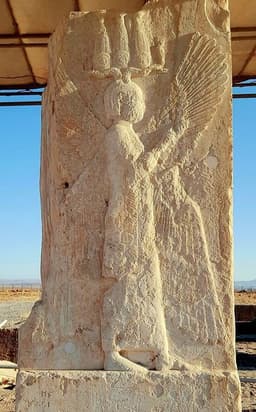
Cyrus the Great
Emperor · Ancient
83.9Total
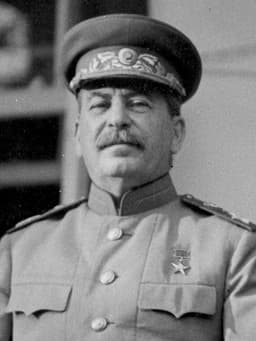
Joseph Stalin
Politician · Modern
68.8Total
Basic Information
Born
-600
1878
Died
-530
1953
Era
Ancient
Modern
Nationality
Persia
Russia
Occupation
Emperor
Politician
Civilization
Middle Eastern
Western
Score Comparison
Military (10%)
82.0
75.0
Political (20%)
85.0
70.0
Influence (20%)
85.0
72.0
Legacy (20%)
90.0
55.0
Leadership (15%)
78.0
80.0
Strategy (15%)
75.0
70.0
TOTAL
83.9
68.8
Cyrus the Great — Complete Timeline
550 BC
Founding of the Achaemenid EmpirePolitical Action
Cyrus led a rebellion against the Median Empire, defeating King Astyages and capturing Ecbatana. He then united the Persian and Median tribes, establishing the Achaemenid Empire, which became the largest empire the world had yet seen.
Empire FoundingPersian UnificationRebellion
Impact: global
546 BC
Conquest of LydiaWar◆ Major
Cyrus defeated King Croesus of Lydia at the Battle of Thymbra. The Lydian capital Sardis was captured, and Croesus was taken prisoner. This conquest brought Anatolia under Persian control and secured access to the Aegean coast.
Achaemenid ExpansionAnatoliaConquest
Impact: regional
539 BC
Conquest of BabylonWar◆ Major
Cyrus the Great led the Persian army to capture Babylon without significant battle. The city's gates were opened, and Cyrus entered peacefully. This conquest added Mesopotamia to the Achaemenid Empire and marked the end of the Neo-Babylonian Empire.
Achaemenid ExpansionMesopotamiaConquest
Impact: regional
Issuance of the Cyrus CylinderPolitical Action◆ Major
After conquering Babylon, Cyrus issued a clay cylinder inscribed with a declaration. It described his policy of restoring temples, repatriating displaced peoples, and allowing religious freedom. The cylinder is often cited as an early charter of human rights.
Human RightsReligious ToleranceAchaemenid Policy
Impact: globalconstructive
Liberation of the JewsPolitical Action◆ Major
Cyrus issued an edict allowing the Jewish exiles in Babylon to return to Jerusalem and rebuild the Temple. This event is recorded in the biblical Book of Ezra and is a key moment in Jewish history, ending the Babylonian captivity.
Jewish HistoryReligious FreedomReturn from Exile
Impact: regionalconstructive
Joseph Stalin — Complete Timeline
1928 AD
Launched the First Five-Year PlanReform
Stalin initiated a series of centralized economic plans aimed at rapid industrialization and collectivization of agriculture. The First Five-Year Plan set ambitious targets for heavy industry, leading to significant growth but also severe shortages and human cost.
Impact: global
1929 AD
Implemented forced collectivization of agricultureReform
Stalin ordered the consolidation of individual peasant farms into collective farms (kolkhozy). This was met with resistance, leading to the liquidation of kulaks (wealthy peasants) as a class. The policy caused a catastrophic famine, particularly in Ukraine (Holodomor), resulting in millions of deaths.
Impact: nationaldestructive
1937 AD
Conducted the Great Purge (Great Terror)Political Action
Stalin orchestrated a campaign of political repression against alleged enemies of the state. Millions were arrested, executed, or sent to the Gulag labor camps. The purges targeted the Communist Party, military leadership, intellectuals, and ordinary citizens, consolidating Stalin's absolute power.
Impact: nationaldestructive
1945 AD
Led the Soviet Union to victory in World War IIWar
Stalin served as Supreme Commander of the Soviet armed forces. The Soviet Union bore the brunt of the war against Nazi Germany, suffering immense casualties. The Red Army's victory at Stalingrad and the capture of Berlin were key turning points. The war ended with Soviet domination of Eastern Europe.
Impact: global
Established the Eastern Bloc and the Iron CurtainPolitical Action◆ Major
After WWII, Stalin imposed communist governments in Eastern European countries occupied by the Red Army, creating a buffer zone against the West. This division of Europe into Soviet and Western spheres of influence marked the beginning of the Cold War.
Impact: globaldestructive
Expert Analysis
Cyrus the Great vs Joseph Stalin
# The Conqueror and the Commissar
On a spring day in 539 BCE, Cyrus the Great entered Babylon not through shattered walls and burning gates, but through doors opened by his own supporters, the city’s priests and merchants weary of their king’s neglect. He walked into the ancient capital as a liberator, not a destroyer. Twenty-five centuries later, in the winter of 1937, Joseph Stalin sat in his Kremlin office, reviewing lists of names—men, women, and children marked for execution. One conqueror built an empire on tolerance; the other solidified his power through terror. What drove these two rulers, both architects of vast states, to such radically different paths?
Origins
Cyrus was born around 600 BCE into the Persian Achaemenid clan, a vassal people under the Median Empire. His world was one of tribal loyalties, shifting alliances, and the memory of ancient Mesopotamian civilizations. The Persians were pastoral warriors, proud but not yet powerful. Cyrus grew up hearing stories of Assyrian cruelty and Median dominance, learning that survival required both strength and diplomacy. His era offered no templates for empire—only models of conquest followed by exploitation.
Stalin entered the world in 1878 in Gori, Georgia, a small town in the Russian Empire. His father was a violent shoemaker, his mother a devout laundress. Young Joseph, born Ioseb Jughashvili, grew up poor, resentful, and marked by smallpox. He studied at a theological seminary but was expelled for revolutionary activity. His world was one of industrializing Russia, where the czar’s autocracy crushed dissent and Marxist ideology promised a new order. Unlike Cyrus, Stalin inherited a blueprint for revolution—Lenin’s vanguard party, class struggle, and the necessity of violence.
Rise to Power
Cyrus’s ascent began in 550 BCE when he led a rebellion against his Median overlord, King Astyages. The Persians were outnumbered, but Cyrus exploited internal discontent: Median nobles, tired of their king’s arrogance, defected to his cause. He captured Ecbatana not by brute force but by persuasion. This pattern repeated. In 546 BCE, he defeated the wealthy King Croesus of Lydia at the Battle of Thymbra, using innovative tactics—camels to spook enemy horses—but also offering generous terms to the defeated. Croesus, legend says, was spared and became an advisor.
Stalin’s rise was slower, more brutal. He joined the Bolsheviks in 1903, took the name “Stalin” (man of steel), and climbed through the ranks of the revolutionary underground. After Lenin’s death in 1924, Stalin maneuvered against rivals like Trotsky, not through battlefield victories but through bureaucratic control. He appointed loyalists, manipulated party congresses, and framed opponents as traitors. By 1928, he had absolute power—not because people loved him, but because they feared him.
Leadership & Governance
Cyrus ruled the largest empire the world had yet seen, stretching from India to the Mediterranean. His genius lay in administration: he divided the realm into satrapies (provinces) under local governors, allowed conquered peoples to keep their religions and customs, and built roads for trade and communication. The Cyrus Cylinder, issued after Babylon’s fall in 539 BCE, proclaimed his policy of restoring temples and repatriating displaced peoples. Most famously, he freed the Jewish exiles, allowing them to return to Jerusalem and rebuild their Temple—a decision recorded in the Hebrew Bible with gratitude.
Stalin governed through terror and planning. His First Five-Year Plan, launched in 1928, forced rapid industrialization: factories rose, dams were built, and the Soviet Union became a military power. But the human cost was staggering. Forced collectivization of agriculture in 1929 led to famine, with millions dying in Ukraine and Kazakhstan. The Great Purge of 1937–1938 saw the arrest of over 1.5 million people, with at least 700,000 executed. Stalin did not build loyalty; he destroyed opposition.
Triumph & Tragedy
Cyrus’s greatest triumph was Babylon itself—a bloodless conquest that made him a legend. He respected the city’s gods, restored its temples, and allowed its diverse peoples to thrive. His tragedy came at the end: dying in battle around 530 BCE while campaigning against nomadic tribes in Central Asia. Even in death, he was honored; his tomb at Pasargadae became a pilgrimage site.
Stalin’s triumph was World War II. As Supreme Commander, he led the Soviet Union to victory over Nazi Germany in 1945, sacrificing 27 million lives but emerging as a global superpower. His tragedy was the peace that followed: he imposed the Iron Curtain across Eastern Europe, crushing hope for freedom in Poland, Hungary, and Czechoslovakia. He died in 1953, feared and isolated, leaving a nation victorious but scarred.
Character & Destiny
Cyrus was pragmatic, curious, and magnanimous. He understood that loyalty grows from respect, not fear. His decisions were shaped by the realities of his era—empire required stability, and stability required consent. He was not a saint; he conquered ruthlessly when necessary. But he chose tolerance because it worked.
Stalin was paranoid, vengeful, and ideological. He saw enemies everywhere—even in his own family. His personality was forged in poverty and revolution, where trust was weakness. He believed that history justified any means, that the end of communism absolved the means of terror. This worldview, combined with absolute power, produced the purges, the gulags, and the famine.
Legacy
Cyrus is remembered as a model ruler. The Cyrus Cylinder is often called the first charter of human rights. His empire set a standard for multicultural governance that influenced Alexander the Great and the Roman Empire. In modern Iran, he is a national hero; in Jewish tradition, a messianic figure.
Stalin’s legacy is contested. In Russia, some view him as the leader who won a war and built a superpower. For millions in Eastern Europe and the former Soviet republics, he is a tyrant who murdered and starved. His statues have been torn down, but his methods—surveillance, repression, propaganda—persist in authoritarian regimes today.
Conclusion
Cyrus and Stalin both built empires that reshaped the world. One did so by freeing captives; the other by imprisoning millions. One issued a cylinder celebrating diversity; the other signed death lists in silence. Their differences were not accidents of fate but products of character, ideology, and the eras that shaped them. Cyrus lived in a world where power could be shared; Stalin in a world where power had to be absolute. In the end, the conqueror of Babylon offers a lesson in what power can achieve when tempered by mercy. The commissar of the Kremlin warns us what power becomes when it answers to nothing but itself.
Rankings
🥇
Cyrus the GreatLeader
Mil: 82.0Pol: 85.0Inf: 85.0
83.9
🥈
Joseph Stalin
Mil: 75.0Pol: 70.0Inf: 72.0
68.8
+15.1 behind
How This Comparison Works
Algorithm
Each figure is scored on 6 dimensions (0—100 scale) based on structured historical data: Military (10%), Political (20%), Influence (20%), Legacy (20%), Leadership (15%), Strategy (15%). The weighted total produces the final ranking.
Data Sources
Scores are computed from structured sub-indicators in the database. Scale factors adjust for era (Ancient ×0.85, Modern ×1.0) and civilization size (Eastern ×1.05, Other ×0.80) to account for differences in population and military scale.
Maximum 3 Figures
Comparisons are limited to 2—3 figures to ensure readability and statistical meaningfulness.
Error Margins
±5 points per dimension — Sub-scores are derived from historical records with inherent uncertainty. Two figures within 5 points on a dimension should be considered roughly equivalent in that area.
Total Score Accuracy
±3 points overall — The weighted combination of 6 dimensions produces a total score with approximately ±3 points of uncertainty. Differences of less than 3 points are not statistically significant— the figures are effectively tied.
Known Limitations
- Historical records are incomplete and uneven across civilizations
- Figures from oral-tradition societies may be underrepresented
- Occupation labels can misclassify multi-role figures
- Scores measure capability and impact, not moral character
- Quantitative scoring is a comparison tool, not absolute truth
Capability Radar
Military (10%) — Battles & Warfare
Battles
85
85
Win Rate
90
80
Expansion
92
85
Political (20%) — Governance & Reform
Reform
90
90
Diplomacy
95
70
Economy
80
85
Influence (20%) — Cultural & Global Reach
Cultural
90
70
Global
90
95
Legacy (20%) — Historical Impact
Historical
95
95
Longevity
95
80
Leadership (15%) — Power & Stability
Tenure
70
95
Stability
85
60
Strategy (15%) — Tactics & Innovation
Strategy
88
85
Tactics
80
60
Reform
75
90
Similar Comparisons
Comments & Discussion
PERSIAN-PINSTRIPER6/16/2026
Military analysts love to call both men "strategic geniuses," but that flattens a key distinction. Cyrus won loyalty through calculated generosity—his Persian nobles stayed faithful for generations. Stalin won through calculated terror; he purged his own officer corps in 1937, decapitating the Red Army on the eve of war. One built institutions that outlasted him; the other built a cult that collapsed within decades. Strategy that requires constant fear is fragile. Cyrus’s tolerance wasn’t softne
万古屠夫6/16/2026
拿居鲁士跟斯大林比,本身就是一种历史暴力。居鲁士活在公元前六世纪,他的“宽容”是治术,不是现代人权。但斯大林在二十世纪,工业革命、电报、铁路都准备好了,他却选择用国家机器搞系统性清洗。1937年大清洗处决了约68万人,其中不少是党内同志。这不是“不同路径”,这是自愿退回野兽纪元。别用“不同时代”当遮羞布。
CYRUS-TRUTH-TELLER6/16/2026
The cylinder is not a constitution. Let’s stop pretending Cyrus was some ancient UN secretary-general. He restored local cults because it was cheaper than garrisoning rebelling provinces. He let Jews return to Jerusalem—great PR, but also a buffer state against Egypt. Stalin’s terror was brutal, but it industrialised a peasant nation in one decade. Both were pragmatic, both cold-blooded. The difference isn’t morality; it’s that Cyrus’s lies aged into idealism, while Stalin’s never had a mask to
孤山冷眼6/16/2026
数据不会撒谎:居鲁士统治约30年,帝国相对平稳,死在他直接命令下的人数保守估计几千人。斯大林统治29年,按档案统计,1932-33年乌克兰大饥荒饿死390万人,大清洗枪决约68万,古拉格死亡约180万。这不是什么“风格差异”,这是数字上的文明深渊。你把居鲁士的任何政策拿来放大十倍,也变不出这种规模的人道灾难。别搞平衡术了。
白马非马6/16/2026
你们都在谈统治风格,却忽略了一个根本:居鲁士的波斯帝国本质是部落联盟
Historian8136/16/2026
Forgotten detail: Cyrus’s own son Cambyses went mad, murdered his brother, and the empire nearly collapsed within a decade of Cyrus’s death. Stalin’s succession was smoother; Beria and Khrushchev fought, but the system held. Which legacy is more stable? The one built on personal charisma that decays, or the one built on institutional terror that others can operate? Cyrus built a beautiful sandcastle; Stalin a concrete bunker. Depends what you value more—architecture or durability.