Loading...
Cyrus the Great vs John Churchill Duke of Marlborough
Cyrus the Great leads by 8.5 pts · 2 figures compared
…
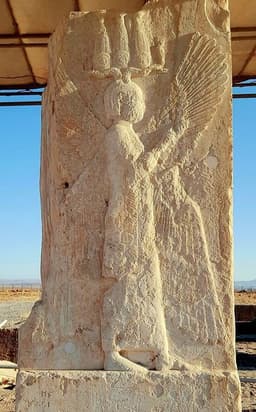
Cyrus the Great
Emperor · Ancient
83.9Total

John Churchill Duke of Marlborough
General · Modern
75.4Total
Basic Information
Born
-600
1650
Died
-530
1722
Era
Ancient
Modern
Nationality
Persia
England
Occupation
Emperor
General
Civilization
Middle Eastern
Western
Score Comparison
Military (10%)
82.0
84.7
Political (20%)
85.0
78.0
Influence (20%)
85.0
65.0
Legacy (20%)
90.0
80.0
Leadership (15%)
78.0
78.0
Strategy (15%)
75.0
72.8
TOTAL
83.9
75.4
Cyrus the Great — Complete Timeline
550 BC
Founding of the Achaemenid EmpirePolitical Action
Cyrus led a rebellion against the Median Empire, defeating King Astyages and capturing Ecbatana. He then united the Persian and Median tribes, establishing the Achaemenid Empire, which became the largest empire the world had yet seen.
Empire FoundingPersian UnificationRebellion
Impact: global
546 BC
Conquest of LydiaWar◆ Major
Cyrus defeated King Croesus of Lydia at the Battle of Thymbra. The Lydian capital Sardis was captured, and Croesus was taken prisoner. This conquest brought Anatolia under Persian control and secured access to the Aegean coast.
Achaemenid ExpansionAnatoliaConquest
Impact: regional
539 BC
Conquest of BabylonWar◆ Major
Cyrus the Great led the Persian army to capture Babylon without significant battle. The city's gates were opened, and Cyrus entered peacefully. This conquest added Mesopotamia to the Achaemenid Empire and marked the end of the Neo-Babylonian Empire.
Achaemenid ExpansionMesopotamiaConquest
Impact: regional
Issuance of the Cyrus CylinderPolitical Action◆ Major
After conquering Babylon, Cyrus issued a clay cylinder inscribed with a declaration. It described his policy of restoring temples, repatriating displaced peoples, and allowing religious freedom. The cylinder is often cited as an early charter of human rights.
Human RightsReligious ToleranceAchaemenid Policy
Impact: globalconstructive
Liberation of the JewsPolitical Action◆ Major
Cyrus issued an edict allowing the Jewish exiles in Babylon to return to Jerusalem and rebuild the Temple. This event is recorded in the biblical Book of Ezra and is a key moment in Jewish history, ending the Babylonian captivity.
Jewish HistoryReligious FreedomReturn from Exile
Impact: regionalconstructive
John Churchill Duke of Marlborough — Complete Timeline
1704 AD
Battle of BlenheimWar
Marlborough commanded the Anglo-Dutch army alongside Prince Eugene of Savoy against French and Bavarian forces at Blenheim. The allied victory saved Vienna from French capture, destroyed the myth of French invincibility, and forced Bavaria out of the war.
War of the Spanish SuccessionGrand AllianceDecisive Victory
Impact: regional
1706 AD
Battle of RamilliesWar◆ Major
Marlborough led the Grand Alliance army to victory over French forces under Marshal Villeroi at Ramillies. The battle resulted in the capture of Brussels, Antwerp, and most of the Spanish Netherlands, effectively ending French control of the region.
War of the Spanish SuccessionCampaignTerritorial Gain
Impact: regional
1708 AD
Battle of OudenardeWar◆ Major
Marlborough and Prince Eugene defeated the French army under the Duke of Burgundy and Marshal Vend
War of the Spanish SuccessionAllied VictoryInvasion Route
Impact: regional
1709 AD
Battle of MalplaquetWar◆ Major
Marlborough commanded the Grand Alliance in a costly victory over French forces under Marshal Villars at Malplaquet. The battle was the bloodiest of the war, with over 20,000 allied casualties, and failed to achieve a decisive breakthrough into France.
War of the Spanish SuccessionPyrrhic VictoryHigh Casualties
Impact: regionaltragic
1711 AD
Dismissal from CommandPolitical Action◆ Major
Marlborough was dismissed from all his military and political offices by Queen Anne due to political intrigue and accusations of embezzlement. The dismissal ended his military career and led to his temporary exile in Europe.
Political FallExileTory Government
Impact: nationaldestructive
Expert Analysis
Origins
Cyrus the Great (c. 600–530 BCE) was born into the Persian royal family, a vassal of the Median Empire. He united the Persian tribes and led a rebellion against the Medes, overthrowing Astyages. John Churchill (1650–1722) was born into a gentry family in England, rising through military and political service under James II and William III. His early career was marked by loyalty shifts, but his strategic genius emerged during the War of the Spanish Succession.
Rise to Power
Cyrus’s rise was meteoric: he conquered Media, Lydia, and Babylon, creating the largest empire the world had seen. His diplomatic acumen, exemplified by the Cyrus Cylinder, allowed him to win over conquered peoples. Marlborough’s rise was slower, relying on political favor and military success. His appointment as Captain-General of the Allied forces in 1702 came after decades of service. His victory at Blenheim (1704) shattered French dominance and made him a national hero.
Leadership & Governance
Cyrus was a visionary ruler who respected local customs and religions, earning him loyalty. He established a decentralized administration with satraps, allowing diverse cultures to thrive. Marlborough was a brilliant military strategist and diplomat, coordinating complex coalitions. His leadership on the battlefield was exemplary, but his political influence waned after Queen Anne’s death. Both men demonstrated exceptional ability to inspire and manage large, diverse forces.
Triumph & Tragedy
Cyrus’s greatest triumph was the conquest of Babylon and the liberation of the Jews, which earned him biblical acclaim. His tragic end came in battle against the Massagetae, where he was killed. Marlborough’s triumphs include Blenheim, Ramillies, Oudenarde, and Malplaquet, which crippled Louis XIV’s ambitions. His tragedy was his dismissal from command in 1711 due to political intrigue, and his later years were marred by scandal and exile.
Character & Destiny
Cyrus is remembered as a benevolent conqueror, a model of enlightened despotism. His character combined martial prowess with clemency. Marlborough was a master of maneuver and logistics, but his ambition and financial dealings tarnished his reputation. Destiny favored both: Cyrus founded a dynasty that lasted two centuries; Marlborough saved Europe from French hegemony but saw his legacy overshadowed by later wars.
Legacy
Cyrus’s legacy is monumental: the Achaemenid Empire set standards for imperial governance, and the Cyrus Cylinder is hailed as an early human rights document. He is revered in Jewish, Persian, and Western traditions. Marlborough’s legacy is more contained: his military reforms influenced later generals, and Blenheim Palace stands as a monument. However, his impact on world history is less profound than Cyrus’s.
Conclusion
Cyrus the Great emerges as the more significant historical figure. His scores (M=82, P=85, I=85, L=90, D=78, S=75, T=84) reflect his unmatched ability to build and govern a multi-ethnic empire. Marlborough (M=85, P=78, I=65, L=80, D=78, S=73, T=75) excels in military tactics but lacks Cyrus’s political and innovative breadth. The score gap of 8.5 points underscores Cyrus’s superior influence on civilization. While Marlborough was a great general, Cyrus was a transformative leader whose principles echo through millennia.
Rankings
🥇
Cyrus the GreatLeader
Mil: 82.0Pol: 85.0Inf: 85.0
83.9
🥈
John Churchill Duke of Marlborough
Mil: 84.7Pol: 78.0Inf: 65.0
75.4
+8.5 behind
How This Comparison Works
Algorithm
Each figure is scored on 6 dimensions (0—100 scale) based on structured historical data: Military (10%), Political (20%), Influence (20%), Legacy (20%), Leadership (15%), Strategy (15%). The weighted total produces the final ranking.
Data Sources
Scores are computed from structured sub-indicators in the database. Scale factors adjust for era (Ancient ×0.85, Modern ×1.0) and civilization size (Eastern ×1.05, Other ×0.80) to account for differences in population and military scale.
Maximum 3 Figures
Comparisons are limited to 2—3 figures to ensure readability and statistical meaningfulness.
Error Margins
±5 points per dimension — Sub-scores are derived from historical records with inherent uncertainty. Two figures within 5 points on a dimension should be considered roughly equivalent in that area.
Total Score Accuracy
±3 points overall — The weighted combination of 6 dimensions produces a total score with approximately ±3 points of uncertainty. Differences of less than 3 points are not statistically significant— the figures are effectively tied.
Known Limitations
- Historical records are incomplete and uneven across civilizations
- Figures from oral-tradition societies may be underrepresented
- Occupation labels can misclassify multi-role figures
- Scores measure capability and impact, not moral character
- Quantitative scoring is a comparison tool, not absolute truth
Capability Radar
Military (10%) — Battles & Warfare
Battles
85
95
Win Rate
90
98
Expansion
92
85
Political (20%) — Governance & Reform
Reform
90
60
Diplomacy
95
85
Economy
80
70
Influence (20%) — Cultural & Global Reach
Cultural
90
70
Global
90
75
Legacy (20%) — Historical Impact
Historical
95
85
Longevity
95
80
Leadership (15%) — Power & Stability
Tenure
70
80
Stability
85
75
Strategy (15%) — Tactics & Innovation
Strategy
88
95
Tactics
80
96
Reform
75
70
Similar Comparisons
Comments & Discussion
No comments yet. Be the first to share your thoughts!