Loading...
Cyrus the Great vs Ivan III the Great
Cyrus the Great leads by 8.6 pts · 2 figures compared
…
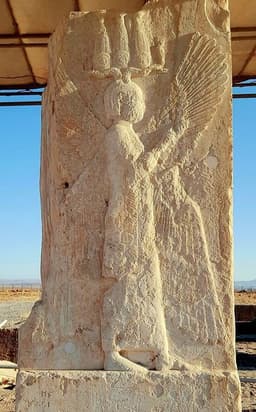
Cyrus the Great
Emperor · Ancient
83.9Total
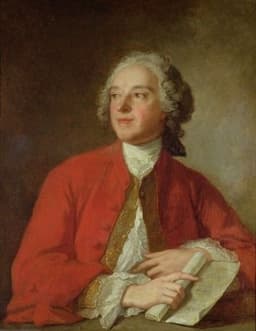
Ivan III the Great
Emperor · Medieval
75.3Total
Basic Information
Born
-600
1440
Died
-530
1505
Era
Ancient
Medieval
Nationality
Persia
Muscovy
Occupation
Emperor
Emperor
Civilization
Middle Eastern
Western
Score Comparison
Military (10%)
82.0
76.0
Political (20%)
85.0
70.0
Influence (20%)
85.0
75.0
Legacy (20%)
90.0
80.0
Leadership (15%)
78.0
78.0
Strategy (15%)
75.0
67.2
TOTAL
83.9
75.3
Cyrus the Great — Complete Timeline
550 BC
Founding of the Achaemenid EmpirePolitical Action
Cyrus led a rebellion against the Median Empire, defeating King Astyages and capturing Ecbatana. He then united the Persian and Median tribes, establishing the Achaemenid Empire, which became the largest empire the world had yet seen.
Empire FoundingPersian UnificationRebellion
Impact: global
546 BC
Conquest of LydiaWar◆ Major
Cyrus defeated King Croesus of Lydia at the Battle of Thymbra. The Lydian capital Sardis was captured, and Croesus was taken prisoner. This conquest brought Anatolia under Persian control and secured access to the Aegean coast.
Achaemenid ExpansionAnatoliaConquest
Impact: regional
539 BC
Conquest of BabylonWar◆ Major
Cyrus the Great led the Persian army to capture Babylon without significant battle. The city's gates were opened, and Cyrus entered peacefully. This conquest added Mesopotamia to the Achaemenid Empire and marked the end of the Neo-Babylonian Empire.
Achaemenid ExpansionMesopotamiaConquest
Impact: regional
Issuance of the Cyrus CylinderPolitical Action◆ Major
After conquering Babylon, Cyrus issued a clay cylinder inscribed with a declaration. It described his policy of restoring temples, repatriating displaced peoples, and allowing religious freedom. The cylinder is often cited as an early charter of human rights.
Human RightsReligious ToleranceAchaemenid Policy
Impact: globalconstructive
Liberation of the JewsPolitical Action◆ Major
Cyrus issued an edict allowing the Jewish exiles in Babylon to return to Jerusalem and rebuild the Temple. This event is recorded in the biblical Book of Ezra and is a key moment in Jewish history, ending the Babylonian captivity.
Jewish HistoryReligious FreedomReturn from Exile
Impact: regionalconstructive
Ivan III the Great — Complete Timeline
1472 AD
Marriage to Sophia PalaiologinaPolitical Action◆ Major
Ivan III married Sophia (Zoe) Palaiologina, niece of the last Byzantine emperor. This marriage allowed Ivan to claim succession to the Byzantine Empire, adopt the double-headed eagle as a symbol, and promote Moscow as the Third Rome.
ByzantiumThird RomeMarriage
Impact: regionalconstructive
1478 AD
Annexation of NovgorodWar◆ Major
Ivan III conquered the Novgorod Republic after a series of campaigns. He abolished the veche (assembly) and removed the veche bell, incorporating Novgorod's vast territories into the Grand Principality of Moscow.
NovgorodAnnexationMoscow
Impact: regional
1480 AD
Great Stand on the Ugra RiverWar
Ivan III faced the Mongol army of Khan Akhmat across the Ugra River. After weeks of stalemate, the Mongols withdrew without battle. This event ended 240 years of Mongol suzerainty over Russia.
Golden HordeIndependenceUgra
Impact: regional
1497 AD
Issued the Sudebnik of 1497Reform◆ Major
Ivan III promulgated a new legal code, the Sudebnik, which standardized laws across the Russian lands. It restricted peasant mobility by limiting the time for transfer between landowners, a step toward serfdom.
Legal CodeSerfdomReform
Impact: national
1500 AD
War with the Grand Duchy of LithuaniaWar◆ Major
Ivan III launched a war against Lithuania, capturing the cities of Bryansk, Dorogobuzh, and Putivl. The war ended with the Truce of 1503, which ceded significant territories to Moscow.
LithuaniaTerritorial ExpansionWar
Impact: regional
Expert Analysis
Origins
Cyrus the Great (c. 600–530 BCE) was born into the Achaemenid dynasty, a Persian vassal of the Median Empire. His lineage was noble, but his rise was not guaranteed. In contrast, Ivan III (1440–1505 CE) was born into the Rurikid dynasty as Grand Prince of Moscow, inheriting a position of relative strength. Cyrus's origins were more precarious, requiring him to overthrow his Median overlord, while Ivan began with a stable base.
Rise to Power
Cyrus united the Persian tribes and rebelled against the Medes, defeating King Astyages in 550 BCE. He then rapidly expanded by conquering Lydia (547 BCE) and Babylon (539 BCE). Ivan III consolidated power by annexing Novgorod (1478) and other Russian principalities. He also ended Mongol suzerainty after the Great Stand on the Ugra River (1480). Both rose through military and political acumen, but Cyrus's conquests were more extensive and transformative.
Leadership & Governance
Cyrus established a vast, multicultural empire with a decentralized administrative system (satrapies), respecting local customs and religions. His Cyrus Cylinder is considered an early charter of human rights. Ivan III centralized power in Moscow, adopted the title "Tsar," and introduced a new legal code (Sudebnik of 1497). While both were effective, Cyrus's inclusive governance was more innovative and enduring.
Triumph & Tragedy
Cyrus's triumphs include conquering the largest empire of his time and freeing the Jews from Babylonian captivity. His tragic end came in battle against the Massagetae, where he was killed. Ivan III's triumphs include ending Mongol rule and doubling Moscow's territory. His tragedy was less personal; he struggled with succession issues and internal conflicts. Cyrus's achievements were more monumental and his death more heroic.
Character & Destiny
Cyrus is remembered as a wise, tolerant, and magnanimous ruler, praised in both Persian and Greek sources. Ivan III was shrewd, ambitious, and autocratic, earning the title "Gatherer of the Russian Lands." Cyrus's character aligns with a unifier and liberator, while Ivan's with a centralizer and nation-builder. Destiny favored Cyrus, as his empire lasted centuries, while Ivan's legacy was built upon by successors.
Legacy
Cyrus's legacy includes the Achaemenid Empire's model of multiculturalism and the Cyrus Cylinder's influence on human rights. He is revered in Judaism, Christianity, and Islam. Ivan III laid the foundation for the Russian Tsardom and later the Russian Empire, but his impact is more regional. Cyrus's global and historical significance far outweighs Ivan's.
Conclusion
Cyrus the Great scores higher overall (84 vs 75) due to superior military conquests, innovative governance, and lasting impact. Both were great rulers, but Cyrus's achievements were more transformative and enduring. **Score: Cyrus 84 - Ivan 75**
Rankings
🥇
Cyrus the GreatLeader
Mil: 82.0Pol: 85.0Inf: 85.0
83.9
🥈
Ivan III the Great
Mil: 76.0Pol: 70.0Inf: 75.0
75.3
+8.6 behind
How This Comparison Works
Algorithm
Each figure is scored on 6 dimensions (0—100 scale) based on structured historical data: Military (10%), Political (20%), Influence (20%), Legacy (20%), Leadership (15%), Strategy (15%). The weighted total produces the final ranking.
Data Sources
Scores are computed from structured sub-indicators in the database. Scale factors adjust for era (Ancient ×0.85, Modern ×1.0) and civilization size (Eastern ×1.05, Other ×0.80) to account for differences in population and military scale.
Maximum 3 Figures
Comparisons are limited to 2—3 figures to ensure readability and statistical meaningfulness.
Error Margins
±5 points per dimension — Sub-scores are derived from historical records with inherent uncertainty. Two figures within 5 points on a dimension should be considered roughly equivalent in that area.
Total Score Accuracy
±3 points overall — The weighted combination of 6 dimensions produces a total score with approximately ±3 points of uncertainty. Differences of less than 3 points are not statistically significant— the figures are effectively tied.
Known Limitations
- Historical records are incomplete and uneven across civilizations
- Figures from oral-tradition societies may be underrepresented
- Occupation labels can misclassify multi-role figures
- Scores measure capability and impact, not moral character
- Quantitative scoring is a comparison tool, not absolute truth
Capability Radar
Military (10%) — Battles & Warfare
Battles
85
75
Win Rate
90
80
Expansion
92
85
Political (20%) — Governance & Reform
Reform
90
80
Diplomacy
95
85
Economy
80
70
Influence (20%) — Cultural & Global Reach
Cultural
90
70
Global
90
70
Legacy (20%) — Historical Impact
Historical
95
85
Longevity
95
80
Leadership (15%) — Power & Stability
Tenure
70
85
Stability
85
75
Strategy (15%) — Tactics & Innovation
Strategy
88
85
Tactics
80
70
Reform
75
65
Similar Comparisons
Comments & Discussion
No comments yet. Be the first to share your thoughts!