Loading...
Cyrus the Great vs Helmuth von Moltke
Cyrus the Great leads by 7.7 pts · 2 figures compared
…
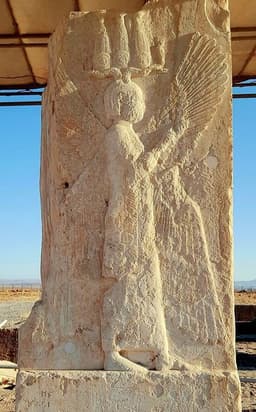
Cyrus the Great
Emperor · Ancient
83.9Total
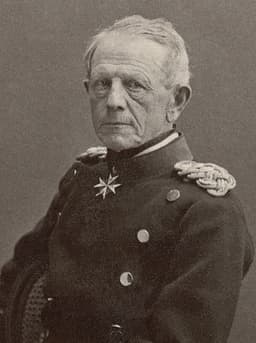
Helmuth von Moltke
General · Modern
76.2Total
Basic Information
Born
-600
1800
Died
-530
1891
Era
Ancient
Modern
Nationality
Persia
Prussia
Occupation
Emperor
General
Civilization
Middle Eastern
Western
Score Comparison
Military (10%)
82.0
65.0
Political (20%)
85.0
62.7
Influence (20%)
85.0
88.0
Legacy (20%)
90.0
70.0
Leadership (15%)
78.0
85.0
Strategy (15%)
75.0
80.6
TOTAL
83.9
76.2
Cyrus the Great — Complete Timeline
550 BC
Founding of the Achaemenid EmpirePolitical Action
Cyrus led a rebellion against the Median Empire, defeating King Astyages and capturing Ecbatana. He then united the Persian and Median tribes, establishing the Achaemenid Empire, which became the largest empire the world had yet seen.
Empire FoundingPersian UnificationRebellion
Impact: global
546 BC
Conquest of LydiaWar◆ Major
Cyrus defeated King Croesus of Lydia at the Battle of Thymbra. The Lydian capital Sardis was captured, and Croesus was taken prisoner. This conquest brought Anatolia under Persian control and secured access to the Aegean coast.
Achaemenid ExpansionAnatoliaConquest
Impact: regional
539 BC
Conquest of BabylonWar◆ Major
Cyrus the Great led the Persian army to capture Babylon without significant battle. The city's gates were opened, and Cyrus entered peacefully. This conquest added Mesopotamia to the Achaemenid Empire and marked the end of the Neo-Babylonian Empire.
Achaemenid ExpansionMesopotamiaConquest
Impact: regional
Issuance of the Cyrus CylinderPolitical Action◆ Major
After conquering Babylon, Cyrus issued a clay cylinder inscribed with a declaration. It described his policy of restoring temples, repatriating displaced peoples, and allowing religious freedom. The cylinder is often cited as an early charter of human rights.
Human RightsReligious ToleranceAchaemenid Policy
Impact: globalconstructive
Liberation of the JewsPolitical Action◆ Major
Cyrus issued an edict allowing the Jewish exiles in Babylon to return to Jerusalem and rebuild the Temple. This event is recorded in the biblical Book of Ezra and is a key moment in Jewish history, ending the Babylonian captivity.
Jewish HistoryReligious FreedomReturn from Exile
Impact: regionalconstructive
Helmuth von Moltke — Complete Timeline
1857 AD
Appointment as Chief of the Prussian General StaffPolitical Action
Moltke was appointed Chief of the Prussian General Staff, a position he held for 30 years. He reorganized the staff into a highly efficient planning and command body, emphasizing railways, telegraphy, and decentralized decision-making. This modernization was crucial for Prussia's subsequent victories.
Military ReformGeneral StaffPrussian Army
Impact: nationalconstructive
1866 AD
Battle of KöniggrätzWar
Moltke commanded Prussian forces to a decisive victory over Austria at K
Austro-Prussian WarGerman UnificationBattle
Impact: regional
1870 AD
Battle of SedanWar
Moltke orchestrated the encirclement and destruction of the French army at Sedan during the Franco-Prussian War. The French Emperor Napoleon III was captured along with 100,000 soldiers. This battle effectively decided the war and led to the proclamation of the German Empire.
Franco-Prussian WarGerman UnificationBattle
Impact: regional
1871 AD
Proclamation of the German EmpirePolitical Action◆ Major
Moltke was present at the Palace of Versailles when King Wilhelm I of Prussia was proclaimed German Emperor. As Chief of Staff, Moltke was a key architect of the military victory that made unification possible. He was later promoted to Field Marshal and ennobled.
German UnificationEmpireCeremony
Impact: regionalconstructive
Expert Analysis
Origins
Cyrus the Great (c. 600–530 BCE) was born in Persis, a vassal of the Median Empire. He united the Persian tribes and overthrew the Medes, founding the Achaemenid Empire. His lineage traced back to Achaemenes, but his rise was due to personal charisma and military skill. Helmuth von Moltke (1800–1891) was born in Mecklenburg-Schwerin into a noble family. He served in the Danish and Prussian armies, later becoming Chief of the Prussian General Staff. His origins were modest compared to Bismarck's political genius, but his strategic mind shaped modern warfare.
Rise to Power
Cyrus conquered Media, Lydia, and Babylon, creating the largest empire of his time. His victory at the Battle of Thymbra against Croesus of Lydia showcased his tactical brilliance. The conquest of Babylon in 539 BCE was a turning point, as he entered the city without a fight and presented himself as a liberator. Moltke's rise came through the Prussian General Staff, which he reformed and led from 1857. His planning for the Austro-Prussian War culminated in the decisive Battle of Königgrätz (1866), where his use of railways and telegraphy revolutionized military strategy. The Franco-Prussian War (1870-71) saw his masterpiece at Sedan, capturing Napoleon III.
Leadership & Governance
Cyrus ruled with a policy of tolerance, respecting local customs and religions. The Cyrus Cylinder, often called the first human rights charter, proclaimed his respect for Babylonian gods and freed enslaved peoples. He allowed the Jews to return to Jerusalem and rebuild their temple. His empire was divided into satrapies with local autonomy. Moltke was a master of organization and logistics, not a political leader. He served under King Wilhelm I and Bismarck, focusing on military efficiency. His leadership was characterized by meticulous planning, but he lacked political ambition, famously saying, "No plan survives first contact with the enemy."
Triumph & Tragedy
Cyrus's greatest triumph was the creation of a multicultural empire that lasted over 200 years. His tragedy was his death in battle against the Massagetae, a nomadic tribe, where his body was mutilated by Queen Tomyris. His empire, however, continued under his successors. Moltke's triumphs were the unification of Germany after the Franco-Prussian War and the proclamation of the German Empire at Versailles in 1871. His tragedy was the later misuse of his military system in World War I, leading to a costly stalemate. He died as a revered hero, but his legacy was tainted by the militarism he helped create.
Character & Destiny
Cyrus was portrayed as a wise and just ruler in Greek sources, particularly Xenophon's Cyropaedia. His character combined ambition with benevolence, earning him the title "King of the World." His destiny was to build an empire that bridged East and West. Moltke was a reserved, intellectual figure, often called "the Silent One." He was deeply religious and contemplative, writing about the relationship between war and morality. His destiny was to be the architect of German unification, but he remained in the shadows of Bismarck and Wilhelm I, never seeking personal glory.
Legacy
Cyrus's legacy is immense: he set the precedent for Persian imperial administration, influenced Jewish theology, and inspired later rulers like Alexander the Great. The Cyrus Cylinder is a symbol of human rights. Moltke's legacy is the modern general staff system, adopted by armies worldwide. He is considered one of the greatest military strategists of the 19th century, but his methods also contributed to the mechanized slaughter of the 20th century. In a head-to-head comparison, Cyrus scores higher overall (82 vs 65) due to his broader impact on civilization.
Conclusion
Cyrus the Great and Helmuth von Moltke represent different epochs and styles of leadership. Cyrus was a founder of an empire that promoted tolerance and unity, while Moltke was a master of industrial warfare. Both were brilliant in their domains, but Cyrus's influence on human rights and governance gives him a higher historical significance. Score gap: 7.7 in favor of Cyrus.
Rankings
🥇
Cyrus the GreatLeader
Mil: 82.0Pol: 85.0Inf: 85.0
83.9
🥈
Helmuth von Moltke
Mil: 65.0Pol: 62.7Inf: 88.0
76.2
+7.7 behind
How This Comparison Works
Algorithm
Each figure is scored on 6 dimensions (0—100 scale) based on structured historical data: Military (10%), Political (20%), Influence (20%), Legacy (20%), Leadership (15%), Strategy (15%). The weighted total produces the final ranking.
Data Sources
Scores are computed from structured sub-indicators in the database. Scale factors adjust for era (Ancient ×0.85, Modern ×1.0) and civilization size (Eastern ×1.05, Other ×0.80) to account for differences in population and military scale.
Maximum 3 Figures
Comparisons are limited to 2—3 figures to ensure readability and statistical meaningfulness.
Error Margins
±5 points per dimension — Sub-scores are derived from historical records with inherent uncertainty. Two figures within 5 points on a dimension should be considered roughly equivalent in that area.
Total Score Accuracy
±3 points overall — The weighted combination of 6 dimensions produces a total score with approximately ±3 points of uncertainty. Differences of less than 3 points are not statistically significant— the figures are effectively tied.
Known Limitations
- Historical records are incomplete and uneven across civilizations
- Figures from oral-tradition societies may be underrepresented
- Occupation labels can misclassify multi-role figures
- Scores measure capability and impact, not moral character
- Quantitative scoring is a comparison tool, not absolute truth
Capability Radar
Military (10%) — Battles & Warfare
Battles
85
85
Win Rate
90
90
Expansion
92
85
Political (20%) — Governance & Reform
Reform
90
75
Diplomacy
95
80
Economy
80
65
Influence (20%) — Cultural & Global Reach
Cultural
90
60
Global
90
75
Legacy (20%) — Historical Impact
Historical
95
85
Longevity
95
75
Leadership (15%) — Power & Stability
Tenure
70
70
Stability
85
70
Strategy (15%) — Tactics & Innovation
Strategy
88
95
Tactics
80
95
Reform
75
90
Similar Comparisons
Comments & Discussion
No comments yet. Be the first to share your thoughts!