Loading...
Cyrus the Great vs Harsha
Cyrus the Great leads by 22.9 pts · 2 figures compared
…
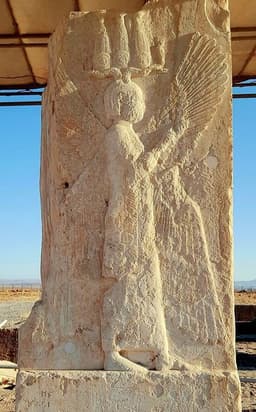
Cyrus the Great
Emperor · Ancient
83.9Total
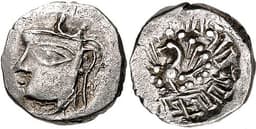
Harsha
Emperor · Medieval
61.0Total
Basic Information
Born
-600
590
Died
-530
647
Era
Ancient
Medieval
Nationality
Persia
India
Occupation
Emperor
Emperor
Civilization
Middle Eastern
Indian
Score Comparison
Military (10%)
82.0
61.7
Political (20%)
85.0
45.0
Influence (20%)
85.0
68.0
Legacy (20%)
90.0
58.0
Leadership (15%)
78.0
66.0
Strategy (15%)
75.0
66.3
TOTAL
83.9
61.0
Cyrus the Great — Complete Timeline
550 BC
Founding of the Achaemenid EmpirePolitical Action
Cyrus led a rebellion against the Median Empire, defeating King Astyages and capturing Ecbatana. He then united the Persian and Median tribes, establishing the Achaemenid Empire, which became the largest empire the world had yet seen.
Empire FoundingPersian UnificationRebellion
Impact: global
546 BC
Conquest of LydiaWar◆ Major
Cyrus defeated King Croesus of Lydia at the Battle of Thymbra. The Lydian capital Sardis was captured, and Croesus was taken prisoner. This conquest brought Anatolia under Persian control and secured access to the Aegean coast.
Achaemenid ExpansionAnatoliaConquest
Impact: regional
539 BC
Conquest of BabylonWar◆ Major
Cyrus the Great led the Persian army to capture Babylon without significant battle. The city's gates were opened, and Cyrus entered peacefully. This conquest added Mesopotamia to the Achaemenid Empire and marked the end of the Neo-Babylonian Empire.
Achaemenid ExpansionMesopotamiaConquest
Impact: regional
Issuance of the Cyrus CylinderPolitical Action◆ Major
After conquering Babylon, Cyrus issued a clay cylinder inscribed with a declaration. It described his policy of restoring temples, repatriating displaced peoples, and allowing religious freedom. The cylinder is often cited as an early charter of human rights.
Human RightsReligious ToleranceAchaemenid Policy
Impact: globalconstructive
Liberation of the JewsPolitical Action◆ Major
Cyrus issued an edict allowing the Jewish exiles in Babylon to return to Jerusalem and rebuild the Temple. This event is recorded in the biblical Book of Ezra and is a key moment in Jewish history, ending the Babylonian captivity.
Jewish HistoryReligious FreedomReturn from Exile
Impact: regionalconstructive
Harsha — Complete Timeline
606 AD
Accession to the Throne of ThanesarPolitical Action
Harsha succeeded his father Prabhakaravardhana as ruler of Thanesar (in present-day Haryana). He was 16 years old and soon faced the challenge of avenging his brother-in-law's death and expanding his kingdom.
ThanesarSuccessionHarsha
Impact: regional
612 AD
Conquest of KannaujWar◆ Major
Harsha captured the city of Kannauj after defeating the Maukhari ruler Grahavarman's enemies. He made Kannauj his capital and established the Vardhana dynasty's control over the Gangetic plain, becoming the dominant power in northern India.
KannaujVardhana DynastyNorthern India
Impact: regional
620 AD
Campaigns in Eastern IndiaWar◆ Major
Harsha led military campaigns into Bengal and Odisha, defeating the Shashanka king of Gauda. He extended his empire eastward to the Bay of Bengal, though his control over these regions was not permanent.
BengalOdishaShashanka
Impact: regional
630 AD
Conflict with the Chalukya King Pulakeshin IIWar◆ Major
Harsha attempted to expand southward but was defeated by the Chalukya king Pulakeshin II on the banks of the Narmada River. This battle halted Harsha's southern expansion and established the Narmada as the boundary between the two empires.
ChalukyaPulakeshin IINarmada
Impact: regional
640 AD
Patronage of Buddhism and the Nalanda UniversityCultural◆ Major
Harsha was a patron of Buddhism and supported the Nalanda University, a major center of Buddhist learning. He convened a grand Buddhist council at Kannauj attended by monks from across Asia, and built monasteries and stupas.
BuddhismNalandaCouncil of Kannauj
Impact: regionalconstructive
643 AD
Visit of the Chinese Pilgrim XuanzangCultural
The Chinese Buddhist monk Xuanzang visited Harsha's court and spent time in the empire. Xuanzang's detailed accounts describe Harsha's administration, military, and religious tolerance, providing a key historical source for the period.
XuanzangChinese PilgrimBuddhism
Impact: regionalconstructive
Expert Analysis
Cyrus the Great vs Harsha
# The Conqueror and the Conciliator
On a spring morning in 539 BCE, the gates of Babylon swung open not to the clash of battle but to the silent march of a Persian army. The great city, whose walls had defied sieges for centuries, surrendered without a fight. Its conqueror, Cyrus the Great, would soon issue a clay cylinder declaring the restoration of temples and the return of displaced peoples. Twelve centuries later, on the dusty plains of northern India, another emperor faced a very different test. Harsha of Thanesar, a teenage boy thrust onto a blood-soaked throne, would spend forty-one years trying to hold together a realm that seemed determined to shatter. Both men built empires. But why did one create a model of multicultural governance that echoed through millennia, while the other built a kingdom that dissolved within decades of his death?
Origins
Cyrus was born around 600 BCE into a world of competing empires. The Medes dominated the north, the Babylonians controlled the south, and the Persians were a semi-nomadic people living under Median suzerainty. His father was a Persian king, his mother the daughter of the Median king Astyages—a dynastic marriage meant to bind two peoples. Legend says Astyages dreamed that his grandson would overthrow him, and ordered the infant killed. The child was saved by a herdsman, raised in obscurity, and only later revealed his true identity. Whether myth or history, the story reveals a crucial truth: Cyrus grew up understanding both Persian and Median cultures, and he knew the power of a narrative that could unite them.
Harsha’s origins were more conventional but no less dramatic. Born in 590 CE, he was the second son of Prabhakaravardhana, ruler of Thanesar, a small kingdom in what is now Haryana. Northern India was a patchwork of warring states—the Guptas had fallen, the Huns had receded, and chaos reigned. When his father died in 605, Harsha’s elder brother Rajyavardhana took the throne. Within a year, Rajyavardhana was lured into a trap by the king of Gauda and assassinated. Harsha, just sixteen, found himself not only king but avenger, inheriting a realm surrounded by enemies.
Rise to Power
Cyrus’s rise was a masterclass in patience and audacity. Around 550 BCE, he led a rebellion against his grandfather Astyages. The Median army, according to the Greek historian Herodotus, largely defected to Cyrus, disgusted by Astyages’ cruelty. Cyrus captured Ecbatana without a major battle. He did not destroy the Medes; he incorporated them. Median nobles became Persian nobles; Median gods found places in Persian temples. This was not conquest—it was fusion.
Then came Lydia. King Croesus, fabulously wealthy and overconfident, attacked first. Cyrus met him at the Battle of Thymbra in 546 BCE, where he used camels to spook the Lydian horses—a tactical stroke of genius. Sardis fell, and Croesus, according to some accounts, became Cyrus’s advisor. The pattern held: defeat the ruler, absorb the elite, respect the gods.
Harsha’s path was bloodier and more direct. He first avenged his brother by defeating the Gauda king Shashanka, then turned his attention to Kannauj, the great prize of northern India. By 612, he had captured the city and made it his capital. For the next two decades, he campaigned relentlessly—east into Bengal, west into Gujarat, south to the Narmada River. There, in 630, he met his match. The Chalukya king Pulakeshin II stopped him cold. The Narmada became a permanent border. Harsha’s empire, for all its size, had limits.
Leadership & Governance
Cyrus governed through a system that seems startlingly modern. He divided his empire into satrapies—provinces ruled by governors who reported directly to him. He allowed local customs, laws, and religions to continue. The Cyrus Cylinder, issued in 539 BCE, is not a charter of human rights in the modern sense, but it established a revolutionary principle: the conqueror’s duty was to restore, not destroy. He returned statues to their temples, rebuilt sanctuaries, and—most famously—issued an edict allowing the Jewish exiles in Babylon to return to Jerusalem and rebuild their Temple. The Book of Ezra calls him “the Lord’s anointed.”
Harsha ruled differently. He was a devout Buddhist who banned animal sacrifice and built monasteries. He convened a great religious assembly at Kannauj in 643 CE, inviting monks, scholars, and the Chinese pilgrim Xuanzang, whose writings provide our richest account of Harsha’s reign. But Harsha’s governance was personal, not institutional. He traveled constantly, held daily audiences, and distributed charity with his own hands. The empire was held together by his presence, not by a system.
Triumph & Tragedy
Cyrus’s greatest triumph was Babylon itself—a city that opened its gates to him because he promised peace. His tragedy came later, in 530 BCE, when he died fighting a nomadic tribe on the northeastern frontier. His body was returned to Pasargadae, where a simple tomb still stands.
Harsha’s triumph was the sheer scope of his achievement: uniting most of northern India under one rule, patronizing art and learning, and creating a brief golden age. His tragedy was that it all depended on him. Xuanzang noted that Harsha’s empire was “loosely knit” and that local rulers often acted independently. When Harsha died in 647 CE, probably poisoned, his empire collapsed within years. No successor could hold it together.
Character & Destiny
Cyrus was pragmatic, patient, and visionary. He understood that empires built on fear are fragile, while those built on loyalty endure. He was also ruthless when necessary—the fall of Sardis involved a siege and massacre—but he preferred persuasion to force.
Harsha was idealistic, energetic, and deeply religious. He wrote three plays, patronized poets, and personally supervised the administration of his realm. But his very virtues were his limitations. He could not delegate, could not institutionalize, could not imagine an empire that outlived him.
Legacy
Cyrus is remembered as a founder—of an empire that lasted two centuries, of a model of governance that influenced Alexander, the Romans, and even the American founders. The Cyrus Cylinder is sometimes called the first declaration of human rights. His name appears in the Bible, in Greek histories, and in the DNA of every multicultural empire that followed.
Harsha is remembered as a patron—of Buddhism, of Nalanda University, of the arts. His reign is a footnote in Indian history, a brief bright moment between the fall of the Guptas and the rise of the Rajputs. Xuanzang’s account preserves his memory, but no lasting institution bears his name.
Conclusion
Two emperors, two visions. Cyrus built a machine that could run without him; Harsha built a kingdom that could not. One thought in terms of systems, the other in terms of souls. The difference was not merely talent or circumstance—it was imagination. Cyrus could envision an empire of many peoples, each worshipping their own gods, governed by a single law. Harsha could only envision himself at the center of everything, holding it all together by sheer force of will. In the end, the first created a civilization; the second, a memory. And that is the difference between a conqueror and a conciliator, between a founder and a flame.
Rankings
🥇
Cyrus the GreatLeader
Mil: 82.0Pol: 85.0Inf: 85.0
83.9
🥈
Harsha
Mil: 61.7Pol: 45.0Inf: 68.0
61.0
+22.9 behind
How This Comparison Works
Algorithm
Each figure is scored on 6 dimensions (0—100 scale) based on structured historical data: Military (10%), Political (20%), Influence (20%), Legacy (20%), Leadership (15%), Strategy (15%). The weighted total produces the final ranking.
Data Sources
Scores are computed from structured sub-indicators in the database. Scale factors adjust for era (Ancient ×0.85, Modern ×1.0) and civilization size (Eastern ×1.05, Other ×0.80) to account for differences in population and military scale.
Maximum 3 Figures
Comparisons are limited to 2—3 figures to ensure readability and statistical meaningfulness.
Error Margins
±5 points per dimension — Sub-scores are derived from historical records with inherent uncertainty. Two figures within 5 points on a dimension should be considered roughly equivalent in that area.
Total Score Accuracy
±3 points overall — The weighted combination of 6 dimensions produces a total score with approximately ±3 points of uncertainty. Differences of less than 3 points are not statistically significant— the figures are effectively tied.
Known Limitations
- Historical records are incomplete and uneven across civilizations
- Figures from oral-tradition societies may be underrepresented
- Occupation labels can misclassify multi-role figures
- Scores measure capability and impact, not moral character
- Quantitative scoring is a comparison tool, not absolute truth
Capability Radar
Military (10%) — Battles & Warfare
Battles
85
65
Win Rate
90
70
Expansion
92
70
Political (20%) — Governance & Reform
Reform
90
60
Diplomacy
95
70
Economy
80
65
Influence (20%) — Cultural & Global Reach
Cultural
90
65
Global
90
50
Legacy (20%) — Historical Impact
Historical
95
60
Longevity
95
55
Leadership (15%) — Power & Stability
Tenure
70
75
Stability
85
60
Strategy (15%) — Tactics & Innovation
Strategy
88
65
Tactics
80
60
Reform
75
50
Similar Comparisons
Comments & Discussion
AchaemenidEyes6/16/2026
Cyrus didn't just conquer Babylon—he got inside their heads. The Nabonidus Chronicle shows Babylon fell in days, not months, because Cyrus positioned himself as Marduk's chosen liberator against the impious Nabonidus. Harsha? His Harsha-charita reads like a courtier's PR campaign. One man rewrote history; the other paid for it. Cyrus understood that empire needs narrative—not just expansion.|zh|居鲁士的楔形文书把宗教自由包装成政策,实际上是在波斯湾沿岸搜刮了数吨黄金。哈尔沙呢?他在曲女城建设图书馆、办佛教集会,但死后他的帝国连三十七年都没撑过。一个用硬实力铺垫软叙事,一个光搞文化秀。居鲁士的陵墓