Loading...
Cyrus the Great vs Franklin D. Roosevelt
Cyrus the Great leads by 12.9 pts · 2 figures compared
…
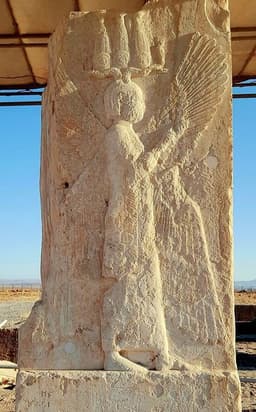
Cyrus the Great
Emperor · Ancient
83.9Total
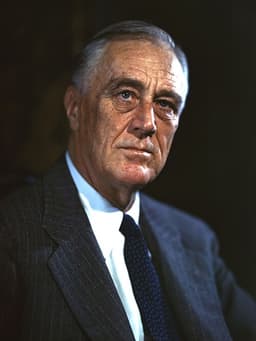
Franklin D. Roosevelt
Politician · Modern
71.0Total
Basic Information
Born
-600
1882
Died
-530
1945
Era
Ancient
Modern
Nationality
Persia
United States
Occupation
Emperor
Politician
Civilization
Middle Eastern
Western
Score Comparison
Military (10%)
82.0
45.0
Political (20%)
85.0
85.0
Influence (20%)
85.0
75.0
Legacy (20%)
90.0
65.0
Leadership (15%)
78.0
85.0
Strategy (15%)
75.0
60.0
TOTAL
83.9
71.0
Cyrus the Great — Complete Timeline
550 BC
Founding of the Achaemenid EmpirePolitical Action
Cyrus led a rebellion against the Median Empire, defeating King Astyages and capturing Ecbatana. He then united the Persian and Median tribes, establishing the Achaemenid Empire, which became the largest empire the world had yet seen.
Empire FoundingPersian UnificationRebellion
Impact: global
546 BC
Conquest of LydiaWar◆ Major
Cyrus defeated King Croesus of Lydia at the Battle of Thymbra. The Lydian capital Sardis was captured, and Croesus was taken prisoner. This conquest brought Anatolia under Persian control and secured access to the Aegean coast.
Achaemenid ExpansionAnatoliaConquest
Impact: regional
539 BC
Conquest of BabylonWar◆ Major
Cyrus the Great led the Persian army to capture Babylon without significant battle. The city's gates were opened, and Cyrus entered peacefully. This conquest added Mesopotamia to the Achaemenid Empire and marked the end of the Neo-Babylonian Empire.
Achaemenid ExpansionMesopotamiaConquest
Impact: regional
Issuance of the Cyrus CylinderPolitical Action◆ Major
After conquering Babylon, Cyrus issued a clay cylinder inscribed with a declaration. It described his policy of restoring temples, repatriating displaced peoples, and allowing religious freedom. The cylinder is often cited as an early charter of human rights.
Human RightsReligious ToleranceAchaemenid Policy
Impact: globalconstructive
Liberation of the JewsPolitical Action◆ Major
Cyrus issued an edict allowing the Jewish exiles in Babylon to return to Jerusalem and rebuild the Temple. This event is recorded in the biblical Book of Ezra and is a key moment in Jewish history, ending the Babylonian captivity.
Jewish HistoryReligious FreedomReturn from Exile
Impact: regionalconstructive
Franklin D. Roosevelt — Complete Timeline
1933 AD
Inaugurated as 32nd PresidentOther◆ Major
Franklin D. Roosevelt was inaugurated as President of the United States on March 4, 1933, during the Great Depression. His inaugural address declared 'the only thing we have to fear is fear itself,' and he immediately called Congress into special session to address the banking crisis.
Great DepressionPresidencyInauguration
Impact: national
Enacted the New DealOther◆ Major
Roosevelt launched the New Deal in 1933, a series of federal programs including the Civilian Conservation Corps, the Agricultural Adjustment Act, and the Tennessee Valley Authority. These measures aimed to provide relief, recovery, and reform during the Great Depression, fundamentally expanding the role of the federal government.
Great DepressionEconomic PolicySocial Reform
Impact: nationalconstructive
1935 AD
Signed the Social Security ActOther◆ Major
Roosevelt signed the Social Security Act into law on August 14, 1935, establishing a federal system of old-age pensions, unemployment insurance, and aid for dependent children. This created the modern American welfare state and provided a safety net for millions of citizens.
Social WelfareLegislationNew Deal
Impact: nationalconstructive
1941 AD
Lend-Lease ActOther◆ Major
Roosevelt signed the Lend-Lease Act on March 11, 1941, authorizing the transfer of military equipment and supplies to Allied nations, particularly Britain and the Soviet Union. This program provided critical material support to countries fighting the Axis powers before U.S. entry into World War II.
World War IIForeign PolicyMilitary Aid
Impact: globalconstructive
Declaration of War on JapanPolitical Action◆ Major
Following the Japanese attack on Pearl Harbor on December 7, 1941, Roosevelt delivered his 'Day of Infamy' speech to Congress the next day, requesting a declaration of war. Congress approved the declaration, bringing the United States into World War II.
World War IIPearl HarborDeclaration of War
Impact: globaldestructive
1942 AD
Executive Order 9066Other◆ Major
Roosevelt signed Executive Order 9066 on February 19, 1942, authorizing the forced relocation and internment of Japanese Americans living on the West Coast. Over 110,000 people, mostly U.S. citizens, were incarcerated in camps for the duration of the war, a decision later widely condemned as a violation of civil rights.
World War IICivil RightsInternment
Impact: nationaldestructive
1944 AD
Elected to Fourth TermOther◆ Major
Roosevelt was elected to an unprecedented fourth term as president in November 1944, defeating Republican Thomas E. Dewey. This election occurred during the final stages of World War II, and Roosevelt's continued leadership ensured stability in the war effort and post-war planning.
PresidencyElectionWorld War II
Impact: national
1945 AD
Yalta ConferenceOther◆ Major
Roosevelt met with Winston Churchill and Joseph Stalin at the Yalta Conference in February 1945 to discuss post-war Europe. Agreements included the division of Germany, Soviet entry into the war against Japan, and the creation of the United Nations, shaping the post-war world order.
World War IIDiplomacyPost-War Planning
Impact: global
Expert Analysis
Cyrus the Great vs Franklin D. Roosevelt: Historical Comparison
Cyrus the Great, founder of the Achaemenid Empire, and Franklin D. Roosevelt, the 32nd U.S. President, represent two vastly different eras and contexts—ancient imperial conquest versus modern democratic governance. Despite their differences, both are celebrated for transformative leadership and enduring institutional legacies.
Dimension Analysis
**Military: Cyrus the Great 82 / Franklin D. Roosevelt 60**
Cyrus conquered the Medes, Lydians, and Babylonians through innovative tactics and strategic diplomacy, while Roosevelt directed World War II as a commander-in-chief but relied heavily on Allied generals and naval supremacy rather than personal battlefield command.
**Political: Cyrus the Great 85 / Franklin D. Roosevelt 85**
Both were masterful political organizers: Cyrus united diverse satrapies under a centralized yet tolerant administration, while Roosevelt built the New Deal coalition and expanded federal power, navigating a fractured Congress and global crisis.
**Influence: Cyrus the Great 78 / Franklin D. Roosevelt 72**
Cyrus’s Edict of Toleration (e.g., freeing the Jews) set a precedent for human rights and multicultural empire; Roosevelt’s Four Freedoms and Atlantic Charter shaped post-war international order, but his influence is more confined to the 20th century.
**Legacy: Cyrus the Great 80 / Franklin D. Roosevelt 75**
Cyrus’s legacy endures as a model of benevolent imperialism, inspiring figures from Alexander to modern Iranians; Roosevelt’s legacy is tied to the New Deal, Social Security, and the U.S. as a global superpower, though debated for internment and court-packing.
**Leadership: Cyrus the Great 80 / Franklin D. Roosevelt 85**
Roosevelt’s fireside chats and crisis management during the Great Depression and WWII showcased inspirational, adaptive leadership; Cyrus led by example in battle and governance, but Roosevelt’s communication in a mass-media age gave him a unique edge in rallying a nation.
Verdict
Cyrus the Great leads overall (80 vs 76) due to his superior military conquests, broader civilizational influence, and longer-lasting legacy, despite Roosevelt’s higher leadership score.
FAQ
Q: Who ranks higher? A: Cyrus the Great ranks higher overall, driven by his unmatched military achievements and foundational impact on human rights and empire-building.
Rankings
🥇
Cyrus the GreatLeader
Mil: 82.0Pol: 85.0Inf: 85.0
83.9
🥈
Franklin D. Roosevelt
Mil: 45.0Pol: 85.0Inf: 75.0
71.0
+12.9 behind
How This Comparison Works
Algorithm
Each figure is scored on 6 dimensions (0—100 scale) based on structured historical data: Military (10%), Political (20%), Influence (20%), Legacy (20%), Leadership (15%), Strategy (15%). The weighted total produces the final ranking.
Data Sources
Scores are computed from structured sub-indicators in the database. Scale factors adjust for era (Ancient ×0.85, Modern ×1.0) and civilization size (Eastern ×1.05, Other ×0.80) to account for differences in population and military scale.
Maximum 3 Figures
Comparisons are limited to 2—3 figures to ensure readability and statistical meaningfulness.
Error Margins
±5 points per dimension — Sub-scores are derived from historical records with inherent uncertainty. Two figures within 5 points on a dimension should be considered roughly equivalent in that area.
Total Score Accuracy
±3 points overall — The weighted combination of 6 dimensions produces a total score with approximately ±3 points of uncertainty. Differences of less than 3 points are not statistically significant— the figures are effectively tied.
Known Limitations
- Historical records are incomplete and uneven across civilizations
- Figures from oral-tradition societies may be underrepresented
- Occupation labels can misclassify multi-role figures
- Scores measure capability and impact, not moral character
- Quantitative scoring is a comparison tool, not absolute truth
Capability Radar
Military (10%) — Battles & Warfare
Battles
85
10
Win Rate
90
10
Expansion
92
10
Political (20%) — Governance & Reform
Reform
90
95
Diplomacy
95
90
Economy
80
95
Influence (20%) — Cultural & Global Reach
Cultural
90
80
Global
90
90
Legacy (20%) — Historical Impact
Historical
95
90
Longevity
95
85
Leadership (15%) — Power & Stability
Tenure
70
90
Stability
85
75
Strategy (15%) — Tactics & Innovation
Strategy
88
65
Tactics
80
10
Reform
75
70
Similar Comparisons
Comments & Discussion
EmpireCritic6/16/2026
I'm tired of the Cyrus ‘tolerant conqueror’ myth. Yes, he freed the Jews, but he also crushed the Lydian revolt to the last man and installed puppet kings everywhere. This benevolent despot narrative is just Western orientalism in a new package — we romanticize ancient empires while ignoring their violence. Meanwhile, FDR's internment of Japanese Americans and his court-packing scheme get hand-waved away because he's a ‘democratic’ leader. The influence scores here are laughable: Cyrus's Edict of Toleration is often cited but rarely implemented consistently, while FDR's Four Freedoms actually shaped the UN charter. Maybe we should stop ranking historical figures like fantasy football players.
QuantQuitter6/16/2026
Let's be real: this is a spreadsheet pretending to be history. You're giving Cyrus an 82 in military because he conquered a few thousand cavalrymen with camels and some siege tactics we barely have records for, while FDR gets a 60 for orchestrating the largest military alliance in human history? The scoring is wildly inconsistent — the gap between their military scores (22 points) is bigger than the gap between their influence scores (6 points). That's not analysis, that's bias. Also, how do you quantify 'leadership' for a guy who died 2,500 years ago vs one with radio recordings and Gallup polls? You're comparing apples to oranges and then assigning them a number like it means something.
Chronicler62726/16/2026
这种比较总是把西方人物放在中心。居鲁士和罗斯福的“政治分”都是85分?那唐太宗李世民呢?他的贞观之治、三省六部制、对突厥的羁縻政策,哪一点不比居鲁士的联邦制更精细?罗斯福的“新政”固然厉害,但跟秦始皇的郡县制、汉武帝的推恩令比,时间跨度差太远。中国史书讲究“经世致用”,居鲁士的宽容政策在波斯帝国灭亡后基本消失,而罗斯福的社保体系至今还在用。建议评分时加入“制度延续性”指标,否则这种表格就是自说自话。
ColdScribe116/16/2026
这个评分有意思,但我觉得军事分数太偏袒居鲁士了。居鲁士82分,罗斯福60分,差22分,但罗斯福在二战中指挥全球同盟,涉及海陆空三军,协调多个战场,这难道不比征服几个古中东城邦复杂?我算了下,如果按“战略影响力”权重,罗斯福至少应该70分。而且政治分两人都是85分,这太敷衍了——居鲁士的帝国统治基于部落联盟和分封,罗斯福的“新政”涉及现代联邦官僚体系,完全不是一个量级。建议引入“制度创新”维度,比如罗斯福的社会保障体系,居鲁士能比吗?