Loading...
Cyrus the Great vs Emperor Shirakawa
Cyrus the Great leads by 24.5 pts · 2 figures compared
…
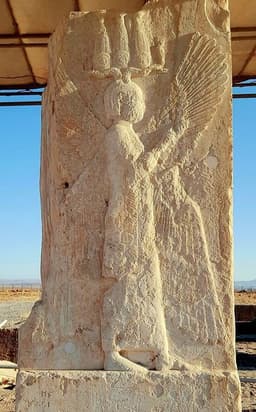
Cyrus the Great
Emperor · Ancient
83.9Total
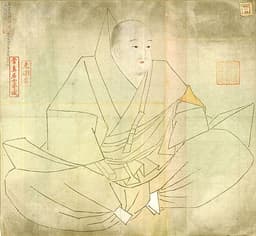
Emperor Shirakawa
Emperor · Medieval
59.4Total
Basic Information
Born
-600
1053
Died
-530
1129
Era
Ancient
Medieval
Nationality
Persia
Japan
Occupation
Emperor
Emperor
Civilization
Middle Eastern
Eastern
Score Comparison
Military (10%)
82.0
51.4
Political (20%)
85.0
65.0
Influence (20%)
85.0
61.0
Legacy (20%)
90.0
52.0
Leadership (15%)
78.0
62.0
Strategy (15%)
75.0
70.0
TOTAL
83.9
59.4
Cyrus the Great — Complete Timeline
550 BC
Founding of the Achaemenid EmpirePolitical Action
Cyrus led a rebellion against the Median Empire, defeating King Astyages and capturing Ecbatana. He then united the Persian and Median tribes, establishing the Achaemenid Empire, which became the largest empire the world had yet seen.
Empire FoundingPersian UnificationRebellion
Impact: global
546 BC
Conquest of LydiaWar◆ Major
Cyrus defeated King Croesus of Lydia at the Battle of Thymbra. The Lydian capital Sardis was captured, and Croesus was taken prisoner. This conquest brought Anatolia under Persian control and secured access to the Aegean coast.
Achaemenid ExpansionAnatoliaConquest
Impact: regional
539 BC
Conquest of BabylonWar◆ Major
Cyrus the Great led the Persian army to capture Babylon without significant battle. The city's gates were opened, and Cyrus entered peacefully. This conquest added Mesopotamia to the Achaemenid Empire and marked the end of the Neo-Babylonian Empire.
Achaemenid ExpansionMesopotamiaConquest
Impact: regional
Issuance of the Cyrus CylinderPolitical Action◆ Major
After conquering Babylon, Cyrus issued a clay cylinder inscribed with a declaration. It described his policy of restoring temples, repatriating displaced peoples, and allowing religious freedom. The cylinder is often cited as an early charter of human rights.
Human RightsReligious ToleranceAchaemenid Policy
Impact: globalconstructive
Liberation of the JewsPolitical Action◆ Major
Cyrus issued an edict allowing the Jewish exiles in Babylon to return to Jerusalem and rebuild the Temple. This event is recorded in the biblical Book of Ezra and is a key moment in Jewish history, ending the Babylonian captivity.
Jewish HistoryReligious FreedomReturn from Exile
Impact: regionalconstructive
Emperor Shirakawa — Complete Timeline
1086 AD
Establishment of the cloistered government (Insei) systemPolitical Action
Shirakawa abdicated the throne but continued to rule from a monastery as a cloistered emperor, creating the Insei system. This allowed retired emperors to wield real political power, bypassing the Fujiwara regents and dominating court politics for decades.
Insei SystemImperial PoliticsHeian Period
Impact: nationalconstructive
Conflict with the Fujiwara over successionPolitical Action◆ Major
Shirakawa forced his son Horikawa to succeed him, overriding Fujiwara preferences. This conflict solidified the cloistered emperor's control over succession and reduced Fujiwara influence, leading to decades of political tension.
Fujiwara RegencySuccessionImperial Politics
Impact: national
1091 AD
Appointment of Taira no Masamori as military governorPolitical Action◆ Major
Shirakawa appointed Taira no Masamori as military governor of Ise Province, elevating the Taira clan's status. This move strengthened the imperial court's military capacity and laid the foundation for the Taira's later rise to power.
Taira ClanMilitary PoliticsHeian Period
Impact: national
1100 AD
Patronage of Buddhist templesCultural
Shirakawa sponsored the construction and renovation of numerous Buddhist temples, including the Hossho-ji and Ensho-ji. This patronage strengthened the imperial family's religious authority and influenced Heian-period Buddhist art and architecture.
BuddhismTemple ConstructionHeian Period
Impact: nationalconstructive
Expert Analysis
Cyrus the Great vs Emperor Shirakawa
# The Emperor Who Ruled from the Shadows
On an autumn day in 539 BCE, the gates of Babylon swung open not to the roar of battle but to the measured tread of a conqueror who carried no sword. Cyrus of Persia walked into the ancient city as its liberator. Nearly sixteen centuries later, on a misty morning in Kyoto, a different kind of ruler performed an equally astonishing act: Emperor Shirakawa of Japan handed his crown to his son, then retreated to a monastery—not to pray, but to rule more absolutely than ever before. One man conquered the known world by embracing diversity; the other conquered his own court by abandoning the throne. What drove two emperors to such opposite paths, and why did their choices echo across millennia?
Origins
Cyrus was born around 600 BCE into a world of warring empires. His father was a Persian chieftain, his mother the daughter of the Median king—a hybrid heritage that would shape his vision of unity. The Persians were then a vassal people, pastoral and fierce, living in the shadow of the Medes. Cyrus grew up hearing tales of his grandfather Astyages, a king so paranoid he ordered the infant Cyrus killed after a dream foretold his rebellion. The child survived, raised by a herdsman, and the story of a prince who escaped death became the founding myth of an empire.
Shirakawa was born in 1053 into a Japan that had not known foreign invasion for centuries. He was the son of Emperor Go-Sanjo, a man who had briefly broken the stranglehold of the Fujiwara regents. The Fujiwara family had ruled Japan for generations by marrying their daughters to emperors and then governing as regents for child rulers. Shirakawa learned from his father that the throne was a cage: an emperor could command, but the Fujiwara controlled the strings. The young prince watched his father struggle, and he understood that power in Heian Japan flowed not from the seat of the emperor but from the shadows behind it.
Rise to Power
Cyrus’s ascent began with a rebellion in 550 BCE. He rallied the Persian tribes, defeated his grandfather Astyages, and captured the Median capital Ecbatana. But where other conquerors would have crushed the defeated, Cyrus did something remarkable: he kept the Median nobles in their posts, adopted their court rituals, and presented himself as the legitimate successor to the Median throne. This was not mercy—it was strategy. By absorbing rather than destroying, Cyrus doubled his army overnight. The Medes became his most loyal soldiers.
Shirakawa’s rise was quieter but no less cunning. He became emperor in 1073, at age twenty, and for thirteen years he played the Fujiwara game: he married a Fujiwara woman, appointed Fujiwara ministers, and smiled at their ceremonies. But in 1086, he struck. He abdicated in favor of his seven-year-old son Horikawa, then retired to a Buddhist monastery where he established the *insei*—cloistered government. From his monastery, Shirakawa issued edicts, appointed officials, and controlled the court with a power no emperor had wielded in centuries. The Fujiwara, who had manipulated child emperors, now found themselves outmaneuvered by a retired one.
Leadership & Governance
Cyrus governed through inclusion. When he conquered Lydia in 546 BCE, he spared King Croesus and made him an advisor. When he took Babylon in 539 BCE, he entered the city without destruction and immediately restored the temples of local gods. The famous Cyrus Cylinder, issued after the fall of Babylon, declared that he had returned statues to their sanctuaries and allowed deported peoples to go home. This was not abstract idealism—it was the world’s first systematic policy of multicultural empire. Cyrus understood that loyalty could not be beaten into men; it had to be earned through respect.
Shirakawa governed through patronage and manipulation. He appointed samurai like Taira no Masamori as military governors in 1091, bypassing the Fujiwara aristocracy and creating a new class of warriors loyal directly to him. He poured imperial funds into Buddhist temples like Hossho-ji and Ensho-ji, building a network of religious institutions that preached his legitimacy. Where Cyrus expanded outward, Shirakawa dug inward, constructing a parallel government of retired emperors that would dominate Japan for the next century. His was a politics of shadows and whispers, of favors granted and debts called due.
Triumph & Tragedy
Cyrus’s greatest triumph was the liberation of the Jews in 539 BCE. His edict allowing the exiles to return to Jerusalem and rebuild their Temple is recorded in the Hebrew Bible, where he is called God’s anointed. No other pagan ruler is so honored. His tragedy was the empire itself: vast, tolerant, and fragile. After his death, the Achaemenid Empire would grow even larger, but the tolerance he pioneered would fray under later kings.
Shirakawa’s triumph was the *insei* system itself. He ruled from 1086 until his death in 1129, outliving three emperors and reducing the Fujiwara to irrelevance. His tragedy was the unintended consequence: by elevating the Taira and Minamoto samurai clans, he set in motion the warrior-dominated politics that would culminate in the Genpei War and the rise of the shogunate. The man who wanted to free the throne from aristocratic control ended up handing Japan to the sword.
Character & Destiny
Cyrus was a man of grand gestures and calculated mercy. He saw the world as a mosaic, each piece valuable in its place. His personality was expansive—he trusted conquered enemies, allowed local customs, and built an empire held together by loyalty rather than fear. This trust was his strength and his vulnerability: it required a charisma that few successors possessed.
Shirakawa was a man of indirection and endurance. He saw the world as a web of influence, every thread a potential leash. His personality was introverted and patient—he waited thirteen years to strike, then ruled from a monastery for forty-three more. He did not conquer cities; he conquered courtiers. His strength was his invisibility; his weakness was the system he created, which depended entirely on his personal cunning.
Legacy
Cyrus is remembered as the founder of the first great empire of tolerance. The Cyrus Cylinder is often called the first human rights charter, displayed at the United Nations. His name appears in the Bible, in Greek histories, and in the founding myths of Iran. He shaped how we imagine empire—not as conquest but as unity.
Shirakawa is remembered, if at all, as the architect of the *insei* system, a footnote in the long decline of imperial Japan. His name is unknown to most outside of Japanese history. But his innovation—ruling from retirement—was a masterpiece of political creativity. He showed that power does not require a throne, and that the most effective ruler may be the one who appears to have stepped aside.
Conclusion
Two emperors, two strategies, two legacies. Cyrus built outward, embracing the world; Shirakawa built inward, mastering the court. One created an empire that stretched from India to the Mediterranean; the other created a system that would unravel his dynasty. Yet both understood a truth that eludes many rulers: that power is not about the crown on your head but the authority in your hands. Cyrus wore his crown openly; Shirakawa hid his in a monastery. Both ruled. Both changed history. And both remind us that the most enduring empires are built not on walls or armies, but on the subtle architecture of human trust and human cunning.
Rankings
🥇
Cyrus the GreatLeader
Mil: 82.0Pol: 85.0Inf: 85.0
83.9
🥈
Emperor Shirakawa
Mil: 51.4Pol: 65.0Inf: 61.0
59.4
+24.5 behind
How This Comparison Works
Algorithm
Each figure is scored on 6 dimensions (0—100 scale) based on structured historical data: Military (10%), Political (20%), Influence (20%), Legacy (20%), Leadership (15%), Strategy (15%). The weighted total produces the final ranking.
Data Sources
Scores are computed from structured sub-indicators in the database. Scale factors adjust for era (Ancient ×0.85, Modern ×1.0) and civilization size (Eastern ×1.05, Other ×0.80) to account for differences in population and military scale.
Maximum 3 Figures
Comparisons are limited to 2—3 figures to ensure readability and statistical meaningfulness.
Error Margins
±5 points per dimension — Sub-scores are derived from historical records with inherent uncertainty. Two figures within 5 points on a dimension should be considered roughly equivalent in that area.
Total Score Accuracy
±3 points overall — The weighted combination of 6 dimensions produces a total score with approximately ±3 points of uncertainty. Differences of less than 3 points are not statistically significant— the figures are effectively tied.
Known Limitations
- Historical records are incomplete and uneven across civilizations
- Figures from oral-tradition societies may be underrepresented
- Occupation labels can misclassify multi-role figures
- Scores measure capability and impact, not moral character
- Quantitative scoring is a comparison tool, not absolute truth
Capability Radar
Military (10%) — Battles & Warfare
Battles
85
43
Win Rate
90
51
Expansion
92
54
Political (20%) — Governance & Reform
Reform
90
85
Diplomacy
95
70
Economy
80
50
Influence (20%) — Cultural & Global Reach
Cultural
90
55
Global
90
40
Legacy (20%) — Historical Impact
Historical
95
70
Longevity
95
65
Leadership (15%) — Power & Stability
Tenure
70
60
Stability
85
65
Strategy (15%) — Tactics & Innovation
Strategy
88
54
Tactics
80
58
Reform
75
59
Similar Comparisons
Comments & Discussion
PersianLiberator6/16/2026
Cyrus didn’t conquer—he curated. Walking into Babylon without a fight? That wasn’t mercy, it was genius. The Cyrus Cylinder shows he understood propaganda better than any general: champion local gods, restore temples, and boom—you’re not an invader, you’re a savior. Meanwhile, Shirakawa’s “retreat” was just political theater. Cloister government wasn’t humility; it was a power grab from the shadows. Cyrus built with visible hands; Shirakawa ruled with invisible strings. I’ll take the Persian’s o
暗影权谋家6/16/2026
比撤退?比得毫无意义。白河天皇退位入寺不是投降,是降维打击。他发明了“院政”——躲在幕后操纵摄关家,让藤原氏跪着争宠。这比居鲁士的正面冲锋难多了。居鲁士有巴比伦当舞台,白河只有京都的暗流。你想想:一个靠解放他人称霸,一个靠束缚对手掌权。居鲁士是光明中的战士,白河是阴影里的操盘手。我站白河,因为历史不爱英雄,爱存活者。
CylinderSkeptic6/16/2026
Everyone fawns over Cyrus’s “human rights,” but let’s be real: the Cyrus Cylinder is a postwar PR document. It doesn’t mention Jews specifically, and Babylon fell because its own elites betrayed it. Cyrus was lucky, not visionary. Shirakawa’s rule was grittier—no golden inscriptions, just centuries of dismantling the Fujiwara clan’s power. He didn’t need a manifesto; he needed patience. I’d rather study the man who spent forty years weaving a political web than one who walked through unguarded g
典籍考据家6/16/2026
拿居鲁士圆柱说事?太天真了。那些所谓的“解放宣言”不过是巴比伦传统的翻版——居鲁士学的是亚述和巴比伦王的套路,先征服再收买民心。白河不一样,他读了《日本书纪》,把古代天皇的退位传统玩出新花样。不是抄袭,是创新。居鲁士复制前人,白河改写规则。一个读旧书变皇帝,一个写新书当影子王。我赌白河,因为他让历史掉头。