Loading...
Cyrus the Great vs Elizabeth I
Cyrus the Great leads by 18.2 pts · 2 figures compared
…
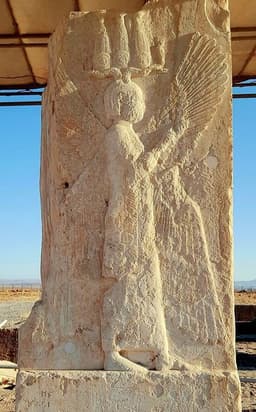
Cyrus the Great
Emperor · Ancient
83.9Total
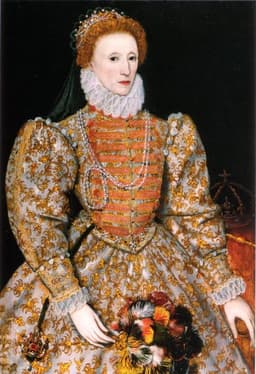
Elizabeth I
Politician · Modern
65.7Total
Basic Information
Born
-600
1533
Died
-530
1603
Era
Ancient
Modern
Nationality
Persia
England
Occupation
Emperor
Politician
Civilization
Middle Eastern
Western
Score Comparison
Military (10%)
82.0
45.0
Political (20%)
85.0
78.0
Influence (20%)
85.0
65.0
Legacy (20%)
90.0
68.0
Leadership (15%)
78.0
75.0
Strategy (15%)
75.0
50.0
TOTAL
83.9
65.7
Cyrus the Great — Complete Timeline
550 BC
Founding of the Achaemenid EmpirePolitical Action
Cyrus led a rebellion against the Median Empire, defeating King Astyages and capturing Ecbatana. He then united the Persian and Median tribes, establishing the Achaemenid Empire, which became the largest empire the world had yet seen.
Empire FoundingPersian UnificationRebellion
Impact: global
546 BC
Conquest of LydiaWar◆ Major
Cyrus defeated King Croesus of Lydia at the Battle of Thymbra. The Lydian capital Sardis was captured, and Croesus was taken prisoner. This conquest brought Anatolia under Persian control and secured access to the Aegean coast.
Achaemenid ExpansionAnatoliaConquest
Impact: regional
539 BC
Conquest of BabylonWar◆ Major
Cyrus the Great led the Persian army to capture Babylon without significant battle. The city's gates were opened, and Cyrus entered peacefully. This conquest added Mesopotamia to the Achaemenid Empire and marked the end of the Neo-Babylonian Empire.
Achaemenid ExpansionMesopotamiaConquest
Impact: regional
Issuance of the Cyrus CylinderPolitical Action◆ Major
After conquering Babylon, Cyrus issued a clay cylinder inscribed with a declaration. It described his policy of restoring temples, repatriating displaced peoples, and allowing religious freedom. The cylinder is often cited as an early charter of human rights.
Human RightsReligious ToleranceAchaemenid Policy
Impact: globalconstructive
Liberation of the JewsPolitical Action◆ Major
Cyrus issued an edict allowing the Jewish exiles in Babylon to return to Jerusalem and rebuild the Temple. This event is recorded in the biblical Book of Ezra and is a key moment in Jewish history, ending the Babylonian captivity.
Jewish HistoryReligious FreedomReturn from Exile
Impact: regionalconstructive
Elizabeth I — Complete Timeline
1559 AD
Act of Supremacy 1559Political Action◆ Major
Elizabeth I re-established the Church of England's independence from Rome, declaring herself Supreme Governor. This act, part of the Elizabethan Religious Settlement, restored Protestantism while maintaining some Catholic traditions, creating a via media that aimed to unify the nation.
Religious SettlementProtestantismChurch of England
Impact: nationalconstructive
1587 AD
Execution of Mary, Queen of ScotsPolitical Action◆ Major
After years of imprisonment, Elizabeth I signed the death warrant for Mary, Queen of Scots, who had been implicated in the Babington Plot to assassinate Elizabeth and claim the English throne. Mary's execution removed a major Catholic rival and solidified Elizabeth's position.
ExecutionCatholic RivalPlot
Impact: nationaltragic
1588 AD
Defeat of the Spanish ArmadaWar
The English navy under Lord Howard and Sir Francis Drake defeated the Spanish Armada, a massive invasion fleet sent by Philip II. Storms and English fireships scattered the Spanish fleet, preventing the invasion and establishing England as a major naval power.
Naval BattleSpainProtestantism
Impact: globalconstructive
1600 AD
Chartering of the East India CompanyPolitical Action◆ Major
Elizabeth I granted a royal charter to the East India Company, giving it a monopoly on English trade with Asia. This company would become a powerful instrument of British imperialism, eventually controlling large parts of India and shaping global trade.
TradeColonialismCharter
Impact: globalconstructive
1601 AD
Golden SpeechPolitical Action
In her final address to Parliament, Elizabeth I delivered the 'Golden Speech,' expressing her love for her subjects and her dedication to the realm. She addressed grievances over monopolies, promising reform, and cemented her image as a beloved monarch devoted to her people.
SpeechParliamentMonarchy
Impact: nationalconstructive
Expert Analysis
Cyrus the Great vs Elizabeth I
# The Virgin Queen and the King of Kings
On a crisp autumn day in 1588, Elizabeth I stood before her troops at Tilbury, her white gown gleaming beneath a steel breastplate, declaring she had "the body of a weak and feeble woman, but the heart and stomach of a king." Across the centuries and continents, another monarch had once entered Babylon without a single arrow fired, proclaiming himself the liberator of captives and the restorer of temples. Elizabeth and Cyrus the Great never met, yet their stories whisper the same question: what makes a ruler truly great?
Origins
Elizabeth Tudor was born into danger. Her mother, Anne Boleyn, was executed when Elizabeth was not yet three years old. Declared illegitimate by her own father, Henry VIII, she spent her childhood oscillating between royal favor and mortal peril. The religious fires of the Reformation burned across Europe, and England was a tinderbox. By contrast, Cyrus II of Persia was born around 600 BCE into a world of warring empires—Medes, Babylonians, Lydians—each vying for dominance. Legend held that his grandfather, the Median king Astyages, dreamed the boy would overthrow him and ordered his death, but a shepherd saved the infant. Both rulers learned early that survival required cunning.
Rise to Power
Elizabeth’s path to the throne was a gauntlet of conspiracies. Her half-sister Mary I, a fervent Catholic, imprisoned Elizabeth in the Tower of London on suspicion of treason. Only Mary’s death in 1558 opened the door. Elizabeth inherited a kingdom bankrupt, divided, and weak—a "ruinous" realm, as she called it. Cyrus’s rise was swifter and more martial. Around 550 BCE, he led a rebellion against his Median overlord, King Astyages, and captured Ecbatana. Within a decade, he had united the Persian and Median tribes into a force that would topple empires. Where Elizabeth waited, Cyrus struck.
Leadership & Governance
Here the two rulers diverged most sharply. Elizabeth governed through the politics of delay and ambiguity. She never married, using her singleness as a diplomatic weapon, dangling marriage negotiations with suitors from France to Spain while keeping England free of foreign entanglements. The Act of Supremacy of 1559 reestablished the Church of England, but she crafted a religious settlement so moderate that both Catholics and Puritans could find room within it—a masterpiece of political balancing. Her military score of 45 reflects that she never led an army; the defeat of the Spanish Armada in 1588 was won by her admirals, not her sword. Yet her political score of 82 captures her genius: she kept fractious nobles in check, managed a parliament that distrusted female rule, and chartered the East India Company in 1600, planting seeds of empire.
Cyrus governed through conquest and clemency. His military score of 82 tells of a commander who personally led campaigns. At the Battle of Thymbra in 546 BCE, he outmaneuvered the wealthy King Croesus of Lydia, capturing Sardis and its gold. But his genius lay in what came after. When he took Babylon in 539 BCE, the city’s gates opened not to massacre but to proclamation. The Cyrus Cylinder, a clay declaration, announced his policy: he restored displaced peoples to their homelands, rebuilt temples, and respected local customs. Most famously, he freed the Jewish exiles, allowing them to return to Jerusalem and rebuild their Temple—an act recorded in the Hebrew Bible with extraordinary reverence. His political score of 85 reflects this vision: an empire held together not by fear, but by loyalty.
Triumph & Tragedy
Elizabeth’s greatest triumph was survival. She outlasted her enemies, saw the Spanish Armada scattered by storms and English fire, and presided over the flowering of Shakespeare and Marlowe. Her tragedy was personal: she was the last Tudor, her refusal to marry leaving no heir. The Golden Speech of 1601, delivered to Parliament when she was old and weary, revealed a woman who had given her entire life to her people: "Though God hath raised me high, yet this I count the glory of my crown: that I have reigned with your loves." She died in 1603, and the throne passed to a Scottish king.
Cyrus’s triumph was the creation of the largest empire the world had yet seen, stretching from the Indus to the Mediterranean. His tragedy came in the manner of his death. According to the Greek historian Herodotus, Cyrus died in battle around 530 BCE fighting a nomadic tribe on the empire’s northeastern frontier. His body was reportedly mutilated by the enemy queen before being recovered. The founder of an empire of tolerance died in barbaric violence.
Character & Destiny
Elizabeth’s personality was a fortress of caution. She hesitated, prevaricated, and delayed—signing Mary Queen of Scots’ death warrant in 1587 only after years of pressure, then claiming it had been a mistake. Her strategy score of 55 reflects a ruler who preferred diplomacy to war, maneuver to confrontation. Cyrus was the opposite: bold, decisive, and visionary. He saw that conquest alone could not hold an empire and built a system of satrapies—provinces ruled by local governors—that allowed diversity within unity. His strategy score of 72 captures a mind that thought in decades, not days.
Legacy
Elizabeth left a legend: the Virgin Queen, Gloriana, the symbol of an age. Her legacy score of 75 reflects a reign that defined English identity. The Church of England, the Royal Navy, the East India Company—all trace their roots to her. Yet her political caution also left problems unsolved: religious tensions simmered, and the Stuart kings who followed proved far less capable.
Cyrus’s legacy is more profound and more paradoxical. The Cyrus Cylinder is often called the first human rights charter, and his policy of cultural tolerance influenced the Greek philosophers, the Roman Empire, and even the American Founders. His legacy score of 80 understates his impact: he is the only non-Jewish figure called "messiah" in the Hebrew Bible. Yet his empire collapsed within two centuries, conquered by Alexander the Great. The tolerance he championed did not survive him.
Conclusion
Elizabeth and Cyrus ruled worlds apart, yet both understood something essential: power is not an end, but a trust. Elizabeth’s England was small, poor, and besieged; she made it a beacon. Cyrus’s Persia was vast, wealthy, and diverse; he made it a home. One governed through the art of waiting, the other through the art of giving. One left a nation, the other left an idea. Perhaps the truest measure of a ruler is not how many battles they won, but how many hearts they held. By that measure, both the Virgin Queen and the King of Kings still reign.
Rankings
🥇
Cyrus the GreatLeader
Mil: 82.0Pol: 85.0Inf: 85.0
83.9
🥈
Elizabeth I
Mil: 45.0Pol: 78.0Inf: 65.0
65.7
+18.2 behind
How This Comparison Works
Algorithm
Each figure is scored on 6 dimensions (0—100 scale) based on structured historical data: Military (10%), Political (20%), Influence (20%), Legacy (20%), Leadership (15%), Strategy (15%). The weighted total produces the final ranking.
Data Sources
Scores are computed from structured sub-indicators in the database. Scale factors adjust for era (Ancient ×0.85, Modern ×1.0) and civilization size (Eastern ×1.05, Other ×0.80) to account for differences in population and military scale.
Maximum 3 Figures
Comparisons are limited to 2—3 figures to ensure readability and statistical meaningfulness.
Error Margins
±5 points per dimension — Sub-scores are derived from historical records with inherent uncertainty. Two figures within 5 points on a dimension should be considered roughly equivalent in that area.
Total Score Accuracy
±3 points overall — The weighted combination of 6 dimensions produces a total score with approximately ±3 points of uncertainty. Differences of less than 3 points are not statistically significant— the figures are effectively tied.
Known Limitations
- Historical records are incomplete and uneven across civilizations
- Figures from oral-tradition societies may be underrepresented
- Occupation labels can misclassify multi-role figures
- Scores measure capability and impact, not moral character
- Quantitative scoring is a comparison tool, not absolute truth
Capability Radar
Military (10%) — Battles & Warfare
Battles
85
45
Win Rate
90
70
Expansion
92
55
Political (20%) — Governance & Reform
Reform
90
80
Diplomacy
95
85
Economy
80
80
Influence (20%) — Cultural & Global Reach
Cultural
90
85
Global
90
80
Legacy (20%) — Historical Impact
Historical
95
85
Longevity
95
85
Leadership (15%) — Power & Stability
Tenure
70
90
Stability
85
75
Strategy (15%) — Tactics & Innovation
Strategy
88
75
Tactics
80
60
Reform
75
65
Similar Comparisons
Comments & Discussion
CYRUSPOET6/16/2026
Elizabeth’s “weak woman” speech is overrated. Cyrus conquered Babylon without a fight—his real greatness was the Cyrus Cylinder, a charter of human rights that predates Magna Carta by 1,700 years. Elizabeth’s Tilbury was theater; Cyrus let exiled peoples go home. Give me a king who erases empires, not one who plays dress-up in armor.|zh|伊丽莎白的蒂尔伯里演讲就是个表演。居鲁士不费一兵一卒拿下巴比伦,还颁布了居鲁士圆柱,这比大宪章早1700年就提出了人权。真正的伟大是解放奴隶,不是穿铠甲秀姿态。|
经典学者老姜6/16/2026
两人都是“神选君主”的典范。伊丽莎白用“童贞女王”神化自己应对政教危机;居鲁士被以赛亚书称为耶和华的受膏者,这是唯一被犹太圣经承认的外邦君王。一个用信仰巩固权力,一个被信仰永恒纪念。高下立判:居鲁士的名字写进了《圣经》,伊丽莎白只写了英格兰。|
修史者老张6/16/2026
比较这两人提醒我们,“伟大”总是被后人重塑。伊丽莎白的黄金时代靠的是殖民和海盗,贝里奥的废奴主张是后来编的梦。居鲁士圆柱不过是宣传工具,但犹太人真信了他。评价的标准在变:伊丽莎白是民族象征,居鲁士是跨文化偶像。过去是宗教打败政治,现在是政治打败历史。
Chronicler66986/16/2026
Any comparison without ratios is useless. Elizabeth’s England had 4 million people; Cyrus’s empire spanned 5.5 million km² with maybe 20 million subjects—different scales entirely. Cyrus’s success rate in battles is unknown; Elizabeth lost at Cadiz (1589) but won the Armada. Statistically, you’re comparing apples to interstellar objects. Context kills this debate.|
Chronicler85966/16/2026
Cyrus entered Babylon like a rock star—no bloodshed, just him rolling in on chariot while locals cheered. Elizabeth stomped around Tilbury in armor, but she never actually fought. Cyrus took down three empires (Medes, Lydians, Babylonians) and died in battle. Elizabeth hid behind advisors and had an aging insecure royal. Sorry, Virgin Queen loses to King of Kings.|