Loading...
Cyrus the Great vs Edgar the Peaceful
Cyrus the Great leads by 30.4 pts · 2 figures compared
…
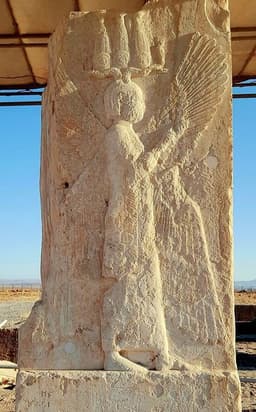
Cyrus the Great
Emperor · Ancient
83.9Total
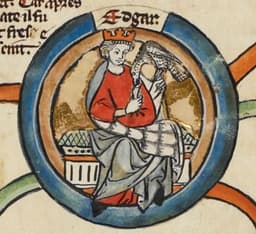
Edgar the Peaceful
Emperor · Medieval
53.5Total
Basic Information
Born
-600
943
Died
-530
975
Era
Ancient
Medieval
Nationality
Persia
England
Occupation
Emperor
Emperor
Civilization
Middle Eastern
Western
Score Comparison
Military (10%)
82.0
21.2
Political (20%)
85.0
65.0
Influence (20%)
85.0
56.4
Legacy (20%)
90.0
49.2
Leadership (15%)
78.0
78.0
Strategy (15%)
75.0
35.7
TOTAL
83.9
53.5
Cyrus the Great — Complete Timeline
550 BC
Founding of the Achaemenid EmpirePolitical Action
Cyrus led a rebellion against the Median Empire, defeating King Astyages and capturing Ecbatana. He then united the Persian and Median tribes, establishing the Achaemenid Empire, which became the largest empire the world had yet seen.
Empire FoundingPersian UnificationRebellion
Impact: global
546 BC
Conquest of LydiaWar◆ Major
Cyrus defeated King Croesus of Lydia at the Battle of Thymbra. The Lydian capital Sardis was captured, and Croesus was taken prisoner. This conquest brought Anatolia under Persian control and secured access to the Aegean coast.
Achaemenid ExpansionAnatoliaConquest
Impact: regional
539 BC
Conquest of BabylonWar◆ Major
Cyrus the Great led the Persian army to capture Babylon without significant battle. The city's gates were opened, and Cyrus entered peacefully. This conquest added Mesopotamia to the Achaemenid Empire and marked the end of the Neo-Babylonian Empire.
Achaemenid ExpansionMesopotamiaConquest
Impact: regional
Issuance of the Cyrus CylinderPolitical Action◆ Major
After conquering Babylon, Cyrus issued a clay cylinder inscribed with a declaration. It described his policy of restoring temples, repatriating displaced peoples, and allowing religious freedom. The cylinder is often cited as an early charter of human rights.
Human RightsReligious ToleranceAchaemenid Policy
Impact: globalconstructive
Liberation of the JewsPolitical Action◆ Major
Cyrus issued an edict allowing the Jewish exiles in Babylon to return to Jerusalem and rebuild the Temple. This event is recorded in the biblical Book of Ezra and is a key moment in Jewish history, ending the Babylonian captivity.
Jewish HistoryReligious FreedomReturn from Exile
Impact: regionalconstructive
Edgar the Peaceful — Complete Timeline
959 AD
Coronation as King of EnglandPolitical Action◆ Major
Edgar succeeded his brother Eadwig as King of England. His reign was marked by stability and the consolidation of monastic reform under Dunstan.
Impact: nationalconstructive
970 AD
Naval defense reformsReform
Edgar organized a standing navy and divided England into naval districts to defend against Viking raids. This created a period of peace and security along the coasts.
Impact: nationalconstructive
Council of WinchesterCultural◆ Major
Edgar convened the Council of Winchester, which established the Regularis Concordia, a code for monastic life. This standardized Benedictine practices across England.
Impact: nationalconstructive
Expert Analysis
Cyrus the Great vs Edgar the Peaceful
# The Conqueror and the Peacemaker
On a spring morning in 539 BCE, the gates of Babylon swung open to admit a Persian king who had not fired a single arrow against its walls. The city, the jewel of the ancient world, fell not to siege but to strategy, and its conqueror entered not as a destroyer but as a liberator. A millennium and a half later, across the continent, another king stood on the deck of a ship in the North Sea, watching his newly organized fleet patrol the waters. He had never fought a major battle, never conquered a foreign capital, yet his subjects called him "the Peaceful." Cyrus the Great and Edgar the Peaceful: two rulers who achieved stability through radically different means, each a product of their age, each a mirror of what their civilizations needed most.
Origins
Cyrus was born around 600 BCE into a world of empires in flux. The Medes dominated the Iranian plateau, the Lydians controlled Anatolia, and Babylon ruled Mesopotamia. According to legend, his grandfather Astyages, the Median king, dreamed that Cyrus would overthrow him and ordered the infant killed. The child survived, raised by a shepherd, and the prophecy fulfilled itself—a story so archetypal that Herodotus recorded it centuries later. Cyrus grew up among the Persians, a nomadic people then subject to Median rule, learning the arts of horsemanship and tribal leadership in a harsh landscape that forged resilience.
Edgar, born in 943 CE, entered a different world entirely. England had been carved into warring kingdoms for centuries, ravaged by Viking raids and dynastic bloodshed. His grandfather Alfred the Great had beaten back the Danes, but the peace was fragile. Edgar was the son of King Edmund I, who was assassinated when Edgar was just three. He grew up in the shadow of violence, raised by monks and nobles who had seen too many kings die young. Where Cyrus learned to ride and fight, Edgar learned liturgy and law.
Rise to Power
Cyrus seized his destiny at age fifty. In 550 BCE, he led a rebellion against his grandfather Astyages, defeating the Median army and capturing the capital Ecbatana. It was a stunning reversal: a vassal people overthrowing their overlord. But Cyrus did not stop there. He united the Persians and Medes into a single kingdom, then turned westward. In 546 BCE, he faced Croesus of Lydia, the wealthiest king in the world, at the Battle of Thymbra. Outnumbered, Cyrus used a novel tactic—placing camels in the front line to spook the Lydian horses—and crushed the enemy. Sardis fell, and Croesus became his counselor rather than his corpse.
Edgar’s rise was quieter. He became king in 959 CE at age sixteen, inheriting a throne his older brother Eadwig had nearly destroyed through scandal and mismanagement. Edgar did not conquer; he consolidated. His first act was to recall Dunstan, the exiled Archbishop of Canterbury, whose monastic reforms would define Edgar’s reign. Where Cyrus conquered through military brilliance, Edgar built through political patience.
Leadership & Governance
Cyrus’s genius lay in his vision of empire. After conquering Babylon in 539 BCE, he issued the Cyrus Cylinder, a clay declaration that restored temples, returned displaced peoples, and allowed conquered nations to retain their customs. Most famously, he freed the Jewish exiles, permitting them to return to Jerusalem and rebuild the Temple. This was not mere benevolence—it was statecraft. By respecting local religions and traditions, Cyrus ensured loyalty without garrisons. He divided his empire into satrapies, each governed by a local official, and built the Royal Road to connect them. His military score of 82 reflects his battlefield prowess, but his political score of 85 captures his true achievement: creating a multicultural empire that lasted two centuries.
Edgar governed on a smaller stage but with similar wisdom. He convened the Council of Winchester in 970 CE, establishing the Regularis Concordia, a uniform code for monastic life that reformed England’s chaotic religious institutions. He organized a standing navy, dividing England into naval districts to patrol against Viking raids. His military score of 30 is misleading—Edgar’s strength was not fighting wars but preventing them. By projecting naval power, he deterred attacks. His political score of 67.6 reflects a reign of stability in an age of violence.
Triumph & Tragedy
Cyrus’s greatest triumph was the conquest of Babylon itself. The city’s gates were opened from within, perhaps by disaffected priests or by Cyrus’s engineers diverting the Euphrates. He entered as a liberator, and the Babylonians welcomed him. His tragedy came later: in 530 BCE, Cyrus died in battle against the Massagetae, a nomadic tribe on the empire’s eastern frontier. The great unifier fell fighting barbarians, his body reportedly mutilated by the enemy queen. It was a brutal end for a king who had preached tolerance.
Edgar’s triumph was the peace itself. For sixteen years, England knew no invasion, no civil war, no royal assassination. He was crowned twice—once at Bath and once at Kingston—a symbolic gesture of unity. His tragedy was his early death at age thirty-two in 975 CE, leaving a kingdom to his teenage sons. Within a decade, Viking raids resumed, and the peace Edgar had built crumbled.
Character & Destiny
Cyrus was driven by ambition and pragmatism. He spared conquered kings, respected foreign gods, and built an empire on consent rather than fear. The Greek historian Xenophon called him the ideal ruler in his *Cyropaedia*, a model of leadership. Yet Cyrus was also ruthless when necessary—he destroyed the Lydian army, enslaved rebels, and expanded through war. His character balanced vision with violence.
Edgar was driven by stability and order. He was called "the Peaceful" not because he was passive but because he preferred reform to war. He was deeply religious, supporting monastic revival, and his reign saw the production of beautiful manuscripts and church art. Yet he was no saint—he exiled nobles who opposed him and married a woman after allegedly seducing her. His character balanced piety with pragmatism.
Legacy
Cyrus’s legacy is monumental. The Cyrus Cylinder is often called the first human rights charter, and his policy of religious tolerance influenced the Greeks, the Romans, and even the American Founders. The Achaemenid Empire he founded became the template for later empires, from Alexander to the Romans. His total score of 79.6 reflects a figure who shaped world history.
Edgar’s legacy is quieter. He is remembered as a reformer who unified England’s church and defended its shores. The Regularis Concordia shaped English monasticism for centuries, and his naval reforms anticipated the Royal Navy. His total score of 63.1 is modest, but it measures a different kind of greatness—not conquest, but preservation.
Conclusion
Cyrus and Edgar faced the same fundamental challenge: how to rule a fractured world. Cyrus answered with conquest and inclusion, building an empire that spanned three continents. Edgar answered with reform and defense, building a kingdom that survived his death. One died in battle, the other in bed. One is remembered in clay and scripture, the other in chronicles and charters. Their scores tell us that history rewards the conqueror more than the peacemaker. But perhaps the peacemaker’s reward was the peace itself—a gift Cyrus, for all his greatness, never fully enjoyed.
Rankings
🥇
Cyrus the GreatLeader
Mil: 82.0Pol: 85.0Inf: 85.0
83.9
🥈
Edgar the Peaceful
Mil: 21.2Pol: 65.0Inf: 56.4
53.5
+30.4 behind
How This Comparison Works
Algorithm
Each figure is scored on 6 dimensions (0—100 scale) based on structured historical data: Military (10%), Political (20%), Influence (20%), Legacy (20%), Leadership (15%), Strategy (15%). The weighted total produces the final ranking.
Data Sources
Scores are computed from structured sub-indicators in the database. Scale factors adjust for era (Ancient ×0.85, Modern ×1.0) and civilization size (Eastern ×1.05, Other ×0.80) to account for differences in population and military scale.
Maximum 3 Figures
Comparisons are limited to 2—3 figures to ensure readability and statistical meaningfulness.
Error Margins
±5 points per dimension — Sub-scores are derived from historical records with inherent uncertainty. Two figures within 5 points on a dimension should be considered roughly equivalent in that area.
Total Score Accuracy
±3 points overall — The weighted combination of 6 dimensions produces a total score with approximately ±3 points of uncertainty. Differences of less than 3 points are not statistically significant— the figures are effectively tied.
Known Limitations
- Historical records are incomplete and uneven across civilizations
- Figures from oral-tradition societies may be underrepresented
- Occupation labels can misclassify multi-role figures
- Scores measure capability and impact, not moral character
- Quantitative scoring is a comparison tool, not absolute truth
Capability Radar
Military (10%) — Battles & Warfare
Battles
85
10
Win Rate
90
10
Expansion
92
10
Political (20%) — Governance & Reform
Reform
90
70
Diplomacy
95
70
Economy
80
65
Influence (20%) — Cultural & Global Reach
Cultural
90
40
Global
90
20
Legacy (20%) — Historical Impact
Historical
95
45
Longevity
95
40
Leadership (15%) — Power & Stability
Tenure
70
65
Stability
85
75
Strategy (15%) — Tactics & Innovation
Strategy
88
15
Tactics
80
10
Reform
75
20
Similar Comparisons
Comments & Discussion
CyrusTheConqueror6/16/2026
Cyrus didn't just defeat Babylon; he reinvented imperial rule. The Cyrus Cylinder is basically the first human rights charter—it respected local gods, freed the Jews, and let conquered peoples keep their identities. Edgar? He never fought a major battle. His "peace" was buying off Vikings with Danegeld and cosying up to the Church. Give me a warrior-king who actually built something over a bureaucrat who managed decline any day.
数据侦探6/16/2026
把我当成怀疑论者吧。说埃德加是“和平者”真可笑——他的统治全靠维京人的不断入侵才得以短暂休战,结果他死前就崩溃了。而居鲁士?数据很清楚:他征服了美索不达米亚、安纳托利亚和中亚,却只用五年时间就建立起一个持续200多年的帝国。埃德加上台时有一套现成的政府体系;居鲁士是从零开始构建一个帝国,却做得更好。
EdwardsLegacyLament6/16/2026
We're calling this a comparison? Edgar was a puppet—his peace depended entirely on Dunstan, the real power behind the throne. Meanwhile, Cyrus personally led armies, negotiated surrenders, and wrote his own cylinder. Edgar got three decades of quiet while his nobles did the work. Cyrus changed world history. Edgar just kept England from being invaded for a bit. Not even close—Cyrus wins hands down for actual greatness.
古典学者洞察6/16/2026
比较他们的遗产时,别忘了居鲁士是被犹太先知以赛亚和希腊作家色诺芬尊崇的——他们对他的赞扬超越了文化界限。埃德加呢?他的名声基本只局限于盎格鲁-撒克逊编年史和维塔·邓斯塔尼斯。居鲁士统治着从印度河到地中海的领土;埃德加从未离开过不列颠群岛。这不是历史辩论——这是关于谁对人类进步的影响更广泛的客观事实。
CynicalHistoryNerd6/16/2026
Let's be real: "the Peaceful" was a PR label Edgar's family invented to whitewash his father's failures and his own mediocrity. Cyrus earned his title through actual governance—the cylinder proves it. Edgar didn't even build anything lasting; his "naval reforms" are barely mentioned in later sources. One king changed how empires worked; the other got lucky with a quiet reign. Stop romanticizing the boring one.