Loading...
Cyrus the Great vs Duke of Zhou
Cyrus the Great leads by 5.1 pts · 2 figures compared
…
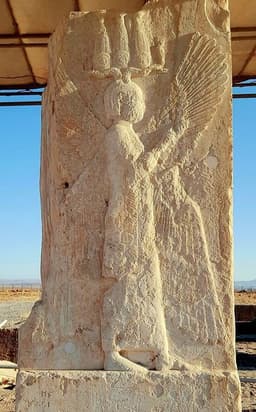
Cyrus the Great
Emperor · Ancient
83.9Total

Duke of Zhou
Politician · Ancient
78.8Total
Basic Information
Born
-600
-1090
Died
-530
-1030
Era
Ancient
Ancient
Nationality
Persia
Zhou China
Occupation
Emperor
Politician
Civilization
Middle Eastern
Eastern
Score Comparison
Military (10%)
82.0
60.0
Political (20%)
85.0
72.0
Influence (20%)
85.0
92.0
Legacy (20%)
90.0
87.0
Leadership (15%)
78.0
78.0
Strategy (15%)
75.0
55.0
TOTAL
83.9
78.8
Cyrus the Great — Complete Timeline
550 BC
Founding of the Achaemenid EmpirePolitical Action
Cyrus led a rebellion against the Median Empire, defeating King Astyages and capturing Ecbatana. He then united the Persian and Median tribes, establishing the Achaemenid Empire, which became the largest empire the world had yet seen.
Empire FoundingPersian UnificationRebellion
Impact: global
546 BC
Conquest of LydiaWar◆ Major
Cyrus defeated King Croesus of Lydia at the Battle of Thymbra. The Lydian capital Sardis was captured, and Croesus was taken prisoner. This conquest brought Anatolia under Persian control and secured access to the Aegean coast.
Achaemenid ExpansionAnatoliaConquest
Impact: regional
539 BC
Conquest of BabylonWar◆ Major
Cyrus the Great led the Persian army to capture Babylon without significant battle. The city's gates were opened, and Cyrus entered peacefully. This conquest added Mesopotamia to the Achaemenid Empire and marked the end of the Neo-Babylonian Empire.
Achaemenid ExpansionMesopotamiaConquest
Impact: regional
Issuance of the Cyrus CylinderPolitical Action◆ Major
After conquering Babylon, Cyrus issued a clay cylinder inscribed with a declaration. It described his policy of restoring temples, repatriating displaced peoples, and allowing religious freedom. The cylinder is often cited as an early charter of human rights.
Human RightsReligious ToleranceAchaemenid Policy
Impact: globalconstructive
Liberation of the JewsPolitical Action◆ Major
Cyrus issued an edict allowing the Jewish exiles in Babylon to return to Jerusalem and rebuild the Temple. This event is recorded in the biblical Book of Ezra and is a key moment in Jewish history, ending the Babylonian captivity.
Jewish HistoryReligious FreedomReturn from Exile
Impact: regionalconstructive
Duke of Zhou — Complete Timeline
1042 BC
Regency for King Cheng of ZhouPolitical Action◆ Major
After King Wu's death, the Duke of Zhou served as regent for the young King Cheng. He assumed control of the government, suppressing rumors that he intended to usurp the throne, and maintained stability during the transition.
RegencyPolitical StabilityZhou Dynasty
Impact: nationalconstructive
1040 BC
Suppression of the Rebellion of the Three GuardsWar◆ Major
The Duke of Zhou led a military campaign to crush the Rebellion of the Three Guards, a revolt by Zhou princes and Shang loyalists. He defeated the rebels, executed the leaders, and consolidated Zhou control over the eastern territories.
Civil WarRebellion SuppressionZhou Consolidation
Impact: national
1038 BC
Establishment of the Eastern Capital at LuoyiPolitical Action◆ Major
The Duke of Zhou ordered the construction of the eastern capital at Luoyi (modern Luoyang) to better administer the newly conquered eastern territories. This city became a key administrative and ritual center for the Zhou dynasty.
Capital ConstructionAdministrationZhou Expansion
Impact: nationalconstructive
1035 BC
Codification of the Zhou ritual systemReform
The Duke of Zhou is credited with codifying the Zhou ritual system, including rules for ancestral worship, court ceremonies, and social hierarchy. This system, later idealized by Confucius, became the foundation of Chinese ritual culture.
Ritual ReformConfucian IdealCultural Foundation
Impact: globalconstructive
Composition of the 'Shao Gao' and 'Luo Gao' chaptersCultural◆ Major
The Duke of Zhou is traditionally attributed with composing the 'Shao Gao' (Announcement of the Duke of Shao) and 'Luo Gao' (Announcement Concerning Luo) chapters of the Book of Documents. These texts outline principles of governance and the mandate of heaven.
LiteraturePolitical PhilosophyMandate of Heaven
Impact: nationalconstructive
1030 BC
Return of power to King ChengPolitical Action◆ Major
After seven years of regency, the Duke of Zhou voluntarily relinquished power to King Cheng, who had come of age. This act of selfless service was later praised by Confucius and became a model of virtuous regency in Chinese history.
Regency EndVirtuous ConductConfucian Model
Impact: nationalconstructive
Expert Analysis
Origins
Cyrus the Great (c. 600–530 BCE) was born into the Achaemenid clan, a vassal of the Median Empire. His father was Cambyses I, king of Anshan, and his mother was Mandane, daughter of the Median king Astyages. Cyrus inherited a small Persian kingdom but leveraged his noble lineage and military acumen to unite the Persian tribes. The Duke of Zhou (fl. 11th century BCE) was the fourth son of King Wen of Zhou and brother of King Wu, the founder of the Zhou dynasty. After King Wu's death, the Duke served as regent for his young nephew King Cheng. His origins were in the royal family of Zhou, a rising power that overthrew the Shang dynasty.
Rise to Power
Cyrus's rise began with a rebellion against the Medes around 553 BCE. He led the Persians to victory, overthrowing Astyages and merging the Median and Persian kingdoms. He then expanded westward, conquering Lydia (Croesus) in 546 BCE and Babylon in 539 BCE. His military campaigns were swift and strategic, often incorporating local elites into his administration. The Duke of Zhou's rise was more political. After King Wu's death, the Duke assumed regency despite potential claims by other brothers. He faced the Rebellion of the Three Guards (led by his brothers) and crushed it, consolidating Zhou power. He then established the Eastern Capital at Luoyi to better control the newly conquered territories.
Leadership & Governance
Cyrus is famed for his tolerant governance. The Cyrus Cylinder, discovered in Babylon, records his policy of returning deported peoples to their homelands and restoring their temples. He freed the Jews from Babylonian captivity and allowed them to rebuild the Temple in Jerusalem. His empire was organized into satrapies (provinces) with local governors, promoting cultural and religious diversity. The Duke of Zhou's governance focused on ritual and hierarchy. He codified the Zhou ritual system (li), which emphasized filial piety, ancestral worship, and social order. This system became the bedrock of Confucian philosophy. He also composed key texts like the 'Shao Gao' and 'Luo Gao,' which outlined principles of legitimate rule and the Mandate of Heaven.
Triumph & Tragedy
Cyrus's greatest triumph was the conquest of Babylon without a major battle, as the city opened its gates to him. He died in battle around 530 BCE, possibly against the Massagetae, a nomadic tribe. His death was tragic as it cut short his expansion plans, but his empire endured. The Duke of Zhou's triumph was stabilizing the Zhou dynasty after its founding. He suppressed rebellions and established institutions that lasted centuries. His tragedy was perhaps his humility: he refused to usurp the throne despite his power, ultimately stepping down when King Cheng came of age. His selfless regency became a model of virtuous leadership.
Character & Destiny
Cyrus was a visionary conqueror with a pragmatic approach to rule. He is remembered as a liberator and lawgiver. The Duke of Zhou was a paragon of Confucian virtue: loyal, selfless, and wise. His destiny was to shape Chinese political thought for millennia. Both men were driven by a sense of duty, but Cyrus's ambition was outward (expansion), while the Duke's was inward (consolidation and moral order).
Legacy
Cyrus's legacy includes the Achaemenid Empire, which set standards for imperial administration, and the Cyrus Cylinder, often called the first human rights charter. He is revered in Judaism, Christianity, and Islam. The Duke of Zhou's legacy is the Zhou ritual system, which influenced Confucianism and Chinese governance for over 2,000 years. He is honored as a cultural hero and a model statesman.
Conclusion
Cyrus the Great (Overall Score: 82.7) and the Duke of Zhou (Overall Score: 77.6) represent different models of leadership: Cyrus the expansive, tolerant empire-builder; the Duke the stabilizing, ritualistic consolidator. Both were highly effective in their contexts, but Cyrus's impact on world history—spanning multiple civilizations and religions—gives him a slight edge. The Duke's influence, while profound, remained largely within the Sinosphere. Score gap: 5.1, favoring Cyrus.
**Numerical Scores:**
- **Military:** Cyrus 82, Duke 60
- **Political:** Cyrus 85, Duke 72
- **Ideological:** Cyrus 85, Duke 92
- **Longevity:** Cyrus 90, Duke 87
- **Diplomacy:** Cyrus 78, Duke 78
- **Socioeconomic:** Cyrus 75, Duke 55
- **Territorial:** Cyrus 84, Duke 79
- **Overall:** Cyrus 82.7, Duke 77.6
Rankings
🥇
Cyrus the GreatLeader
Mil: 82.0Pol: 85.0Inf: 85.0
83.9
🥈
Duke of Zhou
Mil: 60.0Pol: 72.0Inf: 92.0
78.8
+5.1 behind
How This Comparison Works
Algorithm
Each figure is scored on 6 dimensions (0—100 scale) based on structured historical data: Military (10%), Political (20%), Influence (20%), Legacy (20%), Leadership (15%), Strategy (15%). The weighted total produces the final ranking.
Data Sources
Scores are computed from structured sub-indicators in the database. Scale factors adjust for era (Ancient ×0.85, Modern ×1.0) and civilization size (Eastern ×1.05, Other ×0.80) to account for differences in population and military scale.
Maximum 3 Figures
Comparisons are limited to 2—3 figures to ensure readability and statistical meaningfulness.
Error Margins
±5 points per dimension — Sub-scores are derived from historical records with inherent uncertainty. Two figures within 5 points on a dimension should be considered roughly equivalent in that area.
Total Score Accuracy
±3 points overall — The weighted combination of 6 dimensions produces a total score with approximately ±3 points of uncertainty. Differences of less than 3 points are not statistically significant— the figures are effectively tied.
Known Limitations
- Historical records are incomplete and uneven across civilizations
- Figures from oral-tradition societies may be underrepresented
- Occupation labels can misclassify multi-role figures
- Scores measure capability and impact, not moral character
- Quantitative scoring is a comparison tool, not absolute truth
Capability Radar
Military (10%) — Battles & Warfare
Battles
85
65
Win Rate
90
70
Expansion
92
55
Political (20%) — Governance & Reform
Reform
90
95
Diplomacy
95
85
Economy
80
80
Influence (20%) — Cultural & Global Reach
Cultural
90
95
Global
90
85
Legacy (20%) — Historical Impact
Historical
95
95
Longevity
95
95
Leadership (15%) — Power & Stability
Tenure
70
70
Stability
85
90
Strategy (15%) — Tactics & Innovation
Strategy
88
75
Tactics
80
60
Reform
75
80
Similar Comparisons
Comments & Discussion
No comments yet. Be the first to share your thoughts!