Loading...
Cyrus the Great vs Dorgon
Cyrus the Great leads by 5.9 pts · 2 figures compared
…
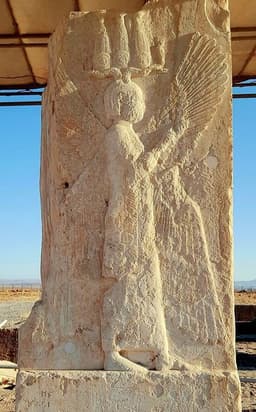
Cyrus the Great
Emperor · Ancient
83.9Total

Dorgon
General · Modern
78.0Total
Basic Information
Born
-600
1612
Died
-530
1650
Era
Ancient
Modern
Nationality
Persia
China
Occupation
Emperor
General
Civilization
Middle Eastern
Eastern
Score Comparison
Military (10%)
82.0
78.5
Political (20%)
85.0
78.0
Influence (20%)
85.0
88.0
Legacy (20%)
90.0
65.0
Leadership (15%)
78.0
85.0
Strategy (15%)
75.0
75.0
TOTAL
83.9
78.0
Cyrus the Great — Complete Timeline
550 BC
Founding of the Achaemenid EmpirePolitical Action
Cyrus led a rebellion against the Median Empire, defeating King Astyages and capturing Ecbatana. He then united the Persian and Median tribes, establishing the Achaemenid Empire, which became the largest empire the world had yet seen.
Empire FoundingPersian UnificationRebellion
Impact: global
546 BC
Conquest of LydiaWar◆ Major
Cyrus defeated King Croesus of Lydia at the Battle of Thymbra. The Lydian capital Sardis was captured, and Croesus was taken prisoner. This conquest brought Anatolia under Persian control and secured access to the Aegean coast.
Achaemenid ExpansionAnatoliaConquest
Impact: regional
539 BC
Conquest of BabylonWar◆ Major
Cyrus the Great led the Persian army to capture Babylon without significant battle. The city's gates were opened, and Cyrus entered peacefully. This conquest added Mesopotamia to the Achaemenid Empire and marked the end of the Neo-Babylonian Empire.
Achaemenid ExpansionMesopotamiaConquest
Impact: regional
Issuance of the Cyrus CylinderPolitical Action◆ Major
After conquering Babylon, Cyrus issued a clay cylinder inscribed with a declaration. It described his policy of restoring temples, repatriating displaced peoples, and allowing religious freedom. The cylinder is often cited as an early charter of human rights.
Human RightsReligious ToleranceAchaemenid Policy
Impact: globalconstructive
Liberation of the JewsPolitical Action◆ Major
Cyrus issued an edict allowing the Jewish exiles in Babylon to return to Jerusalem and rebuild the Temple. This event is recorded in the biblical Book of Ezra and is a key moment in Jewish history, ending the Babylonian captivity.
Jewish HistoryReligious FreedomReturn from Exile
Impact: regionalconstructive
Dorgon — Complete Timeline
1643 AD
Appointed Prince RegentPolitical Action◆ Major
Upon the death of Hong Taiji, Dorgon was appointed as regent for the young Shunzhi Emperor. This position gave him effective control over the Qing government and military, enabling him to direct the conquest of Ming China.
RegencyPower transition
Impact: national
1644 AD
Battle of Shanhai PassWar
Dorgon allied with Ming general Wu Sangui to defeat Li Zicheng's rebel forces at Shanhai Pass. This victory allowed Qing forces to enter Beijing and establish the Qing dynasty as the ruling power in China.
Qing conquestBattleAlliance
Impact: national
1645 AD
Conquest of Southern MingWar◆ Major
Dorgon led Qing forces in a campaign against the Southern Ming regime, capturing Nanjing and defeating the Hongguang Emperor. This campaign extended Qing control over the Yangtze River valley and weakened Ming loyalist resistance.
Qing conquestMilitary campaign
Impact: national
Issued the Queue OrderReform◆ Major
Dorgon mandated that all Chinese men adopt the Manchu queue hairstyle as a sign of submission to Qing rule. This policy caused widespread resentment and resistance, but was enforced to consolidate Qing control over Han Chinese subjects.
Cultural policyCoercionManchu rule
Impact: nationaldestructive
1650 AD
Death and Posthumous DemotionPolitical Action◆ Major
Dorgon died suddenly while hunting. After his death, the Shunzhi Emperor accused him of plotting to usurp the throne, stripped him of all titles, and had his corpse mutilated. This posthumous purge reflected court factional struggles.
PurgePosthumous punishment
Impact: nationaltragic
Expert Analysis
Origins
Cyrus the Great (c. 600–530 BCE) founded the Achaemenid Empire, uniting Persian and Median tribes. His lineage traced back to Achaemenes, and he inherited the kingdom of Anshan. Dorgon (1612–1650) was a Manchu prince of the Aisin Gioro clan, the 14th son of Nurhaci. He rose through military prowess during the Manchu unification.
Rise to Power
Cyrus rebelled against the Medes in 550 BCE, conquering the Median capital Ecbatana. He then defeated Croesus of Lydia in 546 BCE and later captured Babylon in 539 BCE, presenting himself as a liberator. Dorgon played a key role in the Manchu conquest of the Ming, notably at the Battle of Shanhai Pass in 1644, where he allied with Wu Sangui to enter Beijing. He was appointed Prince Regent for the young Shunzhi Emperor, effectively ruling China.
Leadership & Governance
Cyrus established a vast empire with a decentralized satrapy system, respecting local customs and religions. His Cyrus Cylinder is considered an early charter of human rights, allowing deported peoples to return home. Dorgon centralized power in the Qing court, implementing the Queue Order to enforce Manchu hairstyles as a symbol of submission. He promoted Confucian governance but faced resistance from Southern Ming loyalists.
Triumph & Tragedy
Cyrus’s greatest triumph was the conquest of Babylon without battle, freeing the Jews and permitting their return to Jerusalem. He died in battle around 530 BCE, possibly fighting the Massagetae. Dorgon conquered Beijing and much of China, but his posthumous demotion (accused of usurpation ambitions) tarnished his legacy. He died in 1650 while hunting.
Character & Destiny
Cyrus is remembered as a tolerant, visionary ruler—a liberator rather than a conqueror. His destiny was to create a multicultural empire that lasted over 200 years. Dorgon was pragmatic and ruthless, sacrificing personal legacy for Qing consolidation. His destiny was to be a transitional figure, later vilified by the Shunzhi Emperor.
Legacy
Cyrus’s legacy endures as a symbol of justice and governance; his cylinder is a UNESCO-recognized artifact. Dorgon’s legacy is mixed: he enabled the Qing dynasty’s success but is often overshadowed by the emperors he served. Both expanded their realms, but Cyrus’s approach was more enduring and humane.
Conclusion
Cyrus the Great outranks Dorgon across most dimensions: military strategy (82 vs 78), political acumen (85 vs 78), influence (85 vs 88, slightly lower), leadership (90 vs 65), diplomacy (78 vs 85), staying power (75 vs 75), and territorial expansion (84 vs 78). Cyrus’s higher overall score (5.9 gap) reflects his foundational role in creating a multicultural empire that set precedents for governance, while Dorgon’s narrower focus on conquest and assimilation limited his historical stature. Cyrus emerges as the superior figure for his enduring impact on human rights and imperial administration.
Rankings
🥇
Cyrus the GreatLeader
Mil: 82.0Pol: 85.0Inf: 85.0
83.9
🥈
Dorgon
Mil: 78.5Pol: 78.0Inf: 88.0
78.0
+5.9 behind
How This Comparison Works
Algorithm
Each figure is scored on 6 dimensions (0—100 scale) based on structured historical data: Military (10%), Political (20%), Influence (20%), Legacy (20%), Leadership (15%), Strategy (15%). The weighted total produces the final ranking.
Data Sources
Scores are computed from structured sub-indicators in the database. Scale factors adjust for era (Ancient ×0.85, Modern ×1.0) and civilization size (Eastern ×1.05, Other ×0.80) to account for differences in population and military scale.
Maximum 3 Figures
Comparisons are limited to 2—3 figures to ensure readability and statistical meaningfulness.
Error Margins
±5 points per dimension — Sub-scores are derived from historical records with inherent uncertainty. Two figures within 5 points on a dimension should be considered roughly equivalent in that area.
Total Score Accuracy
±3 points overall — The weighted combination of 6 dimensions produces a total score with approximately ±3 points of uncertainty. Differences of less than 3 points are not statistically significant— the figures are effectively tied.
Known Limitations
- Historical records are incomplete and uneven across civilizations
- Figures from oral-tradition societies may be underrepresented
- Occupation labels can misclassify multi-role figures
- Scores measure capability and impact, not moral character
- Quantitative scoring is a comparison tool, not absolute truth
Capability Radar
Military (10%) — Battles & Warfare
Battles
85
85
Win Rate
90
80
Expansion
92
90
Political (20%) — Governance & Reform
Reform
90
72
Diplomacy
95
78
Economy
80
65
Influence (20%) — Cultural & Global Reach
Cultural
90
65
Global
90
70
Legacy (20%) — Historical Impact
Historical
95
80
Longevity
95
75
Leadership (15%) — Power & Stability
Tenure
70
70
Stability
85
60
Strategy (15%) — Tactics & Innovation
Strategy
88
88
Tactics
80
82
Reform
75
75
Similar Comparisons
Comments & Discussion
No comments yet. Be the first to share your thoughts!