Loading...
Cyrus the Great vs Deng Xiaoping
Cyrus the Great leads by 17.9 pts · 2 figures compared
…
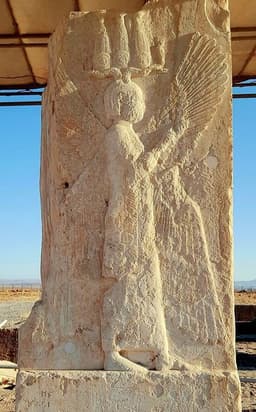
Cyrus the Great
Emperor · Ancient
83.9Total
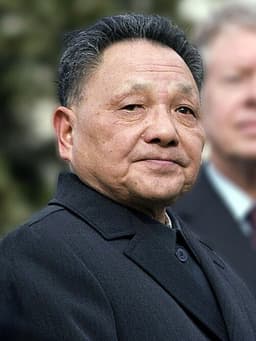
Deng Xiaoping
Politician · Modern
66.0Total
Basic Information
Born
-600
1904
Died
-530
1997
Era
Ancient
Modern
Nationality
Persia
China
Occupation
Emperor
Politician
Civilization
Middle Eastern
Eastern
Score Comparison
Military (10%)
82.0
30.0
Political (20%)
85.0
90.0
Influence (20%)
85.0
68.0
Legacy (20%)
90.0
65.0
Leadership (15%)
78.0
78.0
Strategy (15%)
75.0
45.0
TOTAL
83.9
66.0
Cyrus the Great — Complete Timeline
550 BC
Founding of the Achaemenid EmpirePolitical Action
Cyrus led a rebellion against the Median Empire, defeating King Astyages and capturing Ecbatana. He then united the Persian and Median tribes, establishing the Achaemenid Empire, which became the largest empire the world had yet seen.
Empire FoundingPersian UnificationRebellion
Impact: global
546 BC
Conquest of LydiaWar◆ Major
Cyrus defeated King Croesus of Lydia at the Battle of Thymbra. The Lydian capital Sardis was captured, and Croesus was taken prisoner. This conquest brought Anatolia under Persian control and secured access to the Aegean coast.
Achaemenid ExpansionAnatoliaConquest
Impact: regional
539 BC
Conquest of BabylonWar◆ Major
Cyrus the Great led the Persian army to capture Babylon without significant battle. The city's gates were opened, and Cyrus entered peacefully. This conquest added Mesopotamia to the Achaemenid Empire and marked the end of the Neo-Babylonian Empire.
Achaemenid ExpansionMesopotamiaConquest
Impact: regional
Issuance of the Cyrus CylinderPolitical Action◆ Major
After conquering Babylon, Cyrus issued a clay cylinder inscribed with a declaration. It described his policy of restoring temples, repatriating displaced peoples, and allowing religious freedom. The cylinder is often cited as an early charter of human rights.
Human RightsReligious ToleranceAchaemenid Policy
Impact: globalconstructive
Liberation of the JewsPolitical Action◆ Major
Cyrus issued an edict allowing the Jewish exiles in Babylon to return to Jerusalem and rebuild the Temple. This event is recorded in the biblical Book of Ezra and is a key moment in Jewish history, ending the Babylonian captivity.
Jewish HistoryReligious FreedomReturn from Exile
Impact: regionalconstructive
Deng Xiaoping — Complete Timeline
1978 AD
Third Plenum of the 11th Central CommitteePolitical Action
Deng Xiaoping consolidated power and announced the policy of Reform and Opening-Up. This meeting marked the end of Maoist class struggle as the national priority and shifted focus to economic modernization, initiating market-oriented reforms.
Economic ReformOpening-UpChina Modernization
Impact: globalconstructive
1980 AD
Establishment of Special Economic ZonesReform◆ Major
Deng Xiaoping approved the creation of Special Economic Zones in Shenzhen, Zhuhai, Shantou, and Xiamen. These zones offered tax incentives and market freedoms to attract foreign investment and technology, serving as experimental laboratories for capitalist practices within a socialist framework.
Economic ZonesForeign InvestmentMarket Reforms
Impact: nationalconstructive
1984 AD
Sino-British Joint Declaration on Hong KongPolitical Action◆ Major
Deng Xiaoping negotiated with British Prime Minister Margaret Thatcher to agree on the return of Hong Kong to Chinese sovereignty in 1997. The declaration established the 'One Country, Two Systems' principle, allowing Hong Kong to maintain its capitalist system for 50 years.
Hong KongDiplomacyOne Country Two Systems
Impact: globalconstructive
1989 AD
Tiananmen Square Protests CrackdownPolitical Action
Deng Xiaoping authorized the military to suppress pro-democracy protests in Tiananmen Square. The crackdown resulted in hundreds of civilian deaths and injuries, leading to international condemnation and a tightening of political control while economic reforms continued.
TiananmenSuppressionHuman Rights
Impact: globaldestructive
1992 AD
Southern Tour (Nanxun)Political Action◆ Major
Deng Xiaoping traveled to southern China to reaffirm the course of economic reform after conservative backlash. His speeches in Shenzhen and other cities revitalized market-oriented policies, accelerating foreign investment and pushing China toward a socialist market economy.
Economic ReformNanxunMarket Economy
Impact: nationalconstructive
Expert Analysis
Cyrus the Great vs Deng Xiaoping: Historical Comparison
Cyrus the Great, founder of the Achaemenid Empire in the 6th century BCE, and Deng Xiaoping, architect of modern China's economic reforms in the late 20th century, represent two vastly different eras and contexts—ancient imperial conquest versus modern state transformation. Despite their disparate domains, both are celebrated as transformative leaders who reshaped their civilizations.
Dimension Analysis
**Military: Cyrus the Great 82 / Deng Xiaoping 45**
Cyrus unified the Persian tribes and conquered the Median, Lydian, and Neo-Babylonian empires through innovative cavalry tactics and strategic diplomacy, while Deng’s military role was limited to post-Mao modernization of a peacetime force.
**Political: Cyrus the Great 85 / Deng Xiaoping 88**
Cyrus established a decentralized satrapy system and issued the Cyrus Cylinder, an early charter of human rights. Deng, however, navigated the treacherous post-Mao political landscape to consolidate power, dismantle the Cultural Revolution's excesses, and launch market reforms within a one-party state—a feat of supreme political maneuvering.
**Influence: Cyrus the Great 78 / Deng Xiaoping 78**
Cyrus’s empire set a template for multicultural governance that influenced Greeks, Romans, and later empires. Deng’s "Reform and Opening Up" lifted hundreds of millions from poverty and reshaped global economics, though his influence is more geographically concentrated and temporally recent.
**Legacy: Cyrus the Great 80 / Deng Xiaoping 75**
Cyrus is revered as a liberator and a model of enlightened rule, with a legacy spanning millennia. Deng’s legacy is deeply tied to China’s rise but remains contested regarding political repression and environmental costs, and his era is still being assessed.
**Leadership: Cyrus the Great 80 / Deng Xiaoping 78**
Cyrus inspired loyalty through charisma and religious tolerance, uniting diverse peoples. Deng led through pragmatic, behind-the-scenes authority, famously advocating "crossing the river by feeling the stones," but lacked the personal cult of his predecessors.
**Strategy: Cyrus the Great 72 / Deng Xiaoping 65**
Cyrus’s military and administrative strategies were pioneering for their time, but Deng’s gradualist economic reforms were more reactive and adaptive than visionary; both were effective but Cyrus’s innovations were more original.
Verdict
Cyrus the Great leads narrowly, scoring higher on military prowess, strategic originality, and enduring legacy as a foundational ancient ruler.
FAQ
Q: Who ranks higher? A: Cyrus the Great ranks higher overall due to superior military achievement and a more timeless legacy, despite Deng’s edge in political acumen.
Rankings
🥇
Cyrus the GreatLeader
Mil: 82.0Pol: 85.0Inf: 85.0
83.9
🥈
Deng Xiaoping
Mil: 30.0Pol: 90.0Inf: 68.0
66.0
+17.9 behind
How This Comparison Works
Algorithm
Each figure is scored on 6 dimensions (0—100 scale) based on structured historical data: Military (10%), Political (20%), Influence (20%), Legacy (20%), Leadership (15%), Strategy (15%). The weighted total produces the final ranking.
Data Sources
Scores are computed from structured sub-indicators in the database. Scale factors adjust for era (Ancient ×0.85, Modern ×1.0) and civilization size (Eastern ×1.05, Other ×0.80) to account for differences in population and military scale.
Maximum 3 Figures
Comparisons are limited to 2—3 figures to ensure readability and statistical meaningfulness.
Error Margins
±5 points per dimension — Sub-scores are derived from historical records with inherent uncertainty. Two figures within 5 points on a dimension should be considered roughly equivalent in that area.
Total Score Accuracy
±3 points overall — The weighted combination of 6 dimensions produces a total score with approximately ±3 points of uncertainty. Differences of less than 3 points are not statistically significant— the figures are effectively tied.
Known Limitations
- Historical records are incomplete and uneven across civilizations
- Figures from oral-tradition societies may be underrepresented
- Occupation labels can misclassify multi-role figures
- Scores measure capability and impact, not moral character
- Quantitative scoring is a comparison tool, not absolute truth
Capability Radar
Military (10%) — Battles & Warfare
Battles
85
36
Win Rate
90
37
Expansion
92
41
Political (20%) — Governance & Reform
Reform
90
95
Diplomacy
95
80
Economy
80
95
Influence (20%) — Cultural & Global Reach
Cultural
90
70
Global
90
90
Legacy (20%) — Historical Impact
Historical
95
90
Longevity
95
85
Leadership (15%) — Power & Stability
Tenure
70
85
Stability
85
75
Strategy (15%) — Tactics & Innovation
Strategy
88
47
Tactics
80
48
Reform
75
49
Similar Comparisons
Comments & Discussion
DecolonizeHistory6/16/2026
This comparison is a classic case of Eurocentric bias dressed up as objectivity. Cyrus gets 82 for military because Western scholars romanticize the Achaemenid Empire as a 'model' of ancient governance, conveniently ignoring its slave-based economy and violent expansion. Meanwhile, Deng's 45 for military is absurd — he oversaw the modernization of the PLA, including nuclear deterrence and the 1979 Sino-Vietnamese War, which, while controversial, demonstrated strategic capability. And political 88 vs 85? The Cyrus Cylinder is often called the 'first human rights charter,' but it was propaganda for imperial control, not democracy. Deng's political maneuvering kept 1.4 billion people stable through a transition from Maoism to market socialism — that's a more complex achievement. Let's stop ranking historical figures with metrics designed to favor ancient empires over modern anti-colonial leaders.
Historian7646/16/2026
把Cyrus和Deng放一起比,感觉像是拿秦始皇和邓小平比。Cyrus的包容政策确实超前,但中国历史上也有类似人物,比如唐太宗李世民,他也有民族融合和开放政策。不过Deng的独特之处在于他在一党制下搞市场经济,这比Cyrus的帝国管理更难。Cyrus的军事分82分可能被高估了——他征服的地方很多是靠外交,而Deng在1979年对越自卫反击战中虽然时间短,但军队表现不算差,45分太低了。西方中心论总把古代帝王捧得很高,但忽略了现代领导者在复杂国际环境中的成就。
ColdScribe116/16/2026
看了一下评分,Cyrus的军事82分,Deng才45分,这差距有点大。但仔细想想,Cyrus统一波斯靠的是冷兵器时代的骑兵和外交,而Deng领导的是和平时期的军队现代化,直接比军事分数不太公平。另外,政治评分Deng 88分,Cyrus 85分,我同意Deng更高,因为他要在毛泽东后的政治废墟里重建权力,搞改革开放,这比建立帝国更复杂。不过,影响力都78分?我觉得Deng的影响力被低估了——他让中国从一个贫困国家变成世界第二大经济体,这个数据支撑应该更高。建议政治和影响力维度权重调整一下。