Loading...
Constantius III vs Duke Wen of Jin
Duke Wen of Jin leads by 13.7 pts · 2 figures compared
…
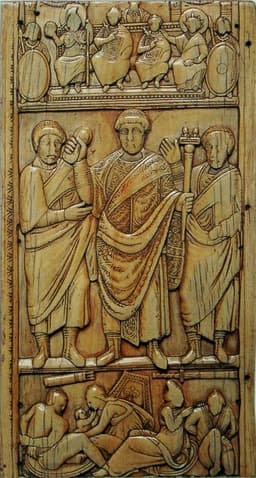
Constantius III
Emperor · Ancient
49.0Total
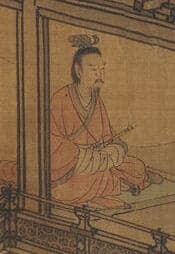
Duke Wen of Jin
Emperor · Ancient
62.7Total
Basic Information
Born
370
-697
Died
421
-628
Era
Ancient
Ancient
Nationality
Western Roman Empire
China
Occupation
Emperor
Emperor
Civilization
Western
Eastern
Score Comparison
Military (10%)
70.0
80.0
Political (20%)
43.7
65.0
Influence (20%)
47.1
59.0
Legacy (20%)
39.2
54.0
Leadership (15%)
48.4
66.0
Strategy (15%)
66.3
68.1
TOTAL
49.0
62.7
Constantius III — Complete Timeline
417 AD
Married Galla PlacidiaPolitical Action◆ Major
Constantius, a Roman general, married Galla Placidia, the half-sister of Emperor Honorius. This marriage strengthened his political position and made him a key figure in the Western Roman court.
MarriageRoman EmpireDynasty
Impact: nationalconstructive
421 AD
Appointed Co-Emperor as Constantius IIIPolitical Action◆ Major
Constantius was appointed co-emperor of the Western Roman Empire by Honorius, ruling as Constantius III. His reign lasted only seven months before he died of illness, but he was the de facto ruler of the West for years prior.
CoronationRoman EmpireCo-Emperor
Impact: national
Duke Wen of Jin — Complete Timeline
656 BC
Exile and Return to JinPolitical Action◆ Major
Duke Wen of Jin (then Prince Chong'er) was forced into exile for 19 years after a political purge in Jin. He traveled through several states, gaining experience and allies, before returning to claim the throne of Jin in 636 BCE.
Spring and AutumnExileReturn
Impact: regionaltragic
636 BC
Reforms in Jin StateReform◆ Major
Upon returning to power, Duke Wen implemented administrative and military reforms in Jin. He reorganized the army into three divisions, promoted talented officials regardless of birth, and established a legal code, strengthening Jin's governance.
Spring and AutumnReformJin State
Impact: regionalprogressive
632 BC
Battle of ChengpuWar
Duke Wen of Jin defeated the state of Chu at the Battle of Chengpu, the largest battle of the Spring and Autumn period. The victory established Jin as the dominant power and Duke Wen as the hegemon of the Chinese states.
Spring and AutumnBattleHegemon
Impact: regional
Convening of the Alliance of JiantuPolitical Action◆ Major
After the Battle of Chengpu, Duke Wen convened a major alliance of states at Jiantu, where he was formally recognized as hegemon. He also received a mandate from the Zhou king to lead military campaigns, solidifying his authority.
Spring and AutumnAllianceHegemon
Impact: regionalconstructive
Expert Analysis
Origins
Constantius III, born in Naissus (modern Niš, Serbia) around 370 AD, was a Roman general of humble origins. His early career is obscure, but he rose through military ranks under Emperor Honorius. He gained prominence as a commander in the Western Roman Empire, which was beset by barbarian invasions and civil wars. Constantius married Galla Placidia, the half-sister of Honorius, in 417 AD, cementing his political ties. His background was purely military, with no formal education in philosophy or law, typical of late Roman generals.
Duke Wen of Jin, born as Prince Chong'er in 697 BC, was a son of Duke Xian of Jin, a powerful state during the Spring and Autumn period in China. His early life was marked by court intrigue; after a purge of the royal family, he was forced into exile for 19 years (656–637 BC). During his exile, he traveled through various states, including Qi, Chu, and Qin, gaining political insight and allies. His experiences shaped his pragmatic and resilient character, and he returned to Jin in 636 BC to become duke.
Rise to Power
Constantius III rose through military success. He served as magister militum (master of soldiers) under Honorius and played a key role in defeating the Visigoths, notably in 411 AD when he suppressed the usurper Constantine III. His greatest political achievement was marrying Galla Placidia in 417 AD, which gave him a claim to the throne. In 421 AD, Honorius appointed him co-emperor as Constantius III, but his reign lasted only seven months before his death on September 2, 421 AD. His rise was swift but fragile, dependent on imperial favor and military support.
Duke Wen of Jin's path to power was long and arduous. After his father's death, his half-brother Xiqi and then his brother Zhuozi ruled briefly, but both were murdered, leading to chaos. Prince Chong'er was recalled from exile in 636 BC with the help of Duke Mu of Qin. He returned to Jin, defeated his nephew (Duke Huai), and took the throne. He then implemented reforms, reorganizing the army into three divisions and promoting talented officials like Hu Yan and Zhao Shuai. His rise was a testament to endurance and strategic alliances.
Leadership & Governance
Constantius III's leadership was characterized by military firmness and political pragmatism. As co-emperor, he focused on consolidating the Western Roman Empire's borders and dealing with barbarian threats. He continued the policy of settling foederati (barbarian allies) within the empire, which had mixed results. His governance was short-lived, so he left little administrative legacy. He scored 48.4 in leadership and 43.7 in political aptitude, reflecting his limited impact as a ruler.
Duke Wen of Jin was a transformative leader. He reformed Jin's administration and military, creating a centralized bureaucracy and a merit-based promotion system. He convened the Alliance of Jiantu in 632 BC after the Battle of Chengpu, where he was recognized as hegemon (ba) by the Zhou king and other states. His governance emphasized alliance-building and legal reforms, which strengthened Jin's power. His leadership score of 66.0 reflects his effective rule and ability to unite diverse factions.
Triumph & Tragedy
Constantius III's greatest success was his military campaign against the Visigoths, which secured a temporary peace for the Western Roman Empire. He also managed to become co-emperor, a remarkable achievement for a general of humble birth. However, his tragedy was his short reign—he died of natural causes after only seven months, leaving no lasting reforms or stable succession. His death led to renewed instability, as Galla Placidia later fled to the Eastern court. His military score of 70.0 is decent, but his overall impact was minor.
Duke Wen of Jin's triumph was the Battle of Chengpu in 632 BC, where he decisively defeated the state of Chu, the largest battle of the Spring and Autumn period. This victory established Jin as the dominant power and earned him the title of hegemon. His tragedy was the internal strife that continued in Jin after his death; his successors were weak, and Jin eventually fragmented. He scored 80.0 in military and 65.0 in political, reflecting his success in both spheres. However, his long-term legacy was limited by the eventual decline of Jin.
Character & Destiny
Constantius III was a capable general but a cautious politician. He was known for his military competence and loyalty to Honorius, but his ambition was tempered by his dependence on the emperor. His character was shaped by the declining Roman system, where military commanders often sought power but lacked the institutional support to maintain it. His destiny was to be a footnote in Roman history, a brief emperor with little impact.
Duke Wen of Jin was resilient, patient, and strategic. His 19-year exile taught him diplomacy and perseverance. He was decisive in battle but also adept at building coalitions. His character was that of a survivor who learned from adversity. His destiny was to become one of the Five Hegemons, a model of leadership in Chinese history. However, his reliance on personal relationships and alliances meant that his achievements were not institutionalized.
Legacy
Constantius III's legacy is minimal. He is remembered as a short-lived co-emperor who married Galla Placidia, but his reign had no lasting impact on the Western Roman Empire, which collapsed in 476 AD. He scored 39.2 in legacy, reflecting his obscurity. His military reforms were not significant, and his political influence faded quickly.
Duke Wen of Jin's legacy is more substantial. He is remembered as one of the Five Hegemons, a symbol of strength and statesmanship in the Spring and Autumn period. His reforms influenced later Chinese governance, and his military tactics were studied by later strategists. He scored 54.0 in legacy, indicating moderate long-term impact. However, his state of Jin did not survive as a major power, and his achievements were overshadowed by later figures like Qin Shi Huang.
Conclusion
Duke Wen of Jin had a greater impact than Constantius III. His total score of 62.7 versus Constantius's 49.0 reflects his superior military, political, and leadership abilities. While Constantius III briefly stabilized the Western Roman Empire, his reign was too short to effect lasting change. Duke Wen of Jin transformed his state, won a decisive battle, and established a hegemony that shaped Chinese interstate relations for decades. His exile and return provide a narrative of resilience that resonates in Chinese culture. Therefore, Duke Wen of Jin is the more significant historical figure.
Rankings
🥇
Duke Wen of JinLeader
Mil: 80.0Pol: 65.0Inf: 59.0
62.7
🥈
Constantius III
Mil: 70.0Pol: 43.7Inf: 47.1
49.0
+13.7 behind
How This Comparison Works
Algorithm
Each figure is scored on 6 dimensions (0—100 scale) based on structured historical data: Military (10%), Political (20%), Influence (20%), Legacy (20%), Leadership (15%), Strategy (15%). The weighted total produces the final ranking.
Data Sources
Scores are computed from structured sub-indicators in the database. Scale factors adjust for era (Ancient ×0.85, Modern ×1.0) and civilization size (Eastern ×1.05, Other ×0.80) to account for differences in population and military scale.
Maximum 3 Figures
Comparisons are limited to 2—3 figures to ensure readability and statistical meaningfulness.
Error Margins
±5 points per dimension — Sub-scores are derived from historical records with inherent uncertainty. Two figures within 5 points on a dimension should be considered roughly equivalent in that area.
Total Score Accuracy
±3 points overall — The weighted combination of 6 dimensions produces a total score with approximately ±3 points of uncertainty. Differences of less than 3 points are not statistically significant— the figures are effectively tied.
Known Limitations
- Historical records are incomplete and uneven across civilizations
- Figures from oral-tradition societies may be underrepresented
- Occupation labels can misclassify multi-role figures
- Scores measure capability and impact, not moral character
- Quantitative scoring is a comparison tool, not absolute truth
Capability Radar
Military (10%) — Battles & Warfare
Battles
55
75
Win Rate
60
70
Expansion
50
75
Political (20%) — Governance & Reform
Reform
30
65
Diplomacy
55
85
Economy
35
70
Influence (20%) — Cultural & Global Reach
Cultural
25
60
Global
15
55
Legacy (20%) — Historical Impact
Historical
35
70
Longevity
20
65
Leadership (15%) — Power & Stability
Tenure
20
70
Stability
40
65
Strategy (15%) — Tactics & Innovation
Strategy
70
85
Tactics
65
80
Reform
40
60
Similar Comparisons
Comments & Discussion
No comments yet. Be the first to share your thoughts!