Loading...
Duke Wen of Jin vs Napoleon Bonaparte
Napoleon Bonaparte leads by 8.2 pts · 2 figures compared
…
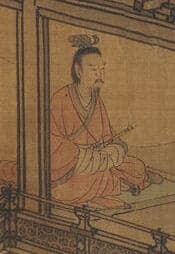
Duke Wen of Jin
Emperor · Ancient
62.7Total

Napoleon Bonaparte
General · Modern
70.9Total
Basic Information
Born
-697
1769
Died
-628
1821
Era
Ancient
Modern
Nationality
China
France
Occupation
Emperor
General
Civilization
Eastern
Western
Score Comparison
Military (10%)
80.0
94.0
Political (20%)
65.0
72.0
Influence (20%)
59.0
40.0
Legacy (20%)
54.0
80.0
Leadership (15%)
66.0
78.0
Strategy (15%)
68.1
90.0
TOTAL
62.7
70.9
Duke Wen of Jin — Complete Timeline
656 BC
Exile and Return to JinPolitical Action◆ Major
Duke Wen of Jin (then Prince Chong'er) was forced into exile for 19 years after a political purge in Jin. He traveled through several states, gaining experience and allies, before returning to claim the throne of Jin in 636 BCE.
Spring and AutumnExileReturn
Impact: regionaltragic
636 BC
Reforms in Jin StateReform◆ Major
Upon returning to power, Duke Wen implemented administrative and military reforms in Jin. He reorganized the army into three divisions, promoted talented officials regardless of birth, and established a legal code, strengthening Jin's governance.
Spring and AutumnReformJin State
Impact: regionalprogressive
632 BC
Battle of ChengpuWar
Duke Wen of Jin defeated the state of Chu at the Battle of Chengpu, the largest battle of the Spring and Autumn period. The victory established Jin as the dominant power and Duke Wen as the hegemon of the Chinese states.
Spring and AutumnBattleHegemon
Impact: regional
Convening of the Alliance of JiantuPolitical Action◆ Major
After the Battle of Chengpu, Duke Wen convened a major alliance of states at Jiantu, where he was formally recognized as hegemon. He also received a mandate from the Zhou king to lead military campaigns, solidifying his authority.
Spring and AutumnAllianceHegemon
Impact: regionalconstructive
Napoleon Bonaparte — Complete Timeline
1799 AD
Coup of 18 BrumaireOther◆ Major
Napoleon Bonaparte, with support from his brother Lucien and key political figures, overthrew the Directory in a bloodless coup. He established the Consulate with himself as First Consul, effectively becoming the ruler of France. This event ended the French Revolution's most unstable period.
French RevolutionCoupRise to Power
Impact: regional
1804 AD
Promulgation of the Napoleonic CodeOther◆ Major
Napoleon enacted the Civil Code of the French, known as the Napoleonic Code, a comprehensive set of laws that replaced the fragmented feudal legal systems. The code established legal equality, protected property rights, and secularized law. It became the basis for legal systems in many European and world countries.
Legal ReformNapoleonic CodeCivil Law
Impact: globalconstructive
1805 AD
Battle of AusterlitzWar◆ Major
Napoleon's Grande Arm
Napoleonic WarsBattleDecisive Victory
Impact: global
1812 AD
Invasion of RussiaWar◆ Major
Napoleon led the Grande Arm
Napoleonic WarsInvasionDisaster
Impact: globaldestructive
1815 AD
Battle of WaterlooWar◆ Major
Napoleon's French army was defeated by the combined forces of the Duke of Wellington's Anglo-Allied army and Gebhard Leberecht von Bl
Napoleonic WarsBattleFinal Defeat
Impact: globaldestructive
Expert Analysis
duke-wen-of-jin-vs-napoleon-bonaparte
### The Emperor and the Exile: Napoleon and Duke Wen of Jin
In the spring of 1815, Napoleon Bonaparte returned from exile on Elba to a France that had tried to forget him. Within weeks, he had raised an army and marched toward Waterloo, where his ambition would finally shatter. Nearly twenty-five centuries earlier and half a world away, another exiled prince, Chong’er of Jin, wandered through the courts of ancient China for nineteen years, a fugitive without a throne. When he finally returned, he did not conquer Europe—he reshaped the very concept of Chinese power. Both men were masters of war and statecraft, yet one ended his life on a remote Atlantic island, while the other was canonized as one of the Five Hegemons. Why did their paths diverge so sharply? The answer lies not in their genius, but in the worlds they sought to rule.
### Origins
Napoleon was born in 1769 on Corsica, an island only recently annexed by France. His family was minor nobility, but his education was thoroughly French—military academies, Enlightenment philosophy, and the intoxicating promise of revolution. He came of age in a world of collapsing monarchies, where a young artillery officer could rise on talent alone. His era was one of rapid change, where the old rules of war and politics were being rewritten by gunpowder and nationalism.
Duke Wen of Jin, born in 697 BCE, belonged to a very different universe. He was a prince of the Zhou dynasty’s feudal order, where power was measured in chariots and ritual bronze vessels. His China was a patchwork of competing states, bound by a fragile code of honor and hierarchy. When a political purge in Jin forced him into exile in 656 BCE, he became a wanderer—not a revolutionary, but a claimant to a throne that still existed. His world demanded patience, cunning, and the ability to read the subtle signals of a hundred warring courts.
### Rise to Power
Napoleon’s ascent was a lightning strike. He seized his moment at the Siege of Toulon in 1793, a young captain who saw how to turn artillery against a British fleet. By 1796, he was commanding the Army of Italy, winning battles with a speed that stunned Europe. His rise was built on merit, ambition, and the chaos of revolution—a system where a man could become emperor in a decade.
Chong’er’s rise was the opposite: a slow, grinding marathon. For nineteen years, he traveled from state to state, sometimes welcomed, often humiliated. He learned diplomacy by sleeping in strange courts and warfare by observing distant campaigns. When he finally returned to Jin in 636 BCE, he did not conquer his kingdom—he was invited back by nobles who had tired of the usurper. His power came not from a single victory, but from the relationships and debts he had accumulated across a generation of exile.
### Leadership & Governance
As emperor, Napoleon governed with a pen as sharp as his sword. The Napoleonic Code, implemented in 1804, standardized French law, abolished feudal privileges, and laid the foundation for modern civil law across Europe. He centralized the state, reformed education, and built roads and canals. Yet his military genius—scoring 93 in strategy, 94 in military power—was also his weakness. He trusted his star, and that trust led him to invade Russia in 1812, a catastrophe that cost half a million men.
Duke Wen of Jin governed with the wisdom of a survivor. Upon returning to power in 636 BCE, he reorganized the Jin army into three divisions, a reform that made it the most formidable fighting force in China. But his greatest achievement was political: after defeating the state of Chu at the Battle of Chengpu in 632 BCE—the largest battle of the Spring and Autumn period—he did not destroy his enemy. Instead, he convened the Alliance of Jiantu, where he was formally recognized as hegemon. He understood that in China’s feudal world, victory meant not annihilation, but a new order of alliances. His leadership score of 75 reflects a man who led through consensus, not conquest.
### Triumph & Tragedy
Napoleon’s triumph was Austerlitz in 1805, where he crushed the combined armies of Russia and Austria. It was the masterpiece of his career, a battle so perfect it became a textbook example of military genius. His tragedy was Waterloo in 1815, where a rain-soaked field and a late-arriving Prussian army ended his dream. He died in 1821 on Saint Helena, a prisoner of the British, his empire reduced to memory.
Duke Wen’s triumph was Chengpu, where he defeated the mighty state of Chu and secured Jin’s dominance for a generation. His tragedy was more subtle: he died in 628 BCE, leaving a powerful state but no clear successor. Within decades, Jin would fragment into civil war, and the hegemony he built would crumble. Yet he died in his bed, a king among kings, not a captive.
### Character & Destiny
Napoleon was a man of fire—restless, brilliant, and incapable of rest. His personality drove him to conquer, but it also drove him to overreach. He could not stop, because stopping meant admitting that the world was larger than his ambition. His destiny was to burn bright and fast, a comet that illuminates the sky for a moment before vanishing.
Duke Wen was a man of water—patient, adaptable, and deep. His nineteen years of exile taught him that power is not seized but earned, that the strongest army is useless without the loyalty of allies. His destiny was to endure, to build something that would outlast him, even if only in memory. He understood that in the long game of history, the slow river outlasts the sudden flood.
### Legacy
Napoleon’s legacy is written in stone and law. His code governs millions, his battles are studied in every military academy, and his name is synonymous with ambition. Yet his influence score of 82 and legacy score of 78 reflect a figure who is admired but also feared—a warning about the limits of power.
Duke Wen’s legacy is more elusive. He is remembered as one of the Five Hegemons, a model of virtuous leadership in China’s classical tradition. His story of exile and return is a parable of resilience, taught to generations of Chinese schoolchildren. His influence score of 77 and legacy score of 68 are lower than Napoleon’s, but they measure a different kind of greatness—not the shock of the new, but the endurance of the old.
### Conclusion
Standing on the deck of the *Bellerophon*, watching the coast of Europe fade, Napoleon might have thought of his glory—the arches, the victories, the trembling of kings. Duke Wen, in his final days in Jin, might have thought of the long road, the friends he made, the enemies he spared. Both were great, but their greatness was shaped by their worlds: Napoleon’s world of revolution and empire, Duke Wen’s world of ritual and alliance. One burned, one flowed. And history, in its quiet judgment, holds both in its hands—the emperor who fell, and the exile who rose.
Rankings
🥇
Napoleon BonaparteLeader
Mil: 94.0Pol: 72.0Inf: 40.0
70.9
🥈
Duke Wen of Jin
Mil: 80.0Pol: 65.0Inf: 59.0
62.7
+8.2 behind
How This Comparison Works
Algorithm
Each figure is scored on 6 dimensions (0—100 scale) based on structured historical data: Military (10%), Political (20%), Influence (20%), Legacy (20%), Leadership (15%), Strategy (15%). The weighted total produces the final ranking.
Data Sources
Scores are computed from structured sub-indicators in the database. Scale factors adjust for era (Ancient ×0.85, Modern ×1.0) and civilization size (Eastern ×1.05, Other ×0.80) to account for differences in population and military scale.
Maximum 3 Figures
Comparisons are limited to 2—3 figures to ensure readability and statistical meaningfulness.
Error Margins
±5 points per dimension — Sub-scores are derived from historical records with inherent uncertainty. Two figures within 5 points on a dimension should be considered roughly equivalent in that area.
Total Score Accuracy
±3 points overall — The weighted combination of 6 dimensions produces a total score with approximately ±3 points of uncertainty. Differences of less than 3 points are not statistically significant— the figures are effectively tied.
Known Limitations
- Historical records are incomplete and uneven across civilizations
- Figures from oral-tradition societies may be underrepresented
- Occupation labels can misclassify multi-role figures
- Scores measure capability and impact, not moral character
- Quantitative scoring is a comparison tool, not absolute truth
Capability Radar
Military (10%) — Battles & Warfare
Battles
75
95
Win Rate
70
90
Expansion
75
95
Political (20%) — Governance & Reform
Reform
65
95
Diplomacy
85
80
Economy
70
85
Influence (20%) — Cultural & Global Reach
Cultural
60
85
Global
55
90
Legacy (20%) — Historical Impact
Historical
70
95
Longevity
65
90
Leadership (15%) — Power & Stability
Tenure
70
85
Stability
65
70
Strategy (15%) — Tactics & Innovation
Strategy
85
95
Tactics
80
98
Reform
60
92
Similar Comparisons
Comments & Discussion
History's Accountant6/17/2026
**A classicist’s structural argument: Napoleon fought time, Duke Wen fought space.** Napoleon’s campaigns had to be swift—
Historian1766/17/2026
**The data skeptic’s question: What’s the actual outcome metric?** Napoleon conquered most of Europe in a decade—territory, population, GDP. Duke Wen of Jin unified a few fractious Chinese states, but his “hegemony” was temporary and ceremonial. If you compare by battle win rate (Napoleon ~90% vs. Duke Wen’s few major battles), lifespan in power, or cultural legacy in global textbooks, Napoleon wins on raw stats. But if you measure by long-term institutional impact? Duke Wen’s Jin state influenc
Historian2786/17/2026
**Revisionist take: Duke Wen was the better state-builder, Napoleon just a flashy conqueror.** Napoleon’s reforms (Civil Code, prefectures) were impressive, but he failed to consolidate—his empire lasted barely a decade. Duke Wen inherited a chaotic Jin, stabilized it through strategic marriages, alliances, and a centralized army, then won Chengpu—after which Jin remained a great power for over 150 years. Napoleon’s legacy is a museum piece; Duke Wen’s is a template for Chinese dynastic survival
Historian3656/17/2026
**Napoleon vs. Duke Wen? One fought for glory, the other for legitimacy.** Napoleon’s genius was tactical—he won battles through speed and artillery, but his empire crumbled when he overreached into Russia. Duke Wen, by contrast, spent 19 years in exile learning diplomacy before winning at Chengpu—not by French-style annihilation, but by forcing Chu to overcommit. Napoleon conquered, then fell. Duke Wen waited, and became a hegemon. Timing isn’t everything; it’s the only thing.|黄河剑客|zh|比拿破仑?拿破仑赢