Loading...
This comparison has not been analyzed yet.
One-time AI generation (~1 minute). Scores and timeline are already available below.
Constantine V vs Mongke Temur
Constantine V leads by 7.1 pts · 2 figures compared
…
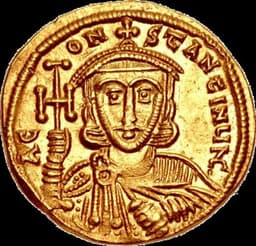
Constantine V
Emperor · Medieval
60.7Total

Mongke Temur
Emperor · Medieval
53.6Total
Basic Information
Born
718
1245
Died
775
1280
Era
Medieval
Medieval
Nationality
Byzantine Empire
Golden Horde
Occupation
Emperor
Emperor
Civilization
Western
Eastern
Score Comparison
Military (10%)
76.0
52.5
Political (20%)
45.0
68.0
Influence (20%)
58.3
57.2
Legacy (20%)
52.0
48.3
Leadership (15%)
80.0
40.0
Strategy (15%)
68.1
57.5
TOTAL
60.7
53.6
Constantine V — Complete Timeline
754 AD
Council of Hieria (754)Political Action◆ Major
Constantine V convened the Council of Hieria, which formally condemned the veneration of icons as idolatry. This council established iconoclasm as official Byzantine Church doctrine, intensifying the religious controversy that divided the empire.
IconoclasmChurch CouncilReligious Policy
Impact: regionaldestructive
Persecution of Iconophiles (after 754)Political Action◆ Major
Following the Council of Hieria, Constantine V intensified persecution of icon venerators. Monks were imprisoned, executed, or forced to marry. Monasteries were confiscated and converted to barracks or secular use. This policy deepened the iconoclast schism.
IconoclasmPersecutionMonasticism
Impact: regionaldestructive
755 AD
Campaigns against the Bulgars (755-775)War◆ Major
Constantine V led nine major campaigns against the Bulgarian Empire, achieving several victories including the Battle of Marcellae (759) and the Battle of Anchialus (763). These campaigns temporarily weakened Bulgaria but did not destroy it.
Byzantine-Bulgarian WarsMilitary Campaigns
Impact: regional
768 AD
Rebuilding of the Aqueduct of ValensOther
Constantine V oversaw the restoration of the Aqueduct of Valens, which had been damaged by the Avars. The repaired aqueduct restored water supply to Constantinople, improving urban infrastructure and public health.
InfrastructurePublic Works
constructive
775 AD
Death in Battle against BulgarsWar◆ Major
Constantine V died while on campaign against the Bulgars. His death occurred during a military expedition, and he was succeeded by his son Leo IV. His campaigns had temporarily checked Bulgarian expansion but left the empire exhausted.
DeathMilitary Campaign
Impact: regional
Mongke Temur — Complete Timeline
1269 AD
Assertion of Independence from the Mongol EmpirePolitical Action
Mongke Temur, as Khan of the Golden Horde, refused to attend the kurultai called by Kublai Khan and ceased sending tribute to the Mongol Yuan dynasty. This act effectively declared the Golden Horde's independence from the central Mongol Empire.
Golden HordeMongol EmpireIndependenceKublai Khan
Impact: global
1270 AD
War with the IlkhanateWar◆ Major
Mongke Temur launched a military campaign against the Ilkhanate, the Mongol state in Persia, over control of the Caucasus region. The war resulted in a stalemate but solidified the Golden Horde's position as a rival power.
Golden HordeIlkhanateWarCaucasus
Impact: regional
1272 AD
Alliance with the Byzantine EmpirePolitical Action
Mongke Temur formed an alliance with Byzantine Emperor Michael VIII Palaiologos, sealed by a marriage between a Mongol princess and a Byzantine noble. This alliance strengthened trade and diplomatic ties between the Golden Horde and the Byzantine Empire.
Golden HordeByzantine EmpireAllianceDiplomacy
Impact: regionalconstructive
This comparison has not been analyzed yet.
One-time AI generation (~1 minute). Scores and timeline are already available below.
Rankings
🥇
Constantine VLeader
Mil: 76.0Pol: 45.0Inf: 58.3
60.7
🥈
Mongke Temur
Mil: 52.5Pol: 68.0Inf: 57.2
53.6
+7.1 behind
How This Comparison Works
Algorithm
Each figure is scored on 6 dimensions (0—100 scale) based on structured historical data: Military (10%), Political (20%), Influence (20%), Legacy (20%), Leadership (15%), Strategy (15%). The weighted total produces the final ranking.
Data Sources
Scores are computed from structured sub-indicators in the database. Scale factors adjust for era (Ancient ×0.85, Modern ×1.0) and civilization size (Eastern ×1.05, Other ×0.80) to account for differences in population and military scale.
Maximum 3 Figures
Comparisons are limited to 2—3 figures to ensure readability and statistical meaningfulness.
Error Margins
±5 points per dimension — Sub-scores are derived from historical records with inherent uncertainty. Two figures within 5 points on a dimension should be considered roughly equivalent in that area.
Total Score Accuracy
±3 points overall — The weighted combination of 6 dimensions produces a total score with approximately ±3 points of uncertainty. Differences of less than 3 points are not statistically significant— the figures are effectively tied.
Known Limitations
- Historical records are incomplete and uneven across civilizations
- Figures from oral-tradition societies may be underrepresented
- Occupation labels can misclassify multi-role figures
- Scores measure capability and impact, not moral character
- Quantitative scoring is a comparison tool, not absolute truth
Capability Radar
Military (10%) — Battles & Warfare
Battles
85
55
Win Rate
80
60
Expansion
75
50
Political (20%) — Governance & Reform
Reform
70
45
Diplomacy
60
65
Economy
65
50
Influence (20%) — Cultural & Global Reach
Cultural
65
40
Global
55
45
Legacy (20%) — Historical Impact
Historical
70
50
Longevity
60
40
Leadership (15%) — Power & Stability
Tenure
85
60
Stability
70
55
Strategy (15%) — Tactics & Innovation
Strategy
80
55
Tactics
75
50
Reform
70
40
Similar Comparisons
Comments & Discussion
No comments yet. Be the first to share your thoughts!