Loading...
Constantine V vs Julius Caesar
Julius Caesar leads by 22.1 pts · 2 figures compared
…
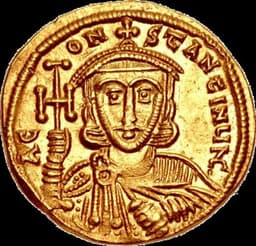
Constantine V
Emperor · Medieval
60.7Total

Julius Caesar
General · Ancient
82.8Total
Basic Information
Born
718
-100
Died
775
-44
Era
Medieval
Ancient
Nationality
Byzantine Empire
Roman Republic
Occupation
Emperor
General
Civilization
Western
Western
Score Comparison
Military (10%)
76.0
88.0
Political (20%)
45.0
78.0
Influence (20%)
58.3
85.0
Legacy (20%)
52.0
82.0
Leadership (15%)
80.0
80.0
Strategy (15%)
68.1
85.0
TOTAL
60.7
82.8
Constantine V — Complete Timeline
754 AD
Council of Hieria (754)Political Action◆ Major
Constantine V convened the Council of Hieria, which formally condemned the veneration of icons as idolatry. This council established iconoclasm as official Byzantine Church doctrine, intensifying the religious controversy that divided the empire.
IconoclasmChurch CouncilReligious Policy
Impact: regionaldestructive
Persecution of Iconophiles (after 754)Political Action◆ Major
Following the Council of Hieria, Constantine V intensified persecution of icon venerators. Monks were imprisoned, executed, or forced to marry. Monasteries were confiscated and converted to barracks or secular use. This policy deepened the iconoclast schism.
IconoclasmPersecutionMonasticism
Impact: regionaldestructive
755 AD
Campaigns against the Bulgars (755-775)War◆ Major
Constantine V led nine major campaigns against the Bulgarian Empire, achieving several victories including the Battle of Marcellae (759) and the Battle of Anchialus (763). These campaigns temporarily weakened Bulgaria but did not destroy it.
Byzantine-Bulgarian WarsMilitary Campaigns
Impact: regional
768 AD
Rebuilding of the Aqueduct of ValensOther
Constantine V oversaw the restoration of the Aqueduct of Valens, which had been damaged by the Avars. The repaired aqueduct restored water supply to Constantinople, improving urban infrastructure and public health.
InfrastructurePublic Works
constructive
775 AD
Death in Battle against BulgarsWar◆ Major
Constantine V died while on campaign against the Bulgars. His death occurred during a military expedition, and he was succeeded by his son Leo IV. His campaigns had temporarily checked Bulgarian expansion but left the empire exhausted.
DeathMilitary Campaign
Impact: regional
Julius Caesar — Complete Timeline
58 BC
Gallic WarsWar◆ Major
Caesar, as proconsul of Gaul, launched a series of campaigns that conquered all of Gaul (modern France, Belgium, and parts of Switzerland). He fought numerous battles, including against the Helvetii, the Belgae, and the Gallic chieftain Vercingetorix. The wars brought immense wealth and a loyal army to Caesar.
Gallic WarsConquestRoman Expansion
Impact: regional
49 BC
Crossing the RubiconPolitical Action◆ Major
Caesar led Legio XIII across the Rubicon River into Italy, defying the Roman Senate's order to disband his army. This act triggered a civil war against Pompey and the Optimates, ultimately leading to Caesar's dictatorship and the end of the Roman Republic.
Roman Civil WarEnd of RepublicPower Struggle
Impact: global
48 BC
Battle of PharsalusWar◆ Major
Caesar's outnumbered army defeated the larger forces of Pompey the Great at Pharsalus in Greece. Caesar's tactical use of a reserve line to counter Pompey's cavalry charge proved decisive. Pompey fled to Egypt, where he was assassinated, leaving Caesar as the undisputed master of the Roman world.
Roman Civil WarBattleDecisive Victory
Impact: regional
44 BC
Appointment as Dictator for LifePolitical Action◆ Major
The Roman Senate appointed Caesar dictator perpetuo (dictator for life), granting him unprecedented personal power. This move concentrated military, legislative, and judicial authority in one person, effectively ending the Roman Republic's traditional system of checks and balances and alarming many senators.
DictatorshipEnd of RepublicPower Consolidation
Impact: regionaldestructive
Assassination on the Ides of MarchPolitical Action◆ Major
A group of Roman senators, led by Marcus Junius Brutus and Gaius Cassius Longinus, stabbed Caesar to death at a meeting of the Senate in the Theatre of Pompey. The assassination was intended to restore the Republic, but instead triggered another civil war that led to the rise of the Roman Empire.
AssassinationRoman PoliticsEnd of Republic
Impact: globaldestructive
Expert Analysis
constantine-v-vs-julius-caesar
### The Crossing and the Cross: Two Paths to Empire
In the summer of 48 BCE, Julius Caesar stood on the banks of the Rubicon, a small river that marked the boundary between his province and Italy proper. By crossing it with his army, he would commit treason against the Roman Senate and ignite a civil war. He is said to have muttered, “The die is cast.” Nearly eight centuries later, in 741 AD, another emperor, Constantine V, sat on the throne of the Byzantine Empire, facing a different kind of divide—not a river, but a chasm of faith. Where Caesar’s gamble would dissolve a republic and forge an empire, Constantine’s would harden a faith and nearly break a civilization. Both men were warriors, reformers, and absolutists; but their eras, their tools, and their fates could not have been more different.
### Origins: The Republic and the Theocracy
Julius Caesar was born into the twilight of the Roman Republic, a world of aristocratic competition, senatorial privilege, and expanding frontiers. His family, the Julii, claimed descent from the goddess Venus, but they were not among the wealthiest. Caesar’s ambition was forged in a culture that worshipped glory—where a general’s triumph was a path to power, and where personal charisma could sway the mob. He learned statecraft in the forums and battle in the fields of Gaul, absorbing the pragmatic, ruthless ethos of a republic already decaying under its own success.
Constantine V, by contrast, was born in 718 AD into a world where God and emperor were fused. The Byzantine Empire was a Christian theocracy, and his father, Leo III, had already shattered the religious peace by banning icons—images of Christ and the saints. Constantine inherited not a republic of squabbling senators, but a divine monarchy where orthodoxy was law. His nickname, “Copronymus,” meaning “dung-named,” was a gift from his enemies, who claimed he had defiled his own baptismal font. This was not a world of Venus and glory; it was a world of councils, curses, and eternal salvation.
### Rise to Power: The General vs. The Iconoclast
Caesar rose through the traditional *cursus honorum*—the ladder of Roman offices—but he accelerated it with debt, bribery, and military success. His conquest of Gaul (58–50 BCE) was not just a war; it was a personal empire built on plunder, loyalty, and a private army of veterans. When the Senate demanded he disband his legions, he instead crossed the Rubicon, betting that his popularity with the people and his troops outweighed the legal authority of the state. He won.
Constantine V’s rise was more dynastic but no less contested. He became emperor in 741, but his brother-in-law Artavasdos immediately seized Constantinople. Constantine spent two years fighting a civil war, eventually blinding and exiling his rival. Unlike Caesar, who broke the law to gain power, Constantine fought to reclaim a throne he believed was his by divine right. His legitimacy came from blood and orthodoxy, not from the people or the Senate.
### Leadership & Governance: Reformers of Different Stripes
Caesar’s governance was a masterclass in political innovation. As dictator, he reformed the calendar (creating the Julian calendar), centralized tax collection, extended citizenship to Gauls, and began public works projects that employed the poor. He ruled with a mix of clemency and iron: pardoning former enemies, but also centralizing power so completely that the Senate became a rubber stamp. His military genius lay in speed and logistics—he once said, “I came, I saw, I conquered”—and he personally led his legions in battle, often turning defeat into victory.
Constantine V was no less a commander. Between 755 and 775, he led nine major campaigns against the Bulgars, winning decisive victories like the Battle of the Rishki Pass. He also fought the Arabs, securing the eastern frontier. His military strategy was methodical, not flashy: he rebuilt fortifications, restored the Aqueduct of Valens in 768 to supply Constantinople with water, and maintained a disciplined army. But his true battlefield was theology. In 754, he convened the Council of Hieria, which formally condemned icon veneration as idolatry. He then persecuted iconophiles—monks were imprisoned, executed, and their monasteries destroyed. His reforms were not about expanding citizenship or building a state; they were about purifying the soul of the empire.
### Triumph & Tragedy: Glory and Ash
Caesar’s greatest moment was his final triumph: the defeat of his rival Pompey at Pharsalus, the conquest of Egypt, and his return to Rome as dictator for life. He was at the peak of power, beloved by the masses, feared by the elite. His tragedy came on the Ides of March, 44 BCE, when a conspiracy of senators, many of whom he had pardoned, stabbed him to death in the Senate chamber. He fell at the foot of a statue of his enemy Pompey—a bitter, ironic end.
Constantine V’s triumph was his military resilience. He never lost a war, and his iconoclast policies, though brutal, were enforced for decades. His tragedy came in 775, when he died on campaign against the Bulgars—not in a palace, but on a muddy battlefield. His death was sudden, and his enemies later declared it divine punishment. Unlike Caesar, who was assassinated by his own peers, Constantine died in the saddle, a soldier to the last.
### Character & Destiny: The Gambler and the Zealot
Caesar was a gambler who trusted his luck and his charm. He forgave enemies not out of mercy, but as a political tool. His arrogance—refusing a crown, but accepting divine honors—provoked his murder. He believed he could control the forces he unleashed, but the republic he destroyed never returned.
Constantine V was a zealot driven by certainty. He saw icons as idols, and compromise as heresy. His persecution of monks and iconophiles created deep divisions that lasted for generations. He believed he was saving the empire’s soul, but his rigidity alienated the West and weakened Byzantine unity. His character was forged by faith, not fortune.
### Legacy: The Empire and the Echo
Caesar’s legacy is the Roman Empire itself. His assassination led to the rise of Augustus, the first emperor. His name became a title: *Kaiser* and *Tsar*. He is remembered as the man who ended the republic and began a new age. His writings, like the *Commentaries*, are still studied. His influence score of 85.0 reflects a figure who changed the course of Western history.
Constantine V’s legacy is more ambiguous. His military victories held the empire together during a dark age, but his iconoclasm was reversed by later emperors. He is remembered by Orthodox Christians as a heretic, by historians as a capable but divisive ruler. His scores—military 67.3, political 66.3, influence 74.4—reflect a competent emperor who failed to transcend his era. He is a footnote, not a founding father.
### Conclusion
Caesar crossed a river and changed the world; Constantine V crossed a theological line and left a scar. One was a man of ambition, the other a man of faith. One built an empire that lasted a thousand years; the other ruled an empire that already existed. Both were warriors, both were reformers, but Caesar’s gamble was for power, while Constantine’s was for salvation. In the end, the general is remembered for his murder, the emperor for his nickname. The difference lies not in their deeds, but in the worlds they inherited—and the ones they chose to destroy.
Rankings
🥇
Julius CaesarLeader
Mil: 88.0Pol: 78.0Inf: 85.0
82.8
🥈
Constantine V
Mil: 76.0Pol: 45.0Inf: 58.3
60.7
+22.1 behind
How This Comparison Works
Algorithm
Each figure is scored on 6 dimensions (0—100 scale) based on structured historical data: Military (10%), Political (20%), Influence (20%), Legacy (20%), Leadership (15%), Strategy (15%). The weighted total produces the final ranking.
Data Sources
Scores are computed from structured sub-indicators in the database. Scale factors adjust for era (Ancient ×0.85, Modern ×1.0) and civilization size (Eastern ×1.05, Other ×0.80) to account for differences in population and military scale.
Maximum 3 Figures
Comparisons are limited to 2—3 figures to ensure readability and statistical meaningfulness.
Error Margins
±5 points per dimension — Sub-scores are derived from historical records with inherent uncertainty. Two figures within 5 points on a dimension should be considered roughly equivalent in that area.
Total Score Accuracy
±3 points overall — The weighted combination of 6 dimensions produces a total score with approximately ±3 points of uncertainty. Differences of less than 3 points are not statistically significant— the figures are effectively tied.
Known Limitations
- Historical records are incomplete and uneven across civilizations
- Figures from oral-tradition societies may be underrepresented
- Occupation labels can misclassify multi-role figures
- Scores measure capability and impact, not moral character
- Quantitative scoring is a comparison tool, not absolute truth
Capability Radar
Military (10%) — Battles & Warfare
Battles
85
95
Win Rate
80
92
Expansion
75
97
Political (20%) — Governance & Reform
Reform
70
90
Diplomacy
60
85
Economy
65
82
Influence (20%) — Cultural & Global Reach
Cultural
65
88
Global
55
94
Legacy (20%) — Historical Impact
Historical
70
95
Longevity
60
96
Leadership (15%) — Power & Stability
Tenure
85
75
Stability
70
60
Strategy (15%) — Tactics & Innovation
Strategy
80
94
Tactics
75
96
Reform
70
88
Similar Comparisons
Comments & Discussion
IconoclastGeneral6/17/2026
Nice comparison, but you're burying the lead—Constantine V didn't just "harden a faith," he started a religious war within Byzantium that burned icons, monasteries, and political rivals. Caesar crossing the Rubicon was a gamble for personal power against a corrupt Senate. Constantine's iconoclasm was a calculated attack on the Church's temporal wealth and influence. Caesar risked his head. Constantine risked his soul—and his empire’s stability—by trying to purge Christianity of "idolatry." Two d
弩矢将军6/17/2026
拿凯撒和君士坦丁五世比?这简直是把猛虎和看门狗相提并论。凯撒渡过卢比孔河是在四十八岁,早已征服高卢,拥有无上军功;君士坦丁五世二十多岁登基,一辈子打个保加利亚人都费劲。凯撒杀的元老院反对派都是真正的政敌,君士坦丁五世呢?迫害修士、禁止圣像,更像是在跟修道院里的老弱病残斗气。军事成就差太多了。
DataFossil6/17/2026
Let's be real: the "die is cast" moment is iconic because we know the outcome. For every Caesar crossing the Rubicon, there are a hundred generals who crossed similar lines and were executed within a month. Survival bias at its finest. Constantine V's iconoclasm? We have the numismatic evidence—his coinage shifted to purely Christological symbols—to show calculated imperial control, not some dramatic brinkmanship. Caesar's gamble was personal; Constantine's was institutional plumbing.
西域孤狼6/17/2026
最让我想笑的是拿一个元首和一个拜占庭皇帝比较。凯撒死后罗马共和国的殡仪队刚出门,屋大维就登台了;而君士坦丁五世死后,他的儿子利奥四世稀里糊涂就挂了,接下来皇室女子伊琳娜篡位,又把圣像崇拜扶了回去!凯撒开启了一个持续五百年的帝国模式,君士坦丁五世连三代政权都没守住。这不是传承,这是烂尾工程。七十年后马其顿王朝才勉强给他翻案,笑死人。
LateAntiquityStan6/17/2026
What nobody mentions: Caesar and Constantine V both fought armies in the shadows of their own capitals. Caesar at Pharsalus against Pompey? That was a civil war decided by raw military competence. Constantine V at the Battle of Akroinon (740 AD) against the Umayyads? That was a desperate survival of the entire Christian Roman state—and he won decisively. Caesar expanded a failing republic; Constantine saved a dying empire. Different contexts, but let's give the Byzantine his due: he kept the lig