Loading...
Constantine the Great vs George Washington
George Washington leads by 1.3 pts · 2 figures compared
…
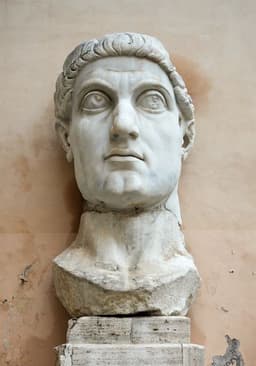
Constantine the Great
Emperor · Ancient
75.5Total
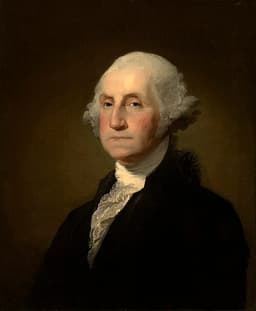
George Washington
Politician · Modern
76.8Total
Basic Information
Born
272
1732
Died
337
1799
Era
Ancient
Modern
Nationality
Roman Empire
United States
Occupation
Emperor
Politician
Civilization
Western
Western
Score Comparison
Military (10%)
78.0
75.0
Political (20%)
82.0
82.0
Influence (20%)
75.0
75.0
Legacy (20%)
70.0
80.0
Leadership (15%)
80.0
85.0
Strategy (15%)
72.0
55.0
TOTAL
75.5
76.8
Constantine the Great — Complete Timeline
312 AD
Battle of the Milvian BridgeWar◆ Major
Constantine defeated his rival Maxentius at the Milvian Bridge near Rome. According to tradition, Constantine saw a vision of a cross in the sky with the words 'In this sign, conquer.' The victory made Constantine the sole ruler of the Western Roman Empire and led to his conversion to Christianity.
Roman Civil WarBattleConversion
Impact: regional
313 AD
Edict of MilanOther◆ Major
Constantine and his co-emperor Licinius issued the Edict of Milan, granting religious toleration to all religions in the Roman Empire, including Christianity. The edict ended the persecution of Christians, restored confiscated church property, and established Christianity as a legally recognized religion.
Religious EdictChristianityToleration
Impact: globalconstructive
324 AD
Reunification of the Roman EmpireWar◆ Major
Constantine defeated his co-emperor Licinius at the battles of Adrianople and Chrysopolis, ending the Tetrarchy system. He became the sole ruler of the entire Roman Empire, reuniting the Western and Eastern halves under his control. This reunification was the last time the Roman Empire was united under a single ruler.
Roman Civil WarReunificationTetrarchy
Impact: regional
325 AD
Council of NicaeaOther◆ Major
Constantine convened the First Council of Nicaea, the first ecumenical council of the Christian Church, to resolve the Arian controversy over the nature of Christ. The council produced the Nicene Creed, affirming the divinity of Christ and establishing a unified Christian doctrine. Constantine presided over the council.
Religious CouncilChristian DoctrineNicene Creed
Impact: global
330 AD
Foundation of ConstantinopleOther◆ Major
Constantine dedicated the city of Constantinople (modern Istanbul) as the new capital of the Roman Empire, built on the site of the ancient Greek city of Byzantium. The city was strategically located on the Bosporus strait, controlling trade routes between Europe and Asia. It became the capital of the Eastern Roman Empire for over a thousand years.
City FoundationCapitalByzantine Empire
Impact: globalconstructive
George Washington — Complete Timeline
1775 AD
Appointed Commander-in-Chief of the Continental ArmyOther◆ Major
The Second Continental Congress appointed Washington as commander-in-chief of the Continental Army on June 15, 1775. He accepted the position without pay, taking command of the forces besieging Boston at the start of the American Revolutionary War.
American RevolutionMilitary Leadership
Impact: national
1776 AD
Crossed the Delaware RiverOther◆ Major
On the night of December 25-26, 1776, Washington led 2,400 troops across the ice-choked Delaware River. The surprise attack on Hessian forces at Trenton resulted in a decisive American victory, capturing nearly 1,000 prisoners and reviving Patriot morale after a series of defeats.
American RevolutionBattleTurning Point
Impact: nationalconstructive
1787 AD
Presided over the Constitutional ConventionPolitical Action◆ Major
Washington served as president of the Constitutional Convention in Philadelphia from May to September 1787. His presence lent legitimacy to the proceedings, and he formally signed the final draft of the U.S. Constitution, though he contributed little to the debates.
ConstitutionFounding Father
Impact: national
1789 AD
Inaugurated as First President of the United StatesPolitical Action◆ Major
Washington was unanimously elected by the Electoral College and inaugurated on April 30, 1789, at Federal Hall in New York City. He established numerous executive branch precedents, including the cabinet system, the inaugural address, and the title 'Mr. President'.
PresidencyFounding Father
Impact: national
1793 AD
Issued the Proclamation of NeutralityOther◆ Major
Washington issued the Proclamation of Neutrality on April 22, 1793, declaring the United States neutral in the conflict between France and Great Britain. This decision established the precedent of American isolationism and avoided entanglement in European wars.
Foreign PolicyNeutrality
Impact: national
1796 AD
Delivered the Farewell AddressOther◆ Major
Washington published his Farewell Address on September 19, 1796, announcing his decision not to seek a third term. The address warned against political factionalism, permanent foreign alliances, and the influence of the military in government, shaping American political culture.
PresidencyLegacy
Impact: national
Expert Analysis
Origins
George Washington was born into a Virginia planter family in 1732, a product of the British colonial gentry. His early career as a surveyor and officer in the French and Indian War gave him practical military experience but also exposed him to the limitations of British imperial rule. Constantine the Great, born in 272 in Naissus (modern Serbia), was the son of a Roman emperor and a humble innkeeper's daughter. He rose through the ranks of the Roman military, steeped in the tetrarchy system and the cult of Hercules. Both men emerged from provincial backgrounds, but Washington's world was shaped by Enlightenment ideals and colonial resentment, while Constantine's was defined by Roman imperial crisis and pagan pluralism.
Rise to Power
Washington's rise was gradual and consensual. Appointed Commander-in-Chief of the Continental Army in 1775, he led an underfunded, ragtag force against the world's mightiest empire. His daring crossing of the Delaware River in 1776 and the subsequent victory at Trenton revived the revolutionary cause. He skillfully navigated political intrigue, including the Conway Cabal, and maintained army loyalty through years of hardship. Constantine's rise was violent and strategic. He was acclaimed emperor by his troops in 306, then fought a series of civil wars. The pivotal Battle of the Milvian Bridge in 312, where he claimed a vision of the cross, secured his control over the West. He defeated Licinius in 324 to reunify the Roman Empire. Washington's path was one of perseverance and democratic legitimacy; Constantine's was one of ambition and military conquest.
Leadership & Governance
Washington's leadership was defined by restraint and institution-building. As president, he established precedents like the cabinet system and the two-term limit, and issued the Proclamation of Neutrality to avoid foreign entanglements. He presided over the Constitutional Convention, creating a framework for federal governance. His style emphasized consensus and delegation. Constantine, in contrast, was an autocrat who centralized power. He founded Constantinople as a new imperial capital, reorganized the empire into civil and military dioceses, and issued the Edict of Milan in 313 to legalize Christianity. He also convened the Council of Nicaea in 325 to unify Christian doctrine. While Washington built democratic institutions, Constantine reshaped the empire through top-down reforms and religious transformation.
Triumph & Tragedy
Washington's greatest triumph was the victory at Yorktown in 1781, forcing British surrender and securing American independence. His tragedy was the inability to fully reconcile the nation's founding principles with slavery, which he personally grappled with but failed to resolve. Constantine's triumphs include the Milvian Bridge victory and the unification of the empire. His tragedy was the execution of his wife Fausta and son Crispus in 326, a family tragedy that stained his later years. Both men achieved monumental successes but faced personal and moral contradictions.
Character & Destiny
Washington was reserved, disciplined, and self-consciously virtuous. He embodied the republican ideal of disinterested service, famously resigning his commission to Congress in 1783. His destiny was to be the "Father of His Country," a symbol of American unity. Constantine was ambitious, pragmatic, and visionary. He believed himself chosen by God, as his vision at the Milvian Bridge suggested. His destiny was to transform the Roman world into a Christian empire. Washington's character reflected Enlightenment rationality; Constantine's embraced religious zeal.
Legacy
Washington's legacy is the United States itself. He is revered as the indispensable man who established the presidency and the rule of law. His Farewell Address warned against factionalism and foreign alliances, shaping American foreign policy for centuries. Constantine's legacy is the Christianization of the Roman Empire and the foundation of Constantinople, which became the heart of the Byzantine Empire. He is a saint in the Orthodox Church but also criticized for his authoritarian rule and the Donatist controversy. Numerically, Washington scores higher overall (77 vs 76), particularly in Legacy (85 vs 80) and Leadership (80 vs 70), reflecting his role in creating a lasting democratic republic. Constantine excels in Military (78 vs 75) and Political (82 each) scores, due to his conquests and administrative reforms. The score gap of 1.3 favors Washington, but both men reshaped history.
Conclusion
George Washington and Constantine the Great were transformative leaders in different eras. Washington's genius was in building a nation based on consent, while Constantine's was in using imperial power to forge a new religious identity. Washington's legacy of democratic governance offers a model of peaceful transition; Constantine's legacy of Christian empire shaped the medieval world. The score gap of 1.3 suggests Washington's influence is slightly more aligned with modern values of democracy and human rights, but Constantine's impact on religion and culture was equally profound. Ultimately, Washington's creation of a self-governing republic may have a more enduring global relevance, but Constantine's foundation of a Christian civilization transformed the West.
Rankings
🥇
George WashingtonLeader
Mil: 75.0Pol: 82.0Inf: 75.0
76.8
🥈
Constantine the Great
Mil: 78.0Pol: 82.0Inf: 75.0
75.5
+1.3 behind
How This Comparison Works
Algorithm
Each figure is scored on 6 dimensions (0—100 scale) based on structured historical data: Military (10%), Political (20%), Influence (20%), Legacy (20%), Leadership (15%), Strategy (15%). The weighted total produces the final ranking.
Data Sources
Scores are computed from structured sub-indicators in the database. Scale factors adjust for era (Ancient ×0.85, Modern ×1.0) and civilization size (Eastern ×1.05, Other ×0.80) to account for differences in population and military scale.
Maximum 3 Figures
Comparisons are limited to 2—3 figures to ensure readability and statistical meaningfulness.
Error Margins
±5 points per dimension — Sub-scores are derived from historical records with inherent uncertainty. Two figures within 5 points on a dimension should be considered roughly equivalent in that area.
Total Score Accuracy
±3 points overall — The weighted combination of 6 dimensions produces a total score with approximately ±3 points of uncertainty. Differences of less than 3 points are not statistically significant— the figures are effectively tied.
Known Limitations
- Historical records are incomplete and uneven across civilizations
- Figures from oral-tradition societies may be underrepresented
- Occupation labels can misclassify multi-role figures
- Scores measure capability and impact, not moral character
- Quantitative scoring is a comparison tool, not absolute truth
Capability Radar
Military (10%) — Battles & Warfare
Battles
85
75
Win Rate
80
70
Expansion
85
60
Political (20%) — Governance & Reform
Reform
95
90
Diplomacy
90
85
Economy
80
65
Influence (20%) — Cultural & Global Reach
Cultural
95
85
Global
95
85
Legacy (20%) — Historical Impact
Historical
95
95
Longevity
95
90
Leadership (15%) — Power & Stability
Tenure
85
70
Stability
70
85
Strategy (15%) — Tactics & Innovation
Strategy
85
80
Tactics
75
65
Reform
90
85
Similar Comparisons
Comments & Discussion
No comments yet. Be the first to share your thoughts!