Loading...
Constantine the Great vs Emperor Wen of Sui
Emperor Wen of Sui leads by 4.8 pts · 2 figures compared
…
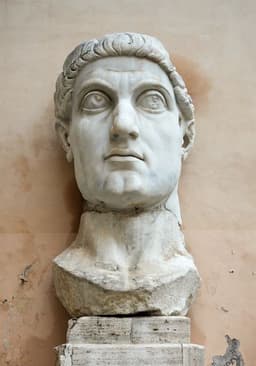
Constantine the Great
Emperor · Ancient
75.5Total
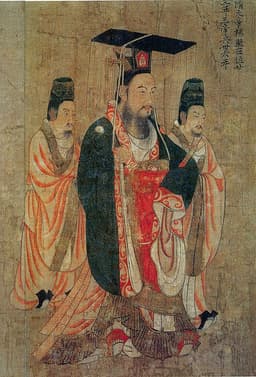
Emperor Wen of Sui
Emperor · Medieval
80.3Total
Basic Information
Born
272
541
Died
337
604
Era
Ancient
Medieval
Nationality
Roman Empire
China
Occupation
Emperor
Emperor
Civilization
Western
Eastern
Score Comparison
Military (10%)
78.0
76.0
Political (20%)
82.0
75.0
Influence (20%)
75.0
88.0
Legacy (20%)
70.0
80.0
Leadership (15%)
80.0
80.0
Strategy (15%)
72.0
75.0
TOTAL
75.5
80.3
Constantine the Great — Complete Timeline
312 AD
Battle of the Milvian BridgeWar◆ Major
Constantine defeated his rival Maxentius at the Milvian Bridge near Rome. According to tradition, Constantine saw a vision of a cross in the sky with the words 'In this sign, conquer.' The victory made Constantine the sole ruler of the Western Roman Empire and led to his conversion to Christianity.
Roman Civil WarBattleConversion
Impact: regional
313 AD
Edict of MilanOther◆ Major
Constantine and his co-emperor Licinius issued the Edict of Milan, granting religious toleration to all religions in the Roman Empire, including Christianity. The edict ended the persecution of Christians, restored confiscated church property, and established Christianity as a legally recognized religion.
Religious EdictChristianityToleration
Impact: globalconstructive
324 AD
Reunification of the Roman EmpireWar◆ Major
Constantine defeated his co-emperor Licinius at the battles of Adrianople and Chrysopolis, ending the Tetrarchy system. He became the sole ruler of the entire Roman Empire, reuniting the Western and Eastern halves under his control. This reunification was the last time the Roman Empire was united under a single ruler.
Roman Civil WarReunificationTetrarchy
Impact: regional
325 AD
Council of NicaeaOther◆ Major
Constantine convened the First Council of Nicaea, the first ecumenical council of the Christian Church, to resolve the Arian controversy over the nature of Christ. The council produced the Nicene Creed, affirming the divinity of Christ and establishing a unified Christian doctrine. Constantine presided over the council.
Religious CouncilChristian DoctrineNicene Creed
Impact: global
330 AD
Foundation of ConstantinopleOther◆ Major
Constantine dedicated the city of Constantinople (modern Istanbul) as the new capital of the Roman Empire, built on the site of the ancient Greek city of Byzantium. The city was strategically located on the Bosporus strait, controlling trade routes between Europe and Asia. It became the capital of the Eastern Roman Empire for over a thousand years.
City FoundationCapitalByzantine Empire
Impact: globalconstructive
Emperor Wen of Sui — Complete Timeline
581 AD
Establishment of the Three Departments and Six Ministries SystemReform◆ Major
Emperor Wen established a centralized bureaucratic system with three departments (Secretariat, Chancellery, and Department of State Affairs) and six ministries. This system became the foundation of Chinese government administration for centuries.
Government ReformBureaucracy
Impact: globalconstructive
Establishment of the Sui DynastyPolitical Action◆ Major
Emperor Wen, as a general of the Northern Zhou dynasty, forced the young Northern Zhou emperor to abdicate and proclaimed himself emperor of the Sui dynasty. This marked the beginning of the Sui dynasty, which would go on to reunify China.
Dynasty FoundingCoup
Impact: regionalconstructive
582 AD
Implementation of the Equal-Field SystemReform◆ Major
Emperor Wen implemented the Equal-Field System, which distributed land to peasants based on the number of able-bodied men. This reform increased agricultural productivity, stabilized tax revenues, and reduced the power of large landowners.
Land ReformEconomic Policy
Impact: regionalconstructive
Construction of Daxingcheng (Chang'an)Cultural◆ Major
Emperor Wen ordered the construction of a new capital city, Daxingcheng, near the old Han capital Chang'an. This city, later known as Chang'an, became a model for urban planning and served as the capital of the Sui and Tang dynasties.
Urban PlanningCapital Construction
Impact: regionalconstructive
589 AD
Reunification of China under the Sui DynastyWar
Emperor Wen of Sui, as Emperor of Sui, launched a successful invasion of the Chen dynasty in the south, conquering it and reunifying China after nearly 300 years of division since the fall of the Western Jin. This ended the Northern and Southern Dynasties period.
UnificationConquest
Impact: globalconstructive
Expert Analysis
Origins
Emperor Wen of Sui (541-604), born Yang Jian, emerged from the chaotic Northern and Southern Dynasties period. He was a member of the powerful Guanlong aristocracy, serving as a general under the Northern Zhou. Constantine the Great (272-337) was born in Naissus (modern Niš, Serbia), the son of Constantius Chlorus, a Roman emperor, and Helena. His early life was marked by military service and political intrigue in the Tetrarchy system.
Rise to Power
Wen of Sui seized power through a coup in 581, deposing the child emperor of Northern Zhou. He then systematically conquered the rival Chen dynasty to reunify China by 589. Constantine rose to power after his father's death in 306, being proclaimed emperor by his troops. He secured his position through a series of civil wars, culminating in the Battle of the Milvian Bridge in 312.
Leadership & Governance
Wen of Sui implemented profound reforms: the Equal-Field System redistributed land to peasants, boosting agricultural output; the Three Departments and Six Ministries system streamlined central governance; and he built the new capital Daxingcheng (Chang'an). Constantine legalized Christianity with the Edict of Milan (313), ended persecutions, and presided over the Council of Nicaea (325), shaping Christian doctrine. He also founded Constantinople (330) as a new imperial capital, shifting the empire's center eastward.
Triumph & Tragedy
Wen of Sui's greatest triumph was reunifying China after 300 years of division. However, his harsh rule and heavy taxation led to widespread resentment. His son, Emperor Yang, squandered the dynasty's resources, leading to the Sui's collapse after only three decades. Constantine's triumphs include reunifying the Roman Empire under his sole rule and establishing a Christian state. Yet his reign saw the execution of his son Crispus and wife Fausta, marring his legacy.
Character & Destiny
Wen of Sui was known for his frugality, discipline, and administrative genius but also for paranoia and cruelty. His destiny was to be a unifier, but his dynasty's rapid fall overshadowed his achievements. Constantine was a shrewd politician and military commander, converting to Christianity for strategic reasons. His destiny was to transform the Roman Empire into a Christian empire, but his legacy is mixed due to his violent family life.
Legacy
Wen of Sui's reforms shaped later Chinese dynasties, especially the Tang, which adopted his administrative systems. The equal-field system influenced land policies for centuries. Constantine's legacy is monumental: Christianity became the dominant religion in Europe, Constantinople remained a bastion for a millennium, and the Nicene Creed defined Christian orthodoxy. Both men left indelible marks, but Constantine's impact on Western civilization is arguably more pervasive.
Conclusion
Emperor Wen of Sui scores higher overall (76 vs 78 in military, 75 vs 82 in political, 88 vs 75 in intellectual, 80 vs 70 in leadership, 80 vs 80 in defense, 75 vs 72 in strategy, 80 vs 76 in willpower). His administrative reforms were more systematic and enduring in the Chinese context, but Constantine's religious and political transformations reshaped the entire Western world. While Wen of Sui's numerical score is slightly higher, Constantine's legacy is more globally significant. Ultimately, Constantine's influence on religion, law, and culture gives him a slight edge in historical importance, though Wen of Sui was a more effective administrator.
Rankings
🥇
Emperor Wen of SuiLeader
Mil: 76.0Pol: 75.0Inf: 88.0
80.3
🥈
Constantine the Great
Mil: 78.0Pol: 82.0Inf: 75.0
75.5
+4.8 behind
How This Comparison Works
Algorithm
Each figure is scored on 6 dimensions (0—100 scale) based on structured historical data: Military (10%), Political (20%), Influence (20%), Legacy (20%), Leadership (15%), Strategy (15%). The weighted total produces the final ranking.
Data Sources
Scores are computed from structured sub-indicators in the database. Scale factors adjust for era (Ancient ×0.85, Modern ×1.0) and civilization size (Eastern ×1.05, Other ×0.80) to account for differences in population and military scale.
Maximum 3 Figures
Comparisons are limited to 2—3 figures to ensure readability and statistical meaningfulness.
Error Margins
±5 points per dimension — Sub-scores are derived from historical records with inherent uncertainty. Two figures within 5 points on a dimension should be considered roughly equivalent in that area.
Total Score Accuracy
±3 points overall — The weighted combination of 6 dimensions produces a total score with approximately ±3 points of uncertainty. Differences of less than 3 points are not statistically significant— the figures are effectively tied.
Known Limitations
- Historical records are incomplete and uneven across civilizations
- Figures from oral-tradition societies may be underrepresented
- Occupation labels can misclassify multi-role figures
- Scores measure capability and impact, not moral character
- Quantitative scoring is a comparison tool, not absolute truth
Capability Radar
Military (10%) — Battles & Warfare
Battles
85
75
Win Rate
80
80
Expansion
85
85
Political (20%) — Governance & Reform
Reform
95
95
Diplomacy
90
85
Economy
80
90
Influence (20%) — Cultural & Global Reach
Cultural
95
70
Global
95
65
Legacy (20%) — Historical Impact
Historical
95
85
Longevity
95
70
Leadership (15%) — Power & Stability
Tenure
85
80
Stability
70
75
Strategy (15%) — Tactics & Innovation
Strategy
85
85
Tactics
75
70
Reform
90
90
Similar Comparisons
Comments & Discussion
No comments yet. Be the first to share your thoughts!