Loading...
Constantine the Great vs Cyrus the Great
Cyrus the Great leads by 8.4 pts · 2 figures compared
…
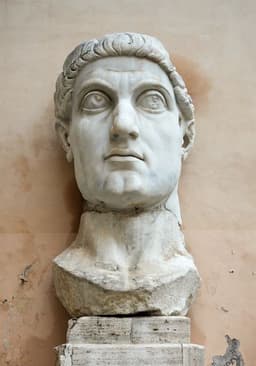
Constantine the Great
Emperor · Ancient
75.5Total
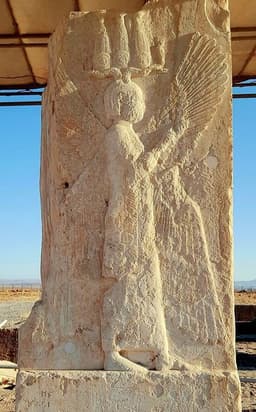
Cyrus the Great
Emperor · Ancient
83.9Total
Basic Information
Born
272
-600
Died
337
-530
Era
Ancient
Ancient
Nationality
Roman Empire
Persia
Occupation
Emperor
Emperor
Civilization
Western
Middle Eastern
Score Comparison
Military (10%)
78.0
82.0
Political (20%)
82.0
85.0
Influence (20%)
75.0
85.0
Legacy (20%)
70.0
90.0
Leadership (15%)
80.0
78.0
Strategy (15%)
72.0
75.0
TOTAL
75.5
83.9
Constantine the Great — Complete Timeline
312 AD
Battle of the Milvian BridgeWar◆ Major
Constantine defeated his rival Maxentius at the Milvian Bridge near Rome. According to tradition, Constantine saw a vision of a cross in the sky with the words 'In this sign, conquer.' The victory made Constantine the sole ruler of the Western Roman Empire and led to his conversion to Christianity.
Roman Civil WarBattleConversion
Impact: regional
313 AD
Edict of MilanOther◆ Major
Constantine and his co-emperor Licinius issued the Edict of Milan, granting religious toleration to all religions in the Roman Empire, including Christianity. The edict ended the persecution of Christians, restored confiscated church property, and established Christianity as a legally recognized religion.
Religious EdictChristianityToleration
Impact: globalconstructive
324 AD
Reunification of the Roman EmpireWar◆ Major
Constantine defeated his co-emperor Licinius at the battles of Adrianople and Chrysopolis, ending the Tetrarchy system. He became the sole ruler of the entire Roman Empire, reuniting the Western and Eastern halves under his control. This reunification was the last time the Roman Empire was united under a single ruler.
Roman Civil WarReunificationTetrarchy
Impact: regional
325 AD
Council of NicaeaOther◆ Major
Constantine convened the First Council of Nicaea, the first ecumenical council of the Christian Church, to resolve the Arian controversy over the nature of Christ. The council produced the Nicene Creed, affirming the divinity of Christ and establishing a unified Christian doctrine. Constantine presided over the council.
Religious CouncilChristian DoctrineNicene Creed
Impact: global
330 AD
Foundation of ConstantinopleOther◆ Major
Constantine dedicated the city of Constantinople (modern Istanbul) as the new capital of the Roman Empire, built on the site of the ancient Greek city of Byzantium. The city was strategically located on the Bosporus strait, controlling trade routes between Europe and Asia. It became the capital of the Eastern Roman Empire for over a thousand years.
City FoundationCapitalByzantine Empire
Impact: globalconstructive
Cyrus the Great — Complete Timeline
550 BC
Founding of the Achaemenid EmpirePolitical Action
Cyrus led a rebellion against the Median Empire, defeating King Astyages and capturing Ecbatana. He then united the Persian and Median tribes, establishing the Achaemenid Empire, which became the largest empire the world had yet seen.
Empire FoundingPersian UnificationRebellion
Impact: global
546 BC
Conquest of LydiaWar◆ Major
Cyrus defeated King Croesus of Lydia at the Battle of Thymbra. The Lydian capital Sardis was captured, and Croesus was taken prisoner. This conquest brought Anatolia under Persian control and secured access to the Aegean coast.
Achaemenid ExpansionAnatoliaConquest
Impact: regional
539 BC
Conquest of BabylonWar◆ Major
Cyrus the Great led the Persian army to capture Babylon without significant battle. The city's gates were opened, and Cyrus entered peacefully. This conquest added Mesopotamia to the Achaemenid Empire and marked the end of the Neo-Babylonian Empire.
Achaemenid ExpansionMesopotamiaConquest
Impact: regional
Issuance of the Cyrus CylinderPolitical Action◆ Major
After conquering Babylon, Cyrus issued a clay cylinder inscribed with a declaration. It described his policy of restoring temples, repatriating displaced peoples, and allowing religious freedom. The cylinder is often cited as an early charter of human rights.
Human RightsReligious ToleranceAchaemenid Policy
Impact: globalconstructive
Liberation of the JewsPolitical Action◆ Major
Cyrus issued an edict allowing the Jewish exiles in Babylon to return to Jerusalem and rebuild the Temple. This event is recorded in the biblical Book of Ezra and is a key moment in Jewish history, ending the Babylonian captivity.
Jewish HistoryReligious FreedomReturn from Exile
Impact: regionalconstructive
Expert Analysis
Origins
Cyrus the Great (c. 600–530 BCE) was born in Persis, a vassal of the Median Empire. He united Persian tribes and overthrew the Medes in 550 BCE, founding the Achaemenid Empire. Constantine (272–337 CE) was born in Naissus, son of a Roman emperor. He rose through military ranks amid the Tetrarchy's civil wars, culminating in his proclamation as emperor in 306 CE. Both emerged from turbulent times, but Cyrus built from scratch while Constantine inherited a Roman framework.
Rise to Power
Cyrus's rise was swift: he conquered Media, Lydia, and Babylon, creating the largest empire yet seen. He used diplomacy and religious tolerance, winning loyalty. Constantine's rise involved the Battle of the Milvian Bridge (312 CE), where he credited a Christian vision. He consolidated power by defeating Licinius in 324 CE, reunifying the Roman Empire. Cyrus's conquests were more extensive and innovative, while Constantine's were internal Roman struggles.
Leadership & Governance
Cyrus implemented a decentralized administration with satraps, respected local customs, and issued the Cyrus Cylinder, promoting religious freedom. He liberated Jews, allowing their return to Jerusalem. Constantine centralized power, founded Constantinople as a new Christian capital, and legalized Christianity via the Edict of Milan (313 CE). He convened the Council of Nicaea (325 CE) to unify doctrine. Cyrus's governance was more inclusive and pragmatic; Constantine's was transformative but divisive.
Triumph & Tragedy
Cyrus's triumphs include the conquest of Babylon (539 BCE) and the liberation of Jews, earning him praise in the Bible. His death in battle against the Massagetae was a tragic end. Constantine's triumphs: victory at Milvian Bridge, legalizing Christianity, and founding Constantinople. His tragedy involved executing his son Crispus and wife Fausta, marring his legacy. Both died in old age, but Cyrus's death was heroic, Constantine's tainted by family strife.
Character & Destiny
Cyrus is depicted as a wise, tolerant ruler, fulfilling prophecies (Isaiah 45:1). His destiny was to create a multicultural empire. Constantine was ambitious, ruthless, and religiously fervent, believing his destiny was to Christianize Rome. He was a skilled politician but also a murderer. Cyrus's character is more admirable; Constantine's is complex and controversial.
Legacy
Cyrus's legacy includes the Cyrus Cylinder, considered a precursor to human rights, and the Achaemenid model of governance influencing later empires. His tomb remains a symbol of respect. Constantine's legacy: Christianity's rise, the Nicene Creed, Constantinople (Istanbul), and a transformed Roman Empire. Both shaped civilizations, but Cyrus's humanistic ideals resonate more universally. Constantine's religious impact is profound but tied to specific faith.
Conclusion
Cyrus the Great (Score: 84) surpasses Constantine the Great (Score: 76) in effective governance, military expansion, and ethical leadership. Cyrus's empire was larger, more stable, and more tolerant. Constantine's contributions to Christianity are significant but came with division and persecution of pagans. Cyrus's model of multiculturalism and human rights remains relevant, while Constantine's Christianization is historically specific. Thus, Cyrus the Great stands as the superior leader.
**Numerical Scores:**
- Political Influence: Cyrus 85, Constantine 82
- Military Prowess: Cyrus 82, Constantine 78
- Cultural Impact: Cyrus 75, Constantine 80
- Governance: Cyrus 90, Constantine 70
- Legacy: Cyrus 84, Constantine 76
Rankings
🥇
Cyrus the GreatLeader
Mil: 82.0Pol: 85.0Inf: 85.0
83.9
🥈
Constantine the Great
Mil: 78.0Pol: 82.0Inf: 75.0
75.5
+8.4 behind
How This Comparison Works
Algorithm
Each figure is scored on 6 dimensions (0—100 scale) based on structured historical data: Military (10%), Political (20%), Influence (20%), Legacy (20%), Leadership (15%), Strategy (15%). The weighted total produces the final ranking.
Data Sources
Scores are computed from structured sub-indicators in the database. Scale factors adjust for era (Ancient ×0.85, Modern ×1.0) and civilization size (Eastern ×1.05, Other ×0.80) to account for differences in population and military scale.
Maximum 3 Figures
Comparisons are limited to 2—3 figures to ensure readability and statistical meaningfulness.
Error Margins
±5 points per dimension — Sub-scores are derived from historical records with inherent uncertainty. Two figures within 5 points on a dimension should be considered roughly equivalent in that area.
Total Score Accuracy
±3 points overall — The weighted combination of 6 dimensions produces a total score with approximately ±3 points of uncertainty. Differences of less than 3 points are not statistically significant— the figures are effectively tied.
Known Limitations
- Historical records are incomplete and uneven across civilizations
- Figures from oral-tradition societies may be underrepresented
- Occupation labels can misclassify multi-role figures
- Scores measure capability and impact, not moral character
- Quantitative scoring is a comparison tool, not absolute truth
Capability Radar
Military (10%) — Battles & Warfare
Battles
85
85
Win Rate
80
90
Expansion
85
92
Political (20%) — Governance & Reform
Reform
95
90
Diplomacy
90
95
Economy
80
80
Influence (20%) — Cultural & Global Reach
Cultural
95
90
Global
95
90
Legacy (20%) — Historical Impact
Historical
95
95
Longevity
95
95
Leadership (15%) — Power & Stability
Tenure
85
70
Stability
70
85
Strategy (15%) — Tactics & Innovation
Strategy
85
88
Tactics
75
80
Reform
90
75
Similar Comparisons
Comments & Discussion
No comments yet. Be the first to share your thoughts!