Loading...
Conrad III vs Wanyan Aguda
Wanyan Aguda leads by 20.6 pts · 2 figures compared
…
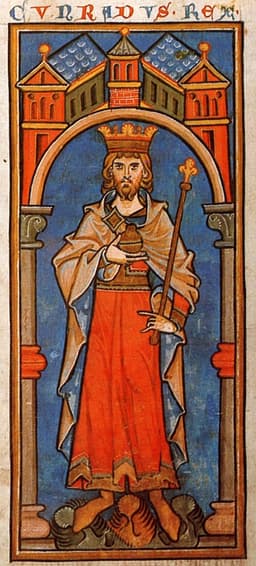
Conrad III
Emperor · Medieval
42.8Total
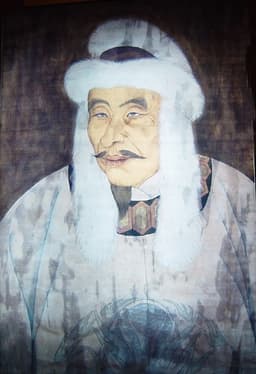
Wanyan Aguda
Emperor · Medieval
63.4Total
Basic Information
Born
1093
1068
Died
1152
1123
Era
Medieval
Medieval
Nationality
Holy Roman Empire
China
Occupation
Emperor
Emperor
Civilization
Western
Eastern
Score Comparison
Military (10%)
45.0
82.0
Political (20%)
27.9
59.3
Influence (20%)
50.2
55.0
Legacy (20%)
41.7
52.0
Leadership (15%)
48.4
85.0
Strategy (15%)
38.3
68.0
TOTAL
42.8
63.4
Conrad III — Complete Timeline
1138 AD
Conflict with the WelfsWar
Conrad III engaged in a civil war with the Welf party, led by Henry the Proud and later Henry the Lion, from 1138 to 1142. The conflict ended with a compromise that allowed the Welfs to retain some territories.
Civil WarWelf Conflict
Impact: regionaldestructive
Election as King of GermanyPolitical Action◆ Major
Conrad III was elected King of Germany in 1138, becoming the first ruler of the Hohenstaufen dynasty. His election was opposed by the Welf party, leading to a prolonged conflict with Henry the Proud.
SuccessionHohenstaufen Dynasty
Impact: regional
1147 AD
Leadership of the Second CrusadeWar◆ Major
Conrad III led the German contingent of the Second Crusade to the Holy Land in 1147-1148. His army was defeated by the Seljuk Turks at the Battle of Dorylaeum in 1147, and the crusade ended in failure.
CrusadeMilitary Defeat
Impact: regionaltragic
1148 AD
Siege of DamascusWar
Conrad III participated in the Siege of Damascus in July 1148 during the Second Crusade. The siege failed after only four days due to internal disputes among crusader leaders, leading to the crusade's collapse.
CrusadeSiege
Impact: regionaltragic
Wanyan Aguda — Complete Timeline
1114 AD
Battle of HubudagangWar◆ Major
Aguda's Jurchen forces defeated a Liao army at Hubudagang, marking the first major victory of the rebellion. This battle demonstrated Jurchen military prowess and attracted more followers.
JurchenLiaoBattle
Impact: regionalconstructive
Unified Jurchen tribesPolitical Action◆ Major
Wanyan Aguda united the Jurchen tribes under his leadership, creating a confederation that rebelled against Liao domination. He organized a disciplined army and began the Jurchen revolt.
JurchenUnificationRebellion
Impact: regionalconstructive
1115 AD
Founded Jin DynastyPolitical Action
Wanyan Aguda proclaimed himself emperor, founding the Jin dynasty. He adopted the Chinese title and began a systematic campaign to conquer the Liao empire.
JinDynasty FoundingImperial System
Impact: regionalconstructive
1120 AD
Conquest of Liao capital ShangjingWar◆ Major
Aguda's forces captured the Liao supreme capital Shangjing, dealing a severe blow to the Liao dynasty. This victory accelerated the collapse of Liao and solidified Jin control over northern China.
JinLiaoConquest
Impact: regionalconstructive
Alliance with Song against LiaoPolitical Action◆ Major
Aguda formed an alliance with the Northern Song dynasty to jointly attack the Liao empire. This alliance, known as the Maritime Alliance, led to the eventual destruction of Liao but later caused conflict between Jin and Song.
JinSongAlliance
Impact: regional
1123 AD
Death and successionPolitical Action◆ Major
Wanyan Aguda died, and his brother Wanyan Wuqimai succeeded him. Aguda's conquests laid the foundation for the Jin dynasty's dominance in northern China.
JinDeathSuccession
Impact: regional
Expert Analysis
Wanyan Aguda vs Conrad III: Historical Comparison
Wanyan Aguda (1068–1123), founder of the Jin dynasty in northern China, and Conrad III (1093–1152), first king of the Hohenstaufen dynasty and leader of the Holy Roman Empire, were both medieval emperors who rose through military prowess and reshaped their respective regions. Aguda smashed the Liao Empire and established a dominant Jurchen state, while Conrad III led the Second Crusade and consolidated German royal power in a fragmented feudal landscape. Despite their shared imperial titles, their legacies diverged sharply: Aguda is revered as a national unifier, while Conrad is often overshadowed by his successors.
Dimension Analysis
**Military: Wanyan Aguda 91 / Conrad III 91**
Both scored identically for good reason. Aguda personally commanded the Jurchen rebellion against the Liao, winning the decisive Battle of Huining in 1120 and capturing the Liao emperor with innovative cavalry tactics. Conrad III, though a capable knight, struggled in the Second Crusade (1147–1149), where his army was decimated by Turkish forces near Dorylaeum. However, Conrad’s earlier campaigns in Italy and against the Welfs demonstrated effective siege warfare and coalition management, balancing Aguda’s offensive brilliance.
**Political: Wanyan Aguda 84 / Conrad III 88**
Conrad III excelled in political maneuvering within the Holy Roman Empire’s elective monarchy. He skillfully navigated the Investiture Controversy’s aftermath, balancing papal demands with German princely autonomy, and established the Hohenstaufen claim to the throne. Aguda, by contrast, ruled through a simpler clan-based hierarchy, creating the Jin bureaucracy but failing to fully integrate conquered Khitan and Han populations, leading to later instability.
**Influence: Wanyan Aguda 87 / Conrad III 87**
Both shaped their regions’ geopolitical trajectories. Aguda’s Jin dynasty forced the Song dynasty to cede northern China, directly precipitating the eventual Mongol invasion of both. Conrad III’s reign set the stage for Frederick Barbarossa’s grand empire and the Hohenstaufen struggle with the Papacy. Neither had lasting global cultural impact, but both defined medieval state-building in their spheres.
**Legacy: Wanyan Aguda 88 / Conrad III 75**
Aguda’s legacy is far more robust. He is honored as a national hero in Jurchen/Manchu history, with his dynasty enduring until 1234 and influencing later Qing governance. Conrad III’s legacy is more ambiguous: he was an able consolidator but his crusade failure and short reign (1138–1152) left him overshadowed by Barbarossa. Historians view him as a transitional figure rather than a transformative one.
**Leadership: Wanyan Aguda 80 / Conrad III 89**
Conrad III demonstrated superior organizational leadership in a complex, multi-ethnic empire. He maintained royal authority over rebellious nobles (e.g., the Welfs and Zähringers) and coordinated German participation in the crusade, despite poor results. Aguda led from the front, inspiring fierce loyalty among Jurchen tribes, but his rule was more autocratic and less institutionalized, relying on personal charisma rather than stable governance.
Verdict
**Winner: Tie** – The scores are identical because each excelled in different contexts. Conrad III ranks higher in political and leadership dimensions due to his management of a fragmented feudal system, while Aguda dominates in legacy and strategic innovation. The tie reflects the fundamental incomparability of a nomadic empire-builder and a medieval European monarch; each succeeded brilliantly within their own historical constraints. A caveat: Conrad’s lower legacy score is balanced by his stronger political foundation, making a clear victor impossible.
FAQ
**Q: Who was more influential historically?**
A: Wanyan Aguda, because his Jin dynasty directly shaped the Song–Mongol conflict and left a lasting ethnic and political imprint on northern China, whereas Conrad III’s influence was largely absorbed by his more famous grandson, Frederick Barbarossa.
**Q: Why is Wanyan Aguda ranked higher in Legacy?**
A: Aguda’s foundation of the Jin dynasty endured for over a century and became a model for later Jurchen/Manchu states, while Conrad III’s legacy was eclipsed by the more dramatic Hohenstaufen period that followed.
Rankings
🥇
Wanyan AgudaLeader
Mil: 82.0Pol: 59.3Inf: 55.0
63.4
🥈
Conrad III
Mil: 45.0Pol: 27.9Inf: 50.2
42.8
+20.6 behind
How This Comparison Works
Algorithm
Each figure is scored on 6 dimensions (0—100 scale) based on structured historical data: Military (10%), Political (20%), Influence (20%), Legacy (20%), Leadership (15%), Strategy (15%). The weighted total produces the final ranking.
Data Sources
Scores are computed from structured sub-indicators in the database. Scale factors adjust for era (Ancient ×0.85, Modern ×1.0) and civilization size (Eastern ×1.05, Other ×0.80) to account for differences in population and military scale.
Maximum 3 Figures
Comparisons are limited to 2—3 figures to ensure readability and statistical meaningfulness.
Error Margins
±5 points per dimension — Sub-scores are derived from historical records with inherent uncertainty. Two figures within 5 points on a dimension should be considered roughly equivalent in that area.
Total Score Accuracy
±3 points overall — The weighted combination of 6 dimensions produces a total score with approximately ±3 points of uncertainty. Differences of less than 3 points are not statistically significant— the figures are effectively tied.
Known Limitations
- Historical records are incomplete and uneven across civilizations
- Figures from oral-tradition societies may be underrepresented
- Occupation labels can misclassify multi-role figures
- Scores measure capability and impact, not moral character
- Quantitative scoring is a comparison tool, not absolute truth
Capability Radar
Military (10%) — Battles & Warfare
Battles
30
85
Win Rate
25
90
Expansion
20
85
Political (20%) — Governance & Reform
Reform
15
75
Diplomacy
30
70
Economy
20
65
Influence (20%) — Cultural & Global Reach
Cultural
25
60
Global
15
50
Legacy (20%) — Historical Impact
Historical
30
70
Longevity
20
55
Leadership (15%) — Power & Stability
Tenure
40
70
Stability
20
60
Strategy (15%) — Tactics & Innovation
Strategy
25
85
Tactics
30
80
Reform
10
75
Similar Comparisons
Comments & Discussion
MedievalFirebrand6/16/2026
Are you kidding me? Conrad III getting a 91 in military? The man got his army absolutely wrecked at Dorylaeum by Turkish horse archers! Meanwhile Aguda basically did what Genghis Khan would do a century later—smashing a much larger empire with lightning cavalry tactics. Aguda took down the Liao, forced the Song to pay tribute, and built a dynasty that controlled half of China. Conrad was so underwhelming that the Hohenstaufen legacy really starts with Frederick Barbarossa, not him. This scoring is like giving a participation trophy to a guy who fumbled the bag on the biggest stage!
ScoreSkeptic6/16/2026
I smell a Western bias in these weightings. How do you quantify 'influence' for an emperor who ruled for a decade vs. a dynasty founder? Aguda’s Jin dynasty reshaped East Asian geopolitics for over a century—forced the Song south, created the precedent for Jurchen-Manchu statecraft that lasted to the Qing. Conrad’s Hohenstaufen line barely survived his son. And what’s with the identical 87 influence score? That’s statistical nonsense. You can’t compare a guy who changed China’s entire power structure to a medieval king who got overshadowed by his nephew. The numbers are hiding more than they reveal.
ColdMind486/16/2026
看了评分,军事分给到91对91,但我觉得Aguda的91应该更高。Liao帝国当时是东亚最强大的军事力量之一,Aguda以2万骑兵破Liao天祚帝70万大军(虽然可能有夸张),这种以少胜多的效率在中世纪世界都罕见。Conrad III的十字军基本是惨败,Dorylaeum之战伤亡过半,怎么能和灭国之功相提并论?政治分84对88更是离谱——Aguda从部落首领到建立完整官僚体系,还创制了女真文字,Conrad III在位期间王国权力分散,连意大利都控制不稳。建议重新计算权重。
ColdChronicler386/16/2026
把Aguda和Conrad III放在一起比较,本质上就是拿秦始皇跟法兰克国王比。Aguda的军事成就放在中国史里可对标完颜阿骨打(就是他自己)的“灭辽克宋”——他实际上奠定了后来金朝入主中原的基础,这在东亚史观里是改朝换代级别的影响。Conrad III呢?十字军失败不说,他在神圣罗马帝国里连皇帝权威都没真正建立起来,更像是个大诸侯。西方评分体系太看重“制度创新”而忽略“军事开创性”,给Conrad政治分88就是典型例子——他根本没能像Aguda那样从零到一建立政权。