Loading...
Colocolo vs Firuz Shah Tughlaq
Firuz Shah Tughlaq leads by 5.2 pts · 2 figures compared
…

Colocolo
Emperor · Medieval
50.1Total
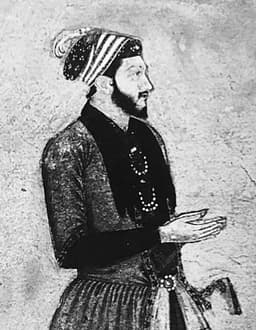
Firuz Shah Tughlaq
Emperor · Medieval
55.3Total
Basic Information
Born
1490
1309
Died
1555
1388
Era
Medieval
Medieval
Nationality
Mapuche
India
Occupation
Emperor
Emperor
Civilization
Other
Indian
Score Comparison
Military (10%)
50.0
45.0
Political (20%)
46.6
72.0
Influence (20%)
53.3
56.4
Legacy (20%)
45.8
47.5
Leadership (15%)
61.1
68.0
Strategy (15%)
41.7
38.6
TOTAL
50.1
55.3
Colocolo — Complete Timeline
1550 AD
Advocated for Unified Mapuche ResistancePolitical Action◆ Major
Colocolo, as an elder leader, called for the Mapuche tribes to unite under a single war leader to resist Spanish incursions. His speech at a council of chiefs helped establish the toqui system, leading to the election of Lautaro as the first toqui.
Arauco WarLeadershipUnification
Impact: regionalconstructive
1553 AD
Battle of TucapelWar
Colocolo participated in the Battle of Tucapel, where Mapuche forces under Lautaro defeated and killed Spanish governor Pedro de Valdivia. This victory was a turning point in the Arauco War, demonstrating Mapuche military capability.
Arauco WarBattleVictory
Impact: regional
Elected Toqui of the MapuchePolitical Action◆ Major
After Lautaro's death, Colocolo was elected toqui to lead the Mapuche resistance. He organized military campaigns against the Spanish, continuing the war effort and maintaining the unity he had advocated for.
Arauco WarLeadershipIndigenous Resistance
Impact: regional
Firuz Shah Tughlaq — Complete Timeline
1354 AD
Construction of the Firuz Shah KotlaCultural◆ Major
Firuz Shah Tughlaq founded the city of Firuzabad and built the Firuz Shah Kotla fortress in Delhi. The complex included a palace, a mosque, and a pillar of Ashoka brought from Topra. It became a major administrative center.
Fort BuildingUrban PlanningArchitecture
constructive
1355 AD
Establishment of the Diwan-i-KhairatReform
Firuz Shah Tughlaq established the Diwan-i-Khairat, a department for charity and welfare. It provided financial assistance to the poor, widows, and orphans. This institutionalized state-sponsored social welfare in the Delhi Sultanate.
WelfareSocial ReformAdministration
Impact: nationalconstructive
1360 AD
Construction of Canals and Irrigation SystemsReform◆ Major
Firuz Shah Tughlaq oversaw the construction of five major canals from the Yamuna and Sutlej rivers to irrigate fields in the Delhi region. These canals improved agricultural productivity and reduced famine risk. They were a key public works achievement.
IrrigationAgriculturePublic Works
Impact: regionalconstructive
1365 AD
Imposition of Jizya on BrahminsPolitical Action◆ Major
Firuz Shah Tughlaq imposed the jizya tax on Brahmins, who had previously been exempt. This policy was based on his interpretation of Islamic law and caused resentment among Hindus. It marked a departure from earlier, more tolerant policies.
TaxationReligious PolicyHindu-Muslim Relations
Impact: nationaldestructive
Expert Analysis
Origins
Colocolo was a Mapuche elder born around 1490 in what is now Chile. Little is known of his early life, but he emerged as a respected leader among the Mapuche people, who inhabited the fertile valleys south of the Bio-Bio River. The Mapuche were a decentralized, agricultural society with a strong warrior tradition, and Colocolo's authority came from his wisdom and oratory skills rather than hereditary rule.
Firuz Shah Tughlaq was born in 1309 in Delhi, India, into the Tughlaq dynasty. His father was Rajab Khan, a cousin of Sultan Ghiyasuddin Tughlaq. Firuz received a thorough education in Islamic theology, law, and administration, which shaped his later policies. He was known for his piety and adherence to orthodox Sunni Islam.
Rise to Power
Colocolo rose to prominence during the early phase of the Arauco War (1536–1555), the Mapuche uprising against Spanish conquest. In a famous council in 1550, he delivered a speech urging the fractious Mapuche tribes to unite under a single war leader to repel the Spanish. This event, known as the "Parliament of Colocolo," was a turning point, leading to the election of Lautaro as toqui (war leader). After Lautaro's death in 1557, Colocolo himself was elected toqui, at an advanced age, to lead the resistance. He organized campaigns that kept the Spanish confined to fortified towns.
Firuz Shah Tughlaq ascended to the throne in 1351 after the death of his cousin Muhammad bin Tughlaq. The nobility chose him over other claimants due to his reputation for generosity and piety. Unlike his predecessor, who had pursued ambitious expansionist policies, Firuz focused on consolidation and public works. His rise was smooth, aided by the support of the ulema (religious scholars) and the military elite.
Leadership & Governance
Colocolo's leadership was based on persuasion and consensus. As an elder, he lacked the military genius of younger toquis like Lautaro or Caupolican, but his political skill was crucial in maintaining unity among the Mapuche. He scored 46.6 in political skill compared to Firuz's 72.0. Colocolo's governance was decentralized, relying on alliances with local loncos (chiefs). He implemented no major administrative reforms but focused on military coordination.
Firuz Shah Tughlaq was a paternalistic ruler who prioritized welfare and infrastructure. He built the city of Firuzabad (now part of Delhi) with the Firuz Shah Kotla fortress, a palace, and a mosque. His most significant achievement was the construction of five major canals from the Yamuna and Sutlej rivers, irrigating vast tracts of land in the Delhi region. He also established the Diwan-i-Khairat, a department for charity that provided financial aid to the poor, widows, and orphans. However, his religious policies were divisive: he imposed jizya on Brahmins, who had previously been exempt, and persecuted non-Muslims, destroying temples and converting them to mosques. His leadership score of 68.0 reflects his administrative competence but also his rigid orthodoxy.
Triumph & Tragedy
Colocolo's greatest triumph was his role in uniting the Mapuche, which enabled them to resist Spanish conquest for decades. The Battle of Tucapel in 1553, where Mapuche forces killed Governor Pedro de Valdivia, was a direct result of the unified resistance he advocated. However, his tragedy was that he died before seeing the ultimate outcome of the war. The Mapuche eventually lost their independence in the 19th century, but Colocolo's legacy as a unifier endured. His military score of 50.0 is modest, as he was more a political leader than a battlefield commander.
Firuz Shah Tughlaq's triumphs were mainly in public works and administration. His canals boosted agricultural productivity, and his charitable institutions provided a safety net. However, his military campaigns were less successful; he scored 45.0 in military, reflecting his inability to suppress rebellions in Bengal and Gujarat. Domestically, his imposition of jizya on Brahmins alienated a key segment of society and contributed to the decline of the Delhi Sultanate after his death. His strategy score of 38.6 indicates a lack of foresight in economic and political matters.
Character & Destiny
Colocolo is remembered as a wise, patient leader who put the survival of his people above personal ambition. His speech at the council is a symbol of Mapuche unity. His destiny was to be a transitional figure, bridging the early resistance and the later, more militant phase. He died around 1558, possibly in battle or of old age.
Firuz Shah Tughlaq was a devout, conservative ruler who believed in strict adherence to Islamic law. His character combined benevolence towards Muslims with intolerance towards non-Muslims. His destiny was to oversee a period of peace and construction, but his policies sowed seeds of discord that weakened the sultanate. He died in 1388 at the age of 79, leaving a succession crisis.
Legacy
Colocolo's legacy is as a symbol of Mapuche resistance and unity. He is commemorated in Chilean literature and history, and his name is used for a type of wild cat. However, his direct impact on governance was limited; the Mapuche remained decentralized. His influence score of 53.3 reflects his cultural significance but lack of structural change.
Firuz Shah Tughlaq's legacy is more tangible: the Firuz Shah Kotla fortress still stands in Delhi, and some of his canals remained in use for centuries. His Diwan-i-Khairat set a precedent for state welfare. However, his religious policies are criticized for exacerbating communal tensions. His legacy score of 47.5 is moderate, as his achievements were overshadowed by the decline that followed.
Conclusion
While Colocolo's leadership was crucial for the Mapuche resistance, Firuz Shah Tughlaq's impact on governance, infrastructure, and administration was broader and more lasting. Firuz's score of 55.3 against Colocolo's 50.1 reflects this difference. Colocolo's influence was limited to a specific region and time, whereas Firuz's policies shaped the Delhi Sultanate's trajectory and left physical monuments. Therefore, Firuz Shah Tughlaq had greater overall impact, despite his flaws.
Rankings
🥇
Firuz Shah TughlaqLeader
Mil: 45.0Pol: 72.0Inf: 56.4
55.3
🥈
Colocolo
Mil: 50.0Pol: 46.6Inf: 53.3
50.1
+5.2 behind
How This Comparison Works
Algorithm
Each figure is scored on 6 dimensions (0—100 scale) based on structured historical data: Military (10%), Political (20%), Influence (20%), Legacy (20%), Leadership (15%), Strategy (15%). The weighted total produces the final ranking.
Data Sources
Scores are computed from structured sub-indicators in the database. Scale factors adjust for era (Ancient ×0.85, Modern ×1.0) and civilization size (Eastern ×1.05, Other ×0.80) to account for differences in population and military scale.
Maximum 3 Figures
Comparisons are limited to 2—3 figures to ensure readability and statistical meaningfulness.
Error Margins
±5 points per dimension — Sub-scores are derived from historical records with inherent uncertainty. Two figures within 5 points on a dimension should be considered roughly equivalent in that area.
Total Score Accuracy
±3 points overall — The weighted combination of 6 dimensions produces a total score with approximately ±3 points of uncertainty. Differences of less than 3 points are not statistically significant— the figures are effectively tied.
Known Limitations
- Historical records are incomplete and uneven across civilizations
- Figures from oral-tradition societies may be underrepresented
- Occupation labels can misclassify multi-role figures
- Scores measure capability and impact, not moral character
- Quantitative scoring is a comparison tool, not absolute truth
Capability Radar
Military (10%) — Battles & Warfare
Battles
20
30
Win Rate
25
35
Expansion
15
10
Political (20%) — Governance & Reform
Reform
30
75
Diplomacy
40
60
Economy
15
65
Influence (20%) — Cultural & Global Reach
Cultural
40
50
Global
20
30
Legacy (20%) — Historical Impact
Historical
45
45
Longevity
40
40
Leadership (15%) — Power & Stability
Tenure
20
70
Stability
25
55
Strategy (15%) — Tactics & Innovation
Strategy
35
20
Tactics
30
25
Reform
25
15
Similar Comparisons
Comments & Discussion
No comments yet. Be the first to share your thoughts!