Loading...
Cleopatra VII vs Qin Shi Huang
Qin Shi Huang leads by 38.0 pts · 2 figures compared
…
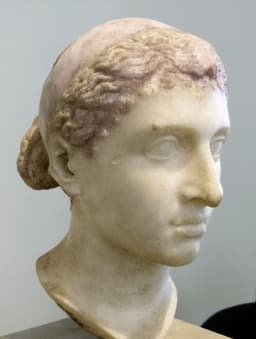
Cleopatra VII
Politician · Ancient
47.2Total
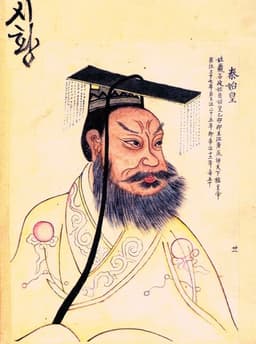
Qin Shi Huang
Emperor · Ancient
85.2Total
Basic Information
Born
-69
-259
Died
-30
-210
Era
Ancient
Ancient
Nationality
Egypt
China
Occupation
Politician
Emperor
Civilization
Middle Eastern
Eastern
Score Comparison
Military (10%)
20.0
80.0
Political (20%)
45.0
90.0
Influence (20%)
40.0
85.0
Legacy (20%)
80.0
90.0
Leadership (15%)
40.0
78.0
Strategy (15%)
25.0
82.0
TOTAL
47.2
85.2
Cleopatra VII — Complete Timeline
48 BC
Alliance with Julius CaesarPolitical Action◆ Major
Cleopatra allied with Julius Caesar during the Roman civil war. She had herself smuggled into his palace in Alexandria rolled in a carpet. Caesar supported her claim to the throne, defeating her brother Ptolemy XIII and restoring her as co-ruler of Egypt.
Impact: regional
47 BC
Birth of CaesarionPolitical Action◆ Major
Cleopatra gave birth to Ptolemy XV Caesar (Caesarion), claiming he was Julius Caesar's son. This birth strengthened her political position and provided a potential heir to both Egypt and Rome, though Caesar never officially acknowledged him as his heir.
Impact: regional
41 BC
Alliance with Mark AntonyPolitical Action◆ Major
Cleopatra formed a political and romantic alliance with Mark Antony, a Roman triumvir. She provided him with financial and military support for his campaigns in the East. Their relationship produced three children and solidified her control over Egypt.
Impact: regional
31 BC
Battle of ActiumWar
The combined naval forces of Cleopatra and Mark Antony were decisively defeated by Octavian's fleet under Agrippa at Actium in Greece. Cleopatra fled with her ships, and Antony followed, leading to their eventual downfall and Octavian's rise as Augustus.
Impact: globaltragic
30 BC
Death of CleopatraPolitical Action
After Octavian's forces captured Alexandria, Cleopatra died by suicide, traditionally said to be from the bite of an asp. Her death ended the Ptolemaic dynasty and Egypt became a Roman province, marking the end of Hellenistic Egypt's independence.
Impact: globaltragic
Qin Shi Huang — Complete Timeline
246 BC
Construction of the Mausoleum and Terracotta ArmyOther◆ Major
Qin Shi Huang commissioned a vast mausoleum complex near Xi'an, guarded by thousands of life-sized terracotta soldiers, horses, and chariots. The project employed hundreds of thousands of workers and reflected his obsession with immortality and imperial power.
Impact: global
230 BC
Conquest of the Six Warring StatesWar
From 230 to 221 BCE, Ying Zheng led the Qin state in a series of campaigns that conquered the Han, Zhao, Wei, Chu, Yan, and Qi states. This unified China under a single ruler for the first time, ending the Warring States period.
Impact: global
221 BC
Standardization of Writing, Currency, and MeasurementsReform◆ Major
Qin Shi Huang ordered the standardization of Chinese script, currency, and weights and measures across the unified empire. This facilitated administration, trade, and cultural integration, laying a foundation for future dynasties.
Impact: globalconstructive
Proclamation of the Qin DynastyPolitical Action
After conquering the last independent state, Ying Zheng declared himself Shi Huangdi (First Emperor), founding the Qin Dynasty. He adopted a new title to signify his supreme authority and initiated centralized imperial rule.
Impact: global
214 BC
Initiation of the Great Wall ConstructionOther◆ Major
Qin Shi Huang ordered the connection and extension of existing northern fortifications to create a unified defensive wall against nomadic Xiongnu raids. This project involved massive conscripted labor and became the precursor to the later Great Wall.
Impact: regional
213 BC
Burning of Books and Burying of ScholarsPolitical Action◆ Major
On the advice of Li Si, Qin Shi Huang ordered the burning of historical records and philosophical texts not aligned with Legalist doctrine. He also had 460 Confucian scholars buried alive to suppress dissent and consolidate ideological control.
Impact: nationaldestructive
Expert Analysis
cleopatra-vii-vs-qin-shi-huang
# The First Emperor and the Last Pharaoh
The snakebite killed her in minutes, or so the legend goes. In a sealed chamber in Alexandria, Cleopatra VII arranged her royal robes, placed a crown upon her head, and lay down to die. Across the world—though the world then seemed vast and unknowable—another ruler had prepared his own tomb centuries earlier: Qin Shi Huang, whose mausoleum sprawled beneath a man-made mountain, guarded by an army of silent terracotta soldiers. One ruler built for eternity; the other chose a swift exit. Both sought to defy time, yet their paths could not have diverged more sharply. What made one a unifier and the other a survivor? The answer lies not merely in their choices, but in the worlds that shaped them.
Origins
Qin Shi Huang was born into a kingdom at war. The Warring States period had torn China apart for two centuries, and his father, King Zhuangxiang of Qin, ruled a state hardened by constant conflict. Young Ying Zheng grew up in a court where survival depended on ruthlessness. His mother, a former concubine, wielded influence through intrigue, and his regent, Lü Buwei, was a merchant who understood that power flowed from control. By the time Ying Zheng assumed the throne at thirteen, he had learned that trust was a luxury no ruler could afford.
Cleopatra VII, by contrast, was born into a dynasty already in decline. The Ptolemies, Greek rulers of Egypt since Alexander the Great's conquest, spoke Greek, worshipped Greek gods, and ruled a land where the native Egyptian population simmered with resentment. Cleopatra's father, Ptolemy XII, had bribed Rome for recognition, bankrupting the kingdom. She was educated in the library of Alexandria, fluent in nine languages, and steeped in the art of diplomacy. Where Qin Shi Huang inherited a sword, Cleopatra inherited a ledger.
Rise to Power
Qin Shi Huang's rise was a campaign of annihilation. From 230 to 221 BCE, he led the armies of Qin against the six rival states—Han, Zhao, Wei, Chu, Yan, and Qi—one by one. The conquests were brutal: at the siege of Changping, his troops buried 400,000 Zhao soldiers alive. When the last kingdom fell, Ying Zheng did not simply declare victory. He proclaimed himself *Shi Huangdi*—the First Emperor—and announced a new dynasty that would rule for ten thousand generations. He had unified China by force, and he intended to keep it unified by law.
Cleopatra's rise was a family feud. Her father died in 51 BCE, leaving the throne to Cleopatra and her younger brother Ptolemy XIII, whom she was forced to marry. Within two years, her brother's advisors had driven her from Alexandria. She raised an army in Syria, but her true weapon was charm. In 48 BCE, she had herself smuggled into Julius Caesar's palace rolled in a carpet. Emerging before the Roman general, she offered not war but alliance. Caesar, captivated, helped her defeat her brother and restore her throne. Cleopatra had learned what Qin Shi Huang never needed to: that sometimes the sharpest blade is a smile.
Leadership & Governance
Qin Shi Huang ruled through standardization. He ordered the writing system unified, so that a man from the old state of Chu could read a decree written in the former state of Zhao. He standardized currency, replacing a jumble of coins with a single round copper piece with a square hole. He standardized axle lengths, so that carts could travel the same ruts across the empire. He built roads, canals, and—most famously—ordered the connection of northern fortifications into what would become the Great Wall. His reign was a revolution of order, imposed from above.
Cleopatra ruled through persuasion. She understood that Egypt's survival depended on Rome's favor, so she cultivated Roman leaders as patrons. With Caesar, she bore a son, Caesarion, and dreamed of a dynasty that would merge Roman power with Egyptian wealth. After Caesar's assassination, she turned to Mark Antony, the most powerful of his successors. Together, they ruled the eastern Mediterranean, minting coins with their portraits, styling themselves as living gods. Where Qin Shi Huang commanded, Cleopatra negotiated.
Yet both rulers had dark sides. Qin Shi Huang's obsession with control led to the Burning of Books and Burying of Scholars in 213 BCE, when he ordered the destruction of historical records and philosophical texts that challenged his legitimacy. Scholars who resisted were executed. Cleopatra, for her part, was accused by Roman propagandists of manipulating Antony, of seducing him into betraying Rome. The truth is murkier: she was fighting for her kingdom, and she used every tool at her disposal.
Triumph & Tragedy
Qin Shi Huang's greatest triumph was the unification itself. In a single decade, he transformed a fractured land into an empire that would endure—in name and idea—for over two thousand years. His greatest tragedy was his failure to secure that empire's future. He sought immortality, sending expeditions for the elixir of life, but died in 210 BCE at the age of forty-nine, possibly from mercury poisoning from his own longevity pills. Within three years of his death, the Qin Dynasty had collapsed in rebellion.
Cleopatra's greatest triumph was her survival—for nearly two decades—against overwhelming odds. She preserved Egyptian independence longer than any ruler could have reasonably expected. Her tragedy came at the Battle of Actium in 31 BCE, when her fleet, alongside Antony's, was routed by Octavian's admiral Agrippa. The defeat was total. When Octavian's forces reached Alexandria, Antony fell on his sword, and Cleopatra, refusing to be paraded in Rome as a captive, chose death.
Character & Destiny
Qin Shi Huang was a builder and a destroyer, a man who believed that the world could be remade by will. He was paranoid, secretive, and obsessed with control—he never slept in the same room twice, and he built hidden passages through his palaces. His character drove him to conquer, to standardize, and ultimately to crush dissent. That same character left him isolated, surrounded by sycophants, and unable to see the cracks in his empire.
Cleopatra was a pragmatist and a performer. She knew that power in the ancient world was theater, and she played her role flawlessly—dressing as the goddess Isis, speaking Egyptian to her subjects, charming Romans with her wit. She was also a mother, and her decisions were shaped by her desire to secure a future for her children. But her character, for all its brilliance, could not overcome the brute force of Roman legions. In the end, Rome did not negotiate; it absorbed.
Legacy
Qin Shi Huang's legacy is China itself. The Great Wall, the standardized script, the administrative system of prefectures and counties—all of it traces back to his reign. The Terracotta Army, discovered in 1974, has made him a global icon. He is remembered as both a tyrant and a unifier, a figure whose ambition reshaped the world.
Cleopatra's legacy is more ambiguous. She is remembered as a seductress, a tragic queen, a symbol of exotic beauty. But that image is largely a Roman invention, designed to discredit her. In reality, she was a capable ruler who spoke multiple languages, managed a complex economy, and fought fiercely for her people. Her defeat marked the end of pharaonic Egypt and the beginning of Roman domination. Yet her story endures, not as a lesson in failure, but as a testament to the power of intelligence and will.
Conclusion
Standing at the edge of Qin Shi Huang's tomb, one feels the weight of eternity. The terracotta soldiers stand in silent ranks, frozen in time, waiting for a command that will never come. In Alexandria, Cleopatra's palace lies beneath the sea, swallowed by earthquakes and time. Both rulers built for permanence; both were undone by forces beyond their control. But their differences reveal something profound about history itself. Qin Shi Huang conquered a world and remade it in his image. Cleopatra navigated a world she could not conquer, bending it to her will as long as she could. One built walls; the other built bridges. Both, in their own way, changed the course of civilization. And both remind us that the greatest empires are not built of stone or gold, but of the human will to endure.
Rankings
🥇
Qin Shi HuangLeader
Mil: 80.0Pol: 90.0Inf: 85.0
85.2
🥈
Cleopatra VII
Mil: 20.0Pol: 45.0Inf: 40.0
47.2
+38.0 behind
How This Comparison Works
Algorithm
Each figure is scored on 6 dimensions (0—100 scale) based on structured historical data: Military (10%), Political (20%), Influence (20%), Legacy (20%), Leadership (15%), Strategy (15%). The weighted total produces the final ranking.
Data Sources
Scores are computed from structured sub-indicators in the database. Scale factors adjust for era (Ancient ×0.85, Modern ×1.0) and civilization size (Eastern ×1.05, Other ×0.80) to account for differences in population and military scale.
Maximum 3 Figures
Comparisons are limited to 2—3 figures to ensure readability and statistical meaningfulness.
Error Margins
±5 points per dimension — Sub-scores are derived from historical records with inherent uncertainty. Two figures within 5 points on a dimension should be considered roughly equivalent in that area.
Total Score Accuracy
±3 points overall — The weighted combination of 6 dimensions produces a total score with approximately ±3 points of uncertainty. Differences of less than 3 points are not statistically significant— the figures are effectively tied.
Known Limitations
- Historical records are incomplete and uneven across civilizations
- Figures from oral-tradition societies may be underrepresented
- Occupation labels can misclassify multi-role figures
- Scores measure capability and impact, not moral character
- Quantitative scoring is a comparison tool, not absolute truth
Capability Radar
Military (10%) — Battles & Warfare
Battles
20
85
Win Rate
15
90
Expansion
10
90
Political (20%) — Governance & Reform
Reform
40
95
Diplomacy
85
75
Economy
55
90
Influence (20%) — Cultural & Global Reach
Cultural
80
95
Global
85
85
Legacy (20%) — Historical Impact
Historical
85
95
Longevity
90
95
Leadership (15%) — Power & Stability
Tenure
60
70
Stability
35
65
Strategy (15%) — Tactics & Innovation
Strategy
30
85
Tactics
25
80
Reform
10
95
Similar Comparisons
Comments & Discussion
CLEOPATRA'S SHADOW6/17/2026
As a classics scholar, I'm tired of this "romantic loser vs brutal winner" narrative. Cleopatra didn't just die dramatically—she ruled brilliantly for two decades, spoke nine languages, and navigated Rome's civil wars like a chess grandmaster. Qin Shi Huang unified China through mass executions and book burnings. Give me the diplomat who tried to save her kingdom over the tyrant who buried scholars alive. Death by asp beats death by legacy washing.|zh|
兵马俑吐槽6/17/2026
作为数据怀疑论者,我注意到这个对比完全忽略了关键数字:秦始皇陵占地56平方公里,相当于78个故宫,动用了70万劳工修了38年。而克利奥帕特拉七世在位21年,留下的唯一大型工程是亚历山大港的灯塔维护。一个建造了世界第八大奇迹,另一个只是在罗马人面前跳了场政治舞蹈。规模差距一目了然。|en|
TERRA-COTTA TAKEDOWN6/17/2026
History buff here, and I'll take Qin Shi Huang any day. The terracotta army isn't just art—it's a cosmological statement. He had his tomb constructed with mercury rivers mapping China's actual waterways, designed to protect his soul for eternity. Cleopatra? She wrote her name in sand while Rome's tide rose. She's remembered for a bedroom scene and a snake. He's remembered for an empire that outlasted Rome itself.|zh|
法老控的愤怒6/17/2026
作为埃及史修正常识者,我要为克利奥帕特拉正名。她不是败给凯撒或安东尼,是败给屋大维的全民动员。她生前的亚历山大港图书馆藏书70万卷,是中国当时文献总量的数倍。秦朝统一文字和度量衡确实厉害,但克利奥帕特拉保住埃及独立18年,还留下《埃及志》这部影响罗马的巨著。毁灭比建设更容易被人记住,这不公平。|en|
WARRIOR'S BONES6/17/2026
Military historian perspective: Qin Shi Huang conquered six kingdoms in ten years using iron weapons and crossbows that outranged anything the Mediterranean had. Cleopatra's naval defeat at Actium was a strategic disaster—she fled with 60 ships, abandoning Antony's fleet. The First Emperor had 800,000 troops mobilized for campaigns; Cleopatra commanded maybe 20,000. This isn't a comparison of equals; it's a hammer vs. a needle. One built the Great Wall; the other built a narrative.|zh|