Loading...
Claudius Gothicus vs Psamtik I
Psamtik I leads by 12.7 pts · 2 figures compared
…
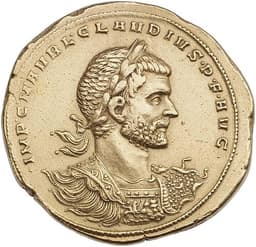
Claudius Gothicus
Emperor · Ancient
46.1Total

Psamtik I
Emperor · Ancient
58.8Total
Basic Information
Born
214
-664
Died
270
-610
Era
Ancient
Ancient
Nationality
Roman Empire
Egypt
Occupation
Emperor
Emperor
Civilization
Western
Middle Eastern
Score Comparison
Military (10%)
70.0
45.0
Political (20%)
27.9
59.3
Influence (20%)
47.1
60.0
Legacy (20%)
41.7
52.0
Leadership (15%)
45.0
72.0
Strategy (15%)
60.0
66.3
TOTAL
46.1
58.8
Claudius Gothicus — Complete Timeline
269 AD
Battle of NaissusWar
Claudius commanded the Roman army against a massive Gothic invasion at Naissus (modern Ni
Gothic WarBattleMilitary Victory
Impact: regional
270 AD
Expulsion of the Goths from the BalkansWar◆ Major
Following the Battle of Naissus, Claudius pursued the remaining Gothic forces across the Balkans. He cleared them from Thrace and Moesia, and forced them to retreat across the Danube. This campaign ended the Gothic threat to the empire for a generation.
Gothic WarBalkansDanube Frontier
Impact: regionalconstructive
Death from PlagueOther◆ Major
Claudius died of the Antonine Plague (likely smallpox) at Sirmium after a short reign of less than two years. His death was a significant loss for the empire, as he had shown promise as a capable military leader and reformer.
DeathPlagueShort Reign
Impact: nationaltragic
Psamtik I — Complete Timeline
658 BC
Expulsion of Assyrian garrisonsWar◆ Major
Psamtik I expelled Assyrian military garrisons from Egypt, taking advantage of the weakening Assyrian Empire. He used Greek and Carian mercenaries to strengthen his army. This action ended Assyrian control over Egypt and established the Saite dynasty as the ruling power.
AssyriaIndependenceMercenaries
Impact: regional
656 BC
Reunification of Egypt under the Saite dynastyPolitical Action◆ Major
Psamtik I unified Egypt after the Assyrian withdrawal, ending the Third Intermediate Period. He established the 26th Saite dynasty and consolidated control over the Nile Delta and Upper Egypt. This reunification restored Egyptian independence and stability after centuries of foreign domination.
UnificationSaite DynastyIndependence
Impact: globalconstructive
640 BC
Promotion of trade and cultural revivalCultural◆ Major
Psamtik I encouraged trade with Greece and the Levant, and promoted a revival of traditional Egyptian art and religion. He sponsored the construction of temples and the restoration of ancient monuments. This period, known as the Saite Renaissance, saw a resurgence of Egyptian culture.
RenaissanceTradeCulture
Impact: regionalconstructive
Expert Analysis
Origins
Claudius Gothicus, born in 214 AD in Illyria (modern Balkans), came from humble origins. Little is known of his early life, but he rose through the Roman military ranks under emperors Gallienus and Valerian. His background was typical of the 3rd-century soldier-emperors: tough, pragmatic, and loyal to the army.
Psamtik I, born around 664 BC, was a prince of the 26th Saite dynasty. His father Necho I ruled as a vassal of the Assyrian Empire. Psamtik was raised in the shadow of Assyrian domination, but also educated in traditional Egyptian culture. He inherited a fragmented Egypt split among local dynasts.
Rise to Power
Claudius rose to prominence as a cavalry commander under Gallienus. In 268 AD, he was part of the conspiracy that assassinated Gallienus, after which he was proclaimed emperor by the army. His reign began amid crisis: the Gothic invasion of the Balkans, the breakaway Palmyrene Empire, and the Gallic Empire in the west.
Psamtik I became ruler of Sais in 664 BC after his father's death. He initially accepted Assyrian suzerainty, but as Assyria weakened under internal strife and attacks from Babylonians and Medes, Psamtik asserted independence. He expelled Assyrian garrisons from Egypt using Greek and Carian mercenaries, and gradually reunified the country, defeating local rivals like the Delta princes.
Leadership & Governance
Claudius ruled for only 18 months (268-270 AD). His main achievement was military: the Battle of Naissus in 269 AD, where he defeated a massive Gothic coalition, killing an estimated 50,000 Goths. He then cleared the Balkans of remaining invaders. However, he had little time for civil reforms. His governance focused on stabilizing the empire's borders and securing loyalty from the army. He scored 45.0 in leadership, reflecting his short tenure.
Psamtik I ruled for 54 years (664-610 BC). He centralized power, reduced the influence of local nomarchs, and promoted a cultural revival. He fostered trade with Greece, bringing Greek mercenaries and merchants into Egypt. He also sponsored construction projects, including the Serapeum at Saqqara. His political score of 59.3 reflects his skill in balancing foreign and domestic pressures. He scored 72.0 in leadership, indicating his long-term stability.
Triumph & Tragedy
Claudius's greatest triumph was the Battle of Naissus, which saved the Roman Balkans from Gothic devastation. He earned the title 'Gothicus' and was seen as a restorer of Roman military pride. His tragedy was his early death from the Antonine Plague in 270 AD, cutting short a promising reign. Had he lived, he might have reconquered the breakaway provinces. His military score of 70.0 reflects his battlefield success.
Psamtik I's greatest triumph was reunifying Egypt after centuries of division, ushering in the Saite Renaissance. He restored Egyptian autonomy and revived traditional art and religion. His tragedy was that his dynasty was short-lived; his grandson Apries was overthrown, and Egypt fell to Persia in 525 BC. His influence score of 60.0 and legacy score of 52.0 reflect his lasting impact on Egyptian culture.
Character & Destiny
Claudius was a decisive military leader, willing to take risks. His assassination of Gallienus shows ambition, but his reign was too brief for complex character assessments. He died of disease, not in battle, a common fate for soldier-emperors. His total score of 46.1 reflects his limited impact.
Psamtik I was a patient strategist, waiting for the right moment to break from Assyria. He used diplomacy and mercenary forces effectively. His long reign allowed him to implement a cultural revival. His total score of 58.8 is higher, reflecting his broader achievements.
Legacy
Claudius is remembered as a capable but short-lived emperor. His victory at Naissus delayed the Gothic threat but did not end it. He is often overshadowed by his successor Aurelian, who reconquered the breakaway empires. His legacy score of 41.7 reflects his minor historical footprint.
Psamtik I is remembered as the founder of the Saite dynasty and the unifier of Egypt. His cultural revival preserved Egyptian identity for later generations. He is considered one of the great pharaohs of the Late Period. His legacy score of 52.0 indicates a more enduring impact.
Conclusion
Psamtik I had greater overall impact, scoring 58.8 total versus Claudius's 46.1. While Claudius achieved a decisive military victory, his reign was too brief to effect lasting change. Psamtik I reunified a fractured nation, restored cultural traditions, and maintained stability for decades. His political and leadership scores (59.3 and 72.0) far exceed Claudius's (27.9 and 45.0). Claudius's military prowess (70.0) is notable, but it did not translate into enduring influence. Thus, Psamtik I stands as the more significant historical figure.
Rankings
🥇
Psamtik ILeader
Mil: 45.0Pol: 59.3Inf: 60.0
58.8
🥈
Claudius Gothicus
Mil: 70.0Pol: 27.9Inf: 47.1
46.1
+12.7 behind
How This Comparison Works
Algorithm
Each figure is scored on 6 dimensions (0—100 scale) based on structured historical data: Military (10%), Political (20%), Influence (20%), Legacy (20%), Leadership (15%), Strategy (15%). The weighted total produces the final ranking.
Data Sources
Scores are computed from structured sub-indicators in the database. Scale factors adjust for era (Ancient ×0.85, Modern ×1.0) and civilization size (Eastern ×1.05, Other ×0.80) to account for differences in population and military scale.
Maximum 3 Figures
Comparisons are limited to 2—3 figures to ensure readability and statistical meaningfulness.
Error Margins
±5 points per dimension — Sub-scores are derived from historical records with inherent uncertainty. Two figures within 5 points on a dimension should be considered roughly equivalent in that area.
Total Score Accuracy
±3 points overall — The weighted combination of 6 dimensions produces a total score with approximately ±3 points of uncertainty. Differences of less than 3 points are not statistically significant— the figures are effectively tied.
Known Limitations
- Historical records are incomplete and uneven across civilizations
- Figures from oral-tradition societies may be underrepresented
- Occupation labels can misclassify multi-role figures
- Scores measure capability and impact, not moral character
- Quantitative scoring is a comparison tool, not absolute truth
Capability Radar
Military (10%) — Battles & Warfare
Battles
65
45
Win Rate
70
55
Expansion
30
40
Political (20%) — Governance & Reform
Reform
20
70
Diplomacy
25
80
Economy
20
75
Influence (20%) — Cultural & Global Reach
Cultural
20
60
Global
20
40
Legacy (20%) — Historical Impact
Historical
40
65
Longevity
30
55
Leadership (15%) — Power & Stability
Tenure
30
75
Stability
25
70
Strategy (15%) — Tactics & Innovation
Strategy
55
60
Tactics
60
50
Reform
20
65
Similar Comparisons
Comments & Discussion
No comments yet. Be the first to share your thoughts!