Loading...
Claudius Gothicus vs Napoleon Bonaparte
Napoleon Bonaparte leads by 24.8 pts · 2 figures compared
…
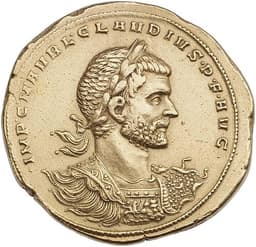
Claudius Gothicus
Emperor · Ancient
46.1Total

Napoleon Bonaparte
General · Modern
70.9Total
Basic Information
Born
214
1769
Died
270
1821
Era
Ancient
Modern
Nationality
Roman Empire
France
Occupation
Emperor
General
Civilization
Western
Western
Score Comparison
Military (10%)
70.0
94.0
Political (20%)
27.9
72.0
Influence (20%)
47.1
40.0
Legacy (20%)
41.7
80.0
Leadership (15%)
45.0
78.0
Strategy (15%)
60.0
90.0
TOTAL
46.1
70.9
Claudius Gothicus — Complete Timeline
269 AD
Battle of NaissusWar
Claudius commanded the Roman army against a massive Gothic invasion at Naissus (modern Ni
Gothic WarBattleMilitary Victory
Impact: regional
270 AD
Expulsion of the Goths from the BalkansWar◆ Major
Following the Battle of Naissus, Claudius pursued the remaining Gothic forces across the Balkans. He cleared them from Thrace and Moesia, and forced them to retreat across the Danube. This campaign ended the Gothic threat to the empire for a generation.
Gothic WarBalkansDanube Frontier
Impact: regionalconstructive
Death from PlagueOther◆ Major
Claudius died of the Antonine Plague (likely smallpox) at Sirmium after a short reign of less than two years. His death was a significant loss for the empire, as he had shown promise as a capable military leader and reformer.
DeathPlagueShort Reign
Impact: nationaltragic
Napoleon Bonaparte — Complete Timeline
1799 AD
Coup of 18 BrumaireOther◆ Major
Napoleon Bonaparte, with support from his brother Lucien and key political figures, overthrew the Directory in a bloodless coup. He established the Consulate with himself as First Consul, effectively becoming the ruler of France. This event ended the French Revolution's most unstable period.
French RevolutionCoupRise to Power
Impact: regional
1804 AD
Promulgation of the Napoleonic CodeOther◆ Major
Napoleon enacted the Civil Code of the French, known as the Napoleonic Code, a comprehensive set of laws that replaced the fragmented feudal legal systems. The code established legal equality, protected property rights, and secularized law. It became the basis for legal systems in many European and world countries.
Legal ReformNapoleonic CodeCivil Law
Impact: globalconstructive
1805 AD
Battle of AusterlitzWar◆ Major
Napoleon's Grande Arm
Napoleonic WarsBattleDecisive Victory
Impact: global
1812 AD
Invasion of RussiaWar◆ Major
Napoleon led the Grande Arm
Napoleonic WarsInvasionDisaster
Impact: globaldestructive
1815 AD
Battle of WaterlooWar◆ Major
Napoleon's French army was defeated by the combined forces of the Duke of Wellington's Anglo-Allied army and Gebhard Leberecht von Bl
Napoleonic WarsBattleFinal Defeat
Impact: globaldestructive
Expert Analysis
claudius-gothicus-vs-napoleon-bonaparte
**The Emperor and the General: When Fate Decides**
On a crisp September morning in 269 AD, a Roman commander named Claudius stood on a hill overlooking the Naissus River, watching tens of thousands of Goths surge toward his legions. He was fifty-five years old, a soldier who had clawed his way up through decades of civil war and barbarian invasion. He would win that day, and history would call him Gothicus. But within a year, he would be dead of plague, his name half-forgotten except by specialists.
Fifteen centuries later, on a June evening in 1815, another commander stood on a ridge near a Belgian village called Waterloo. Napoleon Bonaparte was forty-five, already a legend, already an emperor, already a man who had remade Europe. He watched the Prussian columns appear on his flank and knew, with the cold clarity of a gambler who has overplayed his hand, that the game was over. He would live another six years in exile, but his story had ended.
These two men, separated by 1,500 years, both commanded armies, both defeated barbarian hordes, both rose from obscurity to the pinnacle of power. Yet one became a household name, a shorthand for ambition itself, while the other is a footnote known only to students of Roman history. The difference is not in their talent. It is in the world they inhabited, and the nature of the stage on which they performed.
**Origins**
Claudius was born in 214 AD in the Roman province of Illyricum, in what is now the Balkans. He was not a patrician, not a senator’s son, but a soldier from a rough frontier region. The Roman Empire of the third century was a world in collapse—the so-called Crisis of the Third Century, when emperors rose and fell in months, when barbarians crossed the Rhine and Danube at will, when plague and inflation tore the fabric of civilization. Claudius learned war as a young centurion, fighting on the Danube frontier, watching his commanders die of disease or assassination, learning that survival depended on competence and luck.
Napoleon was born in 1769 on Corsica, a Mediterranean island that had been French for only a year. His family was minor nobility, poor but proud. He went to military school in mainland France, where his accent and poverty made him an outsider. The world he inherited was also in crisis—the French Revolution had shattered the old order, and the great powers of Europe were at war. But it was a different kind of crisis. It was a crisis of opportunity, not of survival. The Revolution had opened every door to talent. A young artillery officer from Corsica could become emperor in a decade.
The difference in their eras is stark. Claudius lived in a world where the only path to power was through the army, and where power itself was fragile, temporary, and usually fatal. Napoleon lived in a world where institutions, laws, and ideas could be reshaped by a single man of genius. One was fighting to prevent the collapse of a civilization. The other was fighting to build an empire.
**Rise to Power**
Claudius rose through the ranks of the Roman military during the worst years of the third century. He served under Emperor Gallienus, a capable but unpopular ruler, and distinguished himself in campaigns against the Alemanni and the Goths. When Gallienus was assassinated in 268, Claudius was proclaimed emperor by the army. He was not the first choice—the conspirators had considered other candidates—but he was the one who survived the selection process. His rise was not a story of brilliant ambition but of steady competence in a world where competence was rare.
Napoleon’s rise was a story of breathtaking ambition. He was a general at twenty-four, a consul at thirty, an emperor at thirty-five. He seized control of France in the coup of 18 Brumaire in 1799, not because the army chose him, but because he chose himself. He understood that the Revolution had created a vacuum of authority, and he filled it. He was not the product of a system; he was the system’s destroyer and rebuilder.
The key turning point for Claudius was the Battle of Naissus in 269. The Goths had assembled a massive invasion force, perhaps 100,000 warriors, and were ravaging the Balkans. Claudius met them near the modern city of Niš, in Serbia, and won a decisive victory. He killed tens of thousands of Goths and drove the survivors back across the Danube. For this, he received the title "Gothicus." It was a great victory, but it was a defensive one. He had saved the empire, not expanded it.
Napoleon’s key turning point was the Italian campaign of 1796–1797. He was given command of a starving, poorly equipped army and turned it into a fighting force that crushed the Austrians and their allies. He did not just defeat the enemy; he dictated peace terms, created new states, and sent millions of francs back to Paris. He was not saving France; he was creating a legend.
**Leadership & Governance**
Claudius ruled for less than two years. In that short time, he stabilized the empire’s borders, expelled the Goths from the Balkans, and began the work of rebuilding Roman military discipline. He was a conservative emperor in the best sense—he preserved what remained and prevented further collapse. He did not reform Roman law, did not build great monuments, did not change the structure of the state. He was a caretaker in a time of emergency.
Napoleon ruled for fifteen years as First Consul and Emperor. In that time, he transformed France and Europe. He created the Napoleonic Code, a legal system that influenced civil law across the continent. He reorganized education, established the Bank of France, and built roads and canals. He also conquered most of Europe, placing his brothers on thrones, redrawing borders, and spreading the ideals of the Revolution—though often at the point of a bayonet.
Their military genius tells the same story. Claudius was a competent general who won one great battle. Napoleon was one of the greatest commanders in history, winning dozens of battles from Austerlitz to Jena to Wagram. His strategic genius—the ability to concentrate forces, to maneuver rapidly, to strike at the decisive point—was unmatched. But his political wisdom was flawed. He could conquer but could not consolidate. He defeated Austria and Prussia but could not make them allies. He invaded Russia and lost half a million men.
**Triumph & Tragedy**
Claudius’s greatest moment was Naissus. It was a triumph of Roman discipline over barbarian numbers, a victory that saved the Balkans and bought the empire another generation of life. His tragedy was his death. In 270, while preparing a campaign against the Persians, he fell ill with the Antonine Plague and died at Sirmium. He had ruled for less than two years. His reign was a promise unfulfilled.
Napoleon’s greatest moment was Austerlitz in 1805, where he destroyed the combined armies of Russia and Austria in a single day. It was a masterpiece of strategy, a battle so perfect that it is still studied in military academies. His tragedy was Waterloo, a battle he should have won but lost because of a combination of bad luck, bad weather, and bad judgment. He died in exile on Saint Helena, a prisoner of the British, far from the Europe he had once dominated.
**Character & Destiny**
Claudius was a soldier-emperor of the old Roman type: disciplined, loyal, and fatalistic. He did not seek power; it was thrust upon him. He did not dream of glory; he dreamed of survival. His character was shaped by the crisis of his age, which demanded competence, not charisma.
Napoleon was a man of limitless ambition and boundless energy. He once said, "I am not a man, but a thing—a thing of destiny." He believed he was destined to rule, and he shaped his world accordingly. His character was both his strength and his weakness. His ambition drove him to conquer, but it also drove him to overreach. He could not stop. He could not consolidate. He could not accept limits.
**Legacy**
Claudius Gothicus is remembered, if at all, as one of the "Illyrian emperors" who saved the Roman Empire from collapse in the third century. His legacy is indirect: he stabilized the empire so that his successor, Aurelian, could reunite it. He is a footnote in the story of Rome’s survival.
Napoleon Bonaparte is one of the most famous men in history. His name is synonymous with military genius, political ambition, and the transformative power of a single individual. The Napoleonic Code remains the basis of law in many countries. His campaigns are studied in every military academy. He reshaped Europe, destroyed the old feudal order, and created the conditions for modern nationalism.
**Conclusion**
Standing on that ridge at Naissus, Claudius could see the Gothic horde and knew that if he lost, the empire might fall. He won, and the empire lived. Standing on the ridge at Waterloo, Napoleon saw the Prussians and knew that if he lost, his empire would fall. He lost, and the world changed.
Both men were products of their times. Claudius was a man of the third century, when survival was the highest achievement. Napoleon was a man of the nineteenth century, when transformation was possible. One saved a civilization; the other tried to create one. History remembers the creator, not the savior. But both, in their own way, shaped the world we live in. The difference is not in their greatness. It is in the nature of the stage on which they performed.
Rankings
🥇
Napoleon BonaparteLeader
Mil: 94.0Pol: 72.0Inf: 40.0
70.9
🥈
Claudius Gothicus
Mil: 70.0Pol: 27.9Inf: 47.1
46.1
+24.8 behind
How This Comparison Works
Algorithm
Each figure is scored on 6 dimensions (0—100 scale) based on structured historical data: Military (10%), Political (20%), Influence (20%), Legacy (20%), Leadership (15%), Strategy (15%). The weighted total produces the final ranking.
Data Sources
Scores are computed from structured sub-indicators in the database. Scale factors adjust for era (Ancient ×0.85, Modern ×1.0) and civilization size (Eastern ×1.05, Other ×0.80) to account for differences in population and military scale.
Maximum 3 Figures
Comparisons are limited to 2—3 figures to ensure readability and statistical meaningfulness.
Error Margins
±5 points per dimension — Sub-scores are derived from historical records with inherent uncertainty. Two figures within 5 points on a dimension should be considered roughly equivalent in that area.
Total Score Accuracy
±3 points overall — The weighted combination of 6 dimensions produces a total score with approximately ±3 points of uncertainty. Differences of less than 3 points are not statistically significant— the figures are effectively tied.
Known Limitations
- Historical records are incomplete and uneven across civilizations
- Figures from oral-tradition societies may be underrepresented
- Occupation labels can misclassify multi-role figures
- Scores measure capability and impact, not moral character
- Quantitative scoring is a comparison tool, not absolute truth
Capability Radar
Military (10%) — Battles & Warfare
Battles
65
95
Win Rate
70
90
Expansion
30
95
Political (20%) — Governance & Reform
Reform
20
95
Diplomacy
25
80
Economy
20
85
Influence (20%) — Cultural & Global Reach
Cultural
20
85
Global
20
90
Legacy (20%) — Historical Impact
Historical
40
95
Longevity
30
90
Leadership (15%) — Power & Stability
Tenure
30
85
Stability
25
70
Strategy (15%) — Tactics & Innovation
Strategy
55
95
Tactics
60
98
Reform
20
92
Similar Comparisons
Comments & Discussion
No comments yet. Be the first to share your thoughts!