Loading...
Napoleon Bonaparte vs Ptolemy X Alexander I
Napoleon Bonaparte leads by 32.2 pts · 2 figures compared
…

Napoleon Bonaparte
General · Modern
70.9Total
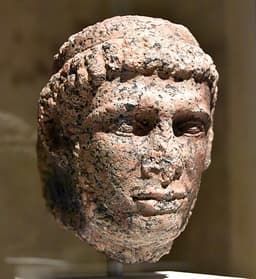
Ptolemy X Alexander I
Emperor · Ancient
38.7Total
Basic Information
Born
1769
-140
Died
1821
-88
Era
Modern
Ancient
Nationality
France
Ptolemaic Kingdom
Occupation
General
Emperor
Civilization
Western
Middle Eastern
Score Comparison
Military (10%)
94.0
50.0
Political (20%)
72.0
35.0
Influence (20%)
40.0
42.4
Legacy (20%)
80.0
32.5
Leadership (15%)
78.0
44.5
Strategy (15%)
90.0
30.3
TOTAL
70.9
38.7
Napoleon Bonaparte — Complete Timeline
1799 AD
Coup of 18 BrumaireOther◆ Major
Napoleon Bonaparte, with support from his brother Lucien and key political figures, overthrew the Directory in a bloodless coup. He established the Consulate with himself as First Consul, effectively becoming the ruler of France. This event ended the French Revolution's most unstable period.
French RevolutionCoupRise to Power
Impact: regional
1804 AD
Promulgation of the Napoleonic CodeOther◆ Major
Napoleon enacted the Civil Code of the French, known as the Napoleonic Code, a comprehensive set of laws that replaced the fragmented feudal legal systems. The code established legal equality, protected property rights, and secularized law. It became the basis for legal systems in many European and world countries.
Legal ReformNapoleonic CodeCivil Law
Impact: globalconstructive
1805 AD
Battle of AusterlitzWar◆ Major
Napoleon's Grande Arm
Napoleonic WarsBattleDecisive Victory
Impact: global
1812 AD
Invasion of RussiaWar◆ Major
Napoleon led the Grande Arm
Napoleonic WarsInvasionDisaster
Impact: globaldestructive
1815 AD
Battle of WaterlooWar◆ Major
Napoleon's French army was defeated by the combined forces of the Duke of Wellington's Anglo-Allied army and Gebhard Leberecht von Bl
Napoleonic WarsBattleFinal Defeat
Impact: globaldestructive
Ptolemy X Alexander I — Complete Timeline
107 BC
Reign as King of EgyptPolitical Action◆ Major
Ptolemy X ruled Egypt after expelling his brother Ptolemy IX. His reign was marked by financial troubles and military defeats, including the loss of Cyprus to his brother.
ReignFinancial CrisisTerritorial Loss
Impact: nationaldestructive
101 BC
Murder of Cleopatra IIIPolitical Action◆ Major
Ptolemy X ordered the murder of his mother Cleopatra III to secure his sole rule. This act of matricide shocked the Ptolemaic court and led to widespread condemnation, but he remained in power.
MatricideDynastic ViolencePower Grab
Impact: nationaldestructive
88 BC
Death in Naval BattleWar◆ Major
Ptolemy X was killed in a naval battle while attempting to invade Cyprus. His death ended his reign and allowed Ptolemy IX to return to Egypt.
Naval BattleDeath in BattleCyprus
Impact: nationaltragic
Expert Analysis
napoleon-bonaparte-vs-ptolemy-x-alexander-i
# The Emperor and the Matricide
On a June morning in 1815, Napoleon Bonaparte watched his Imperial Guard march in perfect formation toward the waiting British lines at Waterloo. The sun had dried the mud, the cannons were positioned, and the fate of Europe hung in the balance. Across the centuries, another ruler faced his own final moment: Ptolemy X Alexander I, fleeing across the Mediterranean in a desperate attempt to reclaim Cyprus, only to be cut down in a naval battle so obscure that history barely records its name. One man reshaped the laws and boundaries of an entire continent. The other is remembered, if at all, for killing his own mother. What separates a figure of world-historical significance from a footnote? The answer lies not merely in talent, but in the currents of their respective ages.
Origins
Napoleon Bonaparte was born in 1769 on the island of Corsica, a place that had only recently become French. His family belonged to the minor nobility, but they were not wealthy. From the beginning, Napoleon inhabited a world of flux—the old order of kings and aristocracies was crumbling under the weight of Enlightenment ideas, and a revolution was about to tear France apart. He attended military school in mainland France, where his Corsican accent marked him as an outsider, but where he absorbed the mathematical precision and tactical thinking that would define his career.
Ptolemy X Alexander I, born around 140 BCE, entered a very different world. The Ptolemaic dynasty had ruled Egypt for nearly two centuries, but it was a kingdom rotting from within. The descendants of Alexander the Great's general had intermarried so thoroughly that incest was dynastic policy. Ptolemy X was born into a family where murder was a routine tool of succession, where mothers and sons, brothers and sisters, fought for the throne with a ferocity that made the Borgias look like amateurs. His mother, Cleopatra III, was a woman of terrifying ambition who had already disposed of one husband and would manipulate her sons like chess pieces.
Rise to Power
Napoleon's ascent was meteoric but earned. In 1793, at the age of 24, he distinguished himself at the Siege of Toulon, where his innovative use of artillery broke the British blockade. By 1796, he was commanding the Army of Italy, where he turned a ragged, unpaid force into a victorious army through a combination of brilliant tactics, ruthless discipline, and the promise of plunder. His Italian campaign of 1796-1797 was a masterclass—he defeated larger Austrian armies by moving faster, striking at supply lines, and never fighting a battle he could not win. When he returned to Paris in 1797, he was a national hero.
Ptolemy X's path to power was far darker. In 107 BCE, he managed to expel his brother Ptolemy IX from Egypt and claim the throne. But this was not a triumph of military genius or popular support—it was a palace coup orchestrated with his mother, Cleopatra III. For six years, they ruled together, but the arrangement was unsustainable. Ptolemy X wanted sole power; his mother wanted to remain the true authority. In 101 BCE, he made his choice. He ordered her murder, an act of matricide that shocked even the jaded Ptolemaic court. He had become king by killing the woman who had made him king.
Leadership & Governance
Napoleon was not merely a general; he was a statesman who understood that conquest required administration. After seizing power in the coup of 18 Brumaire in 1799, he set about reforming France. The Napoleonic Code, established in 1804, standardized laws across France, abolishing feudal privileges and establishing equality before the law. He reorganized education, created the Bank of France, and negotiated the Concordat with the Pope, reconciling the Catholic Church with the revolutionary state. His military campaigns across Europe—Austerlitz in 1805, Jena in 1806, Friedland in 1807—were not just victories; they were instruments of spreading the new order. He appointed his brothers as kings, redrew borders, and forced the old monarchies to reckon with the realities of modern warfare.
Ptolemy X's governance was a study in failure. His reign was plagued by financial troubles so severe that he resorted to melting down the golden sarcophagus of Alexander the Great to pay his debts—an act of desperation and sacrilege that horrified his subjects. He lacked the vision to reform his kingdom or the military skill to defend it. His rule was a slow, grinding collapse punctuated by violence. Where Napoleon inspired loyalty through glory and competence, Ptolemy X inspired only fear and contempt.
Triumph & Tragedy
Napoleon's greatest moment came on December 2, 1805, at Austerlitz. He had lured the combined Russian and Austrian armies into a trap, feigning weakness on his right flank. When the allies attacked, he struck their center, splitting their forces and destroying them piecemeal. The "Battle of the Three Emperors" was his masterpiece, a victory so complete that the Austrian emperor sued for peace immediately. But tragedy followed triumph. The invasion of Russia in 1812 was a catastrophe—600,000 men marched east; fewer than 100,000 returned. The Grande Armée was destroyed by winter, disease, and the Russian scorched-earth tactics. Exiled to Elba in 1814, Napoleon escaped in 1815 only to meet his final defeat at Waterloo, where his genius could not overcome the combined weight of British and Prussian armies.
Ptolemy X's "triumphs" were hollow. His murder of Cleopatra III in 101 BCE secured his throne, but it also ensured that no one trusted him. When he was finally driven from Egypt by his brother's forces, he attempted to invade Cyprus. In 88 BCE, he was killed in a naval battle—not a grand confrontation of empires, but a skirmish over a small island. He died as he had lived: alone, desperate, and forgotten.
Character & Destiny
Napoleon possessed an extraordinary combination of intelligence, ambition, and charisma. He worked eighteen-hour days, read voraciously, and could remember the names of his soldiers. But he was also arrogant, unable to delegate, and ultimately consumed by his own ambition. "I am not a man," he once said, "but a thing." He saw himself as an instrument of destiny, and that belief drove him to conquer Europe—and to overreach.
Ptolemy X was a product of his environment, a dynasty that had normalized the unthinkable. He was neither brilliant nor charismatic; he was a survivor in a family where survival meant killing. His character was shaped by fear and paranoia, not vision. He did not dream of reforming Egypt or building an empire; he simply wanted to stay alive and keep his throne. In the end, he achieved neither.
Legacy
Napoleon's legacy is immense. The Napoleonic Code influenced legal systems across Europe and the Americas. His military innovations—the use of artillery, the corps system, the emphasis on speed and surprise—became the foundation of modern warfare. He is remembered as both a liberator who spread revolutionary ideals and a tyrant who drowned them in blood. His name still evokes awe, debate, and fascination.
Ptolemy X left almost nothing. The Ptolemaic dynasty collapsed within two generations, replaced by the Roman Empire. His name appears only in fragmentary records and scholarly footnotes. He is a cautionary tale, a reminder that not all rulers are shaped by their times—some are simply crushed by them.
Conclusion
Standing at the end of history, we see two men who both reached for power, but with vastly different hands. Napoleon Bonaparte, born on a Corsican hilltop, reshaped the world through force of will and intellect. Ptolemy X Alexander I, born into the gilded cage of the Ptolemaic court, was destroyed by the very forces that elevated him. One built a code that still governs millions; the other melted a sarcophagus for coin. The difference was not merely talent—it was the ability to see beyond the throne, to imagine a world remade, and to have the discipline to build it. That is what separates a legend from a ghost.
Rankings
🥇
Napoleon BonaparteLeader
Mil: 94.0Pol: 72.0Inf: 40.0
70.9
🥈
Ptolemy X Alexander I
Mil: 50.0Pol: 35.0Inf: 42.4
38.7
+32.2 behind
How This Comparison Works
Algorithm
Each figure is scored on 6 dimensions (0—100 scale) based on structured historical data: Military (10%), Political (20%), Influence (20%), Legacy (20%), Leadership (15%), Strategy (15%). The weighted total produces the final ranking.
Data Sources
Scores are computed from structured sub-indicators in the database. Scale factors adjust for era (Ancient ×0.85, Modern ×1.0) and civilization size (Eastern ×1.05, Other ×0.80) to account for differences in population and military scale.
Maximum 3 Figures
Comparisons are limited to 2—3 figures to ensure readability and statistical meaningfulness.
Error Margins
±5 points per dimension — Sub-scores are derived from historical records with inherent uncertainty. Two figures within 5 points on a dimension should be considered roughly equivalent in that area.
Total Score Accuracy
±3 points overall — The weighted combination of 6 dimensions produces a total score with approximately ±3 points of uncertainty. Differences of less than 3 points are not statistically significant— the figures are effectively tied.
Known Limitations
- Historical records are incomplete and uneven across civilizations
- Figures from oral-tradition societies may be underrepresented
- Occupation labels can misclassify multi-role figures
- Scores measure capability and impact, not moral character
- Quantitative scoring is a comparison tool, not absolute truth
Capability Radar
Military (10%) — Battles & Warfare
Battles
95
10
Win Rate
90
5
Expansion
95
5
Political (20%) — Governance & Reform
Reform
95
5
Diplomacy
80
5
Economy
85
5
Influence (20%) — Cultural & Global Reach
Cultural
85
5
Global
90
5
Legacy (20%) — Historical Impact
Historical
95
10
Longevity
90
5
Leadership (15%) — Power & Stability
Tenure
85
15
Stability
70
5
Strategy (15%) — Tactics & Innovation
Strategy
95
10
Tactics
98
10
Reform
92
5
Similar Comparisons
Comments & Discussion
IslandCannon6/17/2026
This comparison is like pitting a hurricane against a hiccup. Waterloo alone had more strategic complexity than Ptolemy X’s entire reign—Napoleon maneuvered 72,000 men across three days while Ptolemy X couldn’t even hold a throne without killing his own mother. One man rewrote continental law codes; the other couldn’t keep Cyprus. History isn’t kind to matricidal mediocrities with no legacy beyond a footnote.|
帝号粉碎机6/17/2026
拿皇室族谱来比拿破仑? Ptolemy X 除了弑母和欠债,还干过什么? 他连埃及本土都统治不稳,要靠罗马撑腰,这种级别的统治者放到拿破仑时代,连科西嘉游击队都打不过。 拿破仑至少留下了民法典和现代军事体系,而这位“亚历山大一世”连名字都是借来的。|